
Microneedling Vs Laser For Acne Scars
Acne is extremely common, especially during the teen and young adult years, but it can affect people at many ages.
Even after active breakouts improve, some people are left with acne scars, dark marks, or lingering redness.
Acne scars can be frustrating, especially when changes in texture or color remain long after a breakout has healed.
Makeup can help even out color, but it cannot fully conceal indented or raised texture. True acne scars may also persist without treatment, while post-acne dark marks can gradually fade over time.
Dermatology has developed several procedures that can make different types of acne scars less noticeable.
Modern treatments can encourage collagen remodeling, improve uneven texture, and address some types of discoloration. Results vary, and no procedure can guarantee that an acne scar will be completely erased.
Two of the most common treatments for acne scars are microneedling and laser treatments.
Both should be discussed with a qualified medical professional because the best choice depends on scar type, skin tone, medical history, treatment settings, and downtime, and both can cause side effects.
For true textural acne scars, in-office procedures can often provide more noticeable improvement than topical skincare alone. However, results are gradual and usually require realistic expectations.
So, is microneedling or laser treatment better for acne scars?
Neither treatment is universally better. Microneedling is commonly used for atrophic acne scars and can be appropriate across a wide range of skin tones, while laser resurfacing can also improve acne scars and discoloration but varies greatly by laser type, skin tone, and downtime. A dermatologist can match the treatment to your scar pattern and skin.
Below, we compare how each treatment works, the main pros and cons, typical recovery considerations, and the factors a dermatologist may use when deciding which approach fits your acne scars.
Microneedling For Acne Scars
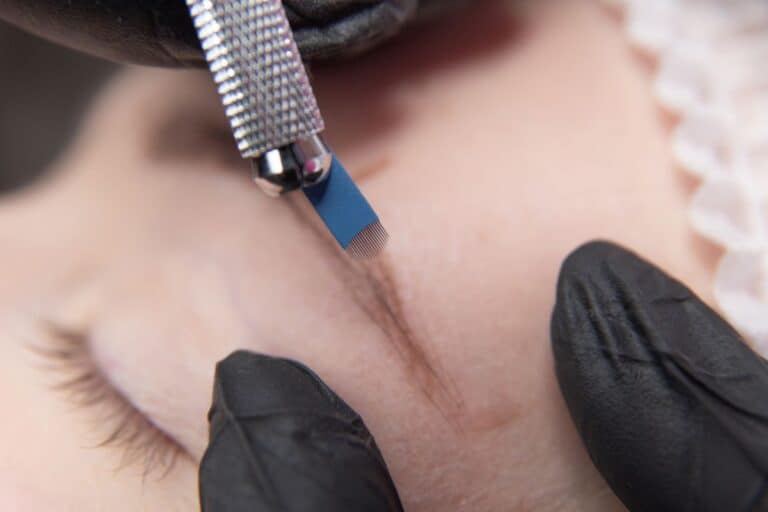
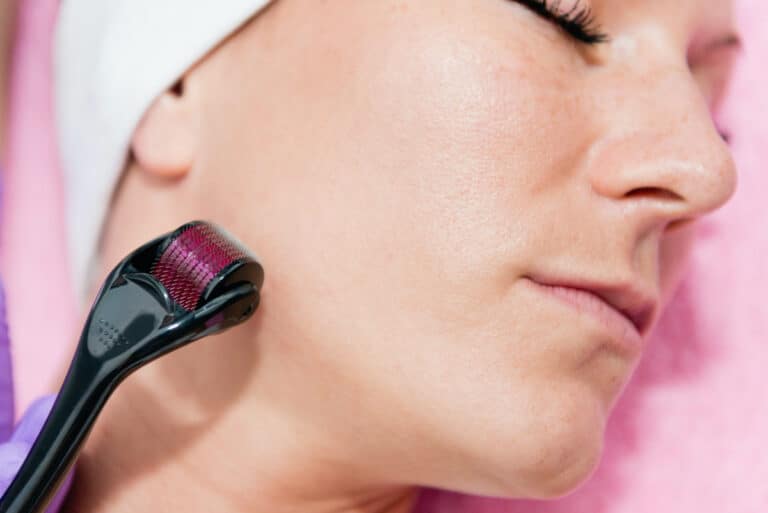
Microneedling uses a device with very small needles to create controlled micro-injuries in the skin. Professional devices may be pen-shaped, stamped, or rolled, and treatment depth can be adjusted for the area being treated.
These controlled punctures trigger a wound-healing response that can stimulate new collagen and elastin. Microneedling is still a medical procedure and can cause bleeding, redness, swelling, pigment changes, infection, or other complications in some people.
The collagen-remodeling response can gradually make some atrophic acne scars look shallower and improve overall texture. It is not designed to treat every type of acne scar equally.
Professional microneedling devices can be used at different depths depending on the treatment area, device, and clinician’s judgment. Deeper settings are not automatically better and can increase the risk of side effects.
Microneedling is used to improve the appearance of acne scars and is also used for concerns such as fine lines and some other types of scarring. It usually improves rather than completely removes scars.
Radiofrequency (RF) microneedling combines microneedles with heat delivered below the skin. It is a different procedure with its own benefits and risks, and it should be performed by an appropriately trained licensed provider.
Microneedling has a generally favorable safety profile when it is performed on an appropriate patient with suitable equipment and technique, but it is not risk-free.
A topical numbing product is often used before professional microneedling. Temporary redness, tightness, tenderness, peeling, bruising, or pinpoint bleeding can occur, and recovery time varies depending on treatment depth and your skin.
Here’s a great video of the microneedling process from U.S. Dermatology Partners.
Pros Of Microneedling:
- Usually involves less downtime than aggressive ablative laser resurfacing
- Redness and tenderness often improve within several days, although recovery varies
- May cost less per session than some laser procedures, depending on the clinic and technology used
- Can be used across a wide range of skin tones when performed appropriately
- Collagen remodeling develops gradually, so improvement is usually assessed over weeks to months
- Professional treatment allows controlled depth, sterile technique, and screening for contraindications
Cons Of Microneedling:
- Results vary, and some people may need maintenance or additional procedures over time
- Multiple sessions are commonly needed, especially for more noticeable scarring
- Side effects can include redness, swelling, dryness, peeling, bruising, bleeding, crusting, pigment changes, infection, or irritation
- It primarily targets texture and may not address hyperpigmentation and dark spots as directly as treatments chosen specifically for pigment
Laser Treatment For Acne Scars
Laser treatment is another common and well-researched technique for addressing acne scarring.
Laser resurfacing uses concentrated light energy to create controlled changes in the skin. The exact effect depends on whether the device is ablative, nonablative, fractional, or pigment-targeting.
Treatment can feel warm, prickly, or uncomfortable, but the experience varies by laser type and intensity. Providers may use cooling, topical numbing, local anesthetic, or other pain-control measures depending on the procedure.
Some laser treatments stimulate collagen remodeling to improve texture, while other laser or light-based approaches may be selected to target pigmentation. The expected result depends heavily on the device and the type of scar or discoloration being treated.
Recovery time varies widely. Nonablative and fractional treatments may involve relatively short downtime, while more aggressive ablative resurfacing can require substantially longer healing. Some people need multiple sessions regardless of laser type.
Ablative lasers remove portions of the skin surface, while nonablative lasers work without removing the entire epidermis. Because these approaches differ, downtime and side effects can range from mild redness to a longer recovery period.
It is not useful to compare microneedling and lasers using one fixed treatment depth. Acne scars are classified by shape and severity, and dermatologists often choose or combine procedures based on whether scars are rolling, boxcar, ice-pick, raised, or accompanied by discoloration.
Here’s a great video on laser treatment from Olivia Skin and Hair Clinic on YouTube.
Pros Of Laser Treatments:
- Can produce noticeable improvement in texture or tone when the laser is matched appropriately to the concern
- Some laser plans use one treatment, while others require a series of sessions
- Offers multiple technologies that can be tailored to different scar patterns and skin concerns
- Certain laser or light-based treatments can target discoloration as well as texture
- Collagen remodeling can produce lasting improvement, although aging, new acne, and additional scarring can affect future appearance
Cons Of Laser Treatments:
- Can cause heat, stinging, tenderness, or discomfort depending on the device and treatment intensity
- Downtime varies from a few days to several weeks depending on whether treatment is nonablative, fractional, or ablative
- Possible side effects include redness, swelling, peeling, crusting, pigment changes, acne flares, infection, and, less commonly, scarring
- Some lasers carry a higher risk of post-inflammatory pigment changes in brown or Black skin, so device selection and provider experience with darker skin tones are especially important
- Can be more expensive than microneedling depending on the laser, number of sessions, and clinic
Microneedling Vs Laser: Which Is Right For You?
If you’re not sure which treatment fits your scars, start by consulting a dermatologist. Acne-scar treatment is highly individualized, and many people benefit from a combination approach rather than one procedure alone.
They can assess the type and severity of your scarring, your skin tone, whether you still have active acne, your tendency to develop pigment changes or keloids, and how much downtime you can realistically manage.
For atrophic scars, microneedling may be one option, but deeper or sharply defined scars sometimes require other procedures such as subcision, punch techniques, fillers, peels, lasers, or combinations chosen by a dermatologist.
Your dermatologist may also combine treatments over time, such as using microneedling or subcision for texture and a separate procedure for remaining discoloration.
Microneedling is commonly used across a wide range of skin tones and does not rely on targeting pigment with light energy.
Laser treatment is not automatically off-limits for darker skin. However, some devices and settings carry a greater risk of post-inflammatory hyperpigmentation or hypopigmentation, so it is important to see a dermatologist experienced in treating brown and Black skin.
Microneedling can be a reasonable option for some people who want a procedure with relatively modest downtime, but whether it should be the first treatment depends on the scar pattern and individual risk factors.
It avoids the heat used by laser resurfacing, but it still has possible complications and is not suitable for everyone.
With topical numbing, many people tolerate the procedure well, and downtime is often limited to several days of redness or sensitivity, although this varies.
Do not assume microneedling is automatically safe for sensitive or reactive skin. Active infections, certain skin conditions, bleeding problems, immune suppression, some medications, and a history of abnormal scarring can affect whether treatment is appropriate.

If you are considering microneedling, set realistic expectations and expect improvement to develop gradually.
Many treatment plans involve several sessions, and the goal is usually to make scars less noticeable rather than to make every scar disappear.
Whether you need additional sessions later depends on your response, new acne, aging, and the treatment plan recommended by your dermatologist.
Laser treatment is not simply the “next level” after microneedling. It is a different tool, and a dermatologist may recommend it first, later, in combination with another procedure, or not at all depending on your skin and scars.
Some lasers and light-based treatments can also target post-acne discoloration, but the device must be selected carefully for your skin tone and the type of pigment involved.
Cost and downtime matter, but they should not be the only deciding factors. Your dermatologist should also consider the expected benefit, risk of pigment changes, current acne activity, scar type, and your ability to follow post-treatment care.
Laser resurfacing can cause infection, pigment changes, prolonged redness, acne flares, and, less commonly, scarring. Risks depend on the device and treatment intensity.
The main takeaway is that microneedling and laser resurfacing can both improve acne scars, but the better match depends on the scar type, skin tone, treatment technology, budget, downtime, and individual medical history. A dermatologist can help you build a plan that balances results with safety.
Microneedling Vs Laser For Acne Scars FAQs
Can You Treat Acne Scars While You Still Have Active Acne?
Active inflammatory acne often needs to be brought under control before aggressive scar treatment begins. Treating ongoing breakouts first can help reduce the chance of developing new scars while you are working on older ones. A dermatologist can tell you when it is appropriate to start procedural scar treatment.
Which Treatment Has Less Downtime?
Microneedling often involves several days of redness and sensitivity. Laser downtime varies much more because nonablative, fractional, and ablative lasers treat the skin differently. A light laser session may require relatively little recovery, while aggressive ablative resurfacing can take considerably longer.
Can Microneedling Or Laser Completely Remove Acne Scars?
These treatments are generally used to make scars less noticeable rather than guarantee complete removal. The amount of improvement depends on the scar type, severity, number of sessions, treatment settings, healing response, and whether multiple techniques are combined.
Is At-Home Microneedling The Same As Professional Microneedling?
No. Professional microneedling for acne scars uses controlled devices and treatment depths in a clinical setting. Deeper microneedling can reach living skin and carries risks such as infection, bleeding, pigment changes, and scarring, so acne-scar treatment is best discussed with a trained healthcare professional rather than attempted with an at-home device.
Related Articles
Microneedling For Cellulite (Does It Really Work?)
Can I Wash My Face After Microneedling?