
Can You Mix Developers?
Coloring your hair at home involves more than choosing a shade. The products, tools, timing, and mixing ratios all affect how evenly the color develops and how much stress the hair experiences.
Many at-home hair dye kits simplify the process by pairing the color with a pre-measured developer. Professional color systems, however, often require you to choose and measure the developer separately.
Understanding what each product does makes it easier to follow the directions correctly, choose an appropriate developer strength, and avoid unnecessary trial and error.
Hair developer is the hydrogen peroxide-based oxidizing product used with many permanent colors, demi-permanent colors, and lighteners. It helps start the chemical process that develops color and, depending on the formula, can also help lighten natural pigment.
Most permanent oxidative hair colors and lighteners require a developer, while many semi-permanent or direct dyes do not. The exact requirement depends on the color system you are using.
The developer strength, product formula, mixing ratio, processing time, and your starting hair color all influence the final result. Using a stronger developer does not automatically create a better or longer-lasting color.
Can you mix developers when coloring your hair?
Generally, yes, compatible hair developers can be mixed to create an intermediate volume. The safest approach is to use developers from the same brand and product line, measure them accurately, and follow the color or lightener manufacturer’s directions. Do not improvise with higher strengths or dilute developer with water or conditioner unless the manufacturer specifically instructs you to do so.
Below, we will cover what hair developer does, how the common volumes differ, how to calculate an in-between strength, and when mixing developers is better avoided.
What Is a Developer?
Hair developer is an oxidizing product mixed with compatible hair color or lightener to activate the formula before application.
Developer is also called an activator, oxidant, or peroxide. Its key active ingredient is usually hydrogen peroxide, and the concentration helps determine how much oxidative strength the mixture has.
The developer should be mixed with color or lightener in the exact ratio specified for that product. During processing, peroxide helps oxidize natural pigment and develop oxidative dye molecules, while other ingredients in the color or lightener help the formula work within the hair fiber.
Developers are available in different volumes and hydrogen peroxide concentrations. Higher-volume developers contain more peroxide and generally provide more oxidative strength, but the amount of lift still depends on the complete color or lightener formula.
Some hair color products, such as many semi-permanent or direct dyes, are designed to work without developer. Oxidative permanent color and many demi-permanent formulas, on the other hand, require the specific developer recommended by the manufacturer.
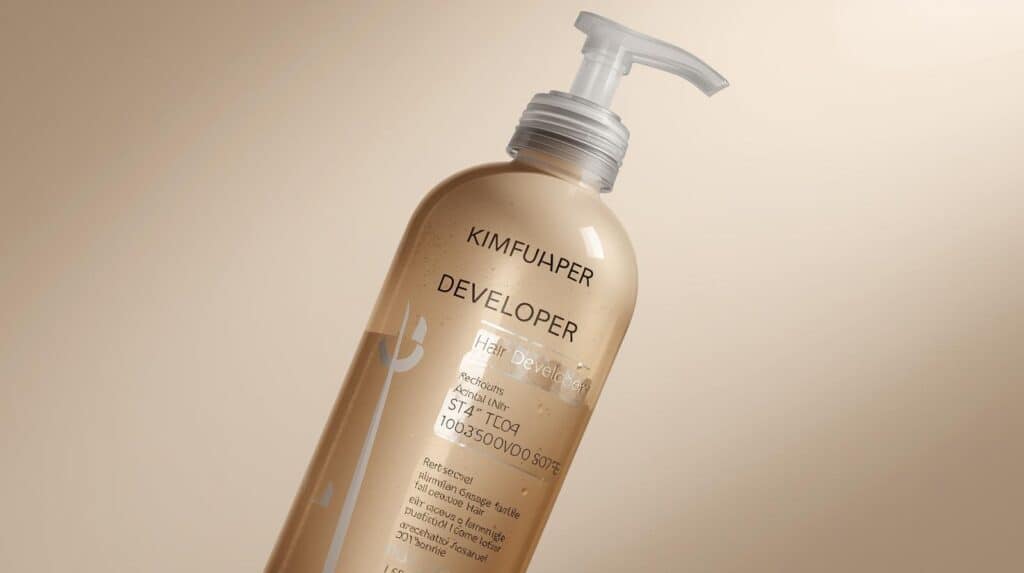
As a general rule, semi-permanent direct dyes do not use developer, while many demi-permanent and permanent oxidative colors do. Demi-permanent systems usually use a lower-strength activator than permanent color, but you should follow the instructions for the specific product.
Permanent color can last longer than semi-permanent color because it changes the hair through an oxidative process, but longevity also depends on the dye formula, hair porosity, aftercare, washing frequency, and shade.
If you are not sure how developer strength changes a color service, this video by Brittnee Alexus offers a visual explanation of common developers on YouTube.
How Are Developers Categorized?
Developers are categorized by volume, a traditional way of describing hydrogen peroxide strength. Volume does not guarantee an exact number of levels of lift because the final result also depends on the color or lightener formula, processing time, starting shade, and hair condition.
The most familiar strengths are 10, 20, 30, and 40 volume, although some professional systems use other strengths. The percentage of hydrogen peroxide on the label is another useful reference.
Developers stronger than 40 volume are not a standard choice for routine at-home coloring. Higher peroxide concentrations increase the risk of scalp irritation and hair damage, so use only the strength specifically allowed by the product directions.
Hair developer is the oxidizing component in many permanent colors and lighteners. It helps develop dye molecules and can contribute to lightening natural pigment when used in a formula designed for lift.
It is common to say that developer “opens” the hair cuticle, but the chemistry is more complex. In oxidative color and lightener systems, alkaline ingredients help swell the hair fiber while peroxide participates in the oxidation process that changes pigment.
In general, lower-strength developers, such as 10 volume and 20 volume, provide less oxidative strength than higher-strength formulas such as 30 volume or 40 volume.
If you are lightening hair with bleach or another lightener, use only the developer strengths listed in that lightener’s directions. A higher volume may provide more lift in some systems, but it can also increase stress on the hair and scalp and is not automatically the best choice.
For deposit-focused color or minimal lift, a lower-volume developer is often specified. The correct strength still depends on the exact color line and the result you want.
A higher hydrogen peroxide concentration means greater oxidative strength. However, the amount of visible lift can vary widely based on the product, natural base color, previous color, hair porosity, and processing conditions.
Can You Mix Different Developers?
Yes, you can sometimes mix two hair developer strengths to create an intermediate volume, but compatibility matters. Using two developers from the same brand and product line is the most predictable option unless the manufacturer states otherwise.
Mixing two developer strengths does not become more damaging simply because they were combined. The main risk is ending up with a final peroxide strength or processing method that is too aggressive for the hair or not approved for the color product.
Hair can feel dry, rough, or brittle when peroxide strength, processing time, repeated lightening, or overlapping applications place too much stress on the fiber.
There are situations where an intermediate volume may be useful, especially in professional color work where a specific in-between strength is appropriate for the formula and technique.
If the target volume is exactly halfway between two developers, equal parts will create that midpoint. For example, equal amounts of 20 and 30 volume produce approximately 25 volume. For any other target, the amounts need to be calculated rather than guessed.
What Are The Different Types of Developers?
Different developer strengths provide different levels of oxidative power. The most common labels are 10, 20, 30, and 40 volume, and the right choice depends on the color or lightener system rather than volume alone.
10 volume is a common low-strength developer and is typically around 3% hydrogen peroxide, although you should always check the actual product label.
As volume increases, the hydrogen peroxide concentration generally increases as well. Common approximations are 10 volume at 3%, 20 volume at 6%, 30 volume at 9%, and 40 volume at 12%, but professional systems can use other strengths.
Vol 10
A 10-volume developer is commonly used in services where little to no lift is needed, such as deposit-focused color or some gentle oxidative color formulas.
Some toners and demi-permanent colors also specify a low-volume developer or activator. Do not substitute 10 volume automatically, because toner systems can require their own dedicated activator.
Vol 20
20 volume is a widely used developer strength. It is typically around 6% hydrogen peroxide and can provide modest lift with permanent color, often around one to two levels when the specific formula is designed for it.
It is also commonly specified for gray coverage and standard permanent color applications, but the correct mixing ratio and processing time come from the color manufacturer.
Vol 30
30 volume is typically around 9% hydrogen peroxide and provides more oxidative strength than 20 volume. In compatible color or lightener systems, it can produce greater lift.
Because it is stronger, 30 volume is not automatically the right choice for darker hair or for every lightening service. Hair condition, technique, scalp contact, and the product’s instructions should determine whether it is appropriate.
Vol 40
40 volume developer is typically around 12% hydrogen peroxide. Some professional high-lift color and lightener systems allow it for specific techniques, but it carries a higher risk of irritation and hair damage if misused.
Some professional highlighting or off-scalp lightening systems permit 40 volume, while others limit the maximum strength. Always follow the instructions for the lightener you are using.
Higher-strength developers require extra caution. Many product systems restrict 40 volume for on-scalp use, and using a stronger developer than directed can increase the risk of irritation, breakage, and uneven results.
50 volume developer is not a standard choice for at-home hair coloring and can substantially increase the risk of irritation and hair damage. Do not use it unless a specific professional system explicitly calls for it and you are trained to use that system safely.
How To Mix Hair Developers Safely
Before mixing developers, first check the instructions for the hair color or lightener you plan to use. Some systems are designed around a specific developer strength, brand, and mixing ratio, so creating your own intermediate strength may not be appropriate.
Most of the time, you do not need to combine different developer volumes. If the formula specifies 20, 30, or another exact strength, using that developer is more predictable than modifying it yourself.
If the manufacturer allows an in-between strength, use compatible developers from the same product line when possible and measure each amount accurately with a scale or graduated container. Keep the color-to-developer ratio required by the color product separate from the ratio used to create the developer blend.
Decide the final developer volume you need before you measure. Equal parts only work when your target is the exact midpoint between the two starting strengths.
For two developers, the final strength is a weighted average of their volumes. If you mix equal amounts, simply average the two numbers. Unequal amounts require a calculated ratio, so avoid estimating by eye.
For example, to make an approximately 25-volume developer, equal amounts of 20 volume and 30 volume will give you the midpoint. Measure the two amounts accurately before combining them.
Keep in mind that a color line labeled for 20 or 30 volume may not be tested or intended for 25 volume. An intermediate blend is only useful when it fits the manufacturer’s directions and the technique you are performing.
Mixing developers from different brands is less predictable because formulas can differ in viscosity, stabilizers, pH, and intended compatibility. Using the same brand and product line is the safer default unless both manufacturers state that cross-brand mixing is acceptable.
If a developer is supplied as part of a pre-measured box color, dedicated toner system, or another two-part kit, do not combine it with unrelated developers or color products unless the instructions specifically permit it.
Even when two bottles are both labeled as developer, they may be designed for different color systems. Following the matching product line helps preserve the consistency, mixing ratio, and performance the manufacturer tested.
If you need a lower developer strength, the best option is to use the properly formulated lower-volume developer recommended for your color or lightener rather than trying to dilute a stronger one yourself.
For example, if you only have 40 volume but your color formula calls for 20 volume, do not assume that adding water or conditioner will turn it into an equivalent product. Obtain the correct developer instead.
Adding conditioner or water to developer can change the formula’s viscosity, pH, stabilizers, and intended color-to-developer ratio. Only dilute a developer when the manufacturer provides explicit instructions for that exact product.
Conclusion
Coloring your hair at home is easier to manage when you treat the developer as part of a complete color system rather than as an interchangeable ingredient.
Understanding what developer does, how its strength is labeled, and how it interacts with color or lightener can help you choose a more appropriate formula and avoid unnecessary overprocessing.
Developer is essential in many oxidative color services, but the right strength is the one specified for the product and the result you are trying to achieve, not simply the highest volume available.
Different developer volumes provide different levels of oxidative strength, and higher volume can increase both lift and the risk of dryness, irritation, or damage when used incorrectly.
When mixing is allowed, measure carefully, stay within the manufacturer’s approved strengths, wear gloves, follow the stated processing time, and complete any allergy alert test or strand test required by the product instructions. If you are planning a major color correction, significant lightening, or using high-volume developer, a licensed colorist is the safer option.
Related Articles
Can You Use Toner Without Developer?
How To Mix Developer And Bleach