
Does Developer Damage Hair?
Developer is an essential part of many oxidative hair colour and lightening services, but the different volumes and formulas can make it difficult to know what your hair actually needs.
Permanent colour, many demi-permanent colours, and most hair lighteners require a compatible developer. Direct semi-permanent dyes are different and generally do not.
The choice affects more than the final shade. Your starting colour, previous chemical services, current hair condition, and the exact product instructions all matter.
Developer is not a universal colour remover, and using more of it or choosing a higher volume does not guarantee faster, lighter, or better results.
Hair developer is a hydrogen peroxide solution or emulsion, usually in cream or liquid form, designed to activate a compatible oxidative colour or lightener.
It is available in different volumes and peroxide concentrations, but the correct strength depends on the specific colour system and service rather than a one-size-fits-all rule.
Peroxide drives oxidation. Alkaline ingredients in the colour or lightener mixture help swell the hair and allow the process to take place.
Does developer damage your hair?
Yes, developer can contribute to dryness, weakened hair, and breakage, even when used as directed. Higher strength, repeated processing, overlap, and already damaged hair increase the risk. Correct product choice and technique reduce that risk but do not eliminate it.
If you only want to add or change tone without lightening, a developer-free direct dye may be an option. It cannot lift natural pigment.
Understanding what developer does, what each volume means, and where the damage risk comes from can make at-home colour decisions much safer.
What Is a Developer?
Hair developer supplies the hydrogen peroxide needed by compatible colour or lightening products. This Wella developer is one example, but the right choice depends on the exact colour system, required volume, and mixing directions, not simply the brand name.
Mixing these components starts a chemical process, so use only the combination and ratio specified by the manufacturer.
A product designed for use with developer will not perform as intended if you omit it.
Hydrogen peroxide can oxidise natural melanin during lightening and help develop oxidative dye molecules within the hair.
The complete mixture matters: developer alone is not responsible for every change to the cuticle or the resulting colour.
You can buy a developer separately, or it may be included in a box dye kit.
Why Do You Need a Developer?
Developer supplies the oxidising ingredient needed by the colour or lightener system. It does not independently guarantee removal of existing artificial dye.
Developer is required for specific colour formulas, including most permanent colours, many demi-permanent colours, and conventional lighteners.
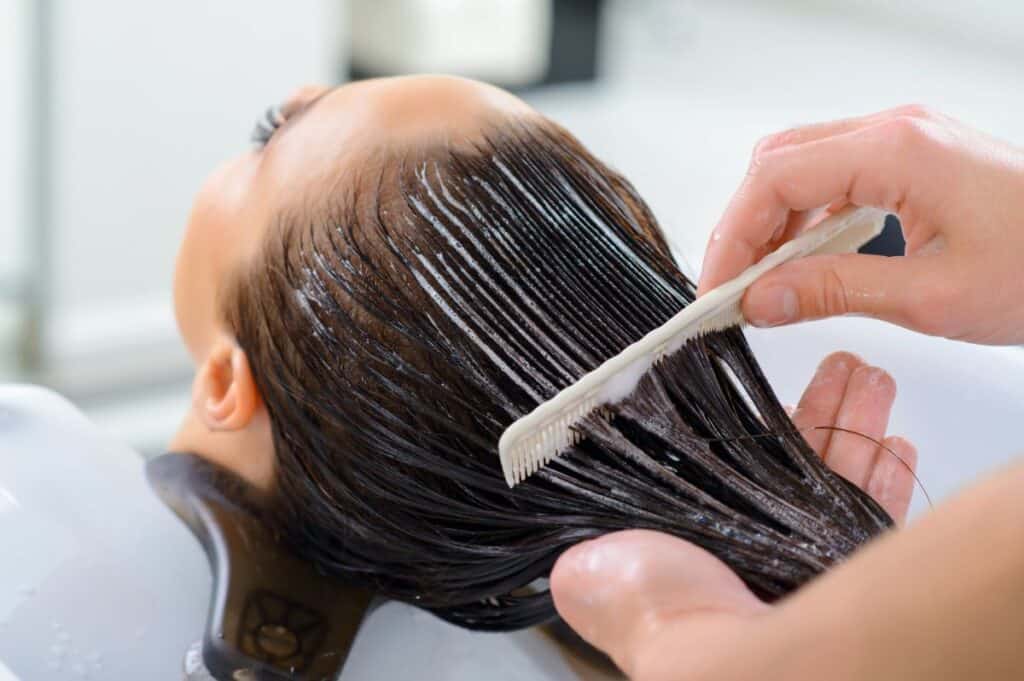
The strength of the developer affects how the formula behaves, how much lift may be possible, and how much stress the hair may experience.
Powder lighteners generally need their specified developer, but lighteners also come in other formats. Do not substitute water just to make a powder spreadable.
Oxidative colour also needs its designated developer to form the intended colour, not merely to become easier to apply.
What Does Each Level Of Developer Mean?
Developers are commonly labelled by volume, a system that corresponds to the concentration of hydrogen peroxide in the formula.
In general, a higher peroxide concentration means a stronger developer, but the final amount of lift still depends on the complete colour or lightener formula.
The amount of lightening depends on the full formula, processing conditions, starting colour, and previous treatments.
A higher peroxide concentration may allow more lift in an appropriate system, with greater potential for damage. It is not a shortcut for every colour goal.
The most common developer volumes are 10, 20, 30, and 40 vol.
The usual equivalents are 10 volume = 3%, 20 = 6%, 30 = 9%, and 40 = 12%. Lower strengths also exist for specific systems.
10 Vol
10 volume contains about 3% hydrogen peroxide. It is not the lowest strength available.
It is commonly used for deposit-focused work in compatible colour systems, but it does not guarantee exactly one level of lift.
Some toners and glosses require lower-strength or dedicated activators. Use 10 volume only when the product specifies it.
With lightener, even a low-volume developer can lighten hair. Results cannot be predicted from the volume number alone.
Lower concentration does not make the process damage-free, particularly on previously bleached hair.
Grey coverage depends on the dye formula and its directions. Do not assume 10 volume will cover resistant greys in every system.
20 Vol
20 volume developer contains about 6% hydrogen peroxide and is one of the most common strengths used in oxidative hair colour.
At about 6% peroxide, 20 volume is used in many permanent-colour systems for grey coverage or some lift. It can still damage hair.
Use it with colour or lightener only where that product’s directions permit it.
It is not automatically appropriate for every hair texture, scalp condition, or chemical history, especially when the hair has already been lightened or repeatedly coloured.
Developer helps oxidative colour develop within the hair; it does not itself contain the shade you want to deposit.
The amount of lift varies. Follow the colour line’s guidance rather than treating “two levels” as a promise.
30 Vol
A 30 vol developer contains about 9% hydrogen peroxide.
It is used in some systems when more lift is needed, but not every lightener allows it for every technique.
Damage can occur with correct use as well as misuse, especially if the mixture overlaps previously lightened areas.
Healthy-looking hair is not proof that it can tolerate 30 volume. A colourist should assess its processing history and strength.
There is no universal guarantee of three or more levels of lift, or of reaching blonde in one session.
Do not increase the developer strength beyond the product’s instructions to speed up a result.
40 Vol
40 volume contains about 12% hydrogen peroxide and is at the stronger end of common colour developers.
Some professional high-lift colour systems specify it for selected applications. That does not make it suitable for routine home bleaching.
The colour or lightener determines what happens: developer has no dye pigment of its own to deposit.
40 volume carries a higher damage and irritation risk because of its stronger peroxide concentration, especially when it is misused, left on too long, or applied to compromised hair or scalp.
Do not assume 40 volume is permitted for on-scalp bleaching. Product restrictions vary and must be followed.
For reference, 40 volume developer is approximately 12% hydrogen peroxide.
What’s The Ideal Volume Of Developer?
There is no single ideal developer volume. Choose the exact activator and strength specified for your product and technique.
For example, Wella’s Koleston Perfect usage guide specifies different developers and mixing instructions for different services.
Your starting colour, previous dye, hair condition, and desired change affect whether the service is appropriate at all.
A 40 volume developer can place significant stress on the hair, particularly when the lengths are previously lightened, chemically treated, or already compromised.
Neither 20 nor 30 volume is a damage-free middle ground. Sometimes a lower-strength system or postponing the service is the better choice.
Do You Always Need To Use A Developer?
No. Developer is needed for products formulated to use it, not for every kind of hair colour.
Direct dyes can deposit colour without a peroxide activator. Do not add developer to a ready-to-use dye unless its instructions require it.
Permanent oxidative dyes, many demi-permanent dyes, and conventional lighteners use a specified developer or activator.
Toners and glazes vary: some are oxidative, while colour-depositing masks and shampoos need no developer.
Developer-free semi-permanent colour generally changes tone or adds depth without lightening natural pigment.
That can include bright shades on already lightened hair, not just going darker. It will not make a dark natural base blonde.
Can Hair Developers Damage Your Strands?
Yes. Oxidative processing can weaken the hair fibre even when the hair still looks smooth and shiny immediately afterward.
Following the directions, measuring accurately, respecting the processing time, and avoiding overlap on previously processed hair can reduce preventable damage.
Concentration is only one factor. Exposure time, lightener strength, repeated applications, and previous damage also matter.
Developer alone can still oxidise hair and irritate skin. Do not apply it as a standalone lightening treatment unless an intended product system specifically directs that use.
Is Hair Developer Always Damaging?
Not everyone will notice the same amount of dryness or breakage, but no developer-based service can be promised to leave hair completely unchanged.
Visible damage and the chemical changes within the fibre are not the same thing.

Signs of over-processing can include unusual brittleness, frequent snapping, increased tangling, roughness, or wet hair that feels gummy and stretches much farther than usual.
If you notice these signs, stop further chemical processing and have the hair assessed.
Bleach and colour mixtures can also irritate or burn the scalp. Burning is not a sign that the product is working well.
Rinse out immediately if you develop burning or a reaction. Seek medical help for burns, significant swelling, or persistent symptoms; breathing difficulty is an emergency.
Can You Dilute Developer?
If you only have a stronger developer than the product requires, it is safer to wait until you can get the correct strength rather than trying to improvise.
Adding water reduces peroxide concentration, but it also changes the formulated product. That is not equivalent to buying a tested lower-volume developer.
There is no universal home dilution recipe suitable for every colour system.
Do not dilute developer with water, conditioner, shampoo, or oil unless the manufacturer gives explicit instructions for that exact system.
Changing the texture, stability, or mixing ratio can make results less predictable.
Use the specified strength and compatible formulation instead of improvising.
Can You Use Hair Developer On Already Damaged Hair?
Lower-volume developer does not automatically make damaged or over-processed hair safe to colour.
If hair is snapping, gummy, or severely weakened, pause oxidative colour and lightening rather than simply switching to 10 or 20 volume.
Conditioning can improve softness and manageability, but damaged hair does not biologically heal back to its original condition. There is no fixed waiting period that guarantees it will tolerate another oxidative service.
A colourist can assess a test strand and discuss gentler colour options, trimming, or allowing new growth.
Is Developer Shelf-Stable?
Another easy-to-overlook factor is the shelf life and storage condition of the developer.
Peroxide can lose strength during storage, giving unreliable results. Do not compensate for old developer by extending processing time.
There is no universal one-year-after-opening rule. Check the expiry or period-after-opening information and ask the manufacturer if it is unclear.
Because developer formulas vary by brand and system, use the storage and expiry guidance printed on the bottle rather than relying on a general rule.
Store it in its original container as directed, away from heat and sunlight. Do not use a product that has changed unexpectedly or has damaged packaging; follow local disposal guidance.
How Long Can You Let a Developer Sit On The Hair?
Processing time belongs to the complete colour or lightener mixture, not to developer as a standalone product.
Processing time is the period the mixed colour or lightener is allowed to remain on the hair before it must be rinsed out.
Respecting the maximum time reduces preventable risk, but it does not guarantee damage-free hair.
There is no universal 30-minute processing time. Some systems require much shorter or longer times under their own directions.
Follow the colour or lightener instructions, including when to start timing, whether heat is allowed, and when to rinse. Never extend the time to chase extra lift.
How Can You Prevent Damage From Hair Developer?
You can reduce preventable damage, but you cannot make oxidative processing risk-free.
Start by checking whether your hair and scalp are in suitable condition for the service.
The FDA advises following hair-dye directions and avoiding application to an irritated, sunburned, or damaged scalp.
Use the specified developer, avoid overlap on processed lengths, and do not improvise dilution or extra processing time.
Follow the colour product’s allergy-alert test instructions before each use. A strand test checks colour and hair response; it does not replace that allergy test.
Stick To A Low Volume
Use the lowest strength appropriate and permitted for the specific service, not simply the lowest bottle on the shelf.
A demi-permanent system may require its own low-strength activator; permanent colour or lightener may require something different.
Do not mix an unfamiliar developer into a system just because the percentage looks similar.
Already damaged hair may need no further oxidative processing, regardless of developer volume.
Use The Correct Formulation
Buy the developer strength the product calls for instead of trying to adjust another bottle.
Do not substitute a home dilution for a purpose-formulated activator.
Measure colour or lightener and developer exactly as directed, using the specified units.
Keep the ratio clear: one part colour to two parts developer is different from two parts colour to one part developer.
If instructions are missing or unclear, contact the manufacturer before mixing.
Avoid Colouring Your Hair Frequently
One of the simplest ways to reduce cumulative chemical stress is to space out oxidative colour and lightening services when your hair needs a break.
Repeated colouring or lightening, particularly over the same lengths, can leave hair increasingly dry, brittle, or over-processed.
Conditioners and some treatments can improve damaged hair’s feel and reduce further mechanical stress, but cannot return it to its untouched state.
Avoid repeatedly applying lightener to already lightened lengths. The next service should depend on hair condition, not only elapsed time.
How To Use Developer
If you are using developer at home, the most important rule is to treat it as one part of a specific colour system, not as a standalone product.
Developers vary in formula, strength, and compatibility, so follow the directions for your exact colour or lightener rather than borrowing a ratio from another brand.
Wear suitable gloves and follow the product’s ventilation, testing, and application instructions.
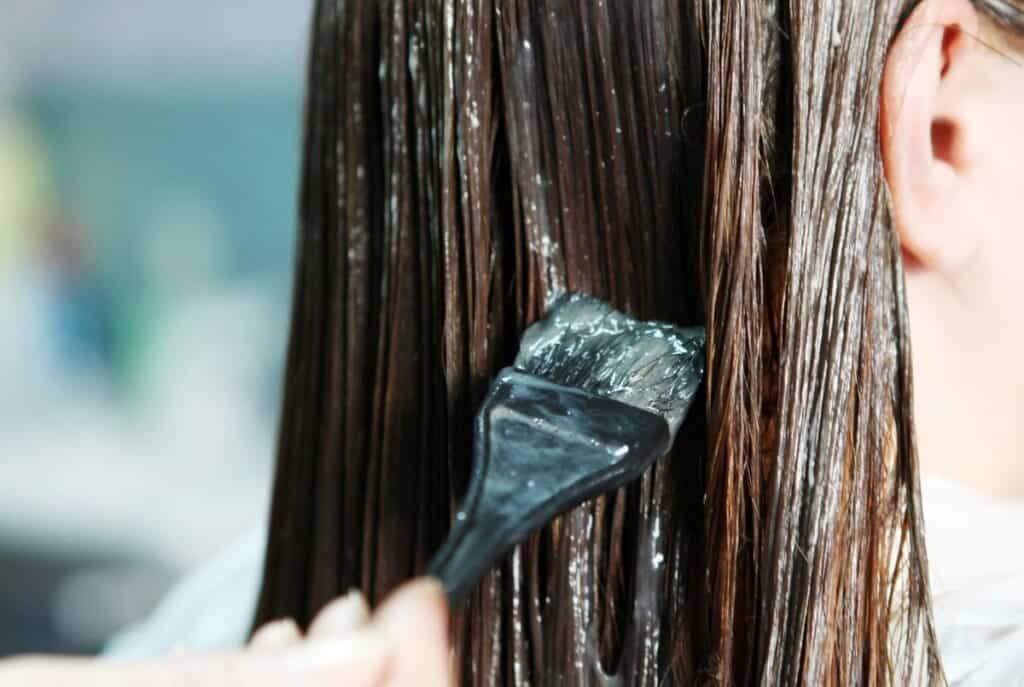
Mix developer with the specified colour or lightener. Do not combine bleach, dye, and developer into an improvised three-product mixture.
Mix only what you need for immediate use. Do not store leftover activated colour or lightener in a closed container.
With Bleach
Developer and lightener create an active chemical mixture that can significantly lighten hair, with greater risk when stronger formulas or repeated processing are involved.
There is no universal bleach-to-developer ratio. Use the lightener’s directions and its compatible developer.
If the directions state one part lightener to two parts developer, measure exactly that. Do not apply this example to a different product.
The required consistency is product-specific; a runny mixture can be difficult to control.
Do not add extra developer or water to a mixture that has dried during processing unless the instructions specifically permit it.
With Color
The correct ratio of colour and developer depends entirely on the colour formula you are using.
Permanent and oxidative demi-permanent colours use their own ratios. Most direct semi-permanent dyes are ready to use without developer.
Some common colour ratios you may see are 1:1, 1:1.5, or 1:2. Always check the labels of your products to ensure you mix the correct ratio of colour and developer.
The video below offers a visual discussion, but the directions for your exact product take priority over any general tutorial.
Related Questions
Can you use household hydrogen peroxide as a substitute for developer?
Do not substitute household hydrogen peroxide for the developer specified by your colour or lightener.
Matching a peroxide percentage does not mean two products have the same formulation or intended use.
Hair developer vs household hydrogen peroxide – what’s the difference?
Household peroxide is not the tested activator supplied or recommended for your hair-colour system.
Both contain an oxidising chemical, but their texture, stabilisers, pH, and other formulation details can differ.
Household peroxide can lighten or damage hair and irritate skin. It is not inactive merely because it is not labelled as developer.
Using it can produce uneven results and does not offer a predictable alternative to the intended activator.
It also has a thinner consistency that can alter the formula of your colour mixture.
For predictable results, use the developer or activator specifically intended for your hair-colour system.
Takeaway
Developer can contribute to hair damage, even when you follow the instructions.
At the same time, it is a necessary component of many permanent colour, demi-permanent colour, and lightening systems.
Correct use reduces avoidable mistakes; it does not make bleaching or oxidative colouring harmless.
The risk increases with higher strengths, repeated applications, excessive processing time, overlap, and already compromised hair.
Choose the developer specified for your system, avoid DIY dilution and overlap, and postpone processing when your hair or scalp is already compromised.
Related Articles
How To Mix Developer And Bleach
Does Bleaching Your Hair Damage It Forever?
I Dyed My Hair, And My Roots Are Too Light – What To Do