Does Damaged Hair Grow Back Healthy?
Finding split ends, rough lengths, and repeated breakage can be upsetting, especially after a colour service or a spell of frequent heat styling.
If your hair feels damaged from bleaching, chemical processing, or over-styling, you may wonder whether the next few inches will have the same problems.
The encouraging news is that damage to the lengths does not automatically damage the hair growing beneath your scalp.
You can usually work towards healthier-looking hair by reducing further damage, caring for the lengths you keep, and gradually trimming away the worst areas.
So, does damaged hair grow back healthy?
Usually, yes: new hair can grow in healthy if the damage is limited to the hair shaft and the follicles are still healthy. Bleached or heat-damaged lengths do not pass that damage to new growth. However, scalp injury, follicle damage, or an underlying health condition can affect regrowth.
The existing hair shaft cannot heal itself like living skin. Conditioners and some treatments can improve its feel, manageability, and resistance to breakage, but they do not turn severely damaged hair back into untouched hair.
Here is how to look after damaged lengths while they grow out, plus what to expect from trims, treatments, and the time involved.
How To Grow Out Damaged Hair
Focus on keeping the length you grow. If the ends keep snapping, your roots may be growing normally even though your hair never seems to get longer.
Trim The Worst Of It
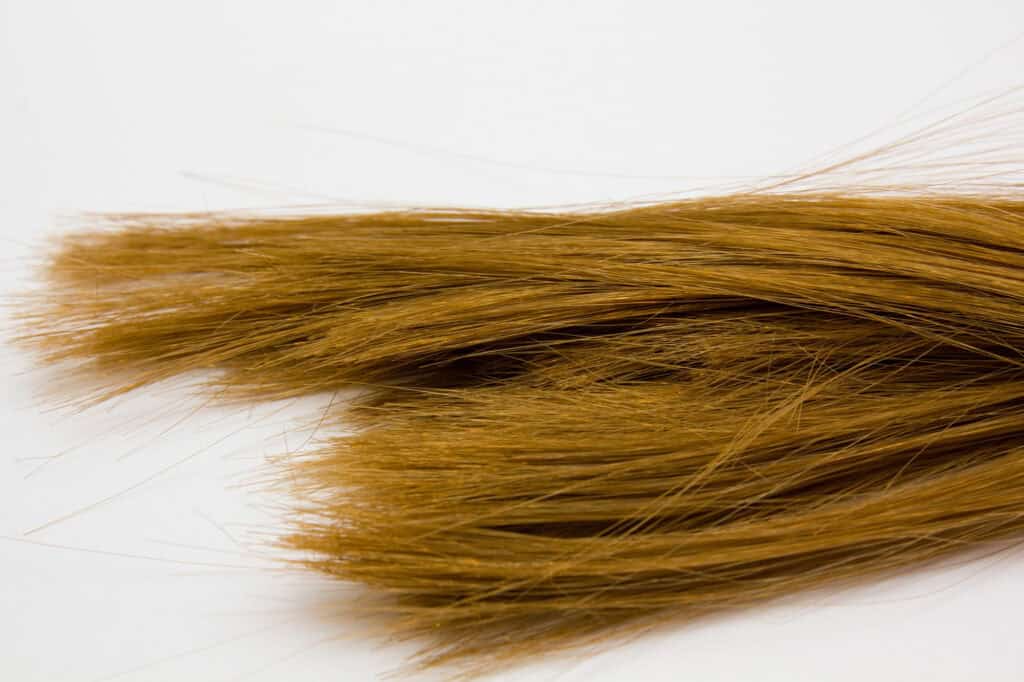
A trim can remove split or badly frayed ends and make detangling easier. It does not change how quickly hair grows from the scalp.
Removing thin, ragged edges can make the overall shape look fuller straight away, even if you only take off a small amount.
Splits can extend farther along a strand, leaving it more vulnerable to breaking.
That does not mean a split end travels into the follicle or damages future growth. The problem is with the existing strand.
If you want to keep as much length as possible, ask your stylist where the most extensive damage ends and discuss gradual trims.
If the lengths are badly matted or snapping with gentle handling, a larger cut may be more practical. There is no single haircut everyone needs.
Trims help with length retention, not faster growth. Plan future cuts around the condition of your ends rather than expecting a trim to stimulate the roots.
Leave-In Conditioner Is Your Best Friend
You can condition the hair you keep whether or not you have had a trim. The goal is to reduce roughness, friction, and tangles.
A leave-in conditioner can be useful when damaged ends still feel dry or catch against each other after washing.
Most leave-ins are applied in a small amount to damp hair and left until the next wash, but follow the instructions for your formula.
Concentrate on the lengths and ends. Fine hair may need a lightweight spray; coarse or very dry hair may suit a richer cream.
You may see the following ingredients in conditioning products. The complete formula matters more than any one ingredient, and none is essential for everyone:
- Coconut oil
- Argan oil
- Keratin
- Shea butter
- Honey
- Aloe vera
Oils and butters can add lubrication, while other conditioning ingredients improve softness or manageability. Hydrolysed proteins may temporarily improve the feel of damaged hair. These effects are not permanent healing of split ends.
Use a rinse-out conditioner after shampooing, too. If a leave-in leaves hair stiff, sticky, or weighed down, use less or choose a different formula instead of layering on more.
Eat For Healthy Hair
Adequate nutrition supports normal hair growth, but food cannot reverse bleach or heat damage in the hair already outside your scalp.
Eating more of a nutrient you already get enough of is not a reliable way to make your hair grow faster.
Aim for regular meals with enough energy and a variety of foods rather than a restrictive “hair growth” diet.
Protein, iron, and zinc are among the nutrients involved in normal hair function. If you suspect a deficiency, a clinician can assess whether testing or treatment is appropriate.
Depending on your preferences and dietary needs, useful foods to include are:
- Leafy greens
- Sweet potatoes
- Milk and yoghurt
- Eggs
- Whole grains
- Fish
- Citrus fruits and berries
- Avocados
- Nuts and seeds
- Lean meats
- Beans and lentils
Extra biotin is not a proven fix for damaged hair. The NIH Office of Dietary Supplements notes that evidence for hair benefits from biotin supplements is limited. High supplemental intakes can also interfere with some blood tests.
Discuss supplements with a healthcare professional if you have dietary restrictions, suspected deficiencies, or unusual shedding. Avoid taking high doses simply because a product is marketed for hair.
Care For Your Scalp
Caring for your scalp is worthwhile, but damaged ends do not automatically mean you need a scalp treatment.
If your scalp feels comfortable and you have no unusual shedding, a gentle washing routine may be enough.
Choose a treatment for a specific concern, such as dandruff, rather than buying a mask to “feed” the damaged lengths through the roots.
Scalp products come as shampoos, lotions, oils, and other formulas. Their intended uses are different, so they are not interchangeable.
Follow the product instructions for contact time. Leaving a rinse-off treatment on overnight does not necessarily make it more effective.
Biotin, keratin, or vitamin claims on a cosmetic scalp product do not establish that it increases hair growth. Persistent flaking, itching, or soreness deserves assessment.
A gentle fingertip massage may feel relaxing, but it is not an established solution for chemical damage. Avoid scratching with your nails or tugging at fragile roots.
Seek a dermatologist’s advice for bald patches, scalp burns, ongoing pain, or a widening part. The American Academy of Dermatology explains that regrowth depends on the cause of hair loss and whether follicles remain intact.
Avoid Heat Styling
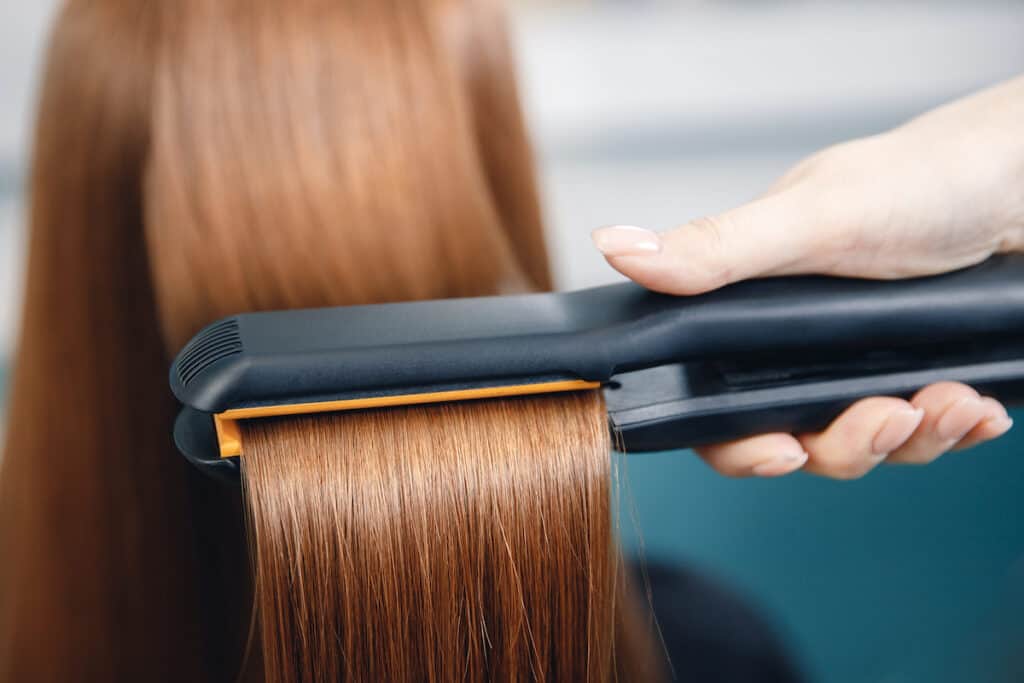
Frequent or intense heat styling can add to existing damage. A heat protectant reduces some exposure-related damage but does not make high temperatures harmless.
New growth can also be damaged once it emerges, so changing your styling habits protects the healthier hair you are trying to keep.
Take a break from straighteners and curling irons while breakage is severe. If you blow-dry, use a low setting and keep the dryer moving.
Try working with your natural texture so you do not need repeated passes with a hot tool to achieve your usual style.
Gently blot away excess water and let your hair air-dry when practical. Avoid rubbing it with a towel or pulling it tightly while it dries.
Loose heatless styling can be an option, but rollers or wraps should not tug on your roots or stretch fragile strands.
Keep braids and buns loose, too. “Heatless” does not mean damage-free if the style creates constant tension.
Pause Chemical Processing
Repeated bleaching, permanent colouring, relaxing, or perming can weaken already fragile hair.
Pause further chemical processing if your hair is snapping or feels unusually gummy when wet. Have a stylist assess its condition before another service.
Overlapping a chemical treatment onto previously processed lengths can increase breakage, particularly when several services are combined.
Hair damage can involve wear to the protective cuticle and changes within the cortex, the part that provides much of the strand’s strength.
Permanent colour and bleach change the hair chemically; they do not simply lift proteins out to make room for pigment.
Bleaching can alter hair proteins as well as pigment, leaving heavily processed lengths more vulnerable to breakage.
Perms and relaxers change bonds within the hair to alter its shape. Processing damaged hair again can further compromise its strength.
A stylist can help you plan a gentler transition towards your natural colour or texture. Do not apply another chemical service to a sore or injured scalp.
Take Extra Caution With Wet Hair
Handle wet hair gently, especially if it is bleached or breaking easily.
Water makes the hair swell and temporarily changes hydrogen bonding within the strand. Wet hair can stretch more, so forceful brushing can cause damage.
This does not mean touching wet hair makes it snap instantly. The condition of your hair and the force you use both matter.
For straight hair, letting it partly dry before combing may help. Curly or tightly textured hair is often easier to detangle while damp with conditioner providing slip.
Work in small sections, support the hair above a tangle, and stop if you feel resistance rather than pulling through it.
These habits can make wash day gentler:
- Blot or gently squeeze out water instead of rubbing with a towel
- Gently detangle using your fingers or a wide-tooth comb
- Use a leave-in conditioner to make the detangling process more gentle
- Begin detangling from the ends and slowly work your way up
- Do not use a flat iron or curling iron on wet hair
These steps mainly protect the hair shaft from friction and pulling. They cannot repair an injured follicle or treat a cause of shedding.
For more everyday handling advice, the American Academy of Dermatology’s hair-damage guide covers washing, conditioning, detangling, and styling.
How Long Does It Take For Damaged Hair To Grow Out?
The Trichological Society gives a growth range of roughly 0.5–1.7 cm per month, or about 0.2–0.7 inches. Your own rate will vary.
Genetics, age, hormones, and health all influence growth. A cosmetic product cannot guarantee that you will reach the upper end of that range.
As a planning example, at 1 cm per month you would grow around 6 cm in six months or 12 cm in a year. These are estimates, not promises, and breakage or trimming changes how much length you keep.
A few damaged centimetres at the ends may be removed over several trims. Replacing long hair that is damaged from near the roots can take years if you want to regain the same length.
Hair may feel softer after conditioning long before all the damage has grown out. Take a photo every month in similar lighting to track the change without checking daily.
Conditioners and some repair treatments may improve manageability or reduce breakage, depending on the formula. They do not make severely damaged lengths identical to unprocessed hair.
Unusual shedding or reduced density may have causes beyond styling damage, including:
- Side effects of some medications
- Rapid weight loss or very restrictive diets
- Inadequate protein or energy intake, including with eating disorders
- Major stress, illness, or hormonal changes
- Scalp conditions or hereditary hair loss
- Nutrient deficiencies that need proper assessment
Do not stop prescribed medication because you suspect a hair-related side effect; discuss it with the prescriber. New bald patches or persistent shedding also warrant medical advice.
Broken pieces of different lengths can suggest breakage, while increased loss of full-length hairs can suggest shedding. The two can happen together, and appearance alone does not establish the cause.
For damage limited to the lengths, the practical approach is to reduce further processing, condition gently, and trim as needed. New growth has a better chance of staying in good condition when the habits that caused the damage change.
Related Articles
My Hair Is So Thin After Extensions – How To Get Your Volume Back
Gel Polish Remover Machines – Do They Work?
What Is A Japanese Manicure? – Plus How To Do One At Home