
11 Best Shampoos For Long Hair
Long hair does not need a special shampoo simply because it is long, but extra length can make dryness, tangling, breakage, and buildup more noticeable.
If you have grown your hair out, the best shampoo is one that suits your scalp, strand thickness, texture, colour treatment, and level of damage while cleansing without leaving the lengths overly dry.
A well-matched shampoo can make long hair easier to manage by keeping the scalp clean and helping the lengths feel soft enough to detangle with less friction and breakage.
What is the best shampoo for long hair?
The best shampoo for long hair is one matched to your scalp and hair condition. Look for enough cleansing power to remove oil and buildup, plus conditioning ingredients if your lengths are dry or prone to tangles. Sulfate-free formulas can suit some dry or colour-treated hair, but sulfates are not automatically harmful. Shampoo can help reduce breakage and preserve length, but it cannot make hair follicles grow faster.
If you are shopping for a shampoo for long hair, focus on scalp comfort, cleansing strength, moisture needs, breakage, and colour treatment rather than promises of faster growth.
Below, we explain what to look for and where each of our picks may fit into a long-hair routine.
Buyer’s Guide – Shampoo For Long Hair
Choosing a good shampoo starts with your scalp and hair condition. Long hair often has older, more weathered ends, so the ideal formula should clean the roots effectively without making the lengths harder to detangle.
When choosing the best shampoo for long hair, consider your strand thickness, density, texture, porosity, scalp oiliness, chemical treatments, and styling habits.
Fine hair may prefer lighter conditioning, while coarse, curly, bleached, or very dry lengths often benefit from more slip and conditioning. If you have persistent itching, scaling, sores, or sudden hair loss, a cosmetic shampoo may not address the underlying issue.
Here is what to consider when choosing the best shampoo for long hair:
Cleansing Shampoo
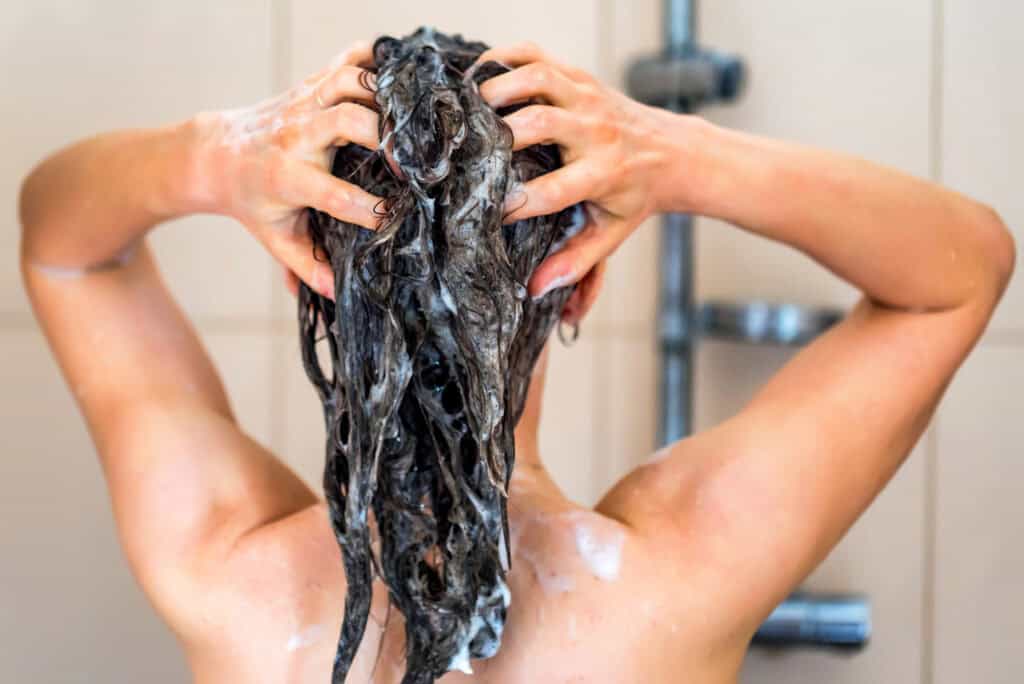
One of the primary purposes of a shampoo is to cleanse the scalp and hair, and the cleansing power of the shampoo should be one of the first things you look at.
A shampoo should clean the scalp effectively by removing excess oil, sweat, styling residue, and other buildup without causing unnecessary irritation.
Heavy buildup can make the scalp feel greasy, itchy, or uncomfortable, but it is not accurate to say ordinary product buildup automatically blocks hair growth. Dandruff also has several possible causes and is not simply the result of an unclean scalp.
After rinsing, your roots should feel clean and your scalp comfortable. A tight, itchy scalp or lengths that suddenly feel rough are reasons to reconsider the formula or how often you use it.
Moisturizing Shampoo
If your ends tangle easily, a shampoo with conditioning agents may make wash day easier. An oily scalp, however, may do better with a lighter cleanser.
You can meet both needs: cleanse the roots and condition the lengths. A moisturising shampoo does not replace conditioner, especially on bleached or weathered ends.
A conditioning shampoo can reduce the rough, stripped feeling that makes long hair harder to detangle. It may help limit friction and breakage, but no shampoo can permanently repair or fuse an existing split end; split ends ultimately need to be trimmed.
Choose Ingredients Based On Your Scalp
Ingredient lists are more useful when you evaluate them in context rather than dividing formulas into “clean” and “harsh.” A cleanser that works well for an oily scalp may feel too strong on a dry or sensitive one, while a very mild formula may not remove enough buildup for someone who uses heavy styling products.
Natural or herbal does not automatically mean gentler or safer. Essential oils and botanical extracts can also irritate sensitive skin, so fragrance-free or simpler formulas may be preferable if your scalp reacts easily.
Rather than avoiding entire ingredient categories without a reason, pay attention to how your scalp and hair respond to the finished formula. If you have a known allergy or sensitivity, check the label for that specific trigger.
Preservatives help keep water-based cosmetics safe from microbial contamination, while surfactants provide cleansing. Different ingredients serve different roles, and irritation risk depends on the specific formula and individual sensitivity.
If fragrance tends to trigger itching, redness, or headaches for you, a fragrance-free shampoo may be easier to tolerate.
For everyone else, fragrance is mainly a preference rather than a reliable measure of shampoo quality.
Sulfate-Free
Sulfate-free shampoo is an option, not a requirement.
Some sulfate-free formulas feel gentler on dry, curly, bleached, or colour-treated hair, particularly when frequent washing leaves the lengths rough.
However, sulfate-containing shampoos can still be well formulated and useful when you need stronger cleansing for oil, sweat, silicones, or styling buildup.
A gentle, colour-compatible shampoo can be a good option for coloured hair.
Hair-colour fading depends on the dye, wash frequency, water temperature, UV exposure, and the overall formula, so “sulfate-free” alone does not guarantee better colour retention.
Nourishing Ingredients
Look beyond the ingredient highlighted on the front of the bottle. The cleansing and conditioning ingredients together determine how a shampoo feels on your hair.
For long hair, useful benefits include less friction, easier detangling, and a softer finish. A long list of plant extracts does not guarantee any of those results.
Common conditioning or scalp-care ingredients you may see include:
- Oils, such as coconut or jojoba: may add softness, depending on the amount and overall formula.
- Conditioning polymers, such as polyquaternium-10: can improve slip and reduce static.
- Silicones, such as dimethicone: can smooth the feel of rough lengths; the finished formula determines how light or rich they feel.
- Humectants, such as glycerin: help attract and hold water within a formula.
- Biotin: common in strengthening ranges, but its presence in shampoo does not establish a faster-growth benefit.
- Hydrolysed proteins: may temporarily improve the feel of damaged strands without permanently repairing split ends.
- Shea butter: an emollient that may suit dry lengths, though richer formulas can flatten fine hair.
- Botanical extracts and essential oils: optional additions, not essential hair nutrients; avoid any that irritate your scalp.
Do not choose a shampoo solely because it is marketed as natural. Performance depends on the complete formula, including its cleansers, conditioning agents, preservatives, fragrance, and pH.
Oils, butters, proteins, botanical extracts, and humectants can all be useful in the right formula, but natural ingredients are not inherently better than synthetic ingredients.
The best choice is the formula that cleans effectively, feels comfortable on your scalp, and leaves your lengths manageable without causing irritation.
The Best Shampoos For Long Hair
These 11 shampoos for long hair cover different priorities, from flat roots to dry, colour-treated lengths. The order is not a universal ranking: the best fit depends on the problem you want to solve.
The comparisons focus on each product’s intended use, formula information, and practical limitations, rather than claiming hands-on testing.
Check the size, seller, and current ingredient label before ordering. Packaging and formulas can change, so an older product photo may not match the bottle supplied.
Use the list below as a starting point, then match the formula to the concern you actually have, such as dryness, fine hair, frizz, colour treatment, damage, or scalp discomfort.
Quick Match: What Does Your Long Hair Need?
- Breakage-prone lengths: look for conditioning or protein-focused formulas and pair them with gentle detangling.
- Dry or coarse hair: prioritise slip, conditioning agents, and a conditioner that softens the mid-lengths and ends.
- Fine or flat long hair: choose lighter formulas that clean the roots without coating the lengths heavily.
- Colour-treated hair: use a gentle formula and limit unnecessary washing or very hot water if fading is a concern.
- Oily or buildup-prone scalp: do not be afraid of adequate cleansing. A stronger shampoo used when needed may be more helpful than a very mild formula that leaves residue behind.
- Persistent itching or flakes: consider whether you need a dandruff or medicated shampoo rather than another cosmetic “moisturising” shampoo.
| Rank | Product | Key Features |
|---|---|---|
| 1. | Redken Extreme Length Shampoo | Biotin, reduces breakage, strengthening |
| 2. | Biolage Hydrasource Shampoo | Nourishing, moisturizing, softening |
| 3. | Redken Volume Injection Shampoo | Lightweight, softening, creates healthy shine |
| 4. | Pureology Hydrate Shampoo | Sulfate-free, jojoba oil, lavender scent |
| 5. | Matrix Total Results Mega Sleek Shampoo | Frizz-free, creates shine, shea butter |
| 6. | L’Oreal Paris Elvive Dream Lengths Shampoo | Paraben and sulfate free, silicone-free |
| 7. | Marc Anthony Grow Long Biotin Shampoo | Silky hair, caffeine, vitamin E |
| 8. | Nexxus Keraphix Shampoo For Damaged Hair | Repairs damage, smooth and shiny hair |
| 9. | Botanic Hearth Biotin Shampoo | Sulfate and paraben free, cruelty-free |
| 10. | LivSo Moisturizing Shampoo | Coconut oil, glycolic acid, anti-fungal |
| 11. | Tree Hut Extreme Moisture Shampoo | Pure shea butter, lightweight |
1. Redken Extreme Length Shampoo
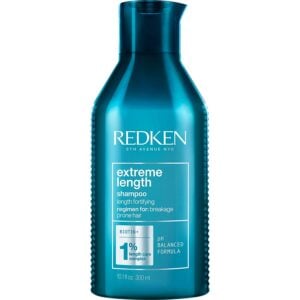
The Redken Extreme Length Shampoo is aimed at long or damaged hair that is prone to breakage.
The formula contains biotin and is marketed to strengthen fragile lengths. The realistic benefit is length retention through reduced breakage, not faster growth from the follicle.
The shampoo belongs to Redken’s Extreme Length system. Ingredients highlighted for the conditioner or leave-in treatment should not be assumed to appear in the shampoo too.
Redken’s breakage claims relate to a specified routine. They do not establish how much improvement the shampoo alone will deliver.
It is worth considering if your ends snap before you reach your preferred length, particularly alongside a conditioner that makes detangling easier.
Check where the breakage happens: rough brushing, repeated bleaching, and high heat can keep causing damage even when you change shampoo.
If your scalp tolerates the formula well, it can work as a regular cleanser while the conditioning system focuses on keeping long strands manageable.
If your hair is already in good condition and you mainly need root lift, a lighter volumising option may be a better match.
The matching conditioner and treatment are options, but you can keep a conditioner you already like. Buying the whole range is not essential for ordinary cleansing.
2. Biolage Hydrasource Shampoo
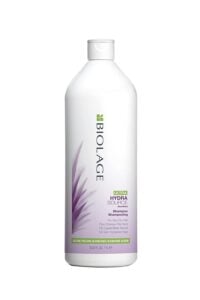
Biolage Hydrasource Shampoo is a moisture-focused option for long hair that feels dry after washing.
It aims to leave dry hair softer and more manageable, rather than treating split ends.
The useful test is how your lengths feel after rinsing and conditioning: easier detangling matters more than a promise of “extreme” moisture.
The UK product guidance recommends Hydra Source for fine to medium hair. Do not confuse it with the richer Ultra Hydra Source range.
Very coarse or extremely dry lengths may need more conditioning than the shampoo alone provides.
The Biolage Hydrasource Shampoo is designed to cleanse while leaving dry lengths feeling softer and easier to manage.
It is fragranced, so it may not suit a scalp that reacts to scented haircare. Choose fragrance-free care if that is a known trigger for you.
If you have colour-treated hair, check the current label and directions to confirm compatibility with your specific colour service.
3. Redken Volume Injection Shampoo
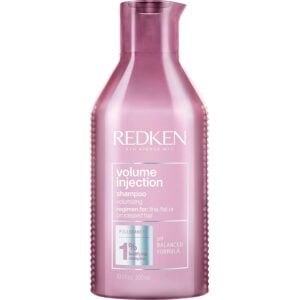
Redken Volume Injection Shampoo is aimed at fine, flat hair that needs cleansing without a heavy finish.
For long hair, that makes it most relevant when the roots fall flat while the ends still need conditioner.
The aim is a fuller appearance and more body, not a permanent increase in strand thickness or the number of hairs.
Redken describes its formula as containing a bodifying complex with Filloxane. Results still depend on your hair’s density, length, and styling routine.
If your fine hair is also bleached or brittle, keep conditioner on the older lengths. Volume-focused cleansing does not remove the need for damage-conscious care.
This is a practical option if your long hair becomes flat at the roots and richer shampoos tend to weigh it down.
4. Pureology Hydrate Shampoo
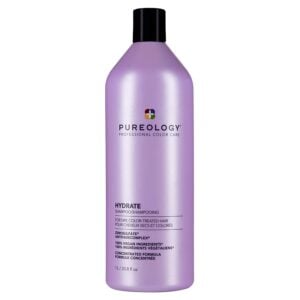
Pureology Hydrate Shampoo is a creamy, sulfate-free option for dry, colour-treated hair, especially when softness matters more than root volume.
Its main appeal is a conditioning wash that fits into a colour-care routine. No shampoo can completely prevent colour fading.
Start with the amount recommended on the bottle, working it into thoroughly wet roots. Add a little water to spread it before reaching for more shampoo.
The formula includes ingredients such as jojoba, sage, and green tea. These can contribute to the feel and conditioning profile of the shampoo, but they should not be treated as proven hair-growth stimulants in a rinse-off product.
The brand describes a lavender, bergamot, and patchouli fragrance. Enjoying that scent is a personal preference; it is not a reason to expect better scalp care.
It may suit dry lengths, but fine hair that gets flat easily may prefer a lighter formula.
Pureology’s product information describes its ingredients and intended benefits. Judge the fit by scalp comfort, softness, and how well your roots stay clean.
5. Matrix Total Results Mega Sleek Shampoo
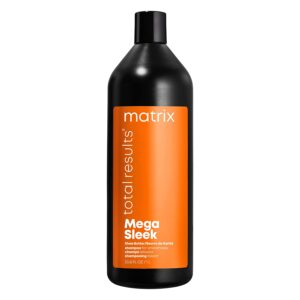
Matrix Mega Sleek Shampoo is designed for frizz-prone hair that benefits from a smoother, more controlled finish.
Consider it when you want a sleeker finish and your lengths tend to feel rough or fluffy after washing.
Check which formula you are buying. Older Mega Sleek bottles featured shea butter, while newer versions in some markets feature oleic acid and jojoba oil. The current UK product page describes the newer version.
Conditioning ingredients can help smooth the cuticle surface and reduce friction, which may make frizz less noticeable.
For waves and curls, decide whether you want a smoother finish or more airy volume. Those preferences can point to different formulas.
The shampoo is only one part of frizz control. Conditioning, gentle drying, and a suitable leave-in product may make a bigger difference to the finished style.
Do not assume a smoothing shampoo is sulfate-free or lightweight. Check the bottle’s ingredient list, then assess whether your roots feel clean and your lengths feel comfortable.
6. L’Oreal Paris Elvive Dream Lengths Shampoo
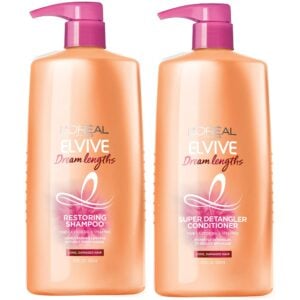
L’Oréal Paris Elvive Dream Lengths Shampoo is aimed at long, damaged hair and offers a conditioning approach to everyday cleansing.
It may make rough lengths look shinier and feel smoother, especially when followed with conditioner.
The shampoo is designed to make damaged lengths feel smoother and more manageable. It may temporarily improve the appearance of split ends, but only trimming removes a true split end.
The brand’s formula description highlights castor oil, vegetal keratin, and vitamins B3 and B5. These are not evidence that the shampoo speeds up growth.
It has a sweet, candy-like fragrance. Fragrance notes describe the scent and should not be mistaken for a list of nourishing fruit or flower extracts.
A useful way to assess it is to keep your usual conditioner and styling routine initially, so you can tell whether changing the shampoo helps.
Although it is marketed to condition without weighing hair down, fine hair can respond differently. Use conditioner mainly where you need it and rinse thoroughly.
If avoiding particular ingredients matters to you, check the current product label, since formulas and regional ingredient lists can change over time.
It may suit long hair that needs a balance of cleansing and conditioning without an especially heavy finish.
7. Marc Anthony Grow Long Biotin Shampoo
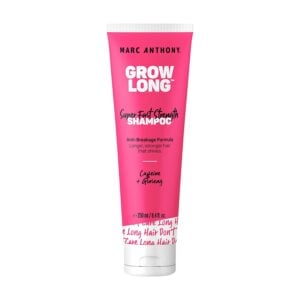
Marc Anthony Grow Long Shampoo is marketed for reducing breakage and caring for longer lengths.
It is a candidate for dry or brittle hair when you want cleansing alongside a softer, more manageable feel.
The formula includes ginseng, caffeine, and vitamin E. In a shampoo, these ingredients are better viewed as part of the overall conditioning formula than as proven drivers of faster hair growth.
If the formula leaves your hair softer and easier to detangle, it may help reduce breakage and support length retention.
The brand describes it as a cleanser that removes buildup while helping limit moisture loss.
Check the label on the version supplied if sulfate-free care or a particular ingredient matters to you. The words “Grow Long” are not a guarantee of growth.
This one is best considered for dry, brittle lengths when softness and easier detangling are the priority.
8. Nexxus Keraphix Shampoo For Damaged Hair
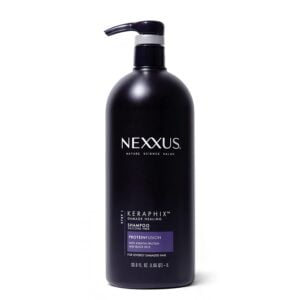
Nexxus Keraphix Shampoo is intended for lengths affected by colouring, bleaching, or frequent styling.
This shampoo is positioned for damaged hair and may improve how rough or weakened lengths feel after washing.
Think of this as a damage-focused cleanser, rather than a substitute for gentler styling or trimming badly split ends.
Keraphix has changed formulas. Older ProteinFusion packaging highlighted keratin and black rice; the current US range uses KRT Keratin Resistance Therapy branding. Check which version the seller supplies.
Neither version is a salon keratin straightening treatment. Shampoo is rinsed out and cannot permanently straighten your hair or restore a split strand to its original condition.
Strength and repair claims should be read with their testing conditions, especially when the brand tested a complete system rather than the shampoo alone.
For long hair, the goal is smoother, easier-to-manage strands that are less likely to snap during brushing and styling.
If your lengths still catch or tangle after washing, add suitable conditioning rather than using more shampoo.
Protein-focused formulas can be useful for some damaged hair, although hair that feels stiff or rough after protein-heavy products may prefer a more conditioning routine.
9. Botanic Hearth Biotin Shampoo
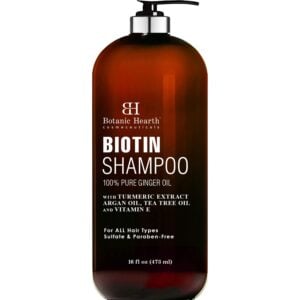
Botanic Hearth Biotin Shampoo is marketed as a sulfate-free cleanser for fuller-looking, more manageable hair.
The brand highlights ginger oil among its botanical ingredients. Plant oils can irritate some scalps, so they are not automatically a good choice for sensitive skin.
It also contains a blend of conditioning ingredients marketed toward fuller, healthier-looking hair.
A fuller-looking finish is a cosmetic benefit, not evidence that a shampoo treats thinning.
Use it as often as your scalp needs cleansing and the formula feels comfortable. Daily use is optional, and colour-treated hair should be assessed for both dryness and fading.
If you avoid particular ingredients or follow a specific cruelty-free standard, check current packaging and brand information before buying.
Ginger oil and keratin in a shampoo should not be expected to treat hair loss or clinically significant thinning. If you are noticing persistent shedding, widening parts, or bald patches, a dermatologist can help identify the cause.
This option is most relevant if you want a botanical-based cleanser and tolerate scented products well. It would not be the first choice for an already irritated scalp.
10. LivSo Moisturising Shampoo
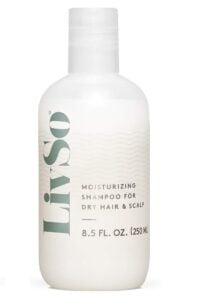
LivSo Moisturising Shampoo focuses on dry hair and scalp care, making it an option when scalp dryness accompanies hard-to-manage lengths.
Its value depends on how well it cleans and how comfortable your scalp feels, rather than whether the formula is described as dermatologist-developed.
The ingredient list includes glycerin, coconut oil, and conditioning polymers.
It also contains glycolic acid. An exfoliating ingredient may help with surface flakes, but it is not suitable for every irritated scalp.
The formula includes xylitol, but that alone is not a reason to treat the shampoo as an antifungal medication.
The sulfate-free formula still contains cleansing agents. Use it according to the label rather than assuming sulfate-free means irritation-free.
Long hair may still need conditioner through the mid-lengths and ends after washing.
This may suit long hair paired with a dry or itchy scalp, provided the formula is comfortable for your skin. Persistent scaling or itching may need a medicated dandruff treatment or professional evaluation.
It contains fragrance, so someone who needs fragrance-free care may prefer a different option.
The formula contains an AHA exfoliating ingredient, which may help loosen surface buildup. Follow the product directions and stop if you notice stinging, redness, or worsening irritation.
LivSo warns that glycolic acid may increase sun sensitivity. Follow its sun-protection directions, including for exposed parts and the hairline.
11. Tree Hut Extreme Moisture Shampoo
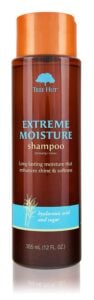
Tree Hut Extreme Moisture Shampoo was marketed for normal to dry hair. Its current formula and availability could not be confirmed on the brand’s website, so check the linked listing carefully.
Older product descriptions highlighted shea butter. Verify the ingredient list on the actual bottle rather than relying on an older photo or description.
If you are looking for this specific formula, ask the seller to confirm the product name, size, and packaging before buying.
A moisture-focused shampoo may appeal to dry lengths, but a lightweight or volumising result is not guaranteed.
Do not expect the shampoo to act like Tree Hut’s body scrubs. Scrubbing the scalp with abrasive products is not necessary for routine cleansing.
For heat-damaged ends, prioritise a comfortable wash and enough conditioning to detangle gently. Shampoo cannot undo repeated high-heat styling.
Check any sulfate-free or other formula claims against the label supplied. Those claims alone do not establish performance or suitability.
If the seller cannot provide clear product information, another moisture-focused option on this list will be easier to assess.
How To Get More From Your Long-Hair Shampoo
When choosing a shampoo for long hair, prioritise effective scalp cleansing and manageable lengths. The right balance can be different for fine, oily hair than for coarse, curly, bleached, or very dry hair.
Thoroughly wet your roots, then use your fingertips to distribute shampoo across the scalp, including the nape. Keep long hair hanging down instead of piling and rubbing it on top of your head, which can create tangles.
Rinse carefully, especially if your hair is dense. You do not need a second lather at every wash; repeat only if buildup remains or the product directions call for it. Apply conditioner where the lengths need slip.
You do not need to buy an entire matching range. A conditioner with enough slip for your lengths, careful detangling, heat protection when styling, and periodic trims can matter just as much as the shampoo itself.
Related Questions
How do I keep long hair from drying out?
To keep long hair from drying out, trim split ends when needed, condition the mid-lengths and ends, limit unnecessary heat, and use a shampoo that matches your scalp. Daily washing is not automatically harmful if your scalp needs it and the routine is gentle.
When caring for long hair, avoid using heat styling tools too often, as they can cause significant damage and dryness.
How often should I wash long hair?
There is no universal wash schedule for long hair. Some people need daily cleansing, while others comfortably wash only a few times per week.
Wash according to scalp oiliness, sweat, styling-product use, texture, and comfort. An itchy scalp is not always a sign that you simply need more shampoo, especially if the itching is persistent or accompanied by redness or scaling.
If frequent washing leaves the lengths rough, concentrate shampoo on the scalp and use conditioner through the mid-lengths and ends rather than forcing yourself onto a fixed schedule.
Is it better to let hair dry naturally?
Air-drying avoids heat exposure, but it is not automatically the least damaging option in every situation. Hair is more vulnerable to stretching and friction while wet, so avoid rough towel drying, tight styles, or going to bed with very wet hair. If you blow-dry, use reasonable heat, keep the dryer moving, and stop once the hair is dry.
FAQs About Shampoo For Long Hair
Can shampoo make long hair grow faster?
Not in the way many marketing claims suggest. Shampoo mainly cleans the scalp and hair. A formula that reduces breakage and makes detangling easier can help you retain more length, but that is different from increasing the rate at which follicles produce hair.
Should I shampoo only my scalp if my hair is long?
For most routine washes, concentrate shampoo on the scalp and roots. The American Academy of Dermatology recommends letting the rinse water carry shampoo through the lengths without rubbing it in. If your ends have heavy styling-product buildup, gently cleanse those areas too, without scrunching or scrubbing them together.
Do I need a sulfate-free shampoo for long hair?
No. A sulfate-free formula may feel better on dry, curly, bleached, or colour-treated hair, but sulfates are effective cleansers and are not automatically damaging. Choose based on how much cleansing your scalp needs and how your lengths feel afterward.
Related Articles
How Often Should You Brush Your Hair? – Complete Guide
Can You Wear Blue Eyeshadow With Red Lipstick?
Best Cool-Toned Eyeshadow Palettes