
Can You Use Fabric Dye On Hair?
Colorful hair has become a mainstream way to experiment with your look, from subtle pastels to vivid rainbow shades.
You can now spot creative colour everywhere, from social media and magazines to workplaces and everyday street style.
That includes mermaid hair, tie-dye-inspired colour, rainbow panels, pastels, and plenty of custom shades.
The market for at-home and professional hair colour has continued to expand, which also means there are far more hair-safe creative colours available than there used to be.
Even so, finding the exact shade or effect you want can be tricky, especially if you are planning a DIY colour job.
Drugstores and beauty retailers now carry more vivid shades than before, but the selection still varies by brand and location.
If you want a highly customised colour, you may need to shop from a specialist hair-colour brand or visit a salon that works with vivid shades.
If you also enjoy crafts, you might already have fabric dye at home and wonder whether it could colour human hair in the same way it colours wool or other fibres.
If that thought has crossed your mind, do not put fabric dye on your hair or scalp. It is not formulated or tested for that use.
So, can you use fabric dye on hair?
The answer is no. Fabric dye is made for textiles, not human hair or skin. The chemistry, processing conditions, and safety instructions vary by product, and using it on your scalp can cause irritation, unpredictable colour, or damage.
The result may also be difficult to predict or remove, and trying to correct an unwanted colour afterward can create even more damage.
If you’re still on the fence, keep reading.
Below, we’ll explain how fabric dyes differ from hair colour, why they should not be used on human hair, and what to know about synthetic wigs and extensions.
What Is Fabric Dye?
Fabric dye is a colourant system designed to alter the colour of textile fibres such as cotton, nylon, wool, polyester, or blends.
Different fabric dyes work in different ways. Some form chemical bonds with fibres, while others disperse into or adhere to a particular type of textile.
Fabric dyes can be derived from natural or synthetic sources, but the products sold for home use are usually formulated for specific fibre types and processing conditions.
The ingredients vary widely by dye class and brand, so it is inaccurate to assume that consumer fabric dyes all contain the same metals or chemicals.
What matters for hair safety is that fabric dyes are not formulated, tested, or labelled for prolonged contact with the scalp or human hair.

Depending on the fibre, a dye may require salt, acid, heat, or another helper ingredient to improve colour uptake. That is why dyeing cotton, wool, nylon, and polyester can require very different methods.
Common consumer options include tie-dye kits, all-purpose fabric dyes, fibre-reactive dyes, and products made specifically for synthetics.
Some are intended mainly for natural fibres such as cotton or linen, while others are designed for synthetics such as polyester or nylon.
Many fabric-dye processes use very hot water, and some synthetic-fibre dyes require near-boiling temperatures. Those conditions are obviously not appropriate for a person’s scalp.
Why You Shouldn’t Use Fabric Dye On Hair
Although hair is a fibre, it is made primarily of keratin protein, while cotton is cellulose and synthetic fabrics may be polyester, nylon, or acrylic. They do not behave the same way with colourants.
Hair dyes are formulated specifically for keratin fibres and for controlled contact with hair and skin. Fabric dyes are engineered around textile chemistry instead.
That means the shade you get from fabric dye on human hair can be highly unpredictable, especially if the hair is porous, bleached, chemically treated, or unevenly damaged.
Some fabric colour may stain hair strongly, while other products may barely take at all. Either way, removing or correcting the result can be difficult.
The bigger concern is that fabric dye is being used outside its intended purpose, so there is no reliable way to predict how a particular formula will affect your hair or scalp.
Some fabric dyes also require processing conditions, additives, or temperatures that can dry out hair, irritate skin, or make breakage more likely.
If the hair becomes rough, brittle, or weakened, trying to strip or recolour it afterward can make the damage worse.
There is also a skin-safety issue.
Fabric-dye formulas are not designed for cosmetic use, and some ingredients or auxiliaries may irritate skin or be unsafe when used contrary to the label directions.
Using a product on clothing is very different from coating your hair and scalp with it for an extended period.
For human hair, use colour products specifically formulated and labelled for hair.
Hair dyes can still cause irritation or allergic reactions, so you should follow the package directions, patch-test when instructed, and avoid assuming that “hair-safe” means risk-free.
When it comes to your hair and scalp, using a product intended for cosmetic hair colouring is the safer and more predictable choice.
Risks Of Using Fabric Dye On Hair
To summarize, here are the main risks of using fabric dyes on hair:
- Colour results can be unpredictable
- The stain may be difficult to remove or correct
- Some formulas or processing conditions can dry or weaken the hair
- Breakage may become more likely, especially on already-damaged hair
- Skin irritation or other reactions can occur because the product is not formulated for cosmetic use
- Some fabric dyes require very hot or near-boiling water, which must never be used on the scalp
There are plenty of reasons to avoid using fabric dye on human hair, even if a video online appears to show a successful result.
You may still see people online experimenting with fabric dyes on hair.
That does not make the method predictable or safe, and it is hard to know from a short video whether the person experienced dryness, irritation, or later breakage.
Hair-colour products sold for cosmetic use are subject to labelling and safety requirements for their intended use.
That does not mean every hair dye is harmless, but it does mean the product is designed for use on hair rather than textiles.
Fabric dyes are regulated and labelled for textile use, not as cosmetic hair-colour products, so you should follow the textile-use directions rather than repurpose them for your body.
Can You Dye Hair Using Tie-Dye?
Just like other fabric dyes, tie-dye colour should not be used on human hair.
Tie-dye kits are made to colour fabric, so they carry the same basic problem: they are not formulated or tested for cosmetic use on the scalp.
If you want a tie-dye-inspired look, use products intended for hair so you have more control over the colour and less risk of irritation or damage.
You can create a tie-dye effect with semi-permanent vivid hair colours by placing different shades in controlled sections.
Complex multicolour patterns can be difficult to do evenly on yourself, so a friend or colourist can help with placement and sectioning.
The result will be much easier to plan, maintain, and correct than using a textile dye on your head.
Can You Dye A Wig With Fabric Dye?
If your wig is made from human hair, treat it like human hair and use colour products intended for hair rather than fabric dye.
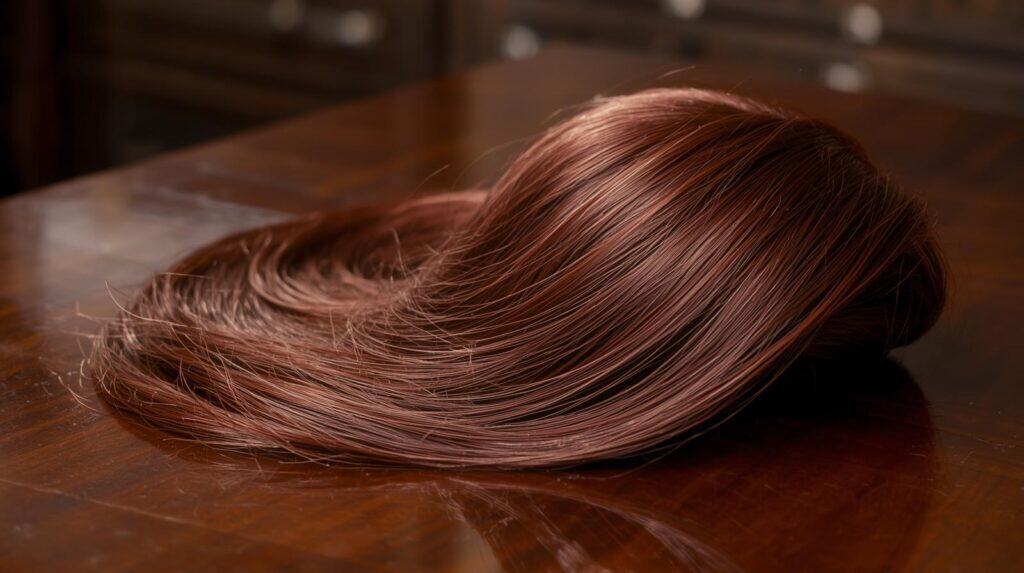
For a synthetic wig, the answer depends on the fibre. Some synthetic-fibre dyes can colour certain wigs, but not every synthetic wig can tolerate the process.
Synthetic wigs may be made from fibres such as polyester, acrylic, modacrylic, or heat-resistant blends. The exact fibre matters because different dyes work on different materials.
Regular oxidative hair dye usually does not work well on synthetic fibres because those fibres do not behave like human keratin hair.
If you want to colour a synthetic wig, first identify the fibre and check the wig manufacturer’s care instructions. Then use a dye or colouring method specifically compatible with that material.
Be especially careful with heat. Some synthetic-fibre dyes require very hot water, while many wigs can warp, frizz, melt, or lose their shape at high temperatures.
Always confirm that the dye is intended for the specific synthetic fibre and test a hidden strand first.
The same principle applies to synthetic hair extensions.
A compatible synthetic-fibre dye may work on some extensions, but the result depends on the fibre, original colour, coatings, and temperature tolerance.
Make sure the extensions are truly synthetic before using a textile-compatible dye, and do not assume that all synthetic hair can handle hot-water dyeing.
Can You Use Rit Dye On Hair?
Rit is a popular fabric-dye brand with products made for different types of textiles.
Some crafters use certain Rit products to colour synthetic wigs or extensions, but success depends on choosing the correct product for the fibre.
Its broad colour range and easy availability make it a common choice for craft projects, costumes, and synthetic materials.
Some people have also experimented with Rit on real hair, including mixing it with conditioner, but that is still an off-label use of a textile dye.
Even if colour deposits, the final shade and effect on hair condition are unpredictable because the product was not designed for human hair.
At the end of the day, Rit is not intended as human hair colour.
Use it only for the materials listed on the product label.
For your own hair, choose a cosmetic hair colour in the shade or effect you want instead.
How Do You Dye Your Hair Safely?
A licensed colourist is the safest choice for major lightening, colour correction, or complicated vivid-colour work.
A professional can assess your starting colour, previous chemical history, and hair condition before choosing the dye and processing method.
If you prefer to colour at home, choose a product specifically made for human hair and follow the manufacturer’s directions exactly.
The video below from stylist Brad Mondo on YouTube offers general at-home colour tips. Always prioritise the instructions that come with your specific hair-colour product.
Related Articles
Can You Use Hair Dye On Eyebrows?
Best Accessories For Thin Hair