
What Happens If You Cut Your Eyelashes?
If you cut your eyelashes, they will usually regain their appearance over time as long as the follicles are unharmed. In the meantime, the ends may look blunt or uneven. Cutting them does not make them grow thicker or faster.
If your lashes look uneven, point in different directions, or simply feel too long, it may be tempting to trim them like the hair on your head. The problem is that scissors near the eye create a much bigger safety concern.
What happens if you cut your eyelashes?
If you cut your eyelashes, the trimmed hairs can look blunt, uneven, or noticeably shorter. The cut itself does not make lashes grow back thicker or faster, and the appearance usually improves only as the lashes continue through their normal growth cycle.
The bigger concern is eye safety. Even small scissors can slip, especially if you blink or move unexpectedly.
A sharp tool near the eyelid can injure the skin, lash line, or eye itself, so purposefully trimming eyelashes is not recommended.
If only the visible lash shaft was cut, a lash that is still in its active growth phase can continue lengthening. A lash that has stopped growing may stay short until it sheds and a new lash replaces it. Cutting does not restart that cycle.
Cutting a lash does not damage the follicle by itself, but the process of bringing a sharp tool so close to the eye introduces unnecessary risk.
If an accident affects the eyelid, lash line, or eye surface, treat that as an injury rather than a cosmetic problem.
Get urgent medical help for pain, light sensitivity, vision changes, bleeding, or a suspected eye scratch after the accident. If scissors pierced the eye or surrounding tissue, seek emergency care immediately.
Below, we cover what happens after lashes are cut, how long regrowth may take, what actually supports healthy lashes, and safer ways to disguise an uneven trim.
Can You Cut Your Eyelashes?
You can physically shorten a lash, but natural eyelashes do not need routine trimming. They help protect the eyes from small particles and follow their own growth and shedding cycle.
If you accidentally cut your lashes, the most useful first step is to determine whether only the hair was shortened or whether the surrounding skin or eye was injured.

If only the lash hairs were cut, you usually do not need to do anything drastic. Avoid trimming the remaining lashes to make them match, because that adds more eye-safety risk and can make the unevenness more noticeable.
What Can Happen If You Cut Your Lashes?
What happens after a trim depends on how much was cut and whether the eyelid or follicle was injured.
When only the lash shafts are shortened, the most likely result is cosmetic: the lashes may look blunt, uneven, sparse, or shorter on one side.
That appearance is usually temporary, but the lashes may not even out at the same pace. Some are growing; others are waiting to shed and be replaced.
A more serious situation is an accidental cut to the eyelid, lash line, or eye. That is why scissors should not be used as a routine lash-grooming tool.
Blunt Or Uneven Lash Lengths
Eyelashes naturally vary in length and are arranged in more than one row, so shortening several lashes can easily create a flat or obviously uneven edge.
Avoid trying to refine that edge with another snip. Letting the normal lash cycle take its course is safer than bringing scissors close to the eye again.
The result may be most noticeable when you wear mascara, because the product can emphasize differences in lash length.
Damage To The Lash Line
Simply cutting the visible hair does not normally damage the follicle. Follicle damage becomes a concern if the skin is cut, burned, scarred, or otherwise injured.
Because the lash roots sit along the eyelid margin, even a small slip can affect delicate tissue. This is one reason the safest approach is not to trim eyelashes intentionally.
Significant follicle scarring can interfere with future growth, although a simple trim that does not injure the skin is a different situation.
If you notice a cut, burn, infection symptoms, or persistent irritation along the lash line, get medical advice rather than applying cosmetic treatments over the area.
Putting Eye Safety At Risk
The most important risk is an accidental eye or eyelid injury.
Scissors can scratch the cornea or cut the eyelid if your hand slips or you blink unexpectedly. A painful, red, watery, or light-sensitive eye after an accident should be evaluated promptly.
For that reason, do not keep cutting in an attempt to even the lashes out. Let them grow instead.
Are Eyelashes Permanently Damaged If You Cut Them?
Usually, no. Cutting the part of the eyelash that extends beyond the skin is different from pulling the lash out or injuring the follicle.
If the eye, eyelid, and lash follicles remain uninjured, cutting the tips does not usually affect the follicle’s ability to produce hair. Existing lashes may lengthen or be replaced, depending on their growth stage.
Permanent changes are more of a concern when there is significant scarring or follicle damage, not from trimming the hair shaft alone.
If you are unsure whether the eye itself was scratched or the eyelid was injured, seek medical help rather than waiting for cosmetic symptoms to improve.
How Long Does It Take For Eyelashes To Grow Back?
According to Healthline, a cut or singed eyelash may take around six weeks to grow back when the follicle and eyelid are not damaged. Treat that as an estimate rather than a deadline, because individual lashes can be at different stages of the growth cycle.
A trimmed lash still has its root in place, but that does not mean it is actively growing. Eyelashes pass through growth, transition, and resting phases, as described in this review of eyelash biology. Expect improvement over weeks, with some lashes taking months to be replaced. Avoid plucking short lashes to try to speed things up.
What Can You Do To Grow Back Your Eyelashes?
You cannot restore the missing length overnight. For a simple trim without injury, the most useful approach is to leave the lashes alone and prevent further breakage. Buying a growth treatment is not an essential step.
Gentle cleansing, careful makeup removal, and avoiding rubbing, pulling, or repeatedly curling fragile lashes are sensible places to start.
The suggestions below apply when the lashes were cut without an injury to the eyelid, follicles, or eye.
If there was an injury, prioritize medical care before adding serums, oils, adhesives, or eye makeup.
Consider A Lash Serum
If you are interested in a lash serum, it helps to distinguish prescription treatment from cosmetic products. Latisse is a prescription option, while products such as GrandeLash are sold as cosmetic serums. They do not have the same evidence, ingredients, or regulatory status.
Cosmetic serums may condition lashes or improve their appearance, but results depend on the formula. Prescription bimatoprost can increase lash length, thickness, and darkness; it is a treatment to discuss with a clinician, not an instant fix for cut tips.
Latisse has potential side effects, including eye irritation, eyelid skin darkening, and increased brown iris pigmentation that may be permanent. Its official safety information is worth reviewing with the prescribing clinician, especially if you use eye-pressure medication.
Because these products are used close to the eyes, follow the directions and stop if irritation develops. Do not assume a cosmetic serum is risk-free because it is sold without a prescription, or apply more in the hope of faster results.
Keep The Lash Line Clean
A simple, low-risk step is to keep the eyelids and lash line clean without aggressive rubbing.
This helps remove makeup, oil, and debris that can otherwise irritate the eye area.
Cleanliness does not directly make lashes grow faster, but a comfortable, healthy eyelid environment can help you avoid unnecessary rubbing and inflammation.
You can use a gentle eye-makeup remover or micellar water if it is suitable for your eye area. Remove makeup gently rather than scrubbing at the lashes.
Eat A Balanced Diet
Like other hair, eyelashes rely on normal nutrition and overall health to grow through their usual cycle.
A significant nutrient deficiency can sometimes contribute to hair changes, including changes in the eyelashes.
A balanced diet is sensible, but taking extra vitamins does not necessarily speed lash growth if you are not deficient.

If you suspect a deficiency or have unexplained lash loss, ask a clinician whether testing or supplementation is appropriate before starting high-dose vitamins on your own.
Be Careful With Castor Oil
Healthline notes that castor oil is often discussed for hair growth, but the available evidence does not establish that applying it to eyelashes makes them grow faster.
That distinction matters because a common beauty remedy is not the same thing as a proven lash-growth treatment.
There is no need to start applying castor oil after a trim. Keep household oils out of the eye, and avoid experimenting with them on an irritated lash line. Conditioning the hair cannot replace its missing length.
How Can You Conceal Cut Eyelashes?
If the eye and lash line are healthy, makeup can make unevenly trimmed eyelashes less noticeable while you wait for normal growth.
Start with the simplest option you can remove easily. If the area is irritated, sore, or injured, skip eye makeup, adhesives, and lash services; an eye-care clinician, rather than a lash technician, should assess a suspected injury.
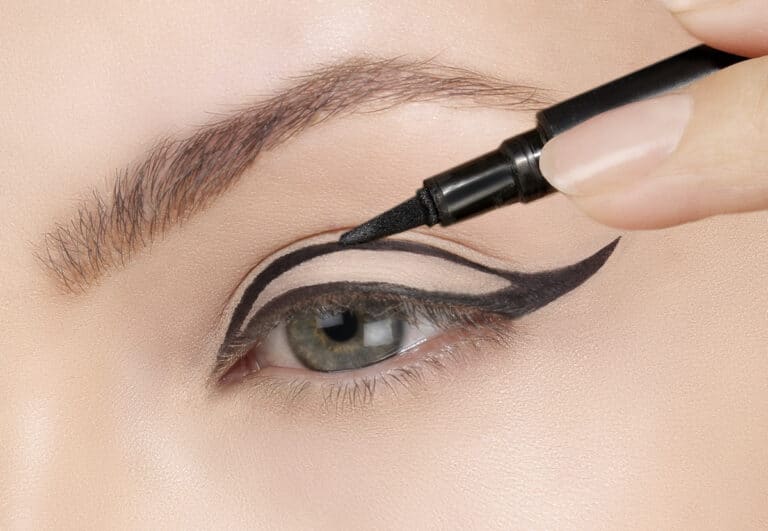
For an uncomplicated trim, soft eyeliner or eyeshadow can define the eye without attaching anything to the lashes. A light coat of mascara may also help, although it can highlight very blunt ends.
Apply Individual Fake Eyelashes
False eyelashes can disguise uneven lengths if your eyelid skin is healthy and you tolerate the adhesive.
Individual clusters allow targeted placement, but they are not automatically gentler than a strip. Very short lashes may not provide suitable support for products designed to attach to natural hairs.
Choose a temporary product with clear placement and removal instructions, and use only the adhesive intended for it. Do not apply glue to the waterline or broken skin, and never use household glue.
Remove temporary lashes and adhesive gently according to the product instructions. Repeated tugging at the lash line can cause more breakage than the original trim.
Use A Gentle Mascara
If you would rather avoid lash glue, mascara is a simpler temporary option.
A volumizing or lengthening mascara, such as this one from L’Oréal, may help visually blend shorter lashes with the rest of the lash line.
Choose a mascara that your eyes tolerate well, and avoid a formula that flakes or requires aggressive rubbing to remove.
Apply lightly at first. Heavy coats can clump short lashes together and make unevenness more obvious.
Apply Eyeshadow To The Lash Line
For subtle definition, use a small brush to press a little eyeshadow onto the upper lid just above the lash roots. Keep powder away from the inner rim of the eyelid.
This will act as a more natural eyeliner that can quickly help create the illusion of fuller lashes.
Choose matte brown for softer definition or black for more contrast. Tap excess powder off the brush first to reduce fallout into the eye.
Remove eye makeup thoroughly but gently each night. The goal is to avoid residue and irritation without rubbing or pulling on the lashes.
Draw On Fake Lash Hairs
You can take inspiration from 60s style eye makeup and draw on additional lash hairs.
This suits a deliberately graphic look, especially along the lower lid. It will not recreate the texture of natural upper lashes, so soft liner may be a better choice for everyday makeup.
Use an eye-area eyeliner to draw a few short, tapered strokes on the skin below the lower lash line, keeping the tip away from the eye itself.
Keep the strokes light and spaced apart. Drawn-on lashes avoid adhesive, but they still need gentle makeup removal at the end of the day.
Visit A Lash Technician
If you are considering extensions, tell an experienced lash technician exactly what happened before booking. Very short or fragile natural lashes may be unsuitable, and waiting may be the better option.
Eyelash extensions do not make natural lashes grow faster. Their purpose here would be cosmetic coverage while the cut lashes continue their own growth cycle.

Extensions may conceal uneven lengths for a period of time, but they also add adhesive and weight to the natural lashes. Skip them if the lash line is irritated or injured.
Seek Professional Help
Please seek medical help from an appropriate clinician, including an eye-care professional when needed, if the eye or eyelid was injured.
The NHS eye-injury guidance advises emergency care for a sharp object piercing the eye, severe eye pain, or sight changes after injury. Do not rub the eye or try to remove anything embedded in it.
Takeaway
If you cut your eyelashes, the main result is usually a blunt or uneven appearance, provided only the hairs were cut. Leave them alone rather than trimming or plucking more lashes to match.
Think in weeks to months, not days. The six-week estimate is a guide rather than a guarantee: a resting lash may remain short until it is naturally replaced.
If the accident involved the eye, eyelid, or lash line, seek medical advice rather than treating it only as a beauty issue.
While you wait, focus on gentle cleansing, careful makeup removal, avoiding further pulling or cutting, and maintaining a balanced diet. Lash serums vary considerably, so use them according to their evidence and instructions rather than assuming every serum stimulates growth.
If the lash line is healthy, mascara, soft liner, eyeshadow, or temporary false lashes can make a trim less noticeable. None of these methods makes the natural lashes regrow faster.
Frequently Asked Questions
Do Eyelashes Grow Back Thicker If You Cut Them?
No. Cutting an eyelash does not make it grow thicker or faster. Removing its tapered tip leaves a blunt edge that may look thicker, but it does not change how the follicle produces hair.
Should You Trim The Other Eye To Make Your Lashes Match?
No. If one side was cut accidentally, it is safer to leave the other lashes alone. Trimming more lashes creates additional risk around the eyes and can turn a temporary uneven spot into a larger one.
Can You Wear Mascara After Cutting Your Eyelashes?
If only the lash hairs were shortened and the eyelid and eye are comfortable, you can generally use mascara as usual. Apply and remove it gently. Skip eye makeup if there is pain, redness, swelling, broken skin, or a suspected eye injury.
Related Articles
Why Do My Eyelashes Go Down When I Apply Mascara?
How To Fix Eyelashes That Grow In Different Directions
Why Won’t My Eyelashes Curl Anymore?