
Titanium Vs. Ceramic Curling Irons
The heat styling tools you use can make a noticeable difference in how easily you style your hair and how much heat your strands are exposed to.
The quality, temperature control, and barrel material of a curling iron can all affect how evenly it heats and how much control you have while styling.
No hot tool can make hair healthier, but choosing the right tool and temperature can help you style with less unnecessary heat.
A curling iron is one of the quickest ways to create waves, bends, or defined curls at home.
A curling iron gives you plenty of styling options, but barrel size, temperature, technique, and your hair type all affect how the curl looks and how long it lasts.
The most popular curling irons are usually made of titanium or ceramic.
Both materials can perform well, but they heat differently and may suit different styling habits.
But is one really better than the other?
What is the difference between titanium and ceramic curling irons?
Titanium curling irons usually heat up quickly and hold heat efficiently, while ceramic tools are known for more gradual, even heat distribution. Fine, fragile, or easily damaged hair often benefits from lower temperatures and steady heat, while thick or coarse hair may respond better to a tool that maintains heat well.
With so many curling irons available, it can be difficult to tell which barrel material actually matters for your hair.
The good news is that the choice becomes easier once you compare heat behavior, hair type, durability, price, and how comfortable you are using hot tools.
Below, we break down the practical differences between titanium and ceramic curling irons so you can choose based on your hair rather than the material name alone.
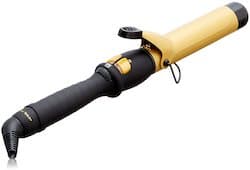
Ceramic Curling Irons
Ceramic curling irons are widely available and come in everything from budget models to professional tools.
You can find them anywhere, whether online, at a drugstore, or at a beauty supply store.
They are often considered beginner-friendly heat-styling tools because the heat tends to build and distribute steadily.
Many tools marketed as ceramic actually use a ceramic coating over a metal barrel rather than a barrel made entirely from ceramic.
This is one thing to look for in ceramic curling irons.
Heat Distribution
What are some other features of a ceramic curling iron?
Lucky Curl states that “a ceramic curler has a smooth surface and curls hair without dragging or pulling… it prevents heat damage by evenly distributing heat to keep hair smooth and shiny.”
One of ceramic’s main advantages is even heat distribution, which can reduce hot spots and make it easier to use a consistent temperature from section to section.
More even heat can help produce consistent curls, although hold time still depends on your hair texture, products, barrel size, and technique.
Hair Characteristics
Before making a purchase, consider whether a heat styling tool will meet your hair’s needs.
Lucky Curl also claims that “a ceramic curling wand is ideal for users with damaged/damage-prone, delicate, fine, or unmanageable hair.”
For fine, fragile, or color-treated hair, the more important advantage is the ability to use lower, controlled temperatures without repeatedly going over the same section.
Regardless of material, use the lowest temperature that styles your hair effectively, apply a heat protectant, and avoid repeatedly reheating the same section.
If your hair is fine, fragile, color-treated, chemically processed, or already showing signs of heat damage,
a ceramic curling iron with adjustable temperature settings can be a practical choice because it is easier to style at lower heat.
Quality Of The Material
Quality varies considerably between ceramic curling irons, especially between solid ceramic and ceramic-coated barrels.
As mentioned earlier, it’s crucial to check whether your ceramic curler is made of ceramic or only has a ceramic coating.
The construction can affect how the tool wears over time and how consistently it performs.
Regardless, it’s crucial to care for your iron so it can last you years.
If your ceramic curling iron has a ceramic coating, you may notice the quality diminish over time.
On lower-quality tools, a ceramic coating can eventually wear, chip, or become scratched, especially if the barrel is dropped or cleaned abrasively.
Tools with more substantial ceramic construction are often more expensive than basic ceramic-coated models.
Price alone does not guarantee durability, so look at the overall build quality, temperature control, warranty, and brand reputation as well as the barrel material.
A well-made ceramic tool can be worth paying more for if you value steady heat, adjustable settings, and smoother styling.
How you care for your hot tools also affects their lifespan, so always use and clean them according to the brand’s instructions.
Cost
The cost of a ceramic curling iron will vary by brand, material, size, and other factors.
Whether your iron is made of ceramic or only has a coating also plays a major role in the price of your curling iron.
Ceramic-coated curling irons are often less expensive than premium ceramic tools, although quality still varies from model to model.
A good ceramic-coated model can still perform very well for occasional or regular home use.
If you are on a budget, a ceramic-coated iron with reliable temperature control can be a sensible option.
On the other hand, if you’re looking to invest, opting for an iron whose barrel is entirely ceramic will offer higher-quality material at a higher price.
What matters most is consistent heat, a smooth barrel, and settings that suit your hair.
No hot tool is guaranteed to last a lifetime, but careful use, proper storage, and regular cleaning can extend its usable life.
Both ceramic and ceramic-coated tools can create smooth-looking curls when the temperature and technique are appropriate for your hair.
How To Use
No matter what heat styling tool you choose, it’s essential to prep your strands with a heat protectant.
Ceramic curling irons are often chosen for their even heat distribution and wide range of temperature settings, but heat protection is still important.
Using a heat protectant with your ceramic curler will help preserve your hair’s integrity.
The size of your curler will determine how much hair can fit around the barrel.
Once you’ve prepped your strands, it’s time to get to curling!
Wrap or clamp a small section around the barrel, hold only as long as needed for the curl to form, then release it gently. Smaller sections usually curl more evenly than oversized ones.
If you struggle with your curls, pin them into coils and let them cool.
Then, do the same for each strand and unpin your hair when you’re done curling.
Continue with the rest of your hairstyling routine.
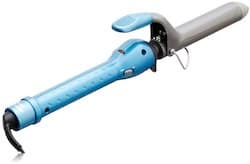
Titanium Curling Irons
Titanium curling irons are common in salons and professional settings because titanium is lightweight, durable, and able to maintain heat efficiently.
A well-made titanium tool can heat quickly and maintain a consistent working temperature during repeated styling.
Titanium curling wands are capable of reaching high temperatures quickly, but you do not need to use the maximum setting for every hair type.
Fast heat-up and strong heat retention can make styling efficient, but excessive temperature still increases the risk of dryness, breakage, and heat damage.
However, they do have their advantages.
Heat Distribution
Compared with many ceramic tools, titanium curling irons often heat up very quickly and recover heat efficiently between sections.
That can be useful when styling a lot of hair, but using more heat than your hair needs can still lead to damage.
According to Lucky Curl, “titanium alloy also produces negative ions that smooth the hair cuticles, just like ceramic plates.”
If you are new to curling your hair, choose a titanium tool with clear, adjustable temperature controls rather than relying on maximum heat.
For frequent styling, titanium’s fast heat recovery can help the barrel maintain a more consistent temperature from one section to the next.
This heat retention can be useful for thick, coarse, or resistant hair that does not curl easily at lower temperatures.
Performance depends heavily on the tool’s heater design. A good titanium iron should maintain a stable temperature, while a lower-quality model may still heat unevenly.
The key is not to chase the highest possible temperature. Use the lowest effective setting that creates the curl you want in one pass.
Hair Characteristics
Just like how certain hair types can benefit from a ceramic wand, other hair types can benefit from a titanium alloy wand.
Fine, thin, fragile, or damaged hair can still be styled with titanium, but it is especially important to keep the temperature low and minimize repeated passes.
According to the Hot Styling Tool Guide, “titanium curling irons work well on coarse hair, curly hair types, and thick hair that will easily take higher temperatures.”
Thick or coarse hair may need more heat than fine hair, but more heat is not automatically better. Section size, prep products, and cooling technique also affect hold.
Titanium hair curlers are often lightweight, and their fast heat recovery can make styling more efficient for thick, coarse, or resistant hair.
Longer-lasting curls depend on more than barrel material, so let each curl cool before brushing it out and use styling products suited to your hair.
Regardless of how strong or resilient your hair feels, excessive heat from any curling iron can cause dryness, breakage, and split ends over time.
It’s always recommended to handle it with care and use a heat protectant.
Quality Of The Material
Also, according to Lucky Curl, “titanium is a lightweight and durable material alloy that’s used in a variety of applications. It’s tough enough to withstand daily abuse and extreme temperatures.”
This is why many stylists prefer titanium wands.
Titanium is generally resistant to chipping and can hold up well to frequent use, although the tool’s hinges, coating, electronics, and heater can still wear out over time.
A quality titanium tool can be a durable choice for frequent or professional use.
With proper care, a well-built titanium curling iron can last for years, but lifespan still depends on the overall construction and how often it is used.
Once the tool is unplugged and fully cooled, wipe away product buildup according to the manufacturer’s cleaning instructions.
Cost
How much does a titanium curling wand cost, and how does it differ from the price of a ceramic curling wand?
Titanium curling irons are available across a wide price range, from affordable consumer tools to professional models.
Price is not determined by barrel material alone. Brand, heater quality, temperature control, barrel size, warranty, and extra features can all raise the cost.
It depends on the size, brand, and other factors, which can drive the price of a titanium curler up.
To determine whether investing in a titanium curling iron is right for you, assess your hair’s needs and set a budget.
If you style frequently and value fast heat-up, steady temperature, and a lightweight barrel, a well-made titanium tool may be worth the investment.
Overall, both budget-friendly and high-end titanium curling irons are available, so compare features rather than assuming a higher price means better results.
How To Use
If you are new to curling your hair, the main challenge is learning the technique while also managing temperature safely.
Whether you are an experienced stylist or a beginner, apply a heat protectant and make sure the hair is fully dry before using the iron.
Clamp-style irons and wands require slightly different hand movements, so practice with the tool turned off if the technique feels unfamiliar.
So, it’s recommended to practice rolling the hair on the iron while it’s thoroughly cooled and turned off.
You will be able to get a feel for the movement. Once you get the technique down, you will be able to curl your hair in a flash.
Aim to curl each section with one controlled pass at an appropriate temperature rather than repeatedly reheating the same hair.
Pros And Cons Comparison
Now that we’ve taken a look at these two products individually, let’s compare them side by side and discuss their pros and cons.
Ceramic
Ceramic curling irons are generally beginner-friendly and known for even heat distribution.
A smooth ceramic barrel can also help hair glide without unnecessary snagging, especially when the tool is clean and in good condition.
Ceramic is often a practical choice for fine, thin, fragile, or chemically treated hair because many models offer precise lower-temperature settings.
However, ceramic curling irons can get quite pricey if they are entirely made from ceramic.
With ceramic-coated tools, the coating can wear or chip over time, especially if the barrel is dropped or cleaned roughly.
If you value steady heat and easy temperature control, a ceramic curling iron is a strong all-around option.
Ceramic tools are available at many price points, so compare the heater, controls, barrel quality, and warranty rather than shopping by material alone.
Remember, hair products aren’t one-size-fits-all, so take your time figuring out what’s right for you!
Pros:
- Beginner-friendly
- Good fit for fine, fragile, or heat-sensitive hair when used at lower temperatures
- Steady heat can help produce consistent curls
- Even heat distribution
Cons:
- Premium ceramic models can be expensive
- Ceramic coatings can wear or chip over time
Titanium
Titanium curling irons typically heat quickly, maintain temperature well, and are often lightweight and durable.
Their strong heat retention can be useful for repeated styling, especially on thick or resistant hair.
Titanium is a durable material and is less likely to chip than a ceramic coating.
They are light and easy to hold, and the titanium alloy is easy to clean.
For the right hair type and temperature, they can make curling fast and efficient.
If you are new to hot tools, choose a titanium model with clear temperature controls and an automatic shutoff so you are not forced to work at excessive heat.
The main risk is using more heat than your hair needs, which can increase dryness and breakage over time.
Use a heat protectant, work on fully dry hair, and keep the temperature as low as possible while still getting the result you want.
Titanium can be especially useful for thick, coarse, dense, or resistant hair because the barrel tends to maintain heat well.
Pros:
- Typically heats up quickly
- Titanium is lightweight, durable, and long-lasting.
- Fast and efficient curling
- Useful for thick, coarse, dense, or resistant hair
Cons:
- Fast heat-up can be less forgiving if you use too high a setting
- Excessive temperatures can increase heat damage
Titanium Vs Ceramic Curling Iron FAQs
Which Is Better For Fine Hair?
Fine or fragile hair usually benefits more from precise temperature control than from one barrel material alone. Ceramic tools are often easier to use at lower, steadier heat, which makes them a popular choice for fine hair.
Which Is Better For Thick Or Coarse Hair?
Titanium can be useful for thick, coarse, or resistant hair because it heats quickly and holds temperature well. You still do not need to use the highest setting if a lower one creates a lasting curl.
What Temperature Should You Use?
Start lower than you think you need and increase only if the curl does not form. Fine, bleached, damaged, or chemically processed hair generally needs less heat, while thick or coarse hair may need more. Always follow the temperature guidance for your specific tool and hair condition.
Does Titanium Damage Hair More Than Ceramic?
The biggest factor in heat damage is temperature and exposure time, not simply whether the barrel is titanium or ceramic. Either material can damage hair if the tool is too hot, held in place too long, or used repeatedly on the same section.
Related Articles
Piggyback Perm Vs. Spiral Perm
Best Vitamin C Serums For Rosacea
11 Best Automatic Curling Irons