
Retinol Vs Hyaluronic Acid
Retinol and hyaluronic acid are two widely used skincare ingredients, but they do very different jobs. Retinol is a vitamin A derivative used for concerns such as acne, fine lines, and uneven tone, while hyaluronic acid is mainly a hydrating humectant.
If you’re not sure what those ingredients do, you’re not alone.
Because they are often marketed together, it can be easy to assume they are interchangeable. They are not, and understanding the difference makes it easier to build a routine without unnecessary irritation.
We think it’s time to change that!
Retinol can cause dryness and irritation if introduced too quickly, while hyaluronic acid (HA) is generally much easier to tolerate. The main risk with an HA product usually comes from the complete formula rather than HA itself.
It’s important to know what each ingredient does and whether you should be using them both.
This matters especially if you have sensitive skin or already use exfoliating acids, acne treatments, or other potentially irritating actives.
So, how do retinol and hyaluronic acid compare?
Hyaluronic acid is best for adding hydration and helping skin feel plumper, while retinol is a treatment ingredient used for acne, fine lines, texture, and some forms of uneven pigmentation. They can usually be used in the same routine because HA can support hydration while your skin adjusts to retinol.
In this post, we will go over each ingredient, how to use them, how to choose the right one for you, and whether or not you should combine them.
If you’ve ever had questions about these two popular skincare players, keep reading!
What Is Hyaluronic Acid?
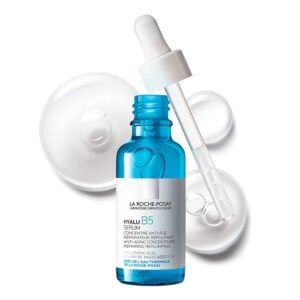
Hyaluronic acid, also called HA, is a sugar molecule naturally found in the body, including the skin, eyes, and joints.
It helps bind and retain water in tissues, which is why it is also widely used in topical skincare and some medical applications.
Your skin also contains natural levels of hyaluronic acid.
Its main purpose is to bind to water molecules to retain moisture and keep your skin supple and hydrated.
In fact, about 50% of your body’s natural hyaluronic acid resides in the skin.
Natural HA in the skin changes with age and environmental exposure. Topical HA can help improve surface hydration and temporarily make dehydrated skin look smoother and plumper.
Hyaluronic acid is highly water-binding, which is why it is commonly used as a humectant in moisturisers and serums. Its water-binding capacity depends on molecular size and formulation.
Most topical HA works mainly at or near the skin surface to increase hydration and reduce water loss. Smaller HA fragments may penetrate more than larger ones, but a serum does not simply infuse every skin layer with water.
Benefits Of Hyaluronic Acid
Hyaluronic acid is a popular hydrating ingredient, especially in serums and moisturisers.
It is generally well tolerated, although any finished product can still irritate depending on its fragrance, preservatives, or other ingredients.
It’s a common ingredient in moisturisers, cleansers, serums, and other makeup products.
Here are some of the benefits of using HA in skincare:
- Hydrates the skin
- Helps the skin surface retain water and feel more hydrated
- Can temporarily improve the look of plumpness and elasticity
- Supports a more comfortable, hydrated skin barrier when paired with a moisturiser
- Can improve skin comfort when dryness makes the barrier feel tight or rough
- Reduces dryness, patches, and scaly skin
- Smooths out the texture of the skin
- Adds a healthy glow to the complexion
- Layers easily with many other skincare ingredients
As you can see, HA has so many benefits that it’s no surprise that it gets added to a lot of products in the skincare section.
It’s well-tolerated by most skin types and available without a prescription.
Side Effects Of Hyaluronic Acid
One thing that makes HA so popular is that it rarely has side effects when used topically on the skin. Most people tolerate it pretty well.
That being said, in some cases, side effects do exist.
If a hyaluronic-acid product causes redness, itching, or irritation, another ingredient in the formula may be responsible. True allergy to HA itself is considered uncommon.
If you have reactive skin, a small-area test can be helpful before applying a new HA product all over your face.
What Is Retinol?
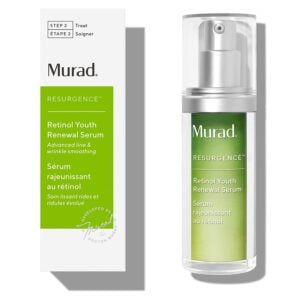
Retinol is a type of retinoid, which is a derivative of vitamin A.
There are several retinoids used in skincare. Retinol is a common over-the-counter option, while other retinoids vary in strength, stability, and regulation.
Other retinoids include tretinoin, retinaldehyde, adapalene, and others. Prescription status depends on the specific retinoid and country.
They act through related vitamin A pathways, but their evidence, irritation potential, and approved uses are not identical.
But today, let’s just focus on retinol since it’s the most common type of retinoid and it’s widely available for purchase.
Retinols are often added to night creams, serums, and other over-the-counter products.
Retinoids have some of the strongest evidence in topical skincare for photoaging and acne, although not every over-the-counter retinol product has the same strength or clinical data.
Benefits Of Retinol
Retinol is a popular ingredient because it does so much for the skin, targeting a wide range of issues. And it’s pretty darn good at it.
Here are some clinically recognised benefits of retinol and other retinoids in skincare:
- Smooths fine lines and wrinkles
- Can help slow the appearance of photoaging with consistent use and sun protection
- Improves skin-cell turnover and can brighten dull, uneven-looking skin
- Helps keep pores from becoming clogged
- Can help treat acne, depending on the retinoid and formulation
- Can help fade some post-acne dark marks and uneven pigmentation over time
- Speeds up skin cell turnover
- Increases natural collagen production
Is it any wonder why people love retinol so much?
Retinol can address several common concerns, including fine lines, uneven texture, acne, and some discoloration, but results vary with concentration, formulation, consistency, and tolerance.
Retinol doesn’t work overnight, however.
Visible changes often take several weeks to a few months, depending on the concern and the product used.
Prescription retinoids such as tretinoin have stronger evidence for some concerns but can also be more irritating and should be used as directed.
Side Effects Of Retinol
Retinol is one of the most well-tolerated types of retinoids on the market because it’s fairly mild.
But like all retinoids, it can cause some unpleasant side effects.
Possible side effects when starting or overusing retinol include:
- Dryness
- Irritation
- A temporary increase in breakouts can occur in some acne-prone users, but not everyone “purges”
- Greater irritation if the skin is also exposed to excessive UV without adequate sun protection
The best way to introduce retinol into your routine is to start by doing a patch test somewhere away from your face and see how your skin reacts after a few days of use.
Some acne-prone users notice temporary worsening when they start a retinoid, but not every breakout is a purge. Irritation, an unsuitable formula, or ordinary acne progression can look similar.
Retinoids change how skin cells turn over and can bring pre-existing microcomedones to the surface more quickly, while irritation can also trigger visible bumps and redness.
Mild dryness or flaking often improves as the skin adapts, but persistent burning, swelling, rash, or worsening acne is a reason to reduce use or stop and reassess.
Be sure to pay close attention to your skin during this time to distinguish between purging and an allergic reaction.
A possible adjustment-related breakout is more likely to appear in areas where you normally break out. Itching, marked redness, burning, swelling, or widespread peeling points more toward irritation or allergy than purging.
Sun protection is especially important when using retinol because irritated skin can be more vulnerable, and UV exposure works against the photoaging benefits you are trying to achieve.
Many retinol products are best used at night because some retinoids are light-sensitive and nighttime use can also make routines easier. Follow the directions for your specific product.
Use a broad-spectrum sunscreen daily, especially if retinol is part of your routine. One example is this one from Neutrogena.
Retinol can be very useful, but the tradeoff is a higher chance of irritation compared with a simple hydrating ingredient such as HA.
If you’ve never used retinoids before, it’s always best to start with a very mild version of it and introduce it to your skin slowly.
Retinol Vs Hyaluronic Acid At A Glance
- Hyaluronic acid: best for hydration, temporary plumping, and helping dry skin feel more comfortable.
- Retinol: best for long-term treatment of concerns such as acne, fine lines, uneven texture, and some discoloration.
- Speed: HA can make skin feel more hydrated quickly, while retinol usually needs weeks to months.
- Irritation risk: HA is usually low-risk; retinol is more likely to cause dryness, peeling, or stinging when introduced too quickly.
- Using both: usually fine. HA can make a retinol routine more comfortable, but it does not make retinol work faster.
Retinol Vs Hyaluronic Acid – Which One Should You Use?
If you’re choosing between the two ingredients, start with the skin concern you actually want to address.
If you’re suffering from dryness and don’t have a lot of other skin concerns, the best choice for you is probably hyaluronic acid.
The risk of using this ingredient is minimal, and you’re unlikely to experience any side effects.
HA can improve surface hydration and temporary plumpness, especially when followed with a moisturiser.
If that’s all you need – HA is the right choice for you.
If you are more concerned with signs of ageing, dull skin, dark spots, acne, and other types of congestion on your skin, retinol might be a better option for you.
Just be gentle with your skin when you first start using it and keep an eye out for potential side effects.
Age alone should not determine your choice. HA can be useful whenever skin needs hydration, while retinol is more appropriate when you have a specific concern such as acne or photoaging and can tolerate it.
Retinol is often chosen for fine lines and photoaging, but there is no rule that you must wait until a certain age to use it.
HA can make dehydration lines look less noticeable, but hydration does not prevent all wrinkles or replace sunscreen and other evidence-based anti-aging strategies.
Another thing to keep in mind is that hyaluronic acid has an immediate effect on the skin, whereas retinol is more of a long-term game.
So, if you have super dry skin and you want relief pronto – HA is your friend.
But if you’re looking for a longer-term solution for deeper issues, retinol might be better for that.
How To Use Hyaluronic Acid In Your Skincare Routine
If you’ve decided to introduce hyaluronic acid into your skincare routine, you have a few different options.
Hyaluronic acid is added to a wide range of products – from cleansers to serums and creams.
Leave-on HA products such as serums and moisturisers generally provide more sustained hydration than a rinse-off cleanser.

So instead of using a cleanser with HA, which you wash off within minutes of applying,
A serum or moisturiser can be useful if you want HA to remain on the skin as part of your routine.
Most people can use HA once or twice daily if the product feels comfortable, although you do not need to use it twice a day to benefit.
Here is a sample routine that you can use with a hyaluronic acid moisturiser:
Morning:
- Wash your face with a gentle cleanser
- Apply HA-containing moisturiser
- Apply sunscreen
Evening:
- Remove makeup with a makeup remover (if applicable)
- Wash your face with a gentle cleanser
- Apply HA-containing moisturiser
If you have a hyaluronic acid serum, here is a sample routine for you to use:
Morning:
- Wash your face with a gentle cleanser
- Apply HA serum
- Apply moisturiser if your skin needs it; HA serum is a humectant and may not replace a moisturiser on dry skin
- Apply SPF
Evening:
- Remove makeup with a makeup remover (if applicable)
- Wash your face with a gentle cleanser
- Apply HA serum
- Apply moisturizer
How To Use Retinol In Your Skincare Routine
If you’ve chosen to add a retinol product to your skincare routine, make sure to start slowly.
Here are a few rules of thumb when starting:
- Start by using retinol once or twice a week for the first month to make sure your skin acclimates to it
- Use retinol at the time recommended on the product label; many formulas are designed for nighttime use
- Always wear sunscreen during the day
- If any irritation or allergic reaction occurs, reduce the frequency of use or cease using the product altogether
- Do not assume irritation or every breakout is a normal purging period
Retinol should be applied according to the product directions. In a simple routine, it is usually applied after cleansing and before or with moisturiser.
Keep your skin hydrated throughout the day to reduce the risk of irritation.
Here is a sample routine for using a retinol night cream:
Evening:
- Remove makeup with a makeup remover (if applicable)
- Wash your face with a gentle cleanser
- Apply the retinol night cream
Morning:
- Wash your face with a gentle cleanser
- Apply moisturizer
- Apply sunscreen
Here is a sample routine if you’re using a retinol serum:
Evening:
- Remove makeup with a makeup remover (if applicable)
- Wash your face with a gentle cleanser
- Apply the retinol serum all over your face
- Apply a moisturiser or night cream
Morning:
- Wash your face with a gentle cleanser
- Apply moisturizer
- Apply sunscreen
Important Retinol Safety Notes
- Do not apply retinol to severely irritated, sunburned, or broken skin.
- Start with a small amount and a low frequency rather than using it every night immediately.
- If you develop persistent burning, swelling, rash, or severe peeling, stop using it and let your skin recover.
- Topical retinoids are generally avoided during pregnancy. Ask your healthcare professional if you are pregnant, trying to conceive, or unsure whether your specific product is appropriate.
Can You Use Retinol And Hyaluronic Acid Together?
Yes. Retinol and HA are generally compatible and can be used in the same routine.
Together, retinol and hyaluronic acid can provide you with their individual benefits (described above) as well as:
- More Comfortable Hydration: HA can help offset some of the dryness that often comes with retinol, especially when followed with a moisturiser. It cannot guarantee that irritation will not occur.
- No Need For Extra Exfoliation: HA does not make retinol exfoliate faster. Its role is hydration, which can make a retinoid routine easier to tolerate.
- Hydration Plus Long-Term Treatment: Retinol addresses concerns such as texture, acne, and photoaging over time, while HA provides more immediate hydration and temporary plumping.
How To Use Hyaluronic Acid And Retinol Together
If you’re wondering how to combine hyaluronic acid and retinol in your routine, we’ve put together a little guide for you.
Frequency
Hyaluronic acid can usually be used once or twice daily. Retinol is typically used once per day at most, and many products are designed for nighttime use. Follow the directions on your specific product.
You should also start using retinol once or twice a week to let your skin adjust to it, whereas hyaluronic acid is usually well-tolerated and can be used daily right away.
Other Products
A moisturiser is useful when you’re combining retinol and hyaluronic acid, especially if retinol makes your skin dry. Ceramides, cholesterol, glycerin, and fatty acids can all support a more comfortable barrier.
Hyaluronic acid attracts and binds water within a formula and at the skin surface. Applying it to slightly damp skin can feel helpful for some people, but it does not rely only on pulling water from the surrounding air.
This is where a rich moisturiser comes in handy.
A good moisturiser can also reduce dryness and tightness if retinol temporarily irritates your skin barrier.
A well-formulated moisturiser can help reduce dryness and support barrier recovery while you adjust to retinol.
You can also use other products in the same overall routine, but add potentially irritating actives gradually so you can tell what your skin actually tolerates.
Order
Most of the time, we recommend applying your hyaluronic acid to damp skin to increase the amount of moisture it can absorb.
Retinol, on the other hand, should be applied to dry skin.
If your HA is a lightweight serum and your retinol is a cream, HA will usually come first. If the retinol is a serum and HA is in your moisturiser, the retinol serum usually comes first.
Depending on the type of retinol and hyaluronic acids you’re using, your routine might be different.
A practical rule is to follow the product directions and generally layer lighter water-based products before thicker creams.
We recommend following this general guideline:
Cleanser > treatment or serum > moisturiser > sunscreen in the morning
Knowing all this can help you plan your routine when using these two products together.
Sample Routines
Here is a sample routine you might have if you’re using a hyaluronic acid serum and retinol cream:
Morning:
- Wash your face with a gentle cleanser
- Apply HA serum
- Apply a moisturiser with sunscreen
Evening:
- Wash your face with a gentle cleanser
- Apply HA serum and allow the face to dry
- Apply retinol cream
Here is a similar routine, but this one is best for when you’re using a HA serum and a retinol serum (notice that you’ll finish off your night routine with a rich moisturiser):
Morning:
- Wash your face with a gentle cleanser
- Apply HA serum
- Apply a moisturiser with sunscreen
Evening:
- Wash your face with a gentle cleanser
- Apply HA serum and allow the face to dry
- Apply retinol serum
- Apply rich moisturiser
In some cases, you might have a hyaluronic-acid-infused moisturiser and a retinol serum.
In this case, you should switch the order and apply the serum first, followed by the moisturiser.
This is because the recommended order of products to use in a skincare routine is determined by the “heaviness” of the product.
So, you want to start with the lightest products first (cleanser, toner, serum), and follow up with heavier products (oil-based serums and emulsions).
And always finish off with the “heaviest” product, which is typically the moisturiser.
Here is a sample routine for those of you who are using a retinol serum with a hyaluronic-acid moisturiser:
Morning:
- Wash your face with a gentle cleanser
- Apply HA moisturiser
- Apply sunscreen
Evening:
- Wash your face with a gentle cleanser
- Apply retinol serum
- Apply HA moisturiser
Combinations And Irritation Risks
You might be wondering if there are any skincare products you should avoid while using retinol and hyaluronic acid in your routine.
Hyaluronic acid is generally compatible with most common skincare ingredients.
It can usually be paired with retinol, vitamin C, AHAs, BHAs, ceramides, and sunscreen, although the other active ingredients may still irritate your skin when combined with each other.
Retinol can work with other ingredients, but when you’re first starting out using retinol,
It’s best to avoid using other potentially irritating ingredients such as alpha-hydroxy acids (AHAs) and beta-hydroxy acids (BHAs).
AHAs and BHAs are chemical exfoliants, so combining them with retinol can create too much irritation for some people, especially when starting.
When combined with retinol, this can contribute to dryness and irritation at first.
Retinol and vitamin C can exist in the same overall routine. Using vitamin C in the morning and retinol at night is a simple way to reduce complexity, but separation is not an absolute chemical requirement.
So if you’re using retinol at night, you’re safe to use vitamin C during the day.
Final Thoughts
Retinol and hyaluronic acid can both be useful, but they solve different problems and should not be expected to produce identical results.
The main difference between the two is that hyaluronic acid is best for hydration and has immediate effects.
Retinol works more gradually and can help with acne, fine lines, texture, and some uneven pigmentation over time.
When deciding which one to use, ask whether your main goal is hydration or a treatment concern such as acne, texture, or photoaging.
In many cases, you might realise your skin needs both!
Using retinol and hyaluronic acid together is generally compatible for most people, provided the retinol itself is appropriate for your skin.
Pairing retinol and hyaluronic acid is straightforward: keep the routine simple, introduce retinol gradually, moisturise as needed, and use sunscreen every morning.
Also avoid topical retinoids during pregnancy unless your healthcare professional specifically advises otherwise.
Hyaluronic acid can support hydration, but it should not be relied on to prevent every retinol side effect.
We hope you found this guide to be helpful in your skincare journey!
Retinol And Hyaluronic Acid FAQs
Should Hyaluronic Acid Go Before Or After Retinol?
It depends on the formulas. A lightweight HA serum usually goes before a retinol cream. If your retinol is a serum and HA is in your moisturiser, apply the retinol serum first and the moisturiser afterward.
Can Hyaluronic Acid Reduce Retinol Irritation?
It can improve hydration and comfort, especially when paired with a moisturiser, but it cannot guarantee that retinol will not cause irritation.
Can You Use Retinol Every Night?
Some experienced users can, but there is no need to rush to nightly use. Start slowly and increase only if your skin remains comfortable and the product directions support more frequent use.
Can You Use Retinol And Hyaluronic Acid During Pregnancy?
Topical hyaluronic acid is generally considered compatible with pregnancy skincare, while topical retinoids are usually avoided. Check with your healthcare professional if you are pregnant or trying to conceive.
Related Articles