
Does Dermaplaning Make Hair Grow Back Thicker?
If you’ve watched a dermaplaning video, you’ve probably seen a blade remove peach fuzz and surface skin cells in the same pass. The immediate smoothness can be appealing, but the most common concern is what happens when that hair grows back.
No, dermaplaning does not make facial hair grow back thicker, darker, or faster. It cuts hair at the surface without changing the follicle beneath your skin.
There is one important detail to understand: freshly cut hair can feel different as it grows out because the blade leaves a blunt cut edge.
That temporary texture can be mistaken for thicker growth, but it does not mean fine vellus hair has been converted into coarser terminal hair.
The results are temporary, so knowing what regrowth feels like can help you decide whether the upkeep suits you.
Does dermaplaning make your hair grow back thicker?
Neither shaving nor dermaplaning changes the follicle, hair-growth rate, or true shaft thickness. A freshly cut tip may feel stubbly as it emerges, but the hair itself has not become thicker.
Here’s what to expect from regrowth, how to think about repeat appointments, and how to keep your aftercare gentle.
What Is Dermaplaning?
Dermaplaning is a cosmetic exfoliation treatment that uses a blade to remove fine facial hair and superficial dead skin cells from the skin’s surface.
It works on the outermost surface of the epidermis, not by removing the dermis or physically erasing deeper pigment and scar tissue. It should not be presented as a treatment that scrapes away acne scars or dark spots.
Its main appeal is a smoother feel and a temporarily brighter-looking surface.
Makeup may sit more evenly without peach fuzz underneath, but dermaplaning is not a permanent treatment for wrinkles, pigmentation, active acne, or acne scarring.
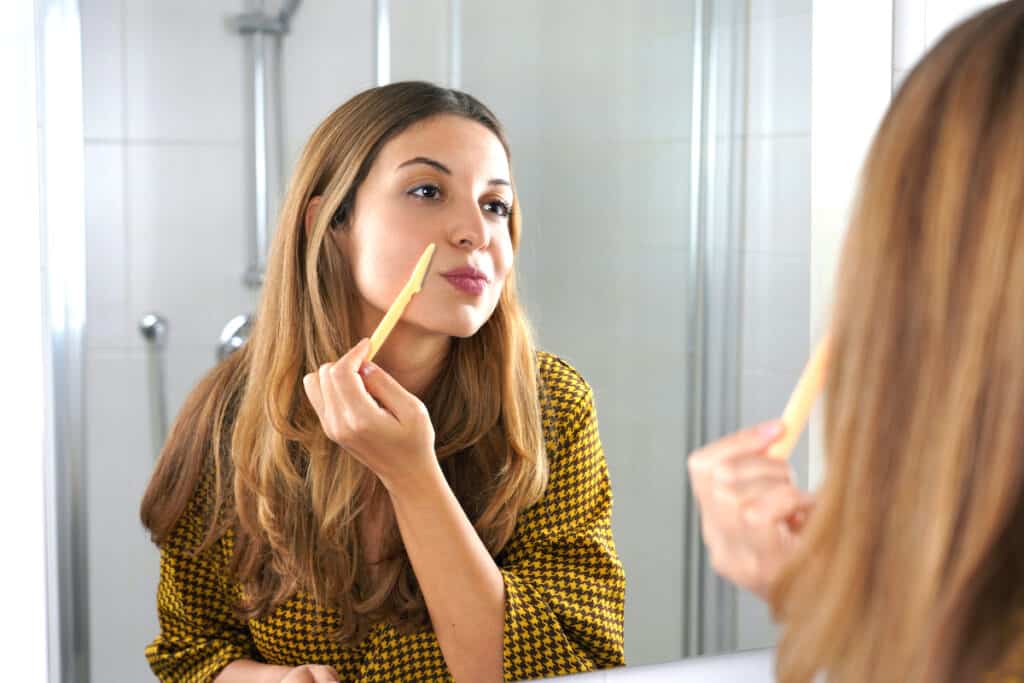
During a professional treatment, a trained provider uses a specialised blade with controlled strokes. The technique, blade, angle, and level of exfoliation differ from casually shaving with a facial razor at home.
A blade still carries risks, including cuts, irritation, infection, and post-inflammatory colour changes. Good technique and hygiene reduce those risks, but do not eliminate them.
Before booking, ask what the appointment includes and how much recovery time that specific treatment may need.
Prices vary by location, provider, and whether other treatments are included. Ask for the total cost rather than relying on a single advertised starting price.
Home facial razors and tools marketed as dermaplaning kits are also available, although they usually function more like facial shaving plus light surface exfoliation than a professional treatment.
Our guide to dermaplaning at home covers the basics, but a home tool is not equivalent to a professional treatment.
Choose a tool intended for home facial use and follow its instructions. A surgical scalpel is not an appropriate beginner substitute, and blades should never be shared.
Dermaplaning Pros And Cons
Whether it’s worth trying depends on your goal. Here are the benefits and limitations to weigh up.
Dermaplaning Pros
The most realistic benefits are about temporary hair removal, smoother-feeling skin, and surface-level exfoliation:
- Temporarily smooths the feel of the skin’s surface
- Removes surface dead skin cells
- Can make dull-looking skin appear brighter
- Provides physical exfoliation without an acid-based product
- May make surface texture less noticeable
- Removes fine facial hair in the treated area
- Can help foundation sit more evenly
- Does not involve pulling hairs out at the root
- Can fit into a relatively short appointment
- Hair removal is visible straight away
- Light treatments may involve little downtime, depending on skin response
- Does not require surgery
- Offers a temporary result if you don’t want permanent hair removal
- Does not change the thickness of future hair growth
- Can be a one-off treatment rather than an ongoing commitment
Dermaplaning Cons
As with any cosmetic procedure, there are also some downsides. Here are a few:
- Professional treatments involve an ongoing cost if repeated
- Results require maintenance if you want to keep the same smooth finish
- Redness, tenderness, and irritation can occur; recovery varies
- May be unsuitable over active acne, eczema, rosacea flares, psoriasis, sunburn, open wounds, or irritated skin
- Requires extra caution and medical advice if you use or recently used isotretinoin or other treatments that significantly affect skin fragility or healing
- Cuts, infection, scarring, and post-inflammatory lightening or darkening are possible
- Requires careful aftercare and sun protection
The best fit is someone whose main goal is temporary removal of fine facial hair and surface exfoliation, with skin that is currently calm enough to tolerate a blade-based treatment.
If you have inflamed spots, broken skin, a current flare, or a history of poor wound healing or pigmentation after irritation, discuss that before booking. A provider should assess your skin rather than simply promise a smoother or brighter result.
Planning it for a wedding or photo shoot? Avoid making the day before an important event your first treatment. Redness, irritation, or breakouts can occur, and you will not yet know how your skin responds.
You can try it once or discuss a maintenance schedule with your provider.
There’s no obligation to continue. Stopping does not make your skin dependent on treatment or cause extra hair growth.
Does Hair Grow Back After Dermaplaning?
Yes, hair grows back after dermaplaning. The blade cuts the visible hair shaft at the skin surface while leaving the follicle and root structures in place.
That makes dermaplaning a temporary hair-removal method rather than a treatment that reduces the number of follicles or permanently slows growth.
Regrowth is expected, not a sign that the treatment failed.
Two separate things matter here: when you notice the hair again, and how it feels when you do.
How Long Does It Take For Hair To Grow Back After Dermaplaning?
There isn’t a single regrowth timetable that applies to everyone.
Fine, light hairs may be hard to spot even when they have started growing beyond the skin’s surface.
Your original hair colour, shaft thickness, density, and growth cycle affect how quickly you notice the change.
Coarser chin or upper-lip hairs can become noticeable sooner than fine cheek fuzz.
Expect the freshly smooth effect to fade gradually. Some regrowth may be noticeable within days, while very fine fuzz can take weeks to look as noticeable as it did before. A repeat-appointment interval is not a promise that the face will remain hair-free until then.
Does It Grow Back Thicker?
No. Dermaplaning does not turn fine peach fuzz into thicker hair.
The confusion comes from how a cut hair feels at the surface, rather than a change in what the follicle is producing underneath the skin.
Think of a short, freshly cut hair brushing against your fingertips: its blunt edge can feel more noticeable than the tapered tip of a longer, uncut strand.
That sensation alone does not tell you whether hair growth has changed.
Mayo Clinic explains that shaving leaves a blunt tip but does not change hair thickness, colour, or growth rate.
Hormones, ageing, and some medical conditions or medicines can affect facial hair independently of hair removal.
Why can regrowth feel stubbly? A blade cuts through the hair shaft rather than removing it from the root.
An uncut hair can have a naturally tapered tip. Cutting it creates a flatter edge until further growth makes the strand feel less noticeable again.
Against freshly smooth skin, the difference can be easier to notice.
The same effect can happen after dermaplaning, particularly on areas where you already have naturally coarser terminal hairs.
It’s useful to compare like with like: cheek fuzz and coarse chin hairs may feel very different after the same treatment.
A rough or prickly sensation is not evidence that the blade has created more follicles or changed the follicle into a thicker-hair type.
Try not to judge the result by repeatedly rubbing or inspecting freshly treated skin.
Does the blade angle prevent stubble? No angle guarantees that regrowth will feel exactly as it did before.
Dermaplaning still cuts hair, so it can leave a cut edge.
Holding the blade at an angle may change the cut edge slightly, but it does not preserve every hair’s natural tapered tip or prevent all stubble sensation.
If you notice a sudden increase in coarse facial hair, especially with other changes such as irregular periods, discuss it with a clinician rather than assuming dermaplaning caused it.
How Often Should You Get Dermaplaning?
If you enjoy the result, discuss repeat treatments with your provider. More frequent exfoliation is not automatically better and can increase irritation if the skin has not recovered.
The useful question is whether your skin has recovered fully, not simply whether a few hairs have become visible again.
Treatment intensity, sensitivity, and the rest of your skincare routine all matter.
Professional sessions are often spaced roughly a month apart, but that is a practical reference point rather than a safety rule for every face or every treatment intensity.
Wait longer if you still have redness, tenderness, peeling, or stinging.
Dermaplaning is not a necessary monthly step for keeping pores clear.
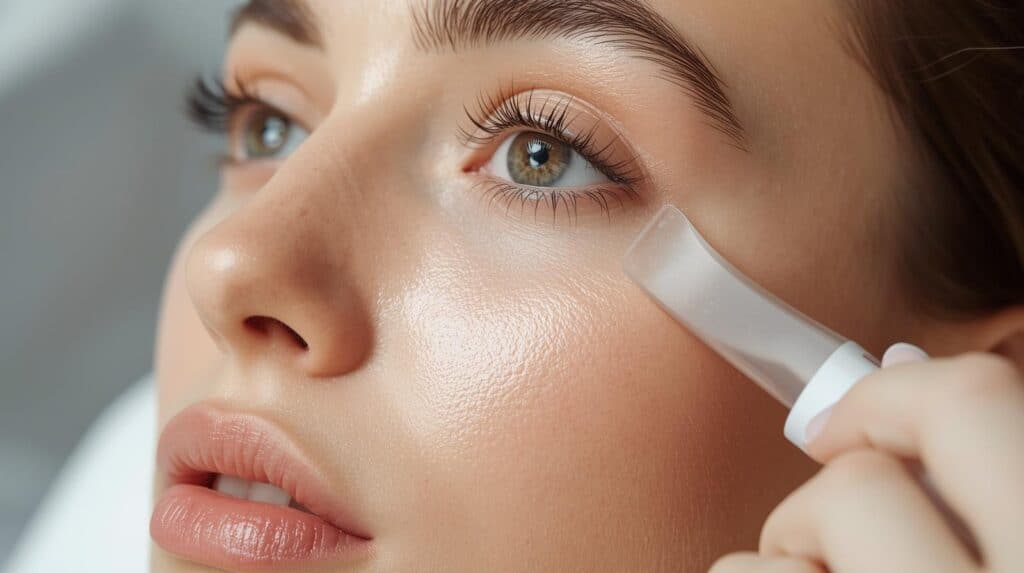
Avoid bringing an appointment forward just because hair is returning. Normal regrowth and readiness for more exfoliation are different things.
Some people prefer occasional appointments, while others decide the maintenance isn’t worth it.
Choose a schedule that suits your skin, priorities, and budget.
Do not assume a weekly professional-style treatment is safe simply because a home razor is easy to buy.
Repeated passes over the same area or overly frequent sessions can add irritation and barrier disruption without meaningfully improving the cosmetic result.
Your skin barrier needs time between exfoliating treatments, particularly if you also use retinoids, AHAs, BHAs, benzoyl peroxide, or other potentially irritating actives.
If hair removal is your only goal, ask whether a facial trimmer would suit you better than repeated exfoliation.
When in doubt, have a dermatologist help you choose a method and frequency.
Are There Lasting Effects of Dermaplaning?
The hair-removal and smoothing effects are temporary. Repeating treatment can maintain the look and feel you prefer, but it does not permanently thin facial hair or change the follicle.
Your skin will continue its normal turnover, and hair will continue growing.
Do not count on dermaplaning to prevent future breakouts, treat acne, or prevent acne scars.
Removing visible fuzz is not the same as treating the causes of acne.
If breakouts are your main concern, ask for an acne treatment plan before adding a blade to your routine.
The same applies to anti-ageing expectations: temporarily smoother surface texture does not mean deeper wrinkles or structural skin ageing have been corrected.
Decide whether you like the short-term finish before committing to a package of sessions.
Ask the provider which changes are realistic for your skin and which require a different approach.
There is no reliable promise that a set number of dermaplaning sessions will keep skin clear or youthful for years.
Although uncommon with appropriate technique, some complications can last longer than the desired smoothing effect.
For example, significant irritation can trigger post-inflammatory pigmentation changes, while a deeper cut or infection can scar.
Tell your provider if your skin tends to develop dark marks after irritation or raised scars after injury.
For a fuller overview, Cleveland Clinic’s dermaplaning guide explains treatment risks and why individual assessment matters.
Keep sun protection part of your routine, including a sunscreen your skin tolerates. Look for broad-spectrum SPF 30 or higher rather than choosing on brand alone.
A cut should never be treated as evidence that the blade is “working harder.” Stop if you injure your skin.
Seek medical advice for spreading redness, worsening pain, pus, or other signs of infection.
Check a provider’s training, hygiene practices, and approach to your skin concerns as well as their reviews.
At home, follow the device instructions, use a clean blade as directed, never share it, and avoid going over inflamed spots, wounds, moles, or raised lesions. A clean setup reduces contamination but does not make a home tool sterile.
How To Care For Your Skin After Dermaplaning
Keep aftercare simple and low-irritation. Follow your treating provider’s instructions, especially if dermaplaning was combined with a peel, facial, laser, or another procedure.
Immediately After Dermaplaning
Cleanse gently when advised. There is no benefit to scrubbing freshly treated skin or trying to remove more surface cells at home.
Your provider may already have cleaned and moisturised your face before you leave.
Ask when to wash again instead of immediately repeating every skincare step at home.
When it’s time to wash, use lukewarm water and a gentle cleanser that you already tolerate. The linked option is not a requirement; suitability matters more than the label.
Use your fingertips and pat dry. Avoid hot water, scrubbing brushes, and rough washcloths.
A product that leaves your skin tight or stinging is not a good choice while it feels sensitive.
Apply a simple, fragrance-free moisturiser if your skin tolerates it. You do not need to layer several new serums, oils, masks, or active products immediately after treatment.
Keeping the routine familiar also makes it easier to identify anything that irritates your skin.
Pause exfoliating acids, scrubs, retinoids, and other irritating actives until your provider says to restart and your skin feels settled. Ask the prescriber how to handle any prescription acne or pigment treatment.
Hold off on makeup as directed, and avoid applying it to sore or broken skin.
For A Few Weeks After Dermaplaning
Return to your routine gradually. Forty-eight hours is not a universal all-clear, especially after a more intensive session or if your skin is still red, tight, or sensitive.
When makeup is comfortable again, use clean tools and remove it gently.
The right pause for retinol, AHAs, or BHAs depends on your treatment and skin response. Follow the recommended interval rather than restarting them all at once.
If a product stings, burns, or causes increasing redness, stop and give your skin more time. Adding extra exfoliation to chase a glow can prolong irritation.
Use a broad-spectrum sunscreen with SPF 30 or higher, and reapply according to its directions, including during outdoor exposure.
Shade and a hat help too. Avoid tanning and unnecessary direct sun while your skin recovers.
Drink normally to stay hydrated, but extra water is not a substitute for moisturiser or appropriate aftercare.
If your face remains persistently tight, sore, swollen, or unusually sensitive, pause irritating products and contact your provider.
Do not try to solve lingering irritation by exfoliating again.
Check with the relevant provider before combining dermaplaning with other cosmetic or injectable treatments.
That includes fillers, microblading, and Botox. Tell each provider what you have had done and when.
Spacing depends on the procedures and their location, so get a coordinated plan rather than following a blanket two-week rule.
Final Thoughts
Dermaplaning can be a useful option if you want temporary peach-fuzz removal plus light physical exfoliation and a smoother-feeling surface.
It does not make facial hair grow back thicker, darker, or faster, although freshly cut hairs can feel more noticeable until they grow longer.
Weigh that temporary result against the cost, maintenance, and possibility of irritation.
If you’re unsure whether your skin can tolerate it, start with a professional assessment. You can also leave peach fuzz alone; removing fine facial hair is a cosmetic preference, not a requirement for healthy skin.
Related Articles