
Dermaplaning At Home Steps
At-home facial shaving tools are often marketed as a way to recreate some of the smoothing effects of professional dermaplaning, but the home version is not the same as a dermatologist or aesthetic professional using a surgical blade.
Professional dermaplaning removes surface dead skin cells and fine vellus hair with a sterile blade. Home tools can create a similar cosmetic effect, but they should be used more conservatively because cuts, irritation, and breakouts are still possible.
So, how can you get a smoother, freshly shaved look at home while reducing the chance of irritating your skin?
The most important steps are to use a clean tool designed for home facial use, work gently, and avoid dermaplaning skin that is already inflamed or compromised.
In this post, we cover what dermaplaning is, how at-home tools differ from professional treatment, and the steps and aftercare that can help you reduce irritation.
What is dermaplaning?
Dermaplaning is a form of mechanical exfoliation in which a trained professional uses a sterile blade to remove surface dead skin cells and fine facial hair. It can leave the skin feeling smoother and can create a more even surface for makeup, but it does not permanently shrink pores or erase lines.
Professional dermaplaning is performed in a controlled setting by a trained provider because blade angle, sanitation, pressure, and skin selection all affect safety.
The benefits of dermaplaning include:
- Smoother skin
- A temporarily brighter, smoother appearance
- A more even-looking surface texture
- Can make skincare feel smoother as it spreads over the skin
- Removes fine facial hair that can catch makeup or skincare
- Removes surface dead skin cells and some debris
- Removes peach fuzz
- May temporarily soften the appearance of superficial texture
Dermaplaning became popular partly because the freshly exfoliated surface can photograph smoothly and sit well under makeup.
Terms such as “dolphin skin” and “glass skin” describe a very smooth, reflective cosmetic finish rather than a medical result.
Can You Dermaplane At Home?
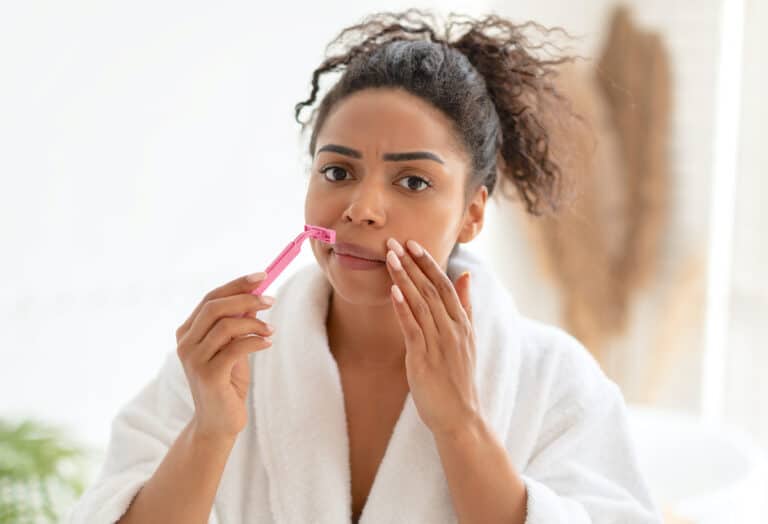
You can use facial shaving or dermaplaning-style tools at home, but home treatment should be gentler and more superficial than professional dermaplaning.
Home tools can be less expensive than professional appointments, but they do not provide the same depth of exfoliation or professional assessment.
If your skin is sensitive, acne-prone, actively inflamed, or affected by a skin condition, professional guidance may still be the better option.
With the right tool and a light technique, you can remove fine facial hair and lightly exfoliate at home.
Instead of a professional surgical blade, home dermaplaning tools usually use guarded or razor-like blades. They may be easier for a consumer to handle, but they can still cause nicks, irritation, and infection if misused.
Always follow the manufacturer’s instructions for the exact home tool you choose.

Technique still matters. Too much pressure, repeated passes, or working over inflamed skin can cause cuts, irritation, post-inflammatory discoloration, breakouts, or, less commonly, scarring.
We’ll go over some tips for safe dermaplaning in a moment.
In the meantime, you should make sure you have the right dermaplaning tools.
Options range from simple manual facial razors to powered tools designed specifically for at-home facial exfoliation.
At-Home Dermaplaning Tools
Here are a few examples of at-home tools in different price ranges:
- Stacked Skincare Dermaplaning Tool – This manual tool uses a replaceable blade and is designed specifically for facial exfoliation and peach-fuzz removal. Follow the replacement and cleaning instructions closely so you are not repeatedly using a dull or contaminated blade.
- Dermaflash Luxe – This powered tool uses a replaceable edge and vibration to help remove surface buildup and fine facial hair. Do not assume powered movement means deeper or better anti-ageing results.
- Schick Hydro-Silk Touch Up – This is a simpler, budget-friendly facial razor option. It can remove peach fuzz and provide light surface exfoliation when used gently.
If you choose to use one of these tools, treat it as gentle facial shaving rather than trying to copy the depth of an in-office procedure. The steps below focus on minimizing irritation.
How To Dermaplane At Home
At-home dermaplaning-style shaving is not risk-free. Cuts, irritation, acne flares, and infection are possible, so technique and skin condition matter.
Before you begin, use a clean tool intended for facial use with a blade that is sharp and in good condition.
Choose a clean, dry, well-lit area where you can clearly see the skin and keep the tool sanitary.
A bathroom can work if the counter and tools are clean and dry, but avoid setting the blade on damp or contaminated surfaces.
Any clean area with a stable mirror and good lighting can work.
Just remember that you’ll need a mirror, a clean space, and good lighting.
For technique, prioritize the instructions from your tool manufacturer or a qualified skincare professional rather than copying aggressive passes from social media videos.
If you are unsure how to hold or move the tool, professional instruction is safer than experimenting on your face.
When you’re ready, follow the steps below:
1. Start With A Clean Face
It’s important to start with a freshly cleaned face.
Make sure to remove any makeup and product from your face and use a gentle cleanser to wash your face. Then dry it with a clean towel.
Dermaplaning can cause tiny abrasions or nicks, especially when too much pressure is used.
Starting with clean skin and a clean tool helps reduce the chance of introducing bacteria into irritated or nicked skin.
2. Prepare Your Tool
Next, make sure your dermaplaning tool is clean and ready to go.
If the tool is reusable, clean or disinfect it exactly as the manufacturer directs before using it again.
If the blade is single-use, use a fresh one and do not share it with anyone else.
Do not improvise a sanitation method if the manufacturer provides specific cleaning or blade-replacement instructions.
Make sure that if your tool requires electricity or a battery charge, it’s plugged in, charged, and ready to go.
3. Hold It At The Right Angle
When dermaplaning, you want to avoid cutting yourself at all costs.
Your goal at home is to remove peach fuzz and a small amount of surface buildup, not to scrape deeply into the skin.
Many manual facial razors are used at roughly a 45-degree angle, but follow the angle and technique specified for your particular tool.
4. Work Your Way Downwards
Once you’re ready to begin dermaplaning, hold your skin taut with one hand, and work the tool with your other hand.
Use short, gentle strokes with minimal pressure. Avoid repeatedly passing over the same patch of skin.
5. Dermaplane: The Right Parts Of Your Face
Work in small sections so you can keep the skin taut and control the tool.
Move gradually across flatter areas of the cheeks rather than trying to cover the entire face quickly.
If your tool is intended for those areas, you can move on to the forehead and temples using the same light pressure.
Only use the tool on the neck if the manufacturer says it is appropriate and the skin there is not irritated or inflamed.
Keep the blade away from eyelids, lips, nostrils, the hairline, open cuts, raised lesions, and any area that is difficult to see or control.
6. Avoid Cuts
Dermaplaning-style tools are sharp, including the versions sold for home use.
You must avoid cutting your face.
Do not dermaplane over active acne, open pimples, an eczema or rosacea flare, sunburn, cuts, cold sores, or another active skin condition. Mechanical exfoliation can worsen irritation and breakouts.
If the skin starts stinging, scraping, bleeding, or becoming very red, stop rather than increasing pressure.
With facial blades, less pressure and fewer passes are safer than trying to remove more skin.
7. Rinse
When you are finished, gently rinse away loose hairs and residue. If you cleanse again, use a mild, non-exfoliating cleanser and avoid scrubbing.

Pat the skin dry with a clean towel rather than rubbing it.
Keep the rest of your routine simple after dermaplaning. If your skin feels tender or looks red, skip makeup and potentially irritating products until it settles.
What To Do After Dermaplaning
After dermaplaning, your skin may be more sensitive and easier to irritate for a short period.
This means you should be extra gentle with it for a few days.
1. Moisturise
Mechanical exfoliation removes part of the outer surface buildup and can temporarily increase dryness or sensitivity.
It’s important to moisturise well after you’re done with the treatment.
Apply a simple fragrance-free moisturizer after the skin is clean and dry. A bland hydrating serum is optional if it does not sting.
2. Avoid Irritating Products
If your skin feels sensitive afterward, temporarily avoid products that sting or exfoliate until it feels normal again.
This can include AHAs, BHAs, retinoids, benzoyl peroxide, scrubs, and other strong actives. People already using retinoids or benzoyl peroxide may be more prone to irritation from mechanical exfoliation.
3. Protect With SPF
Daily sunscreen is important after exfoliation and helps protect the skin from UV-related irritation and discoloration.
Use a broad-spectrum SPF 30 or higher and reapply as directed when you are outdoors.
4. Enjoy Your Beautiful Skin
Once redness or sensitivity has settled, you can gradually return to your usual routine.
Freshly dermaplaned skin often feels smoother, which can make makeup sit more evenly. Greater product penetration is not always a benefit because stronger actives may also sting more.
Resume stronger skincare products only when the skin feels comfortable and no longer looks irritated.
If you choose to dermaplane at home, prioritize a clean tool, light pressure, limited passes, and gentle aftercare over trying to recreate an aggressive professional treatment.
When To Skip At-Home Dermaplaning
Skip dermaplaning if you have active inflammatory acne, open sores, a cold sore, sunburn, an eczema or rosacea flare, or another irritated skin condition. The American Academy of Dermatology also notes that mechanical exfoliation can be too irritating for some acne-prone or sensitive skin, especially when you already use products such as retinoids or benzoyl peroxide.
If you take isotretinoin, use prescription retinoids, have a history of poor wound healing or prominent post-inflammatory pigmentation, or are unsure whether your skin can tolerate blade exfoliation, ask a dermatologist before trying it at home.
At-Home Dermaplaning FAQs
Does Dermaplaning Make Hair Grow Back Thicker?
No. Shaving or dermaplaning cuts the hair at the surface and does not change the follicle underneath, so it does not make facial hair grow back thicker or faster.
How Often Can You Dermaplane At Home?
There is no need to do it frequently. Wait until the skin has fully recovered and the fine facial hair has grown back enough to make another pass worthwhile. Follow your tool manufacturer’s recommended interval and avoid repeated exfoliation if your skin stays sensitive.
Can You Dermaplane Active Acne?
It is better to wait. Passing a blade over inflamed pimples can nick the skin, worsen irritation, and spread bacteria across nearby areas.
Can You Wear Makeup Right After Dermaplaning?
If your skin looks calm and feels comfortable, some people can wear makeup later the same day. If you have redness, stinging, or tenderness, give the skin time to settle and avoid applying makeup over irritated areas.
Related Articles
Types Of Facials And How To Choose – Complete Guide
What Is A Hydrodermabrasion – How It Compares To A Microdermabrasion
Microblading Scars – What To Know