
5 Best Vitamin C Serums For Rosacea
Rosacea is a common chronic skin condition, but finding skincare that does not trigger extra stinging, dryness, or flushing can still take some trial and error.
Because rosacea-prone skin can be reactive, a product that works beautifully for one person may feel uncomfortable for another.
For many people, the most useful routine is a simple one built around gentle cleansing, moisturizer, sun protection, and any treatment recommended by a clinician.
Prescription and over-the-counter treatments can help manage rosacea symptoms, while a gentle routine can reduce avoidable irritation around those treatments.
Some people with rosacea also tolerate vitamin C well as an antioxidant and brightening step. It is optional rather than essential, and the formula matters more than simply seeing “vitamin C” on the label.
What should you look for in the best vitamin C serum for rosacea-prone skin?
Look for a fragrance-free or low-fragrance formula with a vitamin C strength your skin can tolerate, plus hydrating or barrier-supportive ingredients such as glycerin, hyaluronic acid, ceramides, or niacinamide. Start slowly, and stop if the product causes persistent burning or noticeably worsens redness.
Below, we’ll explain where vitamin C may fit into a rosacea-friendly routine, how to introduce it more cautiously, and what to look for when comparing serums.
Can Vitamin C Help Rosacea-Prone Skin?
Vitamin C is a well-known skincare antioxidant that may help with dullness and uneven-looking tone. It is not a primary treatment for rosacea itself, and tolerance can vary widely when skin is reactive.
There’s also an important difference between raw or DIY vitamin C mixtures and a properly formulated vitamin C serum. A finished cosmetic formula controls the concentration, pH, supporting ingredients, and packaging in ways that are difficult to reproduce at home.
Serums are not automatically gentle. Some use lower concentrations or vitamin C derivatives, while others rely on stronger, lower-pH L-ascorbic acid formulas that can sting reactive skin.
The type of vitamin C, concentration, pH, packaging, and supporting ingredients all affect how a serum performs and feels. The word “serum” tells you very little about how gentle the formula will be.
Vitamin C has antioxidant activity and may support a brighter, more even-looking complexion. It should not be expected to repair visible blood vessels, stop flushing, or replace treatments intended to manage rosacea.
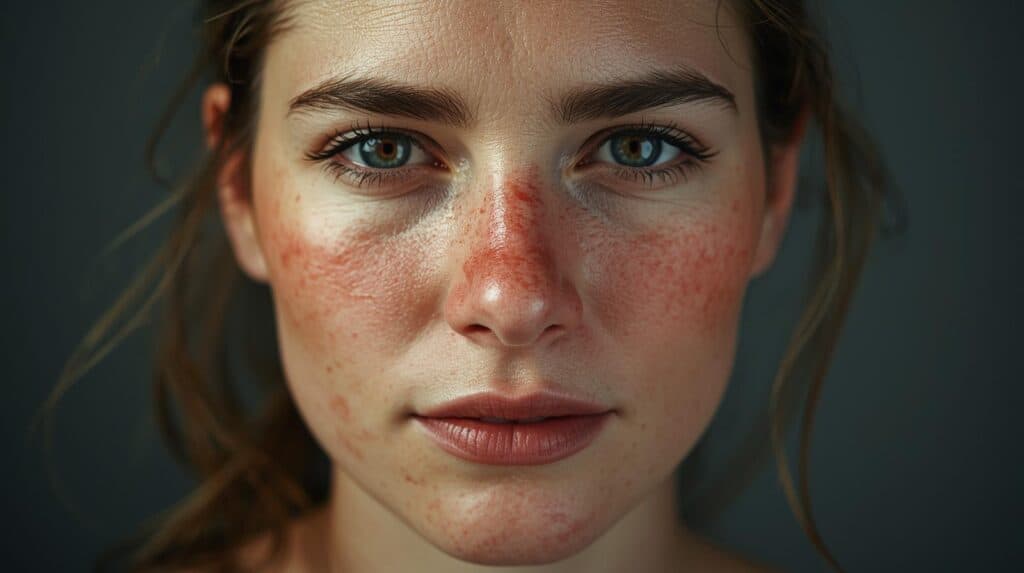
Rosacea is a complex inflammatory condition involving multiple factors, including vascular reactivity, immune responses, and environmental triggers. Visible facial redness cannot be reduced to one single cause.
Vitamin C serums can provide antioxidant support against environmental oxidative stress, which is a reasonable skincare benefit even when they do not directly change rosacea symptoms.
Rosacea redness, heat, bumps, and sensitivity are driven by several processes, so no single antioxidant should be framed as the missing solution.
Think of vitamin C as a supporting skincare step for people who tolerate it, not as a guaranteed way to reduce redness or irritation.
One important caution is that vitamin C can sting or irritate rosacea-prone skin, especially in low-pH L-ascorbic acid formulas.
Some people tolerate vitamin C very well, while others do better with a lower strength, a vitamin C derivative, or no vitamin C at all.
Before using a new serum all over your face, patch test it on a small area and watch for persistent stinging, itching, swelling, or a noticeable increase in redness.
Rosacea-Friendly Vitamin C Serum Features
Supportive Ingredients
Take a minute to break down your biggest issues with your rosacea.
Is it persistent redness, flushing, bumps, dryness, or a combination of several concerns?
Knowing your main concern can help you compare formulas without piling on unnecessary actives. With reactive skin, a simpler combination you tolerate is often more useful than a crowded ingredient list.
If you’re dealing with dryness and sensitivity, vitamin E or other emollient ingredients may help support a more comfortable formula.
Vitamin E is mainly used for antioxidant and moisturizing support. It does not “heal redness at the root” or treat rosacea on its own.
If you’re dealing with barrier sensitivity or redness, a low-to-moderate amount of niacinamide may be worth considering if your skin tolerates it.
Niacinamide can support the skin barrier and may improve uneven texture or the appearance of pores over time, but pores do not become “swollen” and then return to a fixed natural size.
If you’re also dealing with clogged pores or acne, salicylic acid can be useful for some people, but combining it with a new vitamin C serum may be too much for reactive skin. Consider introducing one active at a time.
Do not rely on vitamin C alone to control acne. If you have both rosacea and persistent breakouts, a dermatologist can help distinguish acne from rosacea-related papules and choose a treatment that does not aggravate sensitivity.
If you’re dealing with dryness, hyaluronic acid or glycerin can help attract water and improve the hydrating feel of the formula.
Hydrating and barrier-supportive ingredients are often useful in rosacea-friendly routines because they can help reduce the tight, dry feeling that sometimes accompanies sensitivity.
Fragrance-Free Formula
Rosacea-prone skin is often sensitive, so fragrance-free formulas are usually a sensible starting point, especially if scent has triggered stinging or flushing for you before.
A naturally derived scent is not automatically gentler. Citrus extracts, essential oils, and fragrant botanicals can also irritate reactive skin.
Natural ingredients can still cause irritation or allergic contact dermatitis, so “natural” should not be treated as a safety guarantee.
Fragrance, whether natural or synthetic, can be a trigger for some people with rosacea. Alcohol content also varies by product, so judge the formula by the actual ingredient list rather than broad ingredient labels.
Simple, Well-Tolerated Ingredient List
For the same reasons as choosing a fragrance-free formula, a shorter or familiar ingredient list can make it easier to identify potential triggers, but natural origin is not automatically safer.
If you have a bad reaction to a serum with a very long ingredient list, it can be harder to identify which ingredient may have triggered it.
That makes it harder to know what to avoid the next time you shop for skincare.
There is no good reason to assume that a product is more harmful simply because its ingredients are synthetic or highly processed.
People with rosacea-prone skin often benefit from introducing new products one at a time so potential triggers are easier to spot.
Rosacea can involve barrier sensitivity, but the goal is not to “seal out” germs. The practical focus is keeping the routine comfortable and avoiding ingredients or combinations that repeatedly trigger irritation.
How To Introduce Vitamin C With Rosacea-Prone Skin
Introduce vitamin C when your skin is relatively calm rather than testing several new actives during a flare. Start with a small amount and a low frequency, then increase only if your skin stays comfortable.
Try not to introduce a new vitamin C serum at the same time as a new exfoliating acid, retinoid, scrub, or other potentially irritating treatment. Adding products one at a time makes it easier to identify the cause if your skin reacts.
Apply a moisturizer afterward if your skin tends to feel dry or tight, and use broad-spectrum sunscreen every morning. Sun exposure is a common rosacea trigger and can also worsen uneven-looking pigmentation.
If a serum causes persistent burning, swelling, rash-like irritation, or a clear increase in flushing, stop using it. If you already use prescription rosacea medication, follow your clinician’s instructions on how to layer or space other active skincare.
Best Vitamin C Serums For Rosacea
| Rank | Product | Key Features |
|---|---|---|
| 1. | Vichy LiftActiv Serum | Allergy tested, prevents against free radicals, volcanic water |
| 2. | Innisfree Tangerine Serum | Pore soothing, naturally derived vitamin C, niacinamide |
| 3. | IT Cosmetics Bye-Bye Dullness | Hyaluronic acid, water-light formula, dermatologist-tested |
| 4. | TruSkin Vitamin C Facial Serum | Vitamin E and jojoba, hyaluronic acid, leaping bunny certification |
| 5. | CeraVe Vitamin C Serum | Contains ceramides, dermatologist recommended, hydrating formula |
1. Vichy LiftActive Serum
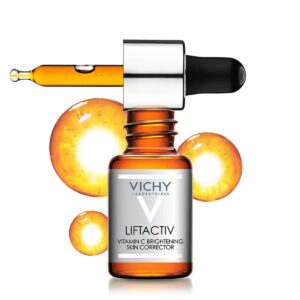
Vichy LiftActive Serum is worth considering if you want a relatively streamlined vitamin C step and your skin already tolerates active formulas.
With vitamin C, the most important factors are the vitamin C form, concentration, pH, packaging, and supporting ingredients, not whether the formula is marketed as “clean” or natural.
Colour and scent can vary between formulas, and preservatives are often included for product stability and safety rather than being something to avoid automatically.
This serum may gradually darken as its vitamin C oxidizes. A major colour change can be a sign that the formula is degrading.
Oxidation is especially relevant to formulas containing L-ascorbic acid, while some vitamin C derivatives are more stable.
If the current formula is fragrance-free, that may appeal to reactive skin. Still, vitamin C itself can sting, so patch test rather than assuming the serum will feel gentle.
With hyaluronic acid and vitamin E, this may be worth considering if dryness is one of your concerns, provided the vitamin C strength is comfortable for your skin.
Pairing antioxidant skincare with broad-spectrum sunscreen makes sense for daytime use, although sunscreen does not block every possible rosacea trigger.
2. Innisfree Tangerine Serum
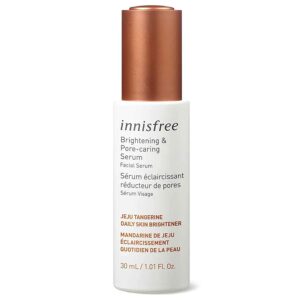
Innisfree Tangerine Serum takes a more ingredient-rich approach, pairing tangerine-derived components with several hydrating and brightening ingredients.
That can appeal to someone who wants more than a minimalist vitamin C formula.
The tradeoff is that a more complex botanical formula gives reactive skin more ingredients to evaluate, so patch testing still matters.
This vitamin C serum features Jeju tangerine-derived ingredients alongside other brightening and hydrating components.
This extract is then paired with hyaluronic acid, niacinamide, and panthenol.
Together, these ingredients are aimed at hydration, smoother texture, and a more even-looking complexion. They should not be expected to literally fill wrinkles or treat rosacea inflammation.
3. IT Cosmetics Bye-Bye Dullness
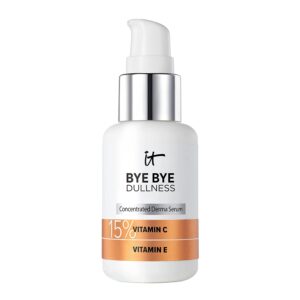
IT Cosmetics Bye-Bye Dullness is the higher-strength option in this list, with a formula built around 15% vitamin C.
That strength may suit experienced vitamin C users, but it is not the most obvious starting point for skin that flushes or stings easily.
UV exposure is a common rosacea trigger, while dryness and barrier irritation can make sensitive skin feel more uncomfortable.
This serum features 15% vitamin C, which may be too strong for some rosacea-prone skin. Introduce it cautiously rather than assuming it will be irritation-free.
The formula includes vitamin E and is marketed as fragrance-free. Check the current label if vegan status or dermatologist testing is important to you.
It may fit some rosacea-friendly routines, but 15% vitamin C is not automatically suitable for highly reactive skin.
4. TruSkin Vitamin C Facial Serum
Botanical formulas can be appealing, but natural origin alone does not determine whether a serum is gentle or effective.
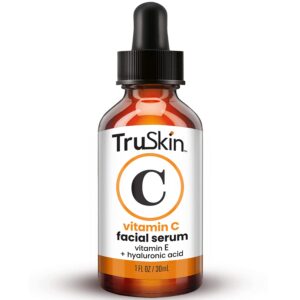
This vitamin C serum from TruSkin uses a botanical-heavy ingredient list alongside moisturizing and antioxidant ingredients.
If your skin is reactive, review the full ingredient list because botanical extracts can still be potential triggers.
This serum is aimed at brightening and antioxidant support. It cannot rebuild pitted acne scars or directly replace lost collagen in depressed scar tissue.
This serum contains antioxidant ingredients along with jojoba oil and witch hazel. Witch hazel can feel soothing to some people but may irritate others with rosacea-prone skin.
5. CeraVe Vitamin C Serum
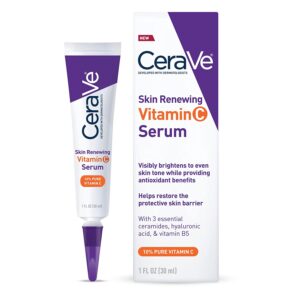
CeraVe Vitamin C Serum combines vitamin C with hydrating and barrier-supportive ingredients, which may appeal to people who want antioxidant care without ignoring dryness.
Ceramides can be useful in barrier-supportive skincare, but no single ingredient is necessary for every age or every skin type.
The ceramides and humectants make the supporting formula particularly relevant for rosacea-prone skin that also feels dry or tight.
Even with those supportive ingredients, the vitamin C portion can still sting some reactive skin.
The realistic goal is antioxidant support and gradual improvement in dull or uneven-looking tone, not treatment of rosacea itself.
Hyaluronic acid is included to help attract water and improve the hydrated feel of the skin.
The formula also contains ceramides, which can support the skin barrier and help reduce moisture loss.
Related Questions
How often should I use vitamin C serum?
If it’s your first time introducing vitamin C, start a few times per week or according to the product directions, then increase only if your skin remains comfortable.
If there is no irritation, you can gradually increase use. Vitamin C can be used in the morning or evening depending on the formula and your routine.
Use broad-spectrum sunscreen every morning, especially because UV exposure is a common rosacea trigger. Vitamin C itself is not known for increasing sun sensitivity in the way exfoliating acids can.
Consistent sun protection can help reduce UV-triggered flushing and protect against photoaging.
What percentage of vitamin C should people with rosacea start with?
There is no single evidence-based vitamin C percentage that is ideal for everyone with rosacea. It is sensible to begin with a lower-strength or gentler vitamin C formula rather than jumping straight to a high concentration.
What matters is the actual vitamin C form and formula, not whether the marketing says it came from fruit or botanicals.
Fruit-derived ingredients are not automatically less irritating than synthetic or purified vitamin C ingredients.
Around 5-10% may be a reasonable starting range for some people, but the vitamin C form, pH, and full formula matter just as much as the percentage. Highly reactive skin may prefer a milder derivative or a lower concentration.
It may take some trial and error. Patch testing on a small area can help screen for irritation, although it cannot guarantee that your whole face will tolerate the product.
Can vitamin C make rosacea look worse?
Yes, it can for some people. Strong L-ascorbic acid formulas, low-pH products, fragrance, or a routine with several active ingredients can cause stinging or a temporary increase in redness. That does not mean everyone with rosacea needs to avoid vitamin C, but discomfort is a reason to reduce use or stop rather than push through.
Should I use vitamin C during a rosacea flare?
If your skin is actively burning, very flushed, or unusually sensitive, it is usually more practical to keep the routine simple and avoid introducing a new active serum until things settle. If vitamin C is already part of your routine and never irritates you, follow the product directions and any advice from your dermatologist.
Related Articles
Best The Ordinary Products For Rosacea