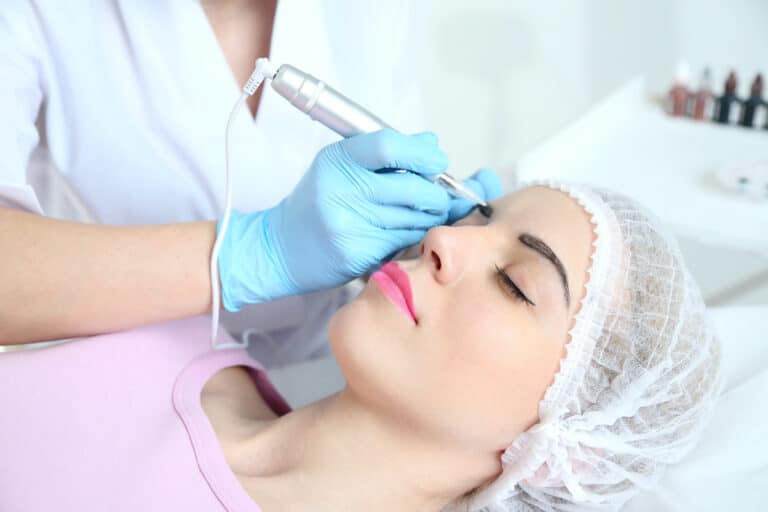

Lash Lift Too Lifted – What You Can Do
Lash lifts are a semi-permanent beauty service that uses chemical processing to reshape the natural lashes into a more lifted curl.
They share many similarities with other semi-permanent beauty services, such as lash extensions or brow laminations.
A lash lift is often described as a perm for your lashes because it temporarily changes the shape of the lash fibers rather than adding extensions.
They can suit people who want to enhance their natural eyelashes without adding extension fibers.
They usually require less day-to-day maintenance than lash extensions, although cost and upkeep vary by salon and location.
Like other chemical beauty services, lash lifts carry risks, especially when the solution strength, timing, shield size, or lash placement is not appropriate.
A lash lift can be overprocessed or poorly positioned, and the eye area needs extra care because chemical solutions can irritate the lashes, eyelids, or eyes.
Lash lifts use chemical lifting and setting solutions to change the shape of the lash fibers.
One possible unwanted result is lashes that end up too lifted, tightly curled, hooked, or uneven.
A result that looks more dramatic than expected is not always the same as true overprocessing, so first check whether the lashes are simply too curly or are also dry, frizzy, brittle, or breaking.
This result can be frustrating, especially before an important event, but trying to chemically reverse it at home can make the lashes more fragile.
What can you do if your lash lift is too lifted?
The safest approach to an overly curled lash lift is usually to avoid further chemical processing and let the treated lashes grow out. If the curl is severe, uneven, painful, or accompanied by eye irritation, contact an experienced lash professional, and seek medical care for eye pain, vision changes, significant swelling, or chemical exposure to the eye.
Lash Lift Too Lifted: What To Do At A Glance
- Too curly but lashes feel smooth and comfortable: leave them alone, handle them gently, and let the result soften as treated lashes shed.
- Frizzy, kinked, brittle, or breaking lashes: avoid another lift, relaxer, curler, or DIY chemical fix and have the lashes assessed.
- Uneven or crossed lashes: contact the technician for an in-person assessment rather than forcing them into a new direction.
- Burning, marked redness, swelling, light sensitivity, persistent tearing, or vision changes: treat this as an eye-health issue and seek medical evaluation.
- Do not try: steam, soaking, kitchen oils, another perm solution, or aggressive brushing as a way to reverse the lift at home.
Below, we explain how to tell simple over-curl from overprocessing, what you can safely do while the lashes grow out, which DIY fixes to avoid, and when eye symptoms need medical attention.
What Is A Lash Lift?
A lash lift works on a similar principle to a perm, but the products and technique are designed specifically for eyelashes.
Lash lifts, hair perms, and brow laminations all rely on chemical reduction and setting steps, although the products and processing times are formulated for different areas.
The goal is to temporarily alter bonds within the hair fiber so it can be reshaped.

To reshape eyelashes, the lifting solution temporarily changes some of the disulfide bonds within the lash fiber, similar in principle to a hair perm.
A lifting solution softens the lash structure while the lashes are arranged over a silicone shield or rod to create the intended curl.
After the lifting solution changes the lash structure, a setting solution is used while the lashes remain positioned on the shield.
Think of this step as the neutralizer in a perm; the setting solution helps reform the altered bonds while the lashes remain in their new shape.
Some services also include a lash tint. Whether tinting is included depends on the service and the products used.
When the process goes well, the lashes hold a lifted shape. If the curl is too tight or uneven, the safest correction depends on how damaged or irritated the lashes and surrounding skin are.
Too Curly Vs Overprocessed: How To Tell The Difference
A lash lift can look tighter than you wanted without the lash fibers being severely damaged. The important distinction is how the lashes look, feel, and behave.
- Mostly cosmetic over-curl: the lashes are smooth and intact but curve back too far, look hooked, or sit closer to the eyelid than you wanted.
- Possible overprocessing: the lashes look frizzy, kinked, sharply bent, dry, crossed, or uneven and may snap more easily.
- Eye-area irritation: burning, swelling, marked redness, tearing, pain, or light sensitivity is not simply a cosmetic curl problem.
If you are unsure which category fits, avoid experimenting with another chemical product until an experienced professional has seen the lashes.
Potential Risks Of Getting A Lash Lift
Because lash lifts use chemical solutions close to the eyes, both cosmetic damage and eye-area irritation are possible.
Possible problems range from dry or overprocessed lash fibers to eyelid irritation, allergic contact dermatitis, or chemical exposure to the eye, so symptoms around the eye should not be dismissed.
Overprocessing can weaken the lash fibers, leaving them dry, frizzy, kinked, or more prone to breakage.
A mild problem may simply be that the lashes are more lifted or curled than you wanted, while more concerning signs include frizz, kinks, breakage, or irritation.
This can happen if the lifting solution is too strong for the lashes, is left on too long, or is combined with poor shield sizing or lash placement.
Aftercare timing varies by product system, and the traditional blanket 24-48 hour setting rule is not universal. Follow the instructions for the specific lash-lift system your technician used.
Overprocessed lashes may appear tightly curled, kinked, crossed, or irregular immediately after the service and as the lashes grow out.
You may also notice frizz, bends, or lashes pointing in different directions. The lift does not change the follicle’s natural growth direction, but damaged fibers can sit irregularly.
Other risks include lash breakage, eyelid irritation, allergic contact dermatitis, and chemical eye irritation. Eye pain, marked redness, light sensitivity, persistent tearing, or vision changes need prompt medical evaluation.
Because lash-lift solutions are used close to the eyes, choose a properly trained professional who meets local licensing requirements and follows the product manufacturer’s safety instructions.
When A Lash Lift Problem Needs Medical Attention
A cosmetic lash professional can assess curl, breakage, and whether another beauty service is appropriate, but they should not diagnose or treat an eye injury.
Seek prompt medical care if you develop eye pain, vision changes, significant swelling, marked redness, strong light sensitivity, persistent tearing, or suspected chemical exposure to the eye. If chemical solution gets into the eye during a service, immediate irrigation and appropriate medical guidance are more important than preserving the lash result.
How Long Does A Lash Lift Last?
Many cosmetic lash-lift problems improve as the treated lashes shed and are replaced, but significant chemical injury or breakage can take longer and should be assessed professionally.
There are multiple ways you can care for your lashes after a lash lift until they grow out entirely or you’re ready for a touch-up.
A lash lift often remains noticeable for several weeks, but the timeline varies with the lash growth cycle and how quickly treated lashes shed.
An unwanted curl usually softens as treated lashes shed and new lashes replace them, but a complete return to your untreated lash population can take longer than a month or two.
According to one review of eyelash biology, eyelashes grow slowly and cycle through growth and resting phases over several months. This is why a complete return to untreated lashes takes longer than simply waiting a few days for the curl to loosen.
The anagen phase is the stage when the hair is growing.
The cosmetic effect is temporary, but damaged lash fibers still need to grow out rather than being permanently “repaired.”
The curl gradually becomes less noticeable as the lash cycle progresses. Aftercare can reduce extra stress on the lashes, but it cannot reliably reverse the chemical reshaping on demand.
Understanding why a lash lift went wrong can also help you avoid repeating the same issue at the next appointment.
What Causes A Lash Lift To Go Wrong?
A careful lash lift depends heavily on the technician’s training, product knowledge, timing, and lash assessment.
Your lash technician should have appropriate training and any license or certification required in your area.
Look for an experienced professional with a clean workspace, clear consultation process, realistic before-and-after photos, and good safety practices.
A lash lift can go wrong if the solutions used to soften and set are left on the lashes too long or if they’re expired.
If the manufacturer recommends an allergy alert or patch test, follow those instructions. Passing a test cannot guarantee that an allergic reaction will never occur.
If the silicone eyelash pad isn’t lying correctly on the lash line, it can cause issues.
Poor shield placement or lash positioning can create an uneven curl, and careless product placement can increase the risk of solution contacting the eyelid or eye.
Other mistakes that can happen during the lash lift are that your eyelashes still have traces of solution on them even after the service.
Or the chosen shield size and curl may simply be tighter than the result you wanted.
Signs Of A Low-Quality Lash Lift
The appearance of the lashes can help you separate an overly dramatic result from signs of chemical or mechanical damage.
That distinction helps determine whether gentle grow-out care is enough or whether you should contact a lash professional or medical professional.
If the lashes are only too curled or lifted but still feel smooth and comfortable, the issue may be mostly cosmetic.
If the lashes look excessively curled immediately after the service, contact the technician rather than waiting for a presumed 48-hour “setting” period to see if they curl further.
If the lashes feel dry, brittle, frizzy, kinked, or begin snapping, overprocessing is more likely and additional chemical correction carries more risk.
This can result from overprocessing, unsuitable solution strength, repeated chemical services, or rough handling.
Conditioning can improve how dry lashes feel, but overprocessed lash fibers cannot be restored to their original untreated structure.
Other signs of a poor lash-lift result include inconsistent curls, crossed or clumped lashes, sharp bends, and sections pointing in different directions.
If your lash lift is too curled, the safest response is usually protective care and time, not an aggressive attempt to undo the chemical process at home.
How To Fix An Overly Curled Lash Lift
An overly lifted lash set does not always need an active correction. The priority is to avoid adding more chemical or mechanical stress.
The options below focus on low-risk care and professional follow-up rather than DIY chemical reversal.
No at-home approach can guarantee zero additional damage, so stop if the lashes feel brittle, painful, or begin breaking.
Before doing anything, assess the lashes and the eye area: are the lashes simply too curly, or are they also frizzy, breaking, painful, or accompanied by eyelid or eye irritation?
If the concern is only appearance, waiting is usually the lowest-risk option. If there is breakage, chemical irritation, or significant discomfort, the priority shifts from styling to protecting the lashes and eye area.

The severity of the curl, the condition of the lash fibers, and whether the eye area is irritated determine how cautious you need to be.
Your routine should focus on gentle handling, avoiding extra processing, and keeping the eye area comfortable while the treated lashes grow out.
Before You Try To Change The Curl
Do not comb the lashes downward aggressively, press them with a curler, or repeatedly manipulate them while wet. Those methods may make fragile fibers bend or break without reliably changing the chemical lift.
If the lashes are comfortable and only look too curly, temporary styling can be as simple as gently brushing them into place with a clean spoolie. Avoid forceful pressure and stop if the fibers catch, bend sharply, or shed unusually.
1. Grow Your Lashes Out
The lowest-risk option is usually to let the treated lashes grow out and shed naturally.
Growing the lashes out is usually the lowest-risk option because you are not exposing already processed fibers to another chemical service.
A full return to untreated lashes can take several months because eyelashes are replaced gradually rather than all at once.
This is not an instant fix, but it avoids adding another chemical process to lashes that have already been treated.
How quickly the appearance improves varies with your individual lash cycle and how many treated lashes remain.
Leaving the treated lashes alone allows new, untreated lashes to replace them through the normal growth cycle.
Once enough new growth is present, an experienced technician can assess whether another lift is appropriate or whether the lashes need more time without chemicals.
Overall, waiting avoids the additional chemical exposure that comes with trying to relax the curl immediately.
You can still cleanse the eye area gently and avoid rubbing, pulling, or mechanically forcing the lashes downward.
2. Call Your Lash Technician
If the result is severe or uneven, contact the lash technician and explain exactly what you are seeing and feeling.
An experienced technician can inspect the lashes and decide whether a professional correction is appropriate or whether the safest option is to leave them alone.
However, if your eyelashes are highly overprocessed, this may not be an option.
A chemical “relaxing” correction is still another processing step and can increase breakage risk, so it should only be considered after the lashes are assessed in person.
If a correction is not advisable, they can explain how to care for the lashes while the curl grows out.
When in doubt, seek advice from an experienced professional who meets the training or licensing requirements in your area.
A professional can also tell you when waiting is safer than trying to reverse the lift.
If you know you are unhappy immediately after the service, tell the technician before leaving so they can document the result and explain what was used and how long it processed.
3. Follow The Correct Aftercare
Aftercare instructions differ by lash-lift system, so do not rely on a universal 48-hour rule.
Freshly processed lashes may be more vulnerable to rough handling regardless of the exact aftercare window.
Some systems advise keeping the lashes dry for a period after treatment, while others allow water sooner. Follow the instructions for the exact products used.
If your lashes are too lifted, deliberately changing the aftercare on your own is not a predictable way to reverse the result.
Clumping or overlap is more likely to reflect lash placement, overprocessing, or the way the fibers are sitting rather than normal “setting.”
Do not deliberately soak or steam freshly lifted lashes to try to relax the curl. Water or steam is not a controlled reversal method and may irritate the eye area or affect the service unpredictably.
If you are unhappy with the result, contact the technician and ask for guidance based on the specific products and processing times used.
Remember that the lashes have just undergone chemical processing, so forceful reshaping, rubbing, or repeated treatments can add more stress.
Continue normal gentle eye-area hygiene as permitted by the product aftercare instructions, and avoid rubbing or manipulating the lashes.
If the lashes are severely curled, frizzy, or breaking, have them assessed rather than using steam or DIY methods to force them straighter.
4. Use Gentle Conditioning Care
A gentle lash-conditioning serum may help the fibers feel less dry after a lash lift, provided it is designed for use around the eyes.
Chemical processing can temporarily change the feel and appearance of the lash fibers.
Overprocessed lashes may feel dry, brittle, rough, or frizzy and can be more prone to breakage.
Some serums coat and condition lashes, which can improve flexibility and appearance, but they do not permanently repair chemically damaged lash fibers.
If you use a growth-focused serum, remember that cosmetic conditioning and actual lash-growth effects are different claims and depend on the active ingredients in the product.
Coconut oil is not a proven lash-growth treatment or lash-lift reversal product. It can also migrate into the eyes and cause irritation or blurred vision.
If you want conditioning, an eye-area product formulated for lashes is a more predictable choice than kitchen oils.
No oil can reverse overprocessing, although a compatible conditioning formula may temporarily improve how dry lashes feel.

Before adding a new lash serum, follow its directions and discontinue use if it causes burning, redness, swelling, or persistent itching.
A patch test can reduce surprises but cannot guarantee that an allergic or irritant reaction will never occur.
5. Avoid Extra Mechanical Stress
Avoid using an eyelash curler on brittle or overprocessed lashes. Eye makeup is not automatically forbidden, but skip anything that requires aggressive rubbing or removal while the area is irritated.
If the eyelids or eyes feel irritated, avoiding eye makeup until the area settles can make cleansing easier and reduce extra friction.
Some eye makeup or removers may sting freshly irritated skin, especially if the lash lift has already caused sensitivity.
Removing eye makeup can cause friction and pressure that can harm your lashes.
Avoid rubbing or pulling at the lashes. If you wear mascara later, choose one that removes easily rather than a formula that requires heavy scrubbing.
Also avoid using an eyelash curler on lashes that are already tightly curled or chemically stressed.
A curler adds pressure and bending to fibers that may already be kinked or weakened.
Eyelash curlers can add mechanical stress to lashes that are already kinked, brittle, or overprocessed.
Over-Curled Lash Lift FAQs
Will A Lash Lift Relax After A Few Days?
The curl may look less dramatic over time as treated lashes shed and new lashes grow in, but there is no guaranteed number of days when an overly tight curl suddenly relaxes. Do not rely on a fixed 24- or 48-hour rule.
Can Water Or Steam Reverse A Lash Lift?
Water or steam is not a controlled reversal method. Aftercare varies by product system, and deliberately soaking or steaming the lashes can irritate the eye area or affect the result unpredictably.
Can Oil Relax An Over-Curled Lash Lift?
Oil is not a reliable way to reverse the chemical reshaping. Kitchen oils can also migrate into the eyes. If the lashes feel dry, use an eye-area conditioning product only if it is suitable for lashes and does not irritate you.
Can A Lash Technician Reverse The Lift?
A technician may sometimes consider a professional correction after assessing the lashes, but that means exposing the fibers to more chemical processing. If the lashes are already brittle, frizzy, or breaking, waiting may be safer.
When Can You Get Another Lash Lift?
Do not schedule another lift simply because a fixed number of weeks has passed. Wait until an experienced professional has assessed the condition of the lashes, especially after an overprocessed result.
Final Thoughts
Lash lifts are a semi-permanent chemical service that temporarily changes the shape of natural lashes.
When the processing, timing, or lash placement is off, you can be left with over-curled, frizzy, uneven, or weakened lashes.
The lowest-risk options are usually letting the treated lashes grow out and having an experienced professional assess whether any correction is safe.
Avoid DIY attempts to reverse the lift with water, steam, oils, or another chemical treatment. Use gentle aftercare and conditioning only if the products are suitable for the eye area.
If the lashes are breaking, the eyelids are swollen, or you have eye pain, redness, light sensitivity, or vision changes, get appropriate professional or medical help rather than treating the problem cosmetically at home.
An experienced lash professional can assess the cosmetic result, while eye or skin symptoms may require a medical professional.
The lifted shape is temporary because treated lashes eventually shed, but significant chemical injury should not simply be waited out without evaluation.
Related Articles
Lash Retention – How To Make Your Extensions Last Longer
Full Face Waxing (Pros And Cons)