How Often To Get Chemical Peels
If you are considering a chemical peel, there is no single schedule that works for everyone. How often you can repeat a peel depends mainly on the depth of the treatment, how your skin heals, and the concern you are treating.
That means a light peel might fit into a short treatment series, while a medium peel needs months between sessions and a deep facial peel is generally a one-time procedure.
Chemical peels range from superficial to medium-depth to deep. The solution used, its strength, the application technique, and the depth reached all affect the recovery period, expected results, and risk of side effects.
They work by creating controlled exfoliation or injury at selected layers of skin so the area can shed and heal. Depending on the peel, this may improve texture, uneven pigmentation, acne, sun damage, and selected signs of aging.
The deeper the peel penetrates, the greater the potential resurfacing effect, but also the greater the risk of swelling, pigment changes, infection, scarring, prolonged redness, and downtime.
A qualified provider should choose the peel based on skin tone, medical history, medications, prior procedures, the condition being treated, and how much downtime is acceptable.
So, the name of the peel alone is not enough to decide when you should book the next one.
The practical rule is simple: allow the full healing period for that depth, and do not repeat the treatment while the skin is still peeling, irritated, unusually sensitive, or otherwise not back to baseline.
So, how often should you get chemical peels as part of your beauty treatment routine?
Superficial peels may be repeated about every 2-5 weeks when a treatment series is appropriate, and 3-5 sessions are sometimes needed for the desired result. Medium peels require much longer recovery and may be repeated around every 6-12 months if your dermatologist recommends it. A deep facial peel is generally performed only once.
Below, we break down the usual timing by peel depth, what can change that schedule, and when it makes more sense to wait rather than squeeze in another treatment.
What Is A Chemical Peel?
Chemical peels use a chemical solution to create controlled exfoliation at a selected depth.
As the treated skin heals, some people see improvements in surface texture, discoloration, acne, fine lines, or sun damage.
Professional peels can penetrate more predictably and deeply than a facial scrub, but the depth depends on the acid, concentration, pH, number of passes, application technique, and skin preparation.
Not every peel is appropriate for every skin type or tone. People with brown or black skin can have chemical peels, but provider experience is especially important because overly aggressive treatment can cause persistent pigment changes.
Peels are most usefully classified by depth: superficial, medium-depth, or deep.
That depth determines both recovery time and how soon another peel or skin procedure can reasonably be scheduled.
Your provider should also account for retinoids, lasers, waxing, microneedling, and other treatments that may increase irritation if scheduled too close together.
Chemical peels should be performed under appropriate professional supervision. In 2024, the FDA warned consumers not to buy or use high-strength chemical peel products without professional supervision because they can cause serious chemical burns, infection, pigment changes, and scarring.
If you’d like to see the process, take a look at this video from Cool Springs Plastic Surgery on YouTube.
Benefits Of Chemical Peels
The biggest benefit of a chemical peel comes from matching the treatment depth to the problem you actually want to address.
Peels can be useful for several concerns, but they are not automatically the best choice. Depending on the issue, a simpler topical routine, prescription treatment, microneedling, or a laser procedure may be more appropriate.
Suitability matters just as much as peel strength. Medical history, skin tone, current irritation, medication use, and a tendency toward abnormal scarring can all change which peel, if any, is appropriate.
For example, selected peels may help improve some forms of discoloration and hyperpigmentation.
For pigment concerns, the goal is controlled resurfacing without triggering so much inflammation that the discoloration becomes worse.
Discolouration can include hyperpigmentation from sun damage, post-acne marks, or melasma.
Peels may also improve rough texture, but no peel can guarantee completely even tone or erase every mark.
A superficial peel can help smooth rough surface buildup and dull-looking skin. Deeper textural concerns may need a medium-depth peel or a different procedure rather than simply repeating light peels more often.
More aggressive peeling is not automatically better. A deeper peel can mean more visible resurfacing, but it also brings more downtime and greater risk.
Once healing is complete, the skin may look smoother and more even.
Chemical peels can also soften the appearance of fine lines and selected wrinkles, with deeper peels producing more dramatic resurfacing than superficial peels.
The expected improvement should be matched to peel depth: a light peel may subtly brighten and smooth, while a medium or deep peel involves more intensive remodeling.
The best option is the peel that matches your skin concern, skin tone, risk factors, and tolerance for downtime, not simply the strongest peel available.
Types Of Chemical Peels
It helps to think about chemical peels by how deeply they penetrate rather than by acid name alone. Depth has a direct effect on what the peel can target, how much aftercare is needed, and how soon another treatment can be considered.
Chemical peels are better grouped into three depth categories: superficial, medium-depth, and deep. AHA, BHA, TCA, and phenol describe ingredients or families of peel solutions, not four fixed depth categories.
Depth, solution, concentration, and technique are selected according to the condition being treated, skin tone, and medical risk factors.
AHAs such as glycolic or lactic acid and salicylic acid are commonly used for superficial peels, although peel depth still depends on concentration, pH, contact time, and technique.
Superficial peels primarily affect the epidermis and generally have the shortest recovery.
They may be considered for mild roughness, fine lines, selected discoloration, or some acne, depending on the specific acid and your skin.
TCA is commonly used for medium-depth peeling, but TCA can be used at different strengths and depths depending on concentration and technique.
Medium-depth TCA peels may improve photoaging, selected pigment problems, superficial acne scars, and wrinkles, but they are not suitable for every scar type or skin tone.
Phenol-based peels can be used for deep resurfacing and may produce substantial improvement in advanced photoaging and deeper wrinkles.
Deep phenol peels also require medical monitoring, significant wound care, and prolonged sun avoidance, and phenol can affect the heart, kidneys, and liver.
How Often To Get Chemical Peels?
How often you should get a chemical peel comes down to two questions: how deep was the treatment, and has your skin completely recovered from it?
A useful schedule starts with the peel depth, but it should be adjusted if your skin takes longer to settle or your provider is treating a concern that needs a more cautious approach.
For a superficial or “lunchtime” peel, the American Academy of Dermatology notes that 3-5 treatments may be needed and that they may be repeated about every 2-5 weeks when appropriate.
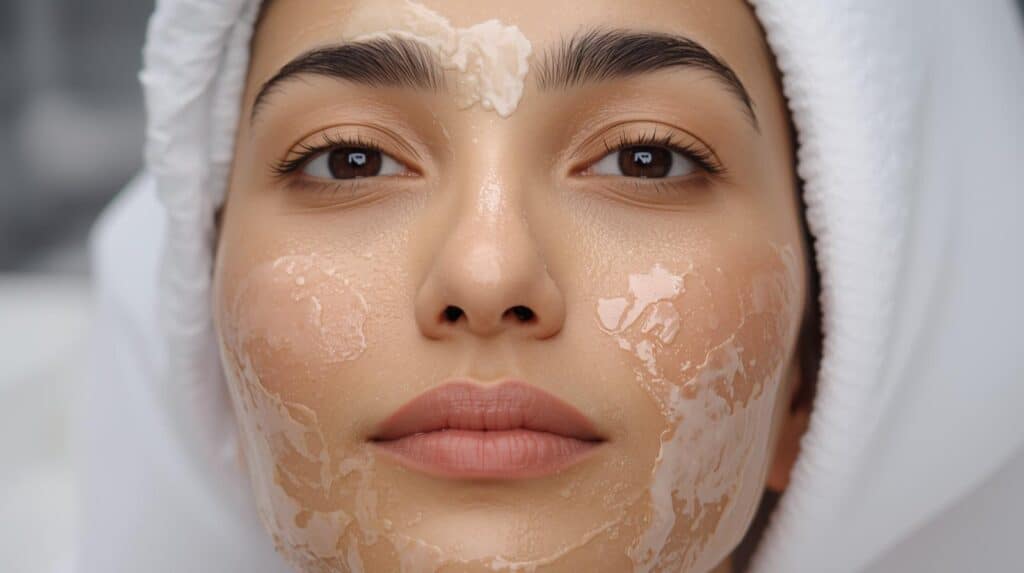
Medium-depth peels need much more recovery time. They are not automatically synonymous with every TCA peel, since TCA can be used at different strengths. Cleveland Clinic notes that additional medium-depth peels may be repeated at roughly 6-12 month intervals if needed to maintain results.
Deep facial peels are different from maintenance treatments. They should not be presented as something to repeat every two or three years. The American Academy of Dermatology and Cleveland Clinic state that a person can have only one deep peel.
How To Know If It Is Too Soon For Another Peel
A calendar date is only a starting point. If your skin is still peeling, red, tender, unusually dry, or easily irritated, it has not fully recovered and another peel should wait.
Also pay attention to how your normal skincare feels. Products that were comfortable before the peel should not suddenly sting or leave the skin feeling increasingly raw. If they do, keep the routine gentle and check with your provider before adding another exfoliating treatment.
Your next appointment may also need to move if you have recently added retinoids, exfoliating acids, waxing, laser treatments, or microneedling. These can increase irritation when they are placed too close to a peel, so timing should be coordinated rather than stacked together.
In other words, do not repeat a peel simply because two or five weeks have passed. The skin’s condition on treatment day matters just as much as the number of days on the calendar.
When To Avoid Chemical Peels
Chemical peels are not appropriate for everyone. In some situations, the safer choice is to postpone treatment, use a shallower peel, adjust medications under professional guidance, or choose a different procedure.
Mayo Clinic lists pregnancy as a reason a doctor may caution against a peel. If you are breastfeeding, discuss the specific peel ingredients and any required medications with your healthcare professional rather than relying on a blanket rule.
Recent chemotherapy, radiation, surgery, or impaired wound healing should be disclosed before treatment because they may change how safely the skin can recover.
Mayo Clinic notes that recent oral isotretinoin can be a reason to postpone or modify treatment. Also disclose topical retinoids, exfoliating acids, benzoyl peroxide, and prescription acne medications because pre-peel instructions may require temporary changes.
A history of frequent or severe cold sores is important because peeling can reactivate herpes simplex and antiviral medication may be needed. Keloid-prone scarring is another major consideration. Autoimmune disease or vitiligo requires individualized medical assessment rather than an automatic blanket exclusion.
After a peel, sun avoidance and broad-spectrum sunscreen are central to aftercare because UV exposure can increase inflammation and the risk of pigment changes.
You do not have to schedule every peel outside summer, but avoid treatment when you cannot realistically limit sun exposure and follow the provider’s recovery instructions.
Healing skin is temporarily more vulnerable to irritation, infection, and abnormal pigmentation.
For medium and deep peels, follow the provider’s specific instructions on total sun avoidance until the skin has healed.
If you are unsure whether a chemical peel is appropriate for you, do not choose peel depth based on an online frequency chart alone.
Discuss your history with an appropriately qualified provider, and use a dermatologist or dermatologic surgeon for deeper peels or if you have a higher risk of scarring or pigment complications.
Frequently Asked Questions
Can You Get A Chemical Peel Every Month?
Some superficial peels may be repeated on a roughly monthly schedule when they are part of an appropriate treatment plan. That does not apply to every peel. Medium-depth peels need much longer intervals, and deep facial peels are not repeat maintenance treatments.
What Happens If You Get Chemical Peels Too Often?
Repeating a peel before the skin has recovered can add more irritation to an already compromised barrier and may increase the chance of prolonged redness, pigment changes, infection, or scarring. Waiting longer is especially important if the previous peel caused more irritation than expected.
Should You Still Get A Peel If Your Skin Is Irritated?
Current irritation is a reason to be cautious. A qualified provider should assess the skin before treatment and may recommend postponing the peel, choosing a shallower option, or addressing the irritation first.
Can You Use Retinoids Between Chemical Peels?
Retinoids can affect how easily the skin becomes irritated around a peel. Tell your provider about both prescription and over-the-counter retinoid use, and follow the specific pre-peel and post-peel instructions you are given rather than stopping or restarting them on your own schedule.
Conclusion
A chemical peel can be a useful resurfacing treatment when the peel depth and treatment goal are well matched, but there is no benefit in repeating one before your skin is ready.
Your provider should choose the depth, acid, concentration, and treatment interval based on your skin tone, medical history, concern, and how you responded to the previous peel.
As a general guide, superficial peels may be repeated every few weeks when appropriate, medium-depth peels need months between treatments, and a deep facial peel is generally a one-time procedure.
Always let the skin heal fully before repeating a peel or adding another resurfacing procedure. If your recovery is taking longer than expected, that is a reason to extend the interval, not to push through the original schedule.
Results vary, so aim for gradual improvement rather than a guaranteed flawless complexion. Gentle aftercare and consistent sun protection also matter between treatments.
Related Articles
Beauty Services List – What’s Worth The Cost And What Isn’t?
Skin Looks Worse After Chemical Peel (What Happened?)
Types Of Chemical Peels – Complete Guide