
5 Best Rubber-Based Gels
Gel manicures can be a convenient choice when you want colour and nail art that hold up beyond a few days.
A good result depends on more than the colour: preparation, the base, curing, and removal all matter.
The base coat helps the rest of the manicure adhere to the natural nail.
One option is rubber base gel, a name commonly used for flexible gel bases.
Depending on the formula, it can also help level minor surface unevenness.
That extra coating supports the nail while worn; it doesn’t repair the nail underneath or make gel damage-proof.
What are the best rubber-based gels?
The best rubber base gel suits your nail type and works with your lamp and polish system. Kodi, Pink Gellac, and In.Hype offer rubber base options. Aimeili’s Nutrition Base is a gel-base alternative, while ORLY Bonder is an air-drying base for regular polish, not a rubber base gel.
A flexible base may suit short natural nails that bend, but very thin, painful, or damaged nails need a different approach from simply adding more gel.
Rubber base isn’t automatically better than every other base. A nail technician can help match flexibility and structure to your nail length and condition.
Before choosing a bottle, decide whether you want a gel manicure or regular lacquer.
We’ll cover formula, lamp compatibility, and colour, then explain who each option may suit.
These comparisons use product information rather than hands-on wear testing. Wear claims are not guarantees, and instructions can change with reformulation.
3 Things To Look For In A Rubber-Based Coat
1. Formulation
“Rubber base” describes a product category, not a standardised formula. Check the brand’s intended use rather than assuming every bottle behaves alike.
A levelling formula can disguise shallow ridges. Don’t use gel to cover an open split, inflamed skin, or a nail that is separating from its bed.
Flexibility can help a coating move with a short natural nail instead of feeling overly rigid.
Long extensions need appropriate structure. A rubber base should not replace builder gel or an extension system unless its manufacturer specifically permits that use.
Many rubber bases are soak-off products, but removal instructions vary. Confirm whether your exact formula soaks off or requires professional filing.
Never peel off a base that is still attached. That can take layers of the natural nail with it.
A compatible base may improve adhesion, but lifting can also come from skin contact, poor preparation, or an unsuitable cure.
If your nails repeatedly peel or become sore after gel, pause the manicures rather than treating another base coat as a repair treatment.
2. UV/LED Properties
Rubber base gels need a compatible curing lamp. Both conventional UV lamps and LED nail lamps can emit ultraviolet light.
A true gel base will not air-dry into a properly cured coating.
Use the exact lamp and curing schedule recommended for your product. Wattage alone does not confirm compatibility.
The British Association of Dermatologists warns that an unsuitable lamp can leave gel improperly cured and increase allergy risk. Keep uncured gel off the skin.
Don’t confuse a gel base with a product labelled “rubberised” for regular polish.
ORLY Bonder, discussed below, is an example of an air-drying lacquer base.
It belongs in a regular-polish routine unless a manufacturer explicitly approves another use.
Buying products from the same brand isn’t enough on its own: brands may sell separate lacquer and gel systems.
Check the base, colour, topcoat, and lamp as a complete system before purchasing.
3. Colour
Rubber bases are available in clear and tinted formulas.
Clear works well when you want the colour coat above it to determine the finished shade.
A tinted base can give a sheer nude or pink finish with fewer separate colour steps.
Choose a tint by undertone and coverage: a milky pink will look different from a warm beige on the same nail.
You may be able to skip coloured gel if you like the tint, but still use the topcoat specified by the system.
Don’t build up thick coats just to make a sheer shade opaque. Follow the permitted layer thickness and cure each layer as instructed.
A smoother base can make fine nail-art lines easier to paint, but good preparation shouldn’t involve aggressively thinning the natural nail.
Best Rubber-Based Gels
1. Kodi Professional Rubber Base Gel
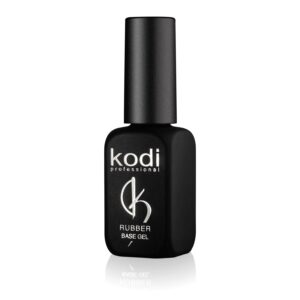
Kodi Professional Rubber Base Gel is a clear gel base to consider if you already use a compatible Kodi system.
Best suited to: short natural-nail manicures where you want a flexible base under gel colour.
Kodi’s Rubber Base product information describes a viscous formula and a sticky dispersion layer after curing.
That thicker texture gives you a different application feel from a runny lacquer base.
Use small amounts and keep control of the brush around the nail folds.
The appeal is flexibility and adhesion within a suitable gel system.
It isn’t a treatment for brittle nails and can’t guarantee that a nail won’t break.
Avoid interpreting claims such as “non-toxic” as meaning allergy-free. Uncured gel still needs careful handling.
A coating can add temporary support, but the result also depends on nail length and everyday wear.
Wearing gloves for cleaning and avoiding using nails as tools helps reduce unnecessary stress on a manicure.
Check compatibility before mixing Kodi base with another brand’s colour or topcoat.
If you’re new to gel, a professional application can help you understand the preparation and layer thickness the product needs.
Prepare according to the product instructions without over-buffing. Use primer only where the system calls for it.
Apply a controlled layer, keeping a small margin from the skin, and cure as directed.
Follow the instructions for the exact bottle and approved lamp rather than applying a generic 30-second or two-minute rule.
Main advantage: a clear, flexible gel base for a coordinated Kodi manicure.
Main limitation: it needs correct curing and careful removal; it won’t automatically stop chipping or lifting.
2. Aimeili Nutrition Base Coat Gel
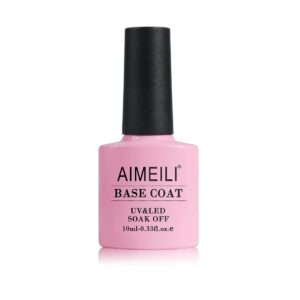
Aimeili Nutrition Base Coat Gel is included as a gel-base alternative rather than a confirmed equivalent to rubber base.
Best suited to: someone seeking a base layer for a compatible Aimeili gel manicure.
The word “Nutrition” should not be read as evidence that it feeds or repairs the nail plate.
Likewise, vegan or cruelty-free claims don’t establish whether a gel will suit someone with a nail-product allergy.
Check the exact product name and formula when ordering, particularly if the listing uses older packaging.
This product is not clearly identified here as a rubber base.
Thickness alone cannot tell you how flexible a cured base will be or whether it can be used for structural overlays.
Treat advertised multi-week wear as a possible outcome, not a promise for every nail type.
If you need a levelling or builder product, verify that the instructions specifically allow that application.
An ordinary base layer and a thicker structural overlay are different uses.
Don’t add extra thickness in an attempt to prevent breakage unless the product instructions support it.
The finishing shine generally comes from the topcoat. A base is primarily there to support adhesion within the system.
For a soak-off version, follow its removal directions and allow enough time for the coating to release without force.
Start with clean, dry nails prepared as instructed. Avoid unnecessary filing and don’t apply over irritated skin.
Apply the recommended layer and cure with the approved lamp for the full specified time before adding colour.
A tacky layer can be normal after curing a gel base, but surface feel alone cannot confirm a complete cure.
Main limitation: choose this for its stated gel-base function, not on the assumption that it performs identically to a rubber base.
3. Orly Bonder Rubberised Nail Base Coat
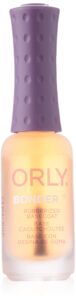
ORLY Bonder Rubberised Nail Base Coat is the important exception in this list.
Best suited to: regular nail polish users who want an adhesive base without a curing lamp.
ORLY’s Bonder product page describes a rubberised formula intended to help polish grip the nail.
It is a lacquer base, not a thick rubber base gel for building an overlay.
That distinction matters if you’re shopping specifically for a lamp-cured manicure.
ORLY also sells gel products, but sharing a brand name doesn’t make different systems interchangeable.
Choose Bonder for its intended regular-polish routine.
It may appeal if your lacquer tends to wear away quickly, although nail preparation and topcoat also affect wear.
It is not a nail-repair treatment or a substitute for assessing persistent splitting.
Its purpose is to improve the bond between the nail surface and polish.
Apply a thin coat rather than trying to create a thick reinforcing layer.
Any advertised wear duration depends on the complete manicure and daily use; don’t expect a guaranteed fortnight from the base alone.
Follow the bottle directions, then apply your regular colour and topcoat.
No curing lamp is needed for this Bonder lacquer base.
For an ORLY gel manicure, choose the base specified by that gel system instead of substituting Bonder.
Main limitation: a useful regular-polish option, but the wrong purchase if you need a true rubber base gel.
4. Pink Gellac Rubber Base UV/LED Base Coat
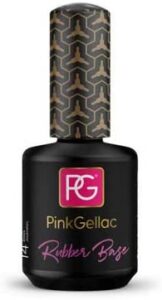
Pink Gellac Rubber Base is a gel option for readers who want to stay within Pink Gellac’s manicure system.
Best suited to: natural-nail overlays where some levelling and support are desired.
Check the exact bottle and current instructions rather than assuming an older marketplace image represents the formula you’ll receive.
A matching base, colour, topcoat, and recommended lamp makes the routine easier to follow.
Pink Gellac’s Rubber Base instructions set out application and removal steps for the system.
The extra coating can support the nail while worn; it doesn’t heal a weak nail underneath.
A thicker base needs controlled placement to avoid pooling near the sidewalls.
Use it to smooth minor surface unevenness, not to seal over deep cracks or damaged skin.
More product doesn’t necessarily mean better support, and overly thick layers can be harder to cure properly.
This is a lamp-cured gel base, not an air-drying polish.
The current Pink Gellac page specifies 60 seconds per base layer under its LED lamp. Follow your exact product’s instructions and recommended equipment.
Actual wear varies. Don’t leave a lifting manicure in place simply to reach an advertised number of days.
Remove it using the brand’s procedure and resist scraping off stubborn patches.
Follow the current preparation instructions for your formula; don’t assume primer is either always necessary or always unnecessary.
Main limitation: correct layer thickness and system compatibility matter more than promises of several weeks without chips.
5. In.Hype Elastic Rubber Base Coat
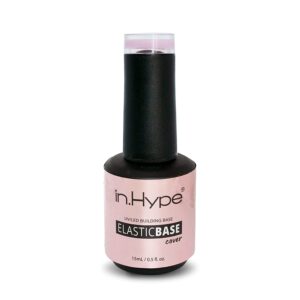
In.Hype Elastic Rubber Base is another flexible gel-base option for natural-nail manicures.
Best suited to: someone choosing a clear base for compatible gel colour or an approved overlay system.
In.Hype offers several base types, so pay attention to the full product name.
Elastic Clear and pigmented cover bases may have different instructions and shouldn’t be treated as identical formulas.
The Elastic Clear product page describes flexibility and smoothing of minor surface unevenness.
If you want a nude finish, compare the brand’s tinted cover bases separately rather than assuming they are simply shades of the same clear base.
A flexible coating may suit short nails that bend, but it does not guarantee freedom from breakage.
Levelling can improve appearance without repairing splits in the natural nail.
Avoid using a soft base as a substitute for the structural product needed for long extensions.
A tinted cover base may reduce the need for a separate colour coat, where its instructions allow that use.
For example, In.Hype recommends a thin Elastic Clear layer beneath its Peach cover base. Check the instructions for the shade you choose.
A sticky surface may remain after the prescribed cure. Avoid touching it with bare fingers.
Do not shorten curing to preserve tackiness, and don’t judge cure quality by hardness or shine alone.
Use compatible finishing products and follow the complete application and removal routine.
Main limitation: you need to distinguish the different base formulas and use the right lamp. If application causes burning, itching, or swelling, stop and seek advice rather than covering the reaction with more gel.
Related Articles
Best Oils For Cuticles – Buyer’s Guide