
How Often Should You Get A Microdermabrasion?
Smoother, more even-looking skin is a common skincare goal, and professional exfoliating treatments are one option people consider alongside a consistent home routine.
Products, sun protection, lifestyle habits, and in-office treatments can all play different roles depending on your skin concerns and budget.
The important part is choosing treatments that match your skin and using them at a frequency your skin can tolerate.
Alongside cleansers, moisturizers, sunscreen, and other at-home products, you can also consider professional cosmetic treatments.
Professional treatments vary widely in intensity, downtime, cost, and evidence, so the best option depends on the concern you are trying to address.
One of the most popular treatments you can get done today is called microdermabrasion.
Because microdermabrasion is a form of mechanical exfoliation, more frequent treatment is not automatically better. Your skin needs time to recover between sessions.
So, how often should you actually get the procedure done?
There is no single ideal schedule for everyone. Some people can tolerate treatments as often as weekly, while others need several weeks between sessions. Your provider should base the interval on your skin, treatment intensity, and how you recovered from the previous appointment.
Before booking your appointment, read through our article to find out what to expect from your microdermabrasion procedure.
Who would benefit from the treatment the most? What benefits and risks are involved, and more!
What Is A Microdermabrasion?
Microdermabrasion is a minimally invasive cosmetic exfoliation treatment that removes part of the outermost layer of dead skin cells.
It works by gently abrading the surface of the skin rather than removing a full living layer. The result can be a temporarily smoother, brighter-looking surface.
Two common approaches are diamond-tip microdermabrasion and crystal microdermabrasion.
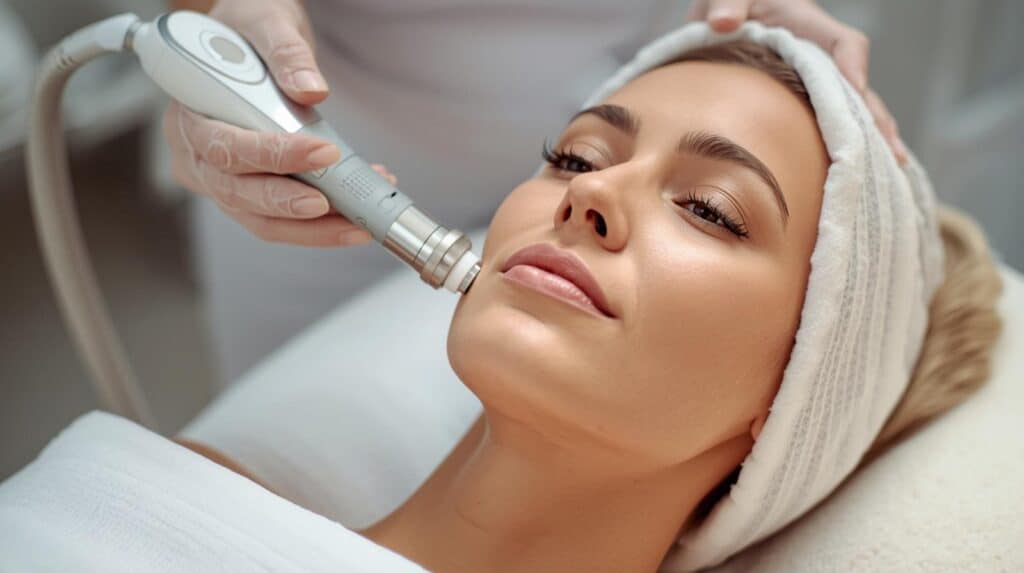
Diamond-tip microdermabrasion uses a handheld abrasive tip to buff away surface dead skin cells while suction removes the loosened debris.
The treatment may feel like mild sanding or suction. It should not require the kind of anesthesia used for deeper dermabrasion, although comfort varies from person to person.
Crystal microdermabrasion uses a stream of fine crystals, such as aluminum oxide or sodium bicarbonate in some systems, to exfoliate the surface before the particles and debris are vacuumed away.
These crystals are abrasive particles rather than a chemical peel. They loosen surface dead skin cells mechanically, and the device removes the debris with suction.
Compared with dermabrasion, lasers, or deeper peels, microdermabrasion is relatively superficial, but it can still cause redness, dryness, sensitivity, bruising, or irritation.
Most people describe the procedure as uncomfortable rather than painful, but it is not intended to treat every skin condition.
Results are usually modest and cosmetic, with smoother texture and a more radiant appearance being common goals.
If you’d like to see the microdermabrasion process in action, take a look at this video from The Cosmetic Clinic on YouTube.
The Benefits Of Microdermabrasion
The most important thing to remember about a microdermabrasion is that it isn’t meant to transform severely damaged skin.
Unfortunately, that means that you probably won’t see striking results if you have very wrinkled skin, skin with harsh hyperpigmentation, or deep acne scars.
Microdermabrasion is mainly used to improve superficial texture and tone. Claims about collagen stimulation are less important than its direct mechanical exfoliation effect.
You may notice smoother texture or a brighter look after one session, but deeper wrinkles, sagging, and significant pigmentation usually need other treatments.
Some people notice a cosmetic improvement after the first treatment, while more persistent concerns may require a series of sessions.
Microdermabrasion is generally better suited to mild superficial texture and discoloration than to active inflammatory acne. If you have active acne, ask a dermatologist whether mechanical exfoliation is appropriate for you.
It will not remove deep pitted acne scars. It may make mild discoloration or superficial unevenness look less noticeable over time, but post-acne dark marks are not simply layers of dead skin that can be scraped away.
Microdermabrasion can be used on many skin types, but it is not universally appropriate.
Dry, oily, combination, and deeper skin tones may all respond differently, so the settings and frequency should be individualized.
Sensitive skin, eczema, psoriasis, frequent rashes, or a tendency to develop dark marks after irritation are reasons to discuss the treatment with a dermatologist first.
Who Should Get A Microdermabrasion?
Microdermabrasion is best suited to relatively superficial cosmetic concerns.
It may help make fine lines, mild acne scarring, uneven tone, blackheads, or enlarged-looking pores less noticeable.
Results vary, and most people need more than one treatment if they are targeting a persistent cosmetic concern.
It’s best to wait to get a microdermabrasion done until your skin is in a calmer state because it can further aggravate already irritated skin.
If your skin is dry, irritated, sunburned, or otherwise compromised, wait until it has settled before considering another exfoliating treatment.
Open sores, active infections, cold sores, and significantly inflamed acne should be evaluated before treatment.
Abrasive treatment over broken or inflamed skin can worsen irritation and increase the risk of complications.
If you are taking or recently took isotretinoin, tell your dermatologist or treatment provider before booking microdermabrasion.
The concern is specific to medications and skin condition rather than all oral acne treatments. The American Academy of Dermatology notes that people who have taken isotretinoin within the previous six months may have a higher complication risk and may need to wait.
Exfoliating skin that is already dry, inflamed, or fragile can increase stinging, peeling, and irritation.
Microdermabrasion is most reasonable for people seeking a modest improvement in superficial texture or tone and who do not have a contraindication to mechanical exfoliation.
It doesn’t work miracles (no treatment does).
Maintenance treatments may help preserve smoother-looking skin, but frequency should be based on how your skin responds rather than on a fixed schedule.
Potential Microdermabrasion Risks
Even if you like the result after your first procedure, give your skin enough time to recover before repeating the treatment.
Too-frequent exfoliation can increase redness, dryness, sensitivity, and post-inflammatory discoloration.
Microdermabrasion temporarily makes the treated skin more sensitive because it removes part of the outer surface layer.
That is why the interval between sessions should be long enough for redness, dryness, and sensitivity to resolve.
Over-treating can disrupt the skin barrier and lead to persistent irritation, so tell your provider if your skin has not returned to normal before the next appointment.
Choose a qualified provider who follows local licensing rules, uses clean equipment, and can recognize when a skin condition makes the treatment inappropriate.
If you have sensitive skin, a history of scarring, changing moles or lesions, or recent isotretinoin use, seeing a dermatologist before treatment is especially important.
Look for a reputable provider who explains the treatment, risks, aftercare, and realistic expected results before beginning.
After exfoliation, the skin may be more sensitive to sunlight, so sun protection becomes especially important.
Follow your provider’s aftercare instructions and use a gentle broad-spectrum SPF 30 or higher when appropriate. A hat and shade can provide extra protection, but sunscreen is generally an important part of post-treatment care rather than something to avoid automatically.
Unprotected UV exposure can worsen redness, sensitivity, and post-inflammatory discoloration.
Proper Aftercare For A Microdermabrasion
Recovery is usually short, but gentle aftercare can make the first day or two more comfortable:
Hands And Products Off
Your skin may feel temporarily sensitive after treatment, so avoid unnecessary friction and irritating products.
Mild redness, dryness, or sensitivity can occur for about a day, although some people take longer to settle.
Be gentle with cleansing, avoid picking or rubbing, and keep sun protection consistent.
Until your skin feels normal again, avoid strong exfoliants and potentially irritating actives such as AHAs, BHAs, retinoids, scrubs, and benzoyl peroxide. The exact pause can vary by treatment intensity and your provider’s instructions.
Anti-inflammatory Products
Mild redness or slight swelling can occur after treatment and often settles within a day.
Significant pain is not expected. Use only the soothing products recommended by your provider rather than applying a random anti-inflammatory cream to freshly treated skin.
A cool, clean compress can help with temporary warmth or discomfort. Avoid ice directly on the skin.
Switch To Gentle Products
- Continue gentle cleansing, but avoid scrubs, exfoliating acids, fragranced products that sting, and other unnecessary irritants while the skin is recovering.
Choose a simple cleanser and moisturizer that you already know your skin tolerates. - Our picks for a gentle, yet effective, cleanser and moisturizer combo are this face wash and this cream – both by Vanicream!
- SPF
- Use broad-spectrum SPF 30 or higher as part of your regular daytime routine after microdermabrasion, along with shade and protective clothing when possible.
Consistent UV protection helps reduce the chance that redness or dark marks will become more noticeable.
Related Questions
How much does a microdermabrasion treatment cost?
Pricing varies widely by location, provider, treatment area, and whether microdermabrasion is bundled with other services, so check current local pricing before booking.
Make sure you do research and ask around to ensure that you’re getting a reputable treatment at a fair price.
The treatment itself often takes roughly 30 to 40 minutes, although a full appointment may be longer if consultation or other services are included.
How old do you have to be to get a microdermabrasion treatment done?
There is no useful universal minimum age for cosmetic microdermabrasion. Treatment in children or teenagers should be based on a real skin concern and professional medical guidance rather than cosmetic routine.
For younger patients, talk to a dermatologist or doctor before considering the procedure.
There is also no universal age cutoff at 70. Older adults may have thinner or more fragile skin, so suitability should be assessed individually by a qualified provider.
If you have a chronic skin condition, take medications that affect the skin, scar easily, or are unsure whether microdermabrasion is appropriate, ask a dermatologist before treatment.
Microdermabrasion FAQs
How Often Can You Get Microdermabrasion?
Some people can safely repeat treatment after about a week, while others need several weeks. Your provider should base the schedule on treatment intensity, your skin type, and how quickly redness or sensitivity resolves.
Can Microdermabrasion Help Acne Scars?
It may improve the look of very mild superficial acne scarring or uneven texture, but it cannot remove deep ice-pick, boxcar, or rolling scars. Those usually require treatments that reach deeper layers of the skin.
Can You Get Microdermabrasion With Active Acne?
Active inflammatory acne can become more irritated with mechanical exfoliation. If you have painful, cystic, open, or widespread acne, ask a dermatologist whether microdermabrasion should be postponed.
Do You Need Sunscreen After Microdermabrasion?
Yes. The treated skin can be more sensitive to sunlight. Use a gentle broad-spectrum SPF 30 or higher as directed by your provider, and add shade, hats, and other sun-protective measures when you are outdoors.
Related Article
What Is A Hydrodermabrasion? – How It Compares To A Microdermabrasion
What Is Fibroblasting? – Everything You Need To Know