
Can You Shower With Press On Nails?
Press-on nails are a convenient option when you want a quick, easy, and affordable manicure without committing to a salon enhancement.
With adhesive tabs or nail glue, plenty of shapes and sizes, and countless designs, press-on nails can give you a polished manicure without a salon appointment.
They can look surprisingly natural when the size and shape fit well, and many sets can be applied at home in well under an hour.
The tradeoff is that wear time depends heavily on prep, fit, adhesive type, and how much water and mechanical stress the nails encounter.
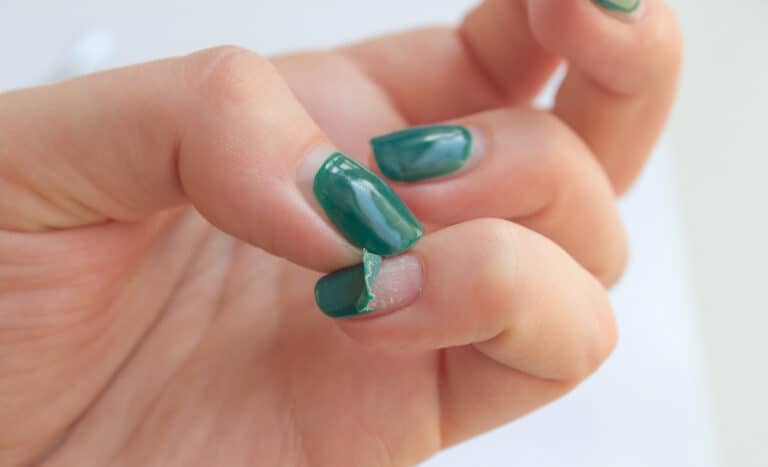
One common issue is that a press-on can lift or pop off unexpectedly, especially when the fit or adhesive bond is weak.
One practical concern is water exposure. Showering, washing your hair, doing dishes, and soaking your hands can all affect wear time, especially once an edge starts to lift.
Removal depends on the adhesive. Adhesive tabs often release with warm soapy water or oil, while glue-on press-ons may need a longer soak and sometimes acetone or another remover recommended by the brand.
So, if that’s the case, can you shower with press-on nails?
Yes, you can shower with press-on nails. The key is to let the adhesive set according to the product directions, avoid prolonged soaking and very hot water, and watch for lifting. If water starts getting underneath a loose nail, remove and reapply it rather than sealing moisture in place.
Below, we’ll cover how water affects different adhesives, how to prep and size press-ons properly, and how to shower, wash your hair, and do wet chores without shortening wear unnecessarily.
Do Press-On Nails Come Off In Water?
The reason showering with press-on nails raises questions is that many temporary adhesive tabs are designed to loosen with warm water, oil, or soaking. Glue-on sets can behave differently, so always check the removal instructions for your specific product.
One appeal of press-ons is that they can be easier to remove than some salon enhancements when you follow the adhesive’s directions and avoid peeling or prying them off the natural nail. Compared with longer-wear systems such as hard or soft gel enhancements, removal can be simpler when the correct adhesive and method are used.
Some tab-applied sets can come off with warm soapy water and oil, but stronger nail glue may require acetone or a dedicated glue remover. Do not force a press-on off if it is still firmly attached.
Soaking is different from a quick shower because prolonged water exposure gives moisture more time to work around the edges of the adhesive bond.
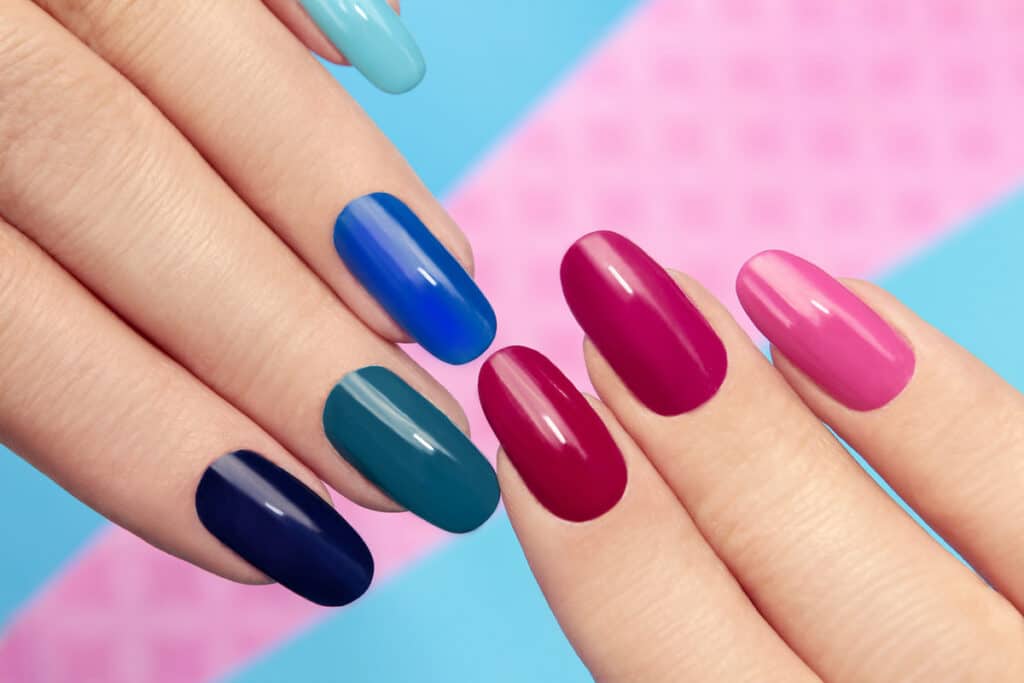
The important word here is “soak.” Prolonged soaking can encourage water to work around lifted edges and weaken some adhesive tabs or glue bonds.
During normal handwashing or a shower, most water runs over the nail surface. Problems are more likely when a press-on has already lifted enough for water to collect underneath.
Sure, exposure to water has the potential to weaken the adhesive and make your nails a little wobbly.
Repeated soaking and prolonged water exposure may shorten wear time, but there is no universal one-week-versus-two-week rule because adhesives and application methods vary.
Water can weaken some press-on bonds over time, but a brief shower is not the same as a deliberate removal soak. Even soaking does not guarantee that every glue-on set will release without additional remover.
So, you do not need to keep your hands completely dry throughout the manicure. The goal is to limit prolonged soaking and deal with lifting early.
There are some steps you can take to ensure that your nails survive regular handwashing and showering, and it starts with proper application.
Proper Application
How long your press-on nails last depends on nail prep, sizing, adhesive type, application technique, nail length, and what your hands do each day.
Start with the instructions on your press-on nail packaging, because adhesive type and recommended set time vary. A few general habits can also help the bond last longer.
These details matter even more if your hands spend a lot of time in water.
Prepping Your Nails
Before you apply your press-on nails to your natural nails, you need to make sure your nails are well-prepped.
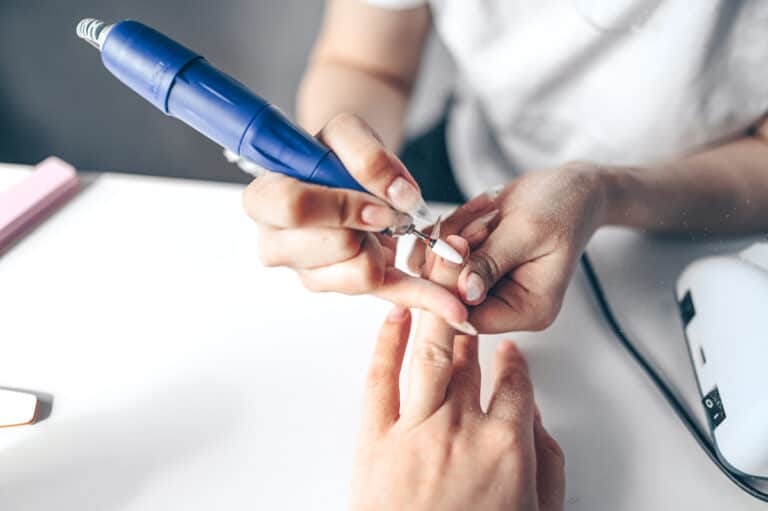
Prepping usually includes shaping the nails, removing surface oil and dust, and gently pushing back the cuticle area so the press-on sits on the nail plate rather than on skin. Here are some basic steps:
- Trim your nails if needed so the press-on sits comfortably and does not leave your natural nail protruding in a way that catches during daily activities.
- File your nails to get rid of any jagged edges that can make the application unreliable.
- Clean the nail plate as directed by the press-on brand. Many kits recommend an alcohol prep pad to remove surface oils and dust before application.
- Gently push back the cuticle area with an orange wood stick if your nails tolerate it.
The goal is to keep adhesive off living skin and help the press-on sit flat on the nail plate. Do not cut or aggressively scrape healthy cuticle tissue.
These steps give the adhesive a cleaner, better-fitting surface to bond to without requiring aggressive filing of the natural nail.
Pick The Right Size
Another important step is choosing the right size for your press-on nails. The artificial nail should cover the nail plate from sidewall to sidewall without pressing into the surrounding skin.
A close fit improves comfort and gives the adhesive more useful contact with the nail plate.
Your box of press-on nails comes in a wide range of sizes.
Keep in mind that corresponding nails can be slightly different sizes from one hand to the other, so size each nail individually.
The most important part of the size selection process is to make sure that the fake nail is not wider than your nail bed.
If the press-on is too wide, it may sit on skin instead of the nail plate, which can reduce adhesion and make lifting more likely.
If you are between sizes, follow the brand’s sizing advice. Many press-ons can be gently filed at the sidewall for a closer fit rather than forcing on a nail that overlaps skin.
Using A Little Glue
Adhesive tabs are convenient for shorter wear and easier removal, but nail glue may be a better fit when you want a stronger bond and the press-on manufacturer allows it.
If you want longer wear than adhesive tabs provide, a nail glue specifically intended for press-ons may create a stronger bond. Use it only if the press-on brand allows glue application.
Nail glue usually resists brief water exposure better than temporary adhesive tabs, but prolonged soaking can still contribute to lifting and removal may require acetone or a dedicated glue remover.
Follow the glue manufacturer’s directions for how much to apply and where to place it. More glue is not automatically better, and excess adhesive should not flood onto the surrounding skin.
For a visual tutorial on how to properly apply press-on nails, take a look at this video on Faye In The City on YouTube.
Shower Mindfully
Once your press-on nails are properly applied and the adhesive has had time to set, normal showering is usually manageable.
You do not need to avoid all water, but the following habits can reduce unnecessary soaking, lifting, and snagging:
Wait A Few Hours
Try not to jump straight into a shower or bath immediately after applying your press-ons.
If possible, avoid prolonged water exposure immediately after application and follow the adhesive’s stated set time. Some brands recommend keeping the nails dry for a few hours, while others specify a different interval.
Giving the adhesive its full recommended set time before prolonged water exposure can improve the initial bond and reduce early lifting.
Do not skip normal handwashing when it is needed for hygiene. The practical point is simply to avoid unnecessary soaking right after application.
Keep Showers Short
There is no universal 10-minute cutoff, but shorter showers and less time with the hands submerged can reduce prolonged moisture exposure around the adhesive.
You do not have to avoid baths entirely, but long periods with the hands submerged can shorten wear time, particularly with adhesive tabs or nails that already have lifted edges.
Avoid Hot Water
Very hot water and prolonged soaking can weaken some adhesives and may make certain plastic press-ons more flexible.
If an edge begins lifting after water exposure, dry the area and remove or reapply the nail according to the adhesive directions rather than pressing a loose nail back down over trapped moisture.
Use a comfortable shower temperature and avoid directing very hot water onto the hands for long periods if you are trying to maximize press-on wear.
Don’t Scrub Your Scalp
If you’re washing your hair, avoid using the press-on tips as scalp-scrubbing tools.
Use the pads of your fingertips instead, or a scalp brush if that is comfortable for you.
Pressing or scratching with the nail tips creates leverage at the adhesive bond and makes lifting more likely.
Using the fingertips rather than the nail tips reduces leverage on the press-ons and can help prevent catching or lifting.
Another reason to be extra careful during hair washing is that strands of hair can get caught under the press-on nails, causing pulling and tugging.
Hair caught beneath a lifted edge can also tug on the press-on and your natural hair, so stop and reposition or remove a loose nail rather than forcing it through the wash.
Wear Plastic Gloves
For dishwashing and household cleaning, waterproof reusable gloves can reduce prolonged contact with water, detergents, and cleaning products. Gloves are usually unnecessary for an ordinary shower.
Choose gloves that fit comfortably and keep the inside dry.
For chores, gloves can protect the manicure from repeated soaking. If water gets inside a glove, remove it and dry your hands rather than leaving moisture trapped around the nails.
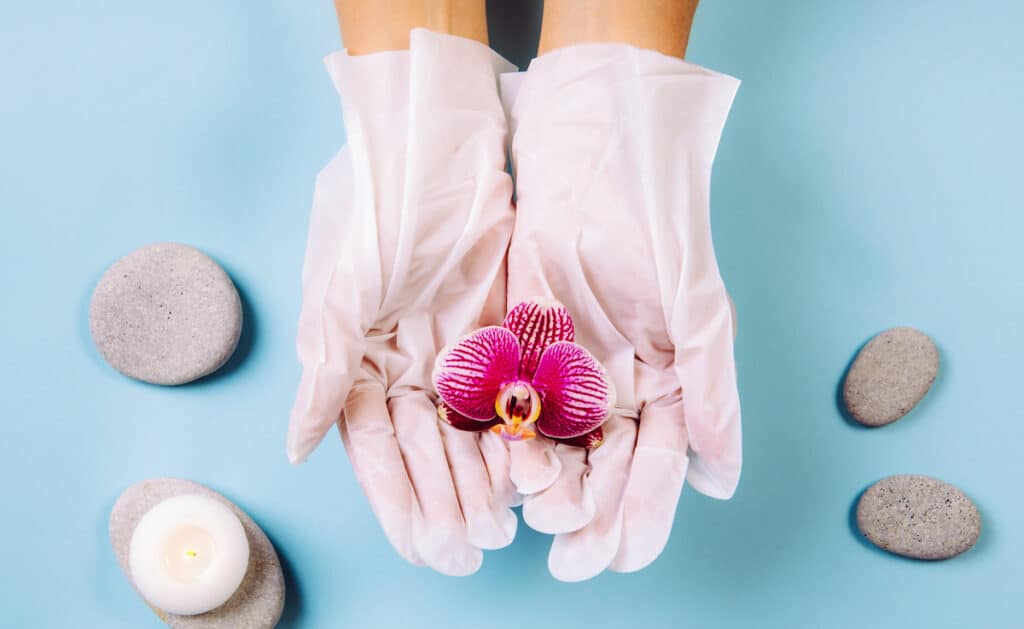
When washing hair, use your fingertips or a scalp brush rather than digging with the press-on tips, which can catch strands and create leverage on the adhesive.
For cleaning or dishes, a reusable waterproof pair is usually more practical than single-use gloves.
Finger covers may help with specific wet tasks, but anything that traps water around a lifted nail can work against you.
Final Thoughts
Press-on nails are convenient and removable, but their wear time is more sensitive to fit, adhesive choice, water exposure, and daily habits than many salon enhancements.
A normal shower is usually fine once the adhesive has set. The bigger concerns are prolonged soaking, very hot water, snagging, and allowing moisture to remain beneath a lifted nail.
With good prep, proper sizing, the right adhesive, and gentle removal, press-ons can be a convenient short-term manicure. Wear time varies widely, and they should not be expected to match gel or acrylic longevity in every case.
Related Articles
Why Do My Press-On Nails Hurt?
Best Long And Short Coffin Press-On Nails
Acrylic And Press-On Nails For Men – Complete Guide