
Is It Bad To Sleep With Mascara On?
Woke up with yesterday’s mascara still on? Remove it gently rather than rubbing away the smudges or adding another coat.
One accidental night is usually not a reason to panic if your eyes feel normal. Making it a habit, though, leaves product on your lashes longer than intended.
Falling asleep in makeup once is unlikely to cause a major problem, but regularly sleeping in eye makeup is not a good habit.
Mascara coats the lashes to make them look longer, fuller, and more defined. That coating belongs in your daytime makeup routine, not your overnight one.
The aim is to enjoy the look while removing the product without pulling at your natural lashes.
In addition, mascara can be quite long-lasting and difficult to remove, especially if it’s waterproof.
There are plenty of reasons someone might skip mascara removal before bed, from being tired to wearing a stubborn waterproof formula.
It may feel like a shortcut, but leaving mascara on overnight can make lashes feel stiff, leave residue around the eyes, and make removal harder the next morning.
Is it bad to sleep with mascara on?
Yes, it is best to remove mascara before sleeping. Overnight wear can leave flakes and residue near the eyes and put friction on stiff, coated lashes. If it happens once, remove it gently when you wake up. Eye pain, light sensitivity, or a change in vision needs prompt medical attention.
Waterproof, washable, and tubing mascaras should all come off before bed. A long-wear label does not mean a formula is intended for sleeping in.
Below, we’ll cover the possible effects, what to do the morning after, and how to remove different formulas without scrubbing.
Why You Should Avoid Sleeping In Mascara
Sleeping in mascara can increase the chance of eye irritation, smudging, lash-line buildup, and mechanical stress on the lashes.
A gentle makeup-removal routine can reduce these problems by removing mascara without excessive rubbing or tugging.
Eyelashes have a purpose, and their main job is to keep dust, debris, and lint from entering the eyes.
Keeping the lash line reasonably clean helps reduce product buildup and residue, especially if you wear multiple coats or waterproof mascara.
It can be tempting to keep applying multiple layers of mascara, but that can lead to clumps forming on the lashes, which can dry out and crumble into your eyes.
In addition, sleeping with mascara can leave flakes or smudges around the eyes, while rubbing against a pillow can put extra friction on stiff, coated lashes.
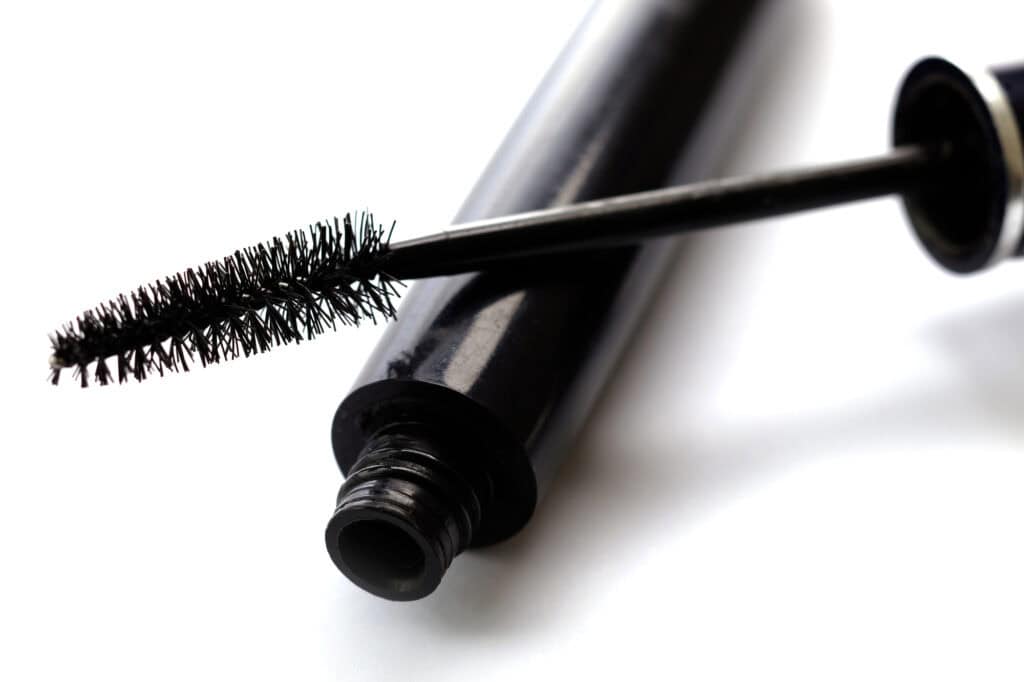
Have you ever woken up with raccoon eyes? This can result from not removing mascara properly before bed.
Mascara can transfer onto your pillow and the skin beneath your eyes. Smudges alone do not mean you have an infection, but they are a reminder to remove the remaining product.
The important distinction is between a messy lash line and symptoms coming from the eye itself. Do not assume pain or blurred vision is just leftover makeup.
Adverse Side Effects Of Sleeping In Mascara
Not everyone who sleeps in mascara develops symptoms. The concerns below are possible problems, not guaranteed consequences of one missed removal.
If you fall asleep with mascara on once, there is usually no reason to panic. Remove it gently when you wake up and pay attention to any unusual irritation.
Start with clean hands. If you wear contact lenses, remove them before taking off eye makeup; do not keep wearing lenses in an irritated eye.
Soften the mascara with a remover suitable for its formula, then gently wipe away what releases. Do not pick off dried clumps or use your nails to scrape the lash roots.
Once the mascara is off, check how your eyes feel. Skip fresh eye makeup if the area is still sore, itchy, or red.
Leaving old makeup and residue around the lash line is not ideal for hygiene, especially if mascara is also past its recommended period of use.
Keep track of when you opened the tube. Follow the manufacturer’s replacement instructions, and discard mascara sooner if it changes smell or texture or causes irritation.
Do not share mascara, and keep the cap closed between uses. A clean-looking wand does not guarantee that a tube is free of contamination.
Never add water or saliva to revive a dried-out tube. Replace it instead.
These habits matter whether or not you ever sleep in mascara. Overnight removal and safe product storage address different parts of eye-makeup hygiene.
The FDA’s eye-cosmetic safety guidance explains contamination risks and advises discarding eye cosmetics used when an eye infection developed.
1. Eye Irritation
Flakes and residue may irritate the eyelids or eye surface, particularly if you rub your eyes when you wake up.
Eye irritation can affect the eyelids, lash line, or surface of the eye, causing redness, watering, burning, or discomfort.
Residue or flakes from mascara can make the eyes feel dry, gritty, or irritated in some people.
Waterproof mascara is not automatically more irritating, but it often requires more thorough removal, which can lead to extra rubbing if you do not use an appropriate remover.
If a loose flake gets into your eye, rinse gently with clean water or sterile saline. Do not try to fish it out with a cotton bud, fingernail, or mascara wand.
Get urgent eye care for significant pain, light sensitivity, marked redness, or new blurred vision. The NHS lists these as warning signs; do not wait for them to become a recurring problem.
A gritty feeling that does not settle after gentle rinsing also deserves an eye-care assessment, especially if you wear contact lenses.
Use eye-makeup remover only on the external area as directed. It is not an eye rinse, and you should not put cleanser or oil directly into the eye.
If removal itself causes burning, stop using that product. More remover and more rubbing are not the answer to an irritated eye.
2. Bacteria
Contaminated eye makeup can cause infection. Sleeping in mascara does not automatically mean bacteria will infect your eyes, but it is a reason to take product hygiene seriously.
A tube’s age, how it is stored, and whether it is shared all matter. Removing mascara nightly does not make an old or contaminated tube safe to use.
Leaving makeup residue around the lash line overnight can contribute to irritation and poor eyelid hygiene, particularly when it happens often.
You may notice crusty residue, dryness, itchiness, or redness around the lash line.
Arrange medical advice for discharge, worsening swelling, or redness that does not settle. Pain, light sensitivity, or vision changes warrant urgent assessment.
They can determine whether you are dealing with simple irritation or something that needs treatment.
If an infection is suspected, avoid eye makeup until you have advice and the problem has resolved. Do not cover symptoms with fresh mascara.
Serious eye complications are not the expected result of sleeping in mascara, but persistent or severe symptoms should not be ignored.
Keep your removal products and reusable pads clean as well. Using a dirty cloth around the lash line undermines an otherwise careful routine.
3. Styes/Swelling
The linked Veterans Optometry Partners of America article discusses overnight mascara wear. A published case report described deposits beneath the eyelids after more than 25 years of heavy mascara use with inadequate removal. That unusual case should not be presented as the expected result of sleeping in mascara once.
Concretions and styes are different problems. A deposit beneath the eyelid is not the same as a tender bump at the lash line.
Swelling can be related to irritation, an allergic reaction, contaminated or old makeup, rubbing, or another eyelid problem.
Styes can also occur if lash follicles or glands around the eyes become infected.
Do not squeeze an eyelid bump or try to remove material from beneath your eyelid yourself. Have an eye-care professional assess persistent swelling or a painful lump.
4. Dry/Brittle Lashes
Dried mascara can make lashes feel stiffer and more brittle until the product is removed.
Waterproof formulas are designed to resist moisture and may require more careful removal, which can increase mechanical stress if you rub or pull at the lashes.
Adding new coats over yesterday’s mascara can make clumps harder to remove. Start on clean lashes instead.
Stiffness from a mascara coating does not necessarily mean the lash itself has been permanently damaged.
Repeated pulling or rough removal can contribute to lash breakage. One forgotten cleanse does not mean your lashes will stop growing.
Avoid pulling individual flakes from the lashes, even if they seem easy to pinch off. Soften the coating first.
If you notice persistent gaps, unusual shedding, or lashes breaking despite gentle handling, seek advice rather than assuming mascara is the only cause.
There is no need to apply a lash serum or household oil as an emergency fix after one night. Focus on gentle removal and how your eyes feel.
If waterproof mascara repeatedly takes too much rubbing to remove, consider a washable or tubing formula with removal directions that fit your routine.
Changing your sleeping position is not a substitute for taking mascara off before bed.
5. Other Skin Conditions
If you already have sensitive skin, eyelid eczema, or a history of eye-area irritation, sleeping in mascara may make the area feel more uncomfortable.
People with sensitive skin or eyes may notice irritation sooner, so gentle removal is especially important.
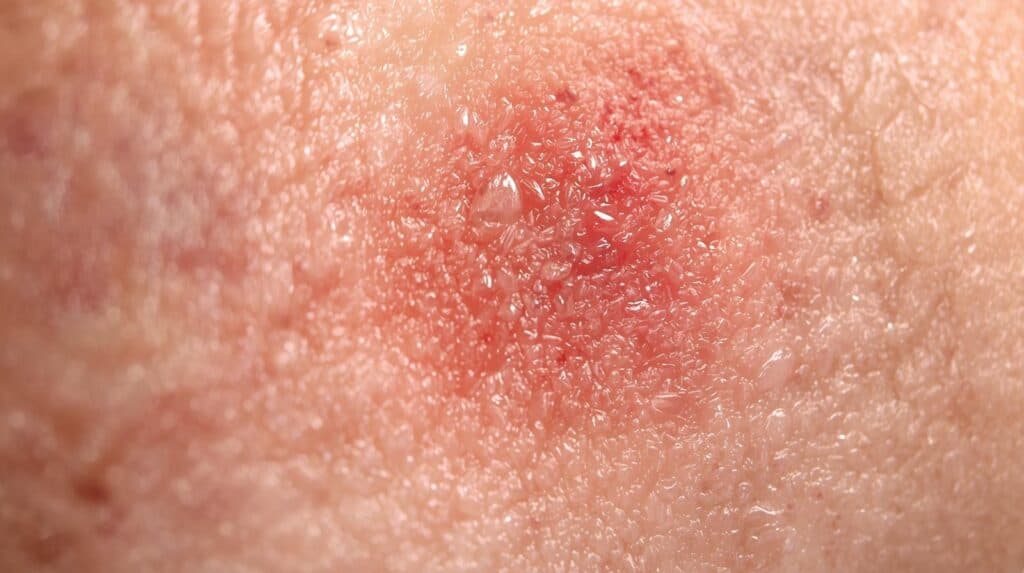
If you already have an eyelid condition, follow the cleansing plan recommended by your clinician. Ordinary makeup removal may not replace that care.
Avoid mascara on actively irritated eyelids. Give the area a break instead of trying to conceal redness or flakes with more makeup.
Mascara can contain pigments, preservatives, waxes, and film-forming ingredients that some people may be sensitive or allergic to.
If a mascara repeatedly causes itching, burning, swelling, or rash, stop using it rather than assuming the reaction is only from sleeping in it.
How To Properly Remove Mascara
The easiest removal method is the one that matches your mascara. Check the tube’s directions before choosing a remover, especially for waterproof or tubing formulas.
Unless you have blonde or fair lashes, it can be hard to see if the mascara is gone.
Smudges the next morning can mean some pigment remained at the lash roots or under the eyes. Aim for careful removal, not repeated scrubbing until the skin feels sore.
Sometimes mascara can be challenging to detect, and you can still have product lingering around your lashes.
You do not need every method below. Choose one suitable makeup-removal step, then cleanse the rest of your face as needed.
Waterproof mascara can take more effort to remove because it is designed to resist water. An oil-based or bi-phase eye makeup remover is often effective, but follow the directions for the specific formula you use.
For tubing mascara, follow the brand’s directions, which often use warm water and gentle pressure to release the coating. Do not assume an oil remover is necessary for every mascara.
Begin with washed hands and remove contact lenses first. Keep your eyes closed while working over the lashes.
1. Oil-Based Eye Makeup Remover
An oil-based or bi-phase eye makeup remover is a useful option for many waterproof formulas, but it is not mandatory for every mascara.
An oil-based eye makeup remover can help dissolve many long-wear and waterproof formulas with less rubbing.
Whether you wear regular or waterproof mascara, a remover formulated for the eye area can make removal easier and more comfortable.
Shake a bi-phase remover if its label instructs you to. Moisten a soft pad so it glides without dragging, and avoid dripping product into the eye.
Hold the pad lightly against the closed lashes for the contact time recommended on the remover. Give the formula time to soften before wiping.
Wipe gently in the direction of the lashes, then use a clean section of the pad for remaining residue. Repeat only as needed, without pressing on the eyeball.
Price is less important than eye-area suitability and formula compatibility. Stop using a remover that repeatedly stings or irritates you.
Rinse afterward if the remover’s instructions require it. Avoid following with a harsh scrub or exfoliating cleanser around the eyes.
2. Cotton Rounds
Cotton rounds are one common tool for removing eye makeup.
Choose a soft, low-lint pad that does not leave loose fibres around the lashes.
Moisten it with the remover before touching your eyelid. A dry pad can drag at the skin and lashes.
Work on one closed eye at a time and use a fresh pad or clean surface for the other eye.
If mascara remains, allow more softening time rather than increasing pressure. Do not push the pad beneath the eyelid.
Disposable pads are convenient, while reusable pads can reduce waste when washed properly. Neither needs to be rough to work.
Reusable cotton rounds can be a lower-waste option if the fabric is soft enough for the eye area and washed thoroughly between uses.
Wash reusable pads according to their care instructions and let them dry fully. Do not reuse a damp, makeup-covered pad the next evening.
Whichever tool you use, avoid aggressive rubbing and use a clean surface each time.
If pads feel scratchy even with enough remover, an eye-area-safe cleansing balm may be more comfortable.
3. Double Cleanse
Double cleansing is optional, particularly useful when you also wear face makeup or sunscreen. It is not a requirement just because you wore mascara.
Double cleansing involves using two cleansers to break down makeup, sunscreen, dirt, pollutants, and other debris.
For the first step, choose a makeup-removing oil or balm that is labelled suitable for the eye area if you plan to use it on your lashes.
Gently dissolve the makeup as directed. Some facial cleansing oils are not intended for use around the eyes, so check rather than assuming.
Rinse the first cleanser according to its instructions. If the mascara is already removed, there is no need to massage the lash line again.
Use a gentle second cleanser on the rest of your face if needed, keeping it out of your eyes.
Double cleansing can be useful for heavy makeup or sunscreen, but you do not need to scrub the eye area twice if the mascara has already dissolved.
If two cleansers leave your eyelids dry or tight, simplify the routine instead of adding more products.
4. Cleansing Balm
A cleansing balm labelled for eye-makeup removal may suit you if you prefer using your fingertips rather than pads.
Cleansing balms are usually rich, semi-solid cleansers that melt into an oily texture as you massage them.
They are usually oil-based and can help break down and eliminate traces of makeup, sunscreen, and more.
A balm can serve as the first cleanse, so you usually do not need a separate cleansing oil as well.
With clean fingertips and closed eyes, gently work the balm over the lashes as its directions allow. Avoid pushing it into the waterline or pulling at lash clumps.
Add water and rinse as directed. Do not assume every balm rinses off in exactly the same way.
If a balm leaves a film that bothers your eyes, try a dedicated eye-makeup remover instead.
Cleansing balms usually soften into an oily texture as they warm on the skin, then emulsify with water during rinsing if the formula is designed to do so.
Use only the amount needed for the area. Adding more balm will not make vigorous rubbing safer.
Follow with your usual facial cleanser only if needed, and avoid repeatedly cleansing the eyelids.
For lash extensions, follow your technician’s cleansing advice and check product compatibility. An oil-based balm is not automatically suitable for every adhesive system.
A removal routine you can do comfortably is easier to keep up than one that leaves your lashes tangled and eyelids sore.
The Takeaway
Sleeping with mascara on is not ideal. If it happens once, gently remove it when you wake up, but avoid making overnight mascara wear a habit.
It can contribute to eye irritation, lash-line residue, and extra friction on the lashes and eyelid skin.
Keep mascara and removal tools clean, replace products as directed, and avoid eye makeup during an infection.
If exhaustion is the reason you skip removal, take your makeup off earlier in the evening rather than waiting until you are already in bed.
Choose the removal method for your formula: a suitable remover for waterproof mascara, or the specified warm-water method for a tubing formula.
You do not need to use pads, balm, and two cleansers every night. The aim is effective removal with as little rubbing as possible.
Seek urgent care for eye pain with light sensitivity or vision changes. Do not put those symptoms down to a messy makeup night.
An occasional mistake calls for gentle cleanup, not panic. Making nightly removal a regular habit is the more useful long-term change.
Related Articles
Can You Wear Mascara With Lash Extensions?
Hair Too Ashy After Toner – What To Do