
Hard Gel Vs Soft Gel (Everything You Need To Know)
There are so many ways to elevate your manicure to have your nails look their best.
We have come a long way from the traditional process of a regular manicure: multiple layers of polish, sitting under the nail dryer.
And carefully using your hands for the first few hours after leaving the salon to prevent any chips or smudges.
Now, with the development and increased popularity of gel manicures, our nails can be strong, functional, and on trend.
Most of us are familiar with regular gel manicures (similar to regular polish but cured under a UV or LED light to set instantly).
The types of gel manicures have evolved to offer more options for your nail goals.
Hard gel and soft gel manicures are the most popular categories of gel applications.
Especially with the variety of styles and shapes that have become trendy lately, it is essential to know what type of gel manicure will get you the results you are after.
What is the difference between hard and soft gel?
Hard gel will provide more strength and durability to your nails while also elongating and shaping them. Soft gels will help maintain your nails’ movement and enhance their natural appearance.
Below, we’ll discuss everything you need to know about the pros, cons, and processes of hard and soft gel manicures.
What Is Hard Gel?
Hard gel is a popular type of nail gel that is used as a nail enhancement.
It is a stronger, more durable type of gel that can be used on the natural nail to shape, elongate, or strengthen the appearance of your nails.
Hard gels are often applied as nail extensions, as they can create strong, lengthened nails that can be formed into any style or shape.
Hard gel is also often referred to as builder gel or sculpting gel, because it builds on top of the natural nail to create a sturdier shape and length.
Like all other gel polishes, hard gel must be cured under UV or LED light to set.
Hard Gel Pros
Hard gels are an ideal option if you are looking to extend your nails or explore trendy shapes and styles.
Especially if you are looking for medium-to-long nails, a hard gel extension is the best way to achieve the look.
Hard gels can be shaped into any style, whether you are looking for a pointy stiletto shape, a trendy coffin style, or a classical oval.
The extensions will be filed to result in your desired outcome.
If you are looking for a more durable nail treatment than regular gel or polish, hard gel can provide it.
After the hard gel is applied to the nail and cured under UV/LED light, it hardens on the nail, creating a stronger extension that can withstand normal activities without chipping, breaking, or losing its shape.
Hard gel nail extensions are the strongest nail treatment of any of the gel manicures.
Along with added strength and durability to your natural nails, hard gel nails will last longer than any other gel manicure as well.
Hard gel extensions generally last up to three weeks without chipping, breaking, or losing shape.
As they grow out with your natural nail, depending on your nail growth, you may even be able to get your hard gel extensions to last up to four weeks before needing a fill-in appointment.
The fill-in process is easy, as it only requires layering hard gel over the new nail growth and blending it into the remaining hard gel on the nail.
After a new set is applied, you will only need to fill in appointments every three or so weeks.
Your nail technician will advise you when it is best to obliterate the hard gel extensions to start over with a fresh set.
Hard Gel Cons
While there are many pros to hard gel extensions, there are also some cons to consider before booking your next nail appointment.
Over time, hard gel extensions can make your natural nails sensitive.
Along with possible sensitivity, continued use of placing the nail under the UV/LED light may make the heat from the light more noticeable.
This can be momentarily uncomfortable during your appointment.
Because the removal process requires a nail drill to file off the hard gel, it must be done at the salon by a nail technician.
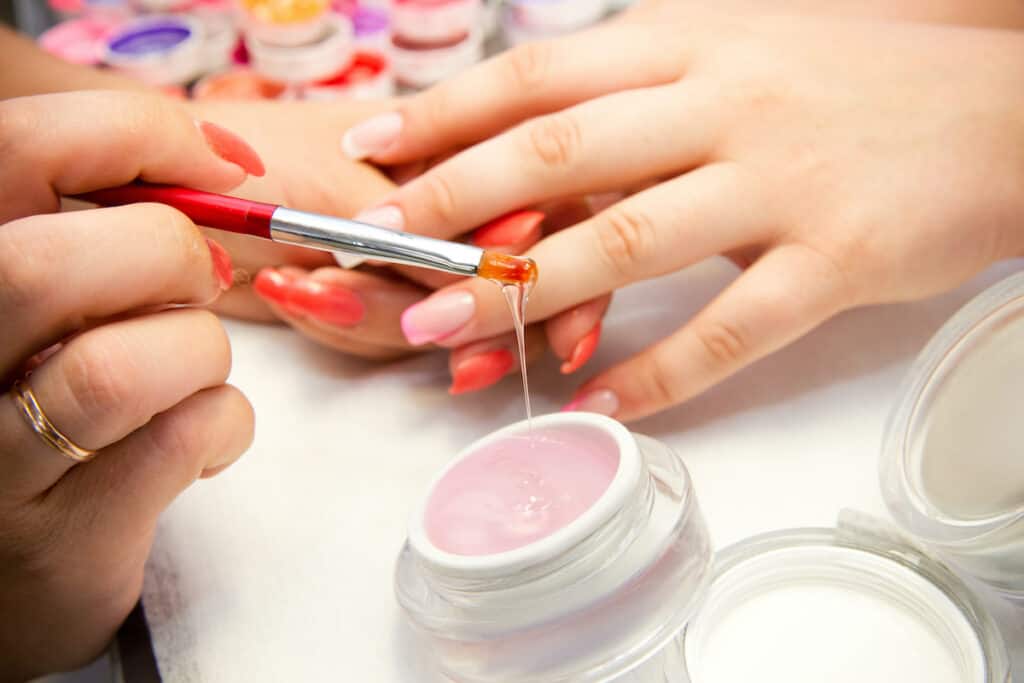
The hard gel is also filed down during fill-in appointments to ensure the newly added gel is applied evenly, to reshape the nail, and to add a new color.
Frequent use of a nail drill can make the natural nail more sensitive over time.
The process of having hard gel extensions applied can also be time-consuming.
The appointment for a new set of hard gels to be applied typically takes between 2 and 2.5 hours.
If you want to maintain the same shape and length for several appointments, fill-in sessions should take about 1.5 hours.
Who Should Use Hard Gel?
Hard gel is a perfect option if you are looking to add strength to your nails, along with length and shape.
Adding a nail extension will let you try trendy shapes or enhance and elongate your natural nails.
Hard gel is also ideal if you are looking for a long-lasting manicure that can last at least 3 weeks before needing a touch-up.
Challenging Gel Procedure and Removal
The process of applying hard gel to the nails begins with determining the nail’s length and shape.
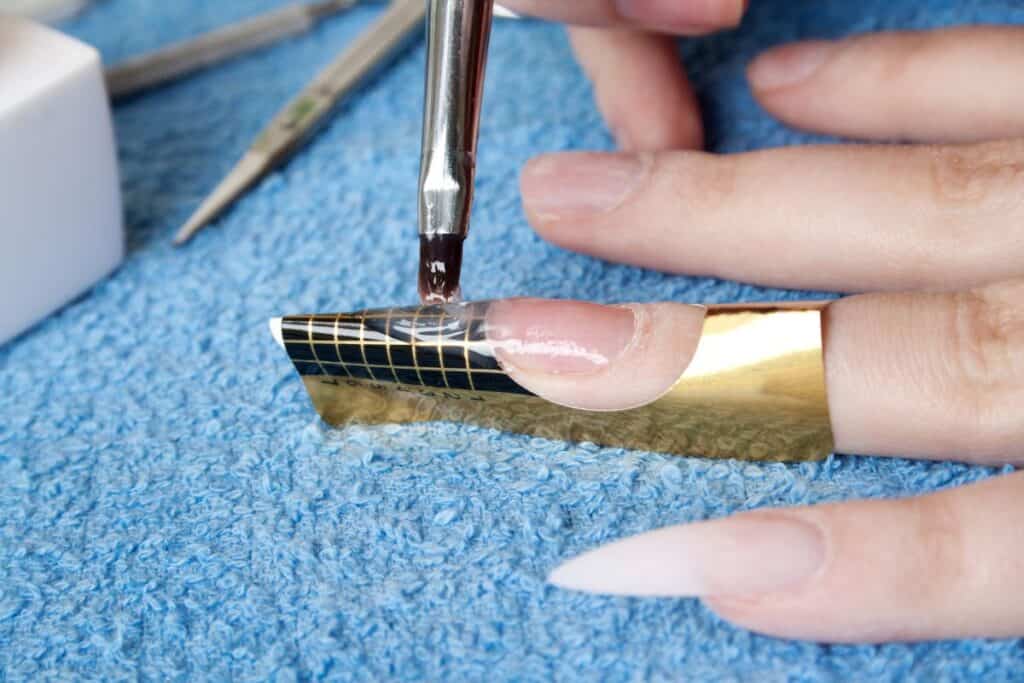
If you are looking to add extra length, nail formers are used to paint hard gel onto the nail for the desired length.
Pre-shaped nail extensions could also be used, depending on your salon and preference, and adhered to with the hard gel.
After regular nail maintenance, such as cuticle trimming and general nail shaping.
The hard gel is placed at the base of the nail and then pulled over the rest of the nail bed and nail former if required.
After the basic shape and length are created, the nail is placed under the UV or LED light to cure the gel.
Once the gel has cured, your nail technician will begin filing, clipping, and shaping to perfect the desired style.
After the hard gel has been shaped, filed, and buffed to a smooth surface, the regular gel polish in the desired color can be applied.
The application of nail polish color follows the steps of a typical gel manicure, with each layer cured under light between layers.
To remove the hard gel extensions, your nail technician will use a nail drill to file down the layers of gel.
If you are obliterating the hard gel.
The thin layer of gel remaining after filing can either be soaked off with acetone or left to grow out and clipped off during regular nail maintenance appointments.
Hard gels cannot be soaked off with acetone alone and require the nail drill to remove most of the layers.
What Is Soft Gel?
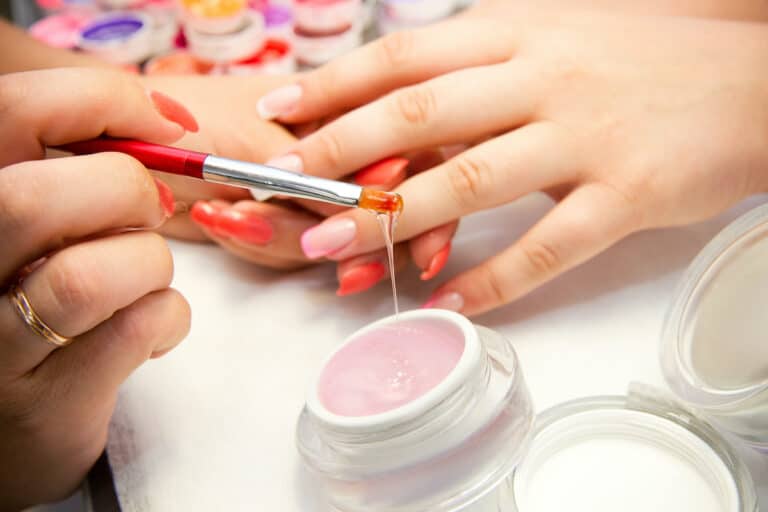
Soft gel is similar to a regular gel polish, but has a slightly thicker consistency.
While not as thick as the hard gel polish, both are applied similarly.
Soft-gel polish is stronger than regular nail polish, so it lasts longer between appointments with no chips or flakes.
Soft gel polish is also different from regular gel nail polish, but it still requires curing under a UV or LED light and has a similar removal process.
If you’d like to see a tutorial, check out this helpful one from Gelish on YouTube.
Soft Gel Pros
If you want to keep the look of your natural nails but strengthen them a bit, soft gel nails are a great option.
Soft gels keep the natural nails bendable and movable while adding extra protection and strengthening them.
While the soft gels are not as durable as hard gels, they are still strong enough to withstand daily activity.
Soft gels also last longer than a regular polish manicure.
The results of a smooth gel manicure can last at least two weeks without any chips or flakes.
The appointment time for a soft gel manicure is also shorter than that for a hard gel manicure, at about 1.5 hours.
Soft Gel Cons
Similar to hard gels, one of the cons of soft gels is that they can make nails sensitive over time.
Because soft gels are removed by soaking in acetone, continued use can weaken the nails or make the natural nail beds more sensitive.
A soft-gel manicure should last at least 2 weeks without any signs of chipping or cracking.
If left too long between appointments, the gel can start to fade or lift from the edges of the nails.
Soft gels are an ideal option if you are happy with the existing length of your nails, because soft gels do not work to provide extra length or to adhere an extension.
While they add a bit of strength to your natural nail, they are not strong enough for the shape, style, and length of a hard gel extension.
Who Should Use Soft Gel?
Soft gel is the perfect option for anyone who wants a manicure that will last a week or two longer than regular nail polish.
But still want to have movement and bendability similar to their natural nails.
If you are happy with the length and shape of your natural nails, soft gel polish will work efficiently on your nail beds.
Soft gels work best on short to medium-length nails.
Soft Gel Procedure and Removal
The application process for a soft-gel manicure is similar to the method mentioned above for hard-gel extensions.
However, soft gels work on natural nails but do not shape or elongate, so the step that includes using a nail former, as with hard gels, is eliminated.
Starting with trimming and cleaning the natural nail, regular maintenance is performed to prepare it for the soft gel application.
The gel needs to be applied to dry nails, so there most likely won’t be any use of cuticle oil at this stage of the application; however, the cuticles will still be trimmed if needed.
Once the nail is prepped and dried, the soft gel is applied to the base of the nail and pulled over its length.
Between layers, the gel is cured under UV/LED light to set the nail, and once the layers are applied, the nails can be shaped and colored accordingly.
The removal process for soft gels differs from that for hard gels because soft gels are more porous, allowing acetone to penetrate and remove the substance.
When it comes time to remove the soft gels, the nails are soaked in acetone to loosen the gel adhesive.
The acetone soak will be about 15–20 minutes, and then the soft gels are easily removed, sometimes with the additional help of a nail stick to scrape off the remaining polish.
As opposed to hard gels, which are filed down for a fill-in appointment with the new gel layered over top, soft gels require complete removal for a new set to be applied.
Is Hard Gel or Soft Gel Right for You?
Soft gel and hard gel can be used together to achieve the ultimate manicure.
If you are looking for extended length and a defined shape, with wear time lasting several weeks, then hard gel is the ideal option for you.
If you want your nails to feel more natural but want a polish that lasts longer than regular nail polish, a soft gel manicure is the solution.
However, both types of gel work easily together and can be layered.
Hard gel will create the shape and length of the nail, while soft gel will be applied secondarily for long-lasting color and design.
Conclusion
Based on what you are looking to achieve with your nails, the type of gel manicure you should book an appointment for will vary.
However, the outstanding feature of these different types of gel manicures is how they can work together or separately.
If you want to explore gel manicures for the first time, try a soft-gel manicure that enhances your natural nails before working your way up to a complex gel set.
If you are looking to extend and lengthen your nails to create a particular shape, choose a hard-gel manicure for the best results.
While these types of gel manicures do last longer than a regular polish, you can still switch them up at any time to try a different kind of gel or to capture the latest nail trends.
Our nails have become an outlet for our personal style and attitude.
Finding the type of manicure that reflects that and suits your needs best will allow you to express your unique self-expression fully.
Related Articles
Can You Paint Over PolyGel Nails?
Gel Polish Remover Machines – Do They Work?