
How To Remove Gel Nail Polish With Sugar
If you’ve been peeling off your gel nail polish, it’s worth switching to a gentler removal method. Peeling can lift layers from the natural nail plate along with the gel.
If you’re wondering whether sugar can safely remove gel polish, the answer is more complicated than many DIY hacks suggest.
Many people start picking or peeling once gel polish grows out, chips, or lifts because salon removal can feel inconvenient.
Going to the salon just for removal may feel like an extra step, especially if you do not plan to apply another gel manicure right away.
Some salons also charge a separate removal fee.
That makes at-home removal appealing, but the method matters.
Even when gel seems loose, pulling it off can remove surface layers of the natural nail, especially where the polish is still firmly attached.
Peeling gel polish can damage the nail plate, leaving it thinner, rougher, or more prone to splitting.
Repeated peeling can make that damage accumulate over time.
According to researchers, repeated binding and removal of nail coatings can be associated with keratin degranulation, which may show up as white surface changes.
That is one reason gentle removal is preferable to peeling or scraping.
There are safe ways to remove soak-off gel polish at home, but abrasive sugar is not the standard or best-supported method.
Ground sugar may physically abrade the gel surface, but that same friction can also abrade the natural nail if you keep rubbing after the coating thins.
So, how do you remove gel nail polish with sugar?
Sugar is not the recommended way to remove gel polish. For soak-off gel, lightly file the shiny topcoat, place acetone-soaked cotton on the nail, wrap it, wait according to the product directions, and gently remove only the softened gel. If the coating resists, rewrap instead of scraping or peeling.
Below, we explain why the sugar method is unreliable, how to remove gel polish more safely at home, and what to avoid during removal.
Can You Really Remove Gel Nail Polish With Sugar?
Ground sugar can scrub away some surface material, but it is not a predictable or efficient remover for cured gel polish.
Its abrasive texture may wear down the coating, but it can also wear down the nail plate underneath if you keep rubbing.
There is no ideal sugar particle size that makes this a controlled gel-removal method.
Large crystals can be harsh, while very fine particles may still require prolonged friction to remove cured gel.
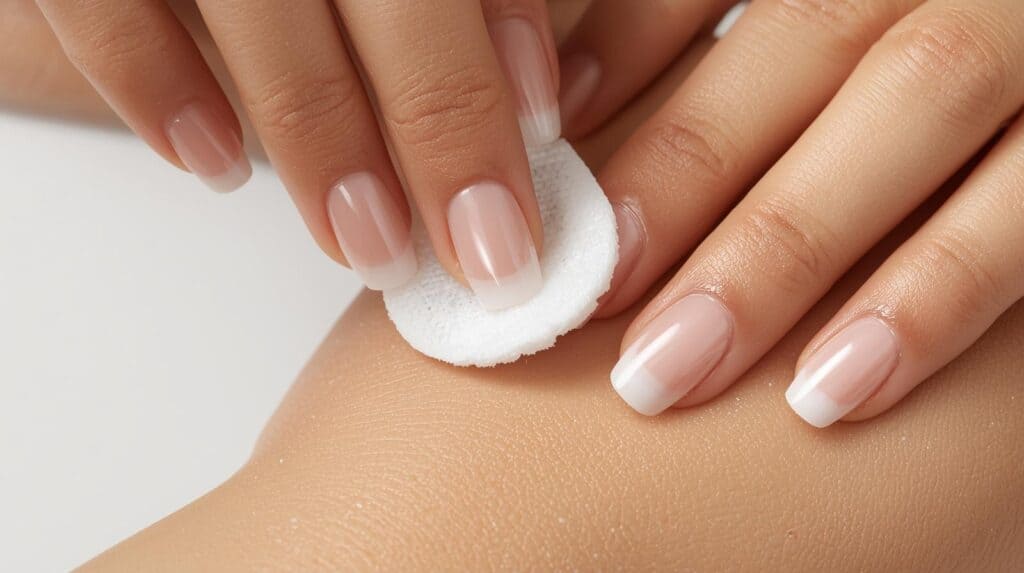
For that reason, it is better to use a removal method designed for the specific gel system rather than grinding sugar for abrasion.
The standard approach for soak-off gel is acetone-based removal, while some hard gels must be filed off instead.
How To Remove Gel Nail Polish With Sugar
Instead of using a kitchen scrub, use the removal method recommended for your specific gel product.
For soak-off gel, you will usually need acetone, cotton, wraps or foil, a nail file, and moisturizer or cuticle oil for aftercare.
A typical soak-off gel removal setup includes:
- 100% acetone or the remover recommended by the gel brand
- A nail file or buffer for lightly breaking the topcoat seal
- Cotton pads or cotton balls
- Foil wraps, reusable soak-off clips, or plastic wrap
- Cuticle oil or hand cream for aftercare
You do not need granulated or powdered sugar for standard soak-off gel removal.
Using abrasion alone is more likely to take longer and makes it harder to know when you have reached the natural nail.
Once you have the correct supplies, follow the gel brand’s removal instructions and stop if you feel pain or see the natural nail becoming thin or rough.
How To Do It
Before you begin, confirm whether the product is actually a soak-off gel. Hard gel, builder gel, acrylic, and some hybrid systems may require professional filing rather than acetone soaking alone.
If the gel is already lifting or cracked, do not use that as an invitation to peel it. Lifted areas can still be firmly attached elsewhere.
Peeling a partially detached coating can pull nail layers from the areas that remain bonded.
Removal timing depends on the brand and thickness of the gel rather than simply how many days you have worn it.
For soak-off gel, use the following general approach:
Step 1:
Wash and dry your hands, then work in a well-ventilated area.
This helps you start with clean nails and reduces unnecessary residue around the skin.
Dry hands also make it easier to keep wraps in place.
Step 2:
Lightly file the glossy topcoat to break the seal. Do not aggressively file through the color or into the natural nail.
A medium or fine nail file is usually enough for this step.
If you are unsure how much to file, stop once the shine is removed rather than continuing deeper.
The goal is to open the top layer so acetone can reach the gel underneath.
You do not need to buff the gel into a powdery surface or thin the natural nail.
Step 3:
Soak a small piece of cotton in acetone or the manufacturer-recommended remover.
Use enough to keep the cotton wet without dripping all over the surrounding skin.
Place the cotton directly over the gel-covered nail.
Step 4:
Wrap the fingertip with foil, plastic wrap, or a soak-off clip so the cotton stays in contact with the gel.
Secure the wrap snugly but not so tightly that it feels uncomfortable.
Keeping the cotton pressed against the nail helps the remover work more efficiently.
Repeat for the remaining nails.
Step 5:
Leave the wraps on for the time recommended by the gel manufacturer, often around 10 to 15 minutes for soak-off formulas.
Remove one wrap first and check whether the gel has softened and begun lifting away from the nail.
If the product is still firmly attached, rewrap it and give the remover more time instead of scraping harder.
Patience reduces the temptation to pry, peel, or over-file the natural nail.
Step 6:
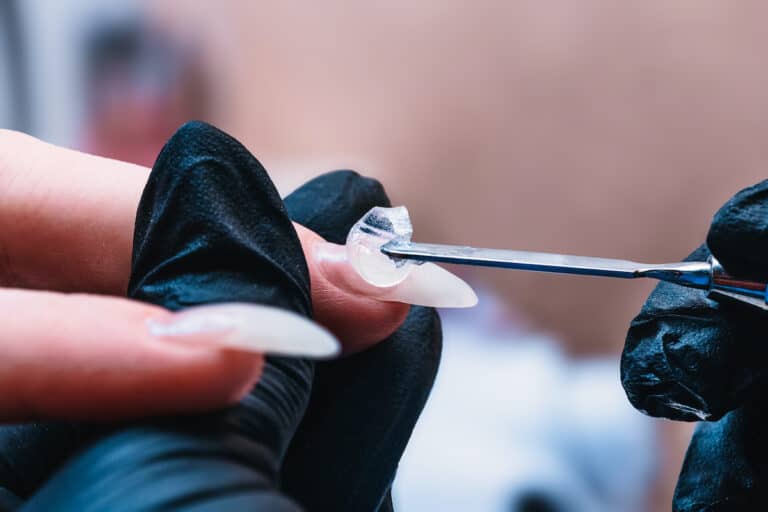
Gently slide softened gel away with a wooden manicure stick or other suitable tool, using very light pressure.
If chunks resist, stop and re-soak rather than forcing them off.
Use fresh cotton and acetone as needed for stubborn areas.
The goal is for the coating to release with minimal force.
Step 7:
Once the gel is removed, the natural nails may look slightly dry or dull from acetone exposure.
Wash your hands to remove remover residue and any loosened gel.
Then dry the hands thoroughly.
Step 8:
Finish with cuticle oil, hand cream, or another moisturizer if the skin and nails feel dry.
Jojoba oil, a dedicated cuticle oil, or a plain hand cream can all help reduce dryness.
Apply the product to the cuticles and surrounding skin, then massage it in gently.
That’s it. Proper soak-off removal takes some patience, but it is more controlled and predictable than scrubbing gel away with sugar.
Other Ways To Remove Gel Nail Polish At Home
Acetone soaking is the standard home method for soak-off gel polish.
Other DIY methods are often less effective and may encourage more scraping or picking.
- Soaking with acetone or the brand-recommended remover
- Professional e-file or hand-file removal for products that are not soak-off
- Manufacturer-specific remover systems when provided
- Professional salon removal if you are unsure what product is on your nails
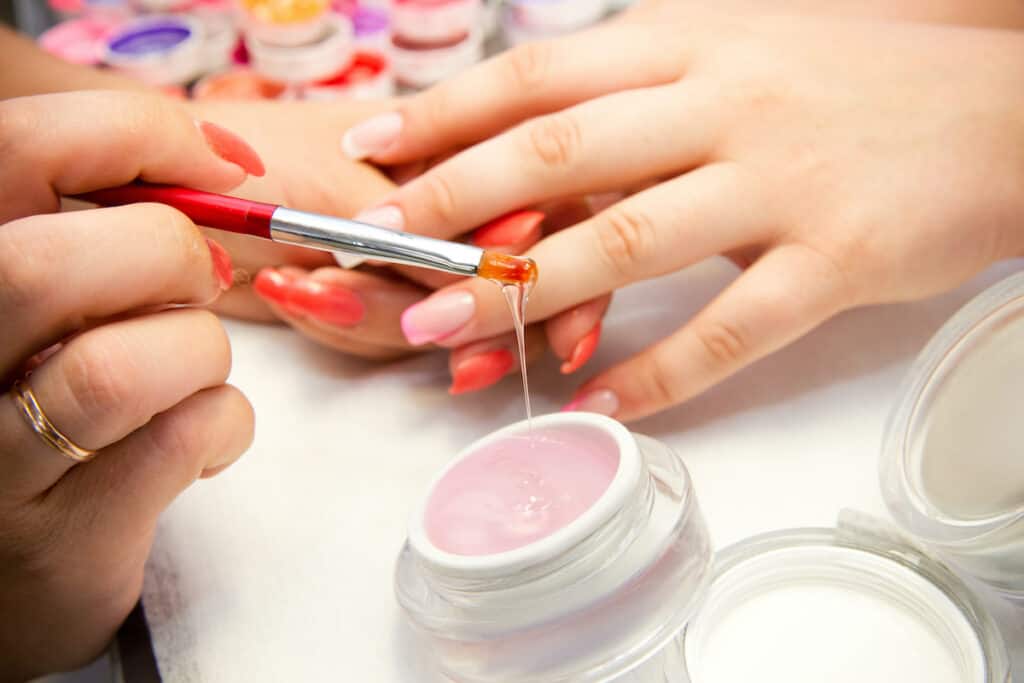
Hand sanitizer, vinegar, hot water, dish soap, and salt are not reliable substitutes for proper gel remover.
They may soften surrounding skin or loosen already-lifted edges, but they do not consistently break down cured gel.
Acetone can dry or irritate skin and nails, especially with repeated exposure, but it is widely used for soak-off gel when applied correctly.
Use it in a well-ventilated area, keep it away from flames, and avoid unnecessary skin exposure.
Moisturize afterward if your nails or surrounding skin feel dry.
Sugar may sound appealing because it is a familiar kitchen ingredient, but natural does not automatically mean gentler or safer. Prolonged abrasion can damage the nail surface.
The safest method is the one designed for the specific nail product you are wearing.
Can You Use Sugar To Remove A Gel Pedicure?
The same advice applies to a gel pedicure: use the recommended removal method for the gel system rather than scrubbing with sugar.
Toenails can be thicker and harder to reach, so professional removal may be easier if you cannot comfortably work on them.
If you remove gel at home, use the same gentle principles: break the topcoat seal, soak if appropriate, and never force product off.
You can also ask a friend for help applying wraps, but the product still needs to be removed according to the gel system rather than with abrasion.
There is no special reason sugar would work better on toenails than on fingernails.
Cured gel does not become safer to remove simply because it is on a pedicure.
What Happens If You Peel Off Gel Nail Polish?
As mentioned earlier, peeling off gel polish can damage the natural nail plate.
When you peel cured gel away, you may lift superficial layers of nail along with the coating.
That can leave the nail rough, thin, white, or more prone to splitting until the damaged area grows out.
Repeated peeling can increase brittleness and make it harder to retain length.
Texture changes such as roughness, flaking, or white patches can follow traumatic removal.
These changes usually grow out with the nail. They do not mean the nail will “continue to grow incorrectly” for years unless the nail matrix itself has been injured.
Discoloration can have many causes, so persistent yellow, green, brown, or painful changes should not automatically be blamed on gel removal.
If the nail is painful, swollen, lifting from the nail bed, or has persistent unusual discoloration, have it assessed before covering it with another enhancement.
That is why it is best not to peel gel polish, even when an edge has already started lifting.
A lifted edge may still be firmly bonded elsewhere on the nail.
Pulling on that attached section can strip off nail layers.
As tempting as it is to pick at a peeling manicure, proper removal is gentler.
For soak-off gel, acetone-based removal is a better-supported option than sugar or other household DIY methods.
What Is The Fastest Way To Remove Gel Nail Polish At Home?
Acetone removal is usually faster and more predictable than abrasive DIY methods for soak-off gel.
Removal time varies by brand, thickness, topcoat, and whether the surface has been lightly filed first.
If you want the fastest safe at-home option, follow the manufacturer’s acetone-removal instructions rather than trying to scrub the gel off.
Acetone is commonly used in salons for soak-off gel systems.
It is widely available, but it should still be used carefully and away from open flames.
Soak cotton in acetone and place it directly over each gel-covered nail.
Wrap the cotton securely with foil, plastic wrap, or a soak-off clip and wait for the gel to soften.
The softened coating should be removed with gentle pressure. Do not scrape aggressively if the gel is still firmly attached.
Many soak-off gels soften within about 10-15 minutes, but always follow the timing recommended for the specific product.
There is no truly instant method that safely removes cured gel without giving the remover time to work.
Acetone can cause temporary dryness and irritation of the nails and surrounding skin, especially with frequent or prolonged exposure.
According to Dr. Eisman, a dermatologist at Sinclair Dermatology, acetone-containing removers can contribute to nail dryness and irritant contact dermatitis around the nails.
Do not use a rigid “10-minute maximum” for every product. Follow the gel manufacturer’s soak time and rewrap stubborn areas rather than scraping.
Applying a little petroleum jelly around the surrounding skin can help reduce direct acetone contact, but keep it off the gel surface so it does not interfere with removal.
Moisturize the nails and surrounding skin afterward.
If you have time, the best option is still proper product-specific removal, not switching to sugar simply because it is non-toxic.
Repeated rubbing with sugar can still thin or roughen the nail surface, so it should not be treated as damage-free.
For more tips and mistakes to avoid, take a look at this video below from Cutepolish on YouTube.
What Is The Cheapest Way To Remove Gel Nail Polish At Home?
Cost is a common reason people try to remove gel polish at home.
But you do not need to peel the manicure off just to avoid a salon removal fee.
For soak-off gel, a small bottle of acetone, cotton, and foil or reusable clips can provide an inexpensive at-home removal setup.
Sugar may already be in your kitchen, but it is not the best choice simply because it is cheap.
Using the correct remover is more important than choosing the lowest-cost household ingredient.
You do not need to buy a grinder for nail removal.
If acetone is appropriate for your gel system, it is usually the most practical low-cost option for home removal.
A bottle of acetone can last through multiple manicures when used carefully.
We hope this article helped clarify the safest approach to gel polish removal.
Removing gel correctly is important because peeling, scraping, and over-filing can damage the natural nail plate.
For soak-off gel, the most reliable home method is controlled acetone soaking followed by gentle removal, not prolonged sugar abrasion.
Related Articles
Best Peel-Off Nail Polish (Complete Guide)
The Best Ways To Fix Far-Apart Eyebrows
Eyebrow Tinting Vs Microblading (Which Is Right For You?)