
Hard Gel Vs Builder Gel
What comes to your mind when you think of gel nails?
Most people automatically assume gel polish provides vivid, opaque, and long-lasting colour.
However, gel nails can refer to multiple formulations, all with their unique characteristics.
Hard gel and builder gel both fit into the gel-enhancement category, but the terms are not exact opposites. “Builder gel” describes a thicker gel used to add structure, and builder formulas can be either soak-off soft gels or non-soak-off hard gels.
A nail technician will be able to identify various gels, such as hard and builder gel, and know when to apply them to the nails.
What’s the difference between hard gel and builder gel?
Both can add structure, reinforce the natural nail, and create extensions. The clearest comparison is hard gel versus soft, soak-off builder gel because some builder gels are themselves hard gels.
A true hard gel is generally filed off, while a soft or soak-off builder gel can usually be removed with acetone after the surface is filed according to the manufacturer’s directions.
The right choice depends on the exact formula, how much structure or length you want, and whether you prefer a soak-off or file-off removal system.
Both systems can create strong-looking, longer nails, but prep, curing, maintenance, and removal matter more than the label when it comes to protecting the natural nail plate and surrounding skin.
So, what else should you know about hard and builder gels before your next manicure?
What Is Hard Gel?
Hard gel is a non-soak-off sculpting gel that cures into a rigid enhancement.
It can be used to build overlays and sculpt extensions. Whether it feels easier than acrylic depends on your technique because both systems have a learning curve.
Hard gel is useful when you want more structure, length, or shape control, especially for sculpted extensions.
Hard gel can reinforce or patch a damaged free edge cosmetically, but it should not be used to cover an infected, painful, or significantly injured nail.
Pros Of Hard Gel
Many people choose hard gel because a skilled application can look thin and natural while providing more structure than gel polish alone.
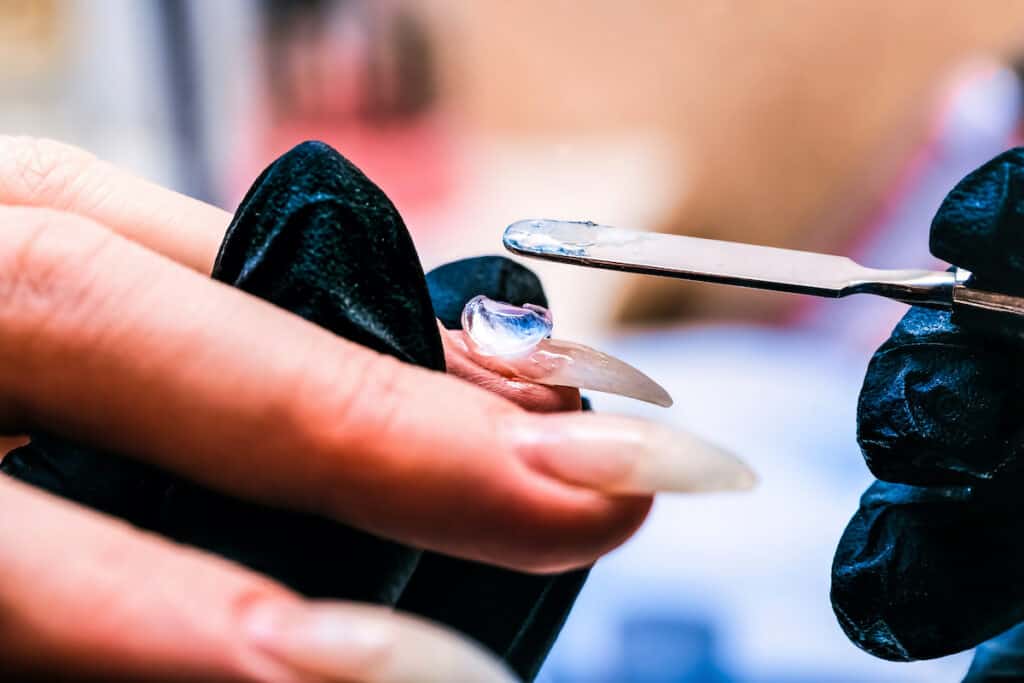
In addition, although it has a thick consistency, the hard gel can be easily filed down after curing, making it undetectable on the nails.
1. Adds Length
Square, almond, and oval-shaped nails are trending, but it can be challenging to achieve length if you struggle with growing your nails.
Hard gel can be sculpted beyond the free edge to create an extension and add a rigid overlay over the natural nail.
It can also protect the free edge from some everyday knocks, which may help you retain natural nail length. It does not make the nail matrix grow faster.
2. Long-Lasting
Hard gel is designed for wear over multiple weeks, with maintenance scheduled as the natural nail grows out.
A fill around every 2 to 3 weeks is common, although the timing depends on growth rate, lifting, length, and how much stress you put on the nails.
Depending on how fast your nails grow, you can prolong a refill to 3 weeks.
3. Natural & Durable
Hard gel can look underwhelming at first. It may appear thick and chunky during application, but it needs to cure under UV light before you manipulate it into the perfect shape.
After curing, a nail tech can refine the surface and sidewalls with a hand file or e-file while avoiding the natural nail plate.
Proper shaping can create a thinner-looking finish while keeping enough product in the stress area for support.
Additionally, this durable gel can withstand long-lasting nail extensions.
Cons Of Hard Gel
Hard gel may not suit people who want easy soak-off removal. Anyone with a history of reactions to acrylates or gel products should be cautious because uncured gel touching the skin can trigger allergic contact dermatitis.
This gel formula is ideal for those looking for a durable canvas for nail art or who want to add extra length to their natural nail beds.
Hard gel doesn’t have an easy removal technique; removing it incorrectly can cause damage.
1. Not Ideal For Beginners
Beginners may struggle with hard gel, especially if they are unfamiliar with other gel formulas.
It can feel foreign to apply an extension with hard gel automatically.
It may not be as straightforward to use and remove as other gels.
2. Challenging To Remove
Many people can mistake hard gel for gel polish or builder gel. Unfortunately, you can’t remove hard gel with acetone or a soak-off treatment.
Hard gel is removed by careful filing. An e-file can speed up the process in trained hands, but it is not automatically safer than a hand file.
It is easy to overfile and thin the natural nail plate, so professional removal is a safer choice if you are not experienced with enhancement removal.
How To Use Hard Gel
Hard gel may be easy to apply compared to some enhancements, but it can still be challenging to master.
You’ll want to pick up a bead of gel to place on the nail, slowly form the apex, and drag down the product to create your extension.
Once the bead is placed and sculpted, cure it with the lamp type and exposure time specified by the gel manufacturer, then refine the shape after curing.
Take a look at the tutorial below!
How To Remove Hard Gel
Hard gel removal relies on controlled filing rather than acetone soaking. A hand file or e-file can work, but the goal is to remove product without filing into the natural nail plate.
Aggressive filing or peeling product off can remove layers of the natural nail and leave it thin, tender, or prone to splitting.
What Is Builder Gel?
Builder gel is a thicker gel formulated to build structure or an apex. Some builder gels are flexible, soak-off soft gels, while others are hard builder gels with durability closer to traditional hard gel.
Builder gels are available in hard and soft formulas.
For the clearest comparison with hard gel, the sections below focus mainly on soft, soak-off builder gel.
Soft builder gels are often used as structured overlays on natural nails and may also support short extensions, depending on the formula.
Pros Of Builder Gel
Builder gel is much thicker than your regular nail polish.
It can be used to reinforce the natural nail or create a short extension. The overlay may help you retain length by reducing everyday breakage, but it does not accelerate nail growth.
Some self-leveling builder gels can feel easier to control than sculpting hard gel, but at-home use still requires careful prep, avoiding skin contact, and curing with the correct compatible lamp.
1. Easy Application
Many builder gel formulas are self-leveling, although viscosity varies by brand and formula.
You can float or guide the gel into place, keeping uncured product off the skin, then cure it for the time specified by the manufacturer.
It also works well on the natural nail plate or to create a shorter extension.
2. Long-Lasting
A structured builder-gel overlay can be useful if you want to keep your natural length while adding support rather than creating a full extension.
This gel formula can last 2-3 weeks with proper preparation and care.
It does not speed up biological nail growth, but the extra structure may help you retain length if your free edge normally chips or breaks.
Builder gel withstands most daily or hands-on activities and is tougher than regular polish.
3. Protects Natural Nails
A builder-gel overlay can add structure over the natural nail and reduce some everyday flexing or chipping.
Soft builder gel can be easier to remove than hard gel when it is genuinely soak-off, but poor prep, curing, filing, or removal can still damage the natural nail.
This is one reason people use structured overlays while growing out the free edge.
Cons Of Builder Gel
You may not be fond of builder gel if you prefer extravagant or long nails.
Soft builder gels are generally more flexible than traditional hard gels, which can be useful on natural nails but may limit very long extensions.
You may be able to create a softer extension with builder gel, but it can be challenging to add extreme length.
1. Delicate
The flexibility of a soft builder gel depends on its chemistry and thickness, not simply the fact that it is called “builder gel.”
Soft builder gels are designed to be soaked off with acetone, but the top layer often needs to be filed first so the acetone can penetrate efficiently.
Soak-off removal can reduce the need for aggressive filing, but acetone can dry the surrounding skin and picking softened gel off can still damage the nail plate.
2. Can’t Offer Extra Length
This gel formula may not be right for you if you love nails with a dramatic length.
A soft builder gel is commonly used for natural-nail overlays and short extensions. For dramatic length, a harder file-off builder or traditional hard gel may provide more structure.
Builder-gel overlays can be useful while you retain natural length, provided the product is applied and removed without damaging the nail plate.
How To Use Builder Gel
Soft builder gel is generally more flexible than hard gel, and many formulas self-level to make application easier.
You’ll want to prepare your nails efficiently for builder gel to avoid them lifting or peeling prematurely.
Builder gel can be built up, or you can apply it by bead and mold it within your nail plate.
Next, cure it using the lamp and timing specified for that exact gel system, then continue with the rest of the manicure.
Take a look at the tutorial below!
How To Remove Builder Gel
Soft builder gel can be removed at home if you confirm that the exact product is soak-off and follow its removal directions carefully.
Many builder gels marketed as soft gel or BIAB-style systems are soak-off, but builder gel is not automatically soak-off. Check the manufacturer’s instructions before choosing a removal method.
For soak-off formulas, acetone softens the gel after the seal is broken. Remove only softened product and never scrape or peel stubborn gel from the natural nail.
Builder Gel Vs Hard Gel
Traditional hard gel is file-off rather than acetone-soak-off, so removal requires careful filing without thinning the natural nail plate.
Both can create structure and extensions, but harder file-off gels are generally better suited to longer sculpted shapes that need more rigidity.
A soft builder gel is typically more flexible and is often chosen for structured overlays on natural nails.
Some people find self-leveling soft builder gel easier to work with, and soak-off removal can be more approachable than filing off a hard gel. However, skin contact with uncured gel and incorrect curing remain important safety concerns for beginners.
Which Gel Is Best For You?
Hard gel is a strong option when you want longer sculpted extensions or more rigid structure.
Its rigidity can provide a stable canvas for nail art, but very long extensions can still crack or lift under impact.
Hard gel can be difficult to remove, so it’s best to see a nail tech.
Soft builder gel suits people who want a structured overlay, modest added length, or soak-off removal.
At-home application is possible, but only if you can keep uncured gel off the skin, use a compatible curing lamp, and remove the product without peeling or overfiling.
Gel Nail Safety Tips
- Keep uncured gel off your skin: Methacrylate ingredients can trigger allergic contact dermatitis in some people. Clean accidental skin contact before curing rather than curing product onto the cuticle or sidewalls.
- Use the correct lamp: Cure for the time and with the lamp type recommended for the exact gel system. A lamp that turns the surface hard does not necessarily mean the gel underneath is fully cured.
- Do not peel enhancements off: Peeling can remove layers of the natural nail plate and leave nails thin or tender.
- Protect the surrounding skin: Gel curing lamps emit UV radiation. If you get frequent gel manicures, the American Academy of Dermatology recommends broad-spectrum SPF 30+ on the hands or dark, opaque fingertipless gloves before curing.
- Pause if you develop a reaction: Itching, swelling, blistering, redness around the nails, or lifting of the nail plate can be signs of an allergic or irritant reaction that deserves medical advice.
Hard Gel Vs Builder Gel FAQs
Is Builder Gel The Same As Hard Gel?
Not always. “Builder gel” describes a gel made to build structure. Some builder gels are flexible soak-off soft gels, while others are hard builder gels that must be filed off.
Can All Builder Gel Be Soaked Off?
No. Check the exact product label or manufacturer instructions. If it is a hard builder gel, acetone will not remove it the way it removes a soak-off builder formula.
Which Is Better For Long Extensions?
Harder file-off gels are generally better suited to longer sculpted extensions because they provide more rigidity. Soft builder gels are commonly chosen for structured overlays and shorter extensions.
Does Builder Gel Make Natural Nails Grow Faster?
No. Builder gel does not speed up nail growth from the matrix. It can help some people retain length by adding structure over a natural nail that would otherwise chip or break.
Related Articles
Acrylic Nail Brush Sizes – How To Choose
Best Dual Forms For Flat Nails
Acrylic Nail Supplies List – Everything You Need