
Texturizer Vs Relaxer Vs Perm
Perms, relaxers, and texturizers are all chemical-based treatments that alter your hair’s natural pattern.
These salon services can be easy to confuse because they all change the hair chemically, yet they are used to create very different results.
These services can permanently alter the treated portion of the hair, but each uses different chemistry, application methods, and techniques to create a different result. New growth will still emerge with your natural texture.
Because these treatments change the structure of the treated hair, they are a long-term commitment. You generally cannot wash the chemical change out, so an unwanted result must usually be grown out, cut away, or professionally managed.
What are the differences between texturizers, relaxers, and perms?
A traditional perm reshapes hair into curls or waves, a relaxer chemically straightens or significantly loosens curls, and a texturizer is usually a relaxer-type treatment processed to leave more of the natural curl pattern intact.
Relaxers, texturizers, and perms all increase the need for careful chemical-service planning. Combining them with bleach or other high-impact colour services can substantially increase breakage risk, so timing and compatibility should be assessed by an experienced stylist rather than stacking treatments at home.
These services are not interchangeable. In particular, traditional thioglycolate perm chemistry and hydroxide relaxers should not be overlapped on the same previously treated hair, because incompatible chemical processes can severely weaken the fibre.
Before choosing one, consider your desired result, chemical history, elasticity, porosity, scalp condition, and current level of damage. Those factors matter more than choosing by curl type alone.
A professional consultation is especially useful if your hair has already been bleached, relaxed, permed, texturised, or is showing signs of breakage.
Perm Vs Relaxer Vs Texturizer At A Glance
| Treatment | Main goal | What happens to treated hair? | Key consideration |
|---|---|---|---|
| Perm | Create curls or waves | Hair is reshaped around rods and chemically set into a new pattern | Best results depend on hair condition, rod size, formula, and wrapping technique |
| Relaxer | Straighten or greatly loosen curls | Hydroxide chemistry permanently alters the treated fibre | Do not overlap onto previously relaxed hair; scalp and strand condition matter |
| Texturizer | Loosen curls while retaining visible texture | Usually uses relaxer-type chemistry for a less-straight result | The result is less predictable than a simple curl-type conversion and still requires chemical aftercare |
None of these services is temporary on the hair that has already been processed. The visual result can soften over time, especially with a perm, but your untouched new growth will keep its natural pattern.
What Is A Perm?
Modern perms include a wider range of formulas and wrapping techniques than the classic one-size-fits-all spiral perm.
Traditional perms are chemical reshaping treatments used to create or redefine curls and waves in hair that is wrapped around rods or otherwise formed into a new shape.
You can determine the tightness of your curls based on the diameter of the curling rods used in your appointment.
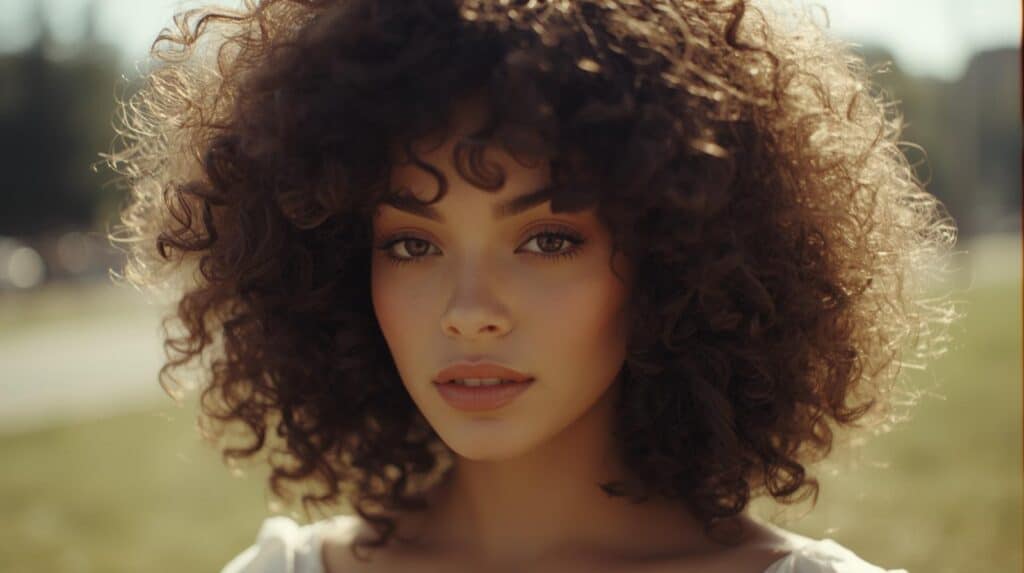
Once the hair is wrapped in rods, a reducing solution is used to break some of the hair’s disulfide bonds, allowing the fibre to take on the shape of the rods.
An oxidising neutraliser is then used to reform bonds in the hair’s new configuration. The treated hair remains chemically altered, although the visible curl can gradually loosen as the hair grows and experiences washing, styling, and wear.
Types Of Perms
Perm formulas are often grouped into alkaline and acid or acid-balanced categories, although salons may use additional modern systems. The appropriate formula depends on the hair’s condition, porosity, resistance, and desired result.
Alkaline perms generally process more readily on resistant hair, while acid or acid-balanced perms may process more gently. Neither option is automatically safe for fragile or heavily processed hair.
The goal is to choose a formula and technique that suit the hair’s condition, resistance, porosity, and desired curl pattern while limiting unnecessary chemical stress.
Alkaline perms are commonly chosen for hair that is resistant to taking a curl because their higher pH helps the hair swell and allows the reducing agent to work efficiently.
Acid or acid-balanced perms are often selected when a gentler processing profile is preferred, but previously damaged or fragile hair still needs a professional assessment because any permanent waving service can add stress.
Who Should Get A Perm?
A perm can be customised for many hair lengths and textures, but hair condition matters more than curl type alone. Bleached, highly porous, breaking, or otherwise compromised hair may not be a good candidate.
A traditional perm serves a different purpose from relaxers and texturizers: it is used to create or reshape curl rather than reduce it.
Perms can be customised through the formula, rod size, section size, and the direction the hair is wrapped.
Perms can suit most textures, lengths, and types of hair.
However, it’s best to avoid perms altogether if you have highly compromised or over-processed hair.
It’s also wise to discuss with a hairstylist if a perm can benefit your hair.
Pros Of A Perm
A perm can be a useful option when you want to create a lasting curl or wave pattern without restyling that texture from scratch every wash day.
Depending on the rods and wrapping technique, the result can range from loose waves and body to tighter curls.
In addition, perms allow your hair to retain its curly shape for a few months, depending on how well you care for your strands.
You can also reduce your styling time by avoiding heat on permed hair, which is recommended.
Instead, the hair can often air-dry with much more of the new curl or wave pattern already built in, reducing the need to recreate that texture with hot tools every wash day.
It can also make the visible curl pattern look more consistent, although porosity, previous damage, and natural density can still make some sections process differently.
Cons Of A Perm
Perms can weaken the hair fibre, and the risk rises with overprocessing, overlapping chemical services, excessive heat, or application to already compromised hair.
Also, if you don’t like your perm, the healthiest way to get rid of it is by growing it out. So it’s a long-term commitment.
Permed hair usually benefits from gentle aftercare, including conditioning, careful detangling, and limiting additional chemical or high-heat stress.
Many stylists recommend waiting before shampooing a fresh perm, but the exact timing depends on the formula and service. Follow the aftercare instructions supplied by your stylist or product manufacturer rather than treating a fixed number of hours as universal.
You may also need to limit heat and carefully time future colour services, and the hair may feel drier or more fragile after processing.
What Is A Relaxer?
A relaxer is designed to chemically straighten or substantially loosen curly or coily hair. Unlike a traditional perm, it is used to reduce curl rather than create it.
Hydroxide relaxers alter disulfide bonds through a process called lanthionisation. They are typically followed by thorough rinsing and a neutralising shampoo to stop residual alkalinity and help return the hair and scalp toward a safer pH.
A fully processed relaxer is intended to create a much straighter result, although the amount of curl reduction can vary with the formula, application, processing time, and starting texture.
Types Of Relaxers
Relaxers also come in different chemical systems, and those differences affect application, aftercare, and how the hair feels afterward.
The most common types of relaxers include no-lye and lye relaxers.
The appropriate system depends on hair condition, scalp tolerance, previous chemical history, and the degree of straightening desired.
Lye relaxers typically use sodium hydroxide, while many no-lye systems use calcium hydroxide combined with an activator to form guanidine hydroxide.
Because some no-lye relaxers can leave mineral deposits on the hair, a chelating or decalcifying shampoo may sometimes be recommended as part of the aftercare routine.
No-lye does not mean non-irritating. These formulas may feel less harsh on some scalps, but they can still cause irritation or chemical burns and may leave the hair feeling drier. Both lye and no-lye systems require careful application.
Who Should Get A Relaxer?
A relaxer may be worth considering if you want a significantly straighter result and your hair and scalp are healthy enough for permanent chemical processing.
Relaxers are mainly used on naturally curly or coily hair types and textures when a significantly straighter result is desired. Hair that is already breaking, heavily bleached, or otherwise compromised may not tolerate the service safely.
Some people choose relaxers to reduce shrinkage, simplify straight styling, or make humidity-related reversion less noticeable, but the trade-off is permanent chemical alteration of the treated hair.
You can also consult your hairstylist to see if you’re an ideal candidate for a relaxer and what type to apply.
It is also crucial to remember that the chemical change affects the treated hair permanently. New growth will still come in with your natural pattern, which is why touch-ups are applied only to regrowth rather than repeatedly coating previously relaxed lengths.
Pros Of Relaxers
A relaxer can make straight styling easier to maintain and reduce the amount of time needed to stretch or straighten naturally curly or coily hair.
It can also reduce visible shrinkage and create a smoother finish, although chemically relaxed hair still needs conditioning, careful detangling, and protection from excess heat.
For some people, that can make day-to-day styling faster and more predictable.
Relaxers will usually maintain their straight results until they grow out, as long as you care for them properly.
When touch-ups are needed, they should be limited to new growth. Reapplying relaxer over hair that has already been relaxed increases the risk of overprocessing and breakage.
Cons Of Relaxers
Relaxing services can be highly irritating or damaging if done incorrectly, if you’re prone to certain ingredients, or have a sensitive scalp.
In addition, you’ll notice your hair texture may feel parched and require nourishment to prevent breakage.
Like perms, the healthiest way to get rid of a relaxer is by growing it out altogether.
Relaxed hair benefits from consistent conditioning, gentle detangling, and conservative heat use. Colour services, especially lightening, should be planned cautiously around the hair’s condition and chemical history.
What Is A Texturizer?
A texturizer sits closer to a relaxer than to a traditional perm, but the intended result is different.
The name can sound milder than it is, which is why texturizers are often misunderstood.
They do not create a new curl pattern the way a traditional perm does. Instead, they usually use relaxer-type chemistry to leave more of the existing curl visible.
A texturizer is usually a relaxer-type chemical service used with the goal of loosening curls rather than making the hair fully straight.
It still chemically alters the hair. The difference is the intended degree of curl reduction, which may be achieved through formula choice, application technique, or shorter processing.
The goal is typically a looser version of the existing curl or coil pattern, not a completely new texture.
A texturizer may suit someone who wants to keep visible curl or coil while reducing shrinkage or tightness, provided the hair and scalp are healthy enough for chemical processing.
However, like perms and relaxers, texturizers are chemical treatments that will permanently alter your hair texture.
Relaxer Vs Texturizer
Relaxers and texturizers use closely related chemistry, but they are processed toward different visual outcomes.
A relaxer is generally chosen when the goal is a much straighter finish.
A texturizer is intended to loosen the curls or coils you already have while leaving visible texture.
It is not intended to produce the same degree of straightening as a full relaxer service.
The finished pattern may look more open or elongated, but the exact result depends on the starting texture, formula, application, and processing time.
Who Should Get Texturizer?
The primary purpose of a texturizer is to loosen an existing curl or coil pattern. It can be used on different lengths, but even application becomes more important as hair gets longer or has multiple textures from previous processing.
You may be prone to shrinkage if you have type 3B curly to 4C coily hair. Shrinkage occurs when the hair dries and looks shorter than it actually is.
A texturizer will loosen those tight curls and make your hair appear longer.
On longer hair, careful sectioning and avoiding overlap on previously texturised lengths are especially important. A professional can also help judge whether the expected change will be noticeable enough to justify the chemical stress.
Pros Of Texturizers
A texturizer is often processed for a subtler result, but it should not be assumed to be harmless or automatically less damaging. Many texturizers use chemistry similar to relaxers and can still cause dryness, breakage, scalp irritation, or burns if misused.
Its main appeal is that it can retain visible curl while reducing some tightness and shrinkage.
Texturised hair may feel easier to stretch, define, or style, but it still requires conditioning and gentle handling because the fibre has been chemically altered.
A texturizer may suit someone who wants to keep a curl pattern while making it looser, provided the hair is healthy enough for the service.
Texturizers are permanent and may need to be touched up when new growth shows at the roots.
Cons Of Texturizers
It can be challenging to create a perfectly uniform result with a texturizer because natural curl patterns, porosity, previous chemical history, and processing speed can vary across the head.
Also, texturizers are often marketed as a “natural” service, but they’re still chemical-based and permanently alter the texture of your hair.
You may be prone to dryness and will most likely need to have a specialised hair routine to care for your texturised strands.
It may need time to grow out, or you can cut your hair shorter to remove the texturizer.
Perm Vs Relaxer Vs Texturizer
So, what are the main similarities and differences between perms, relaxers, and texturizers?
Although all three are chemical texture services, they create different outcomes and use different formulas, application methods, and processing steps.
All three make aftercare more important, especially conditioning, gentle detangling, conservative heat use, and careful planning of future chemical services.
They are all long-term services because the processed hair does not simply return to its original texture after washing.
Similarities
Perms, relaxers, and texturizers all fall under the chemical treatment category.
They all use chemistry that permanently changes the treated fibre, but they do not all alter bonds in exactly the same way. Traditional perms commonly reduce and then re-oxidise disulfide bonds, while hydroxide relaxers straighten through lanthionisation.
All three services make aftercare and breakage prevention more important because chemically altered hair can be less resilient than untreated hair.
These chemical treatments can leave hair drier, rougher, or more breakage-prone, particularly when the hair is overprocessed or exposed to additional chemical and heat stress.
Intense Aftercare
All chemical treatments will involve some aftercare regimen.
These services permanently change the treated hair’s structure, and one possible downside is increased dryness, reduced elasticity, or brittleness.
A practical aftercare routine usually focuses on conditioning, lubrication, gentle detangling, and minimizing unnecessary heat or chemical overlap.
Aftercare instructions vary by service. A fresh perm may come with a temporary no-shampoo window, while relaxer and texturizer aftercare is different. Follow the exact instructions for the chemistry used on your hair.
Your stylist may recommend avoiding other factors, like heat styling and colouring services.
Dry Strands
Chemical texture services can place significant stress on the hair fibre, especially when processing is excessive or combined with other damaging services.
As a result, you may feel that your hair is either coarse in texture or extremely dry.
That extra fragility can increase breakage, so conditioning, low-friction detangling, and sensible heat use become especially important.
To make chemically treated hair feel more manageable, use a compatible conditioner or mask, handle wet hair gently, and choose products that improve lubrication and reduce friction rather than expecting any product to reverse the chemical change.
Permanent Results
Relaxers, perms, and texturizers permanently alter the treated portion of the hair. The visible result can change as the hair grows or the pattern loosens, but the processed fibre itself does not simply revert to its original state.
Differences
Relaxers, texturizers, and perms are separate services with distinct goals.
A perm is used to create curls or waves, a relaxer to straighten or greatly loosen, and a texturizer to loosen while preserving more visible texture.
Their chemistry, processing steps, and maintenance needs can differ substantially.
They all have their own application methods and processing times, producing varying results.
Processing Times/Application Method
Perms, relaxers, and texturizers all have varying application methods and processing times.
Perms are typically done by wrapping sections around rods, applying the waving solution, rinsing, and then neutralising. The full salon appointment can be lengthy, but active chemical processing time varies by formula and hair response and should not be generalised to a fixed number of hours.
Meanwhile, a relaxer is applied with a chemical solution to straighten the hair permanently.
Relaxer processing time varies by product, hair condition, application speed, and manufacturer directions. Leaving a relaxer on longer in pursuit of a straighter result can cause serious overprocessing.
A texturizer is generally processed with the goal of stopping before a fully straight result is reached, but timing should follow the specific product and professional technique rather than a universal countdown.
Curl Patterns
Perms are used to create a lasting curl or wave pattern, with the amount of volume and bounce depending on the wrap and finished style.
You can customise your perm by the diameter of your curling rod and the direction in which you wrap the hair around the rod.
Meanwhile, relaxers are intended to substantially straighten the treated strands, while the exact amount of remaining texture depends on the service and degree of processing.
Texturizers are designed to loosen rather than completely remove an existing curl or coil pattern, and they are not limited to short hair.
The final texturised pattern can vary widely, so it is not guaranteed to become a specific S-shape. Starting texture, formula, application, and processing all affect the result.
Suits with Varying Hair Types
Suitability should be based on the condition and chemical history of the hair, not on the assumption that every hair type needs or tolerates a chemical texture service.
These treatments should not be repeatedly overlapped over already processed hair. If a touch-up is appropriate, it is generally confined to regrowth, with enough time between services for the hair and scalp to recover.
In addition, you may need to avoid colouring services and heat styling.
Perms and relaxers can be adapted for different hair types, but the deciding factor should be whether the individual hair fibre and scalp are healthy enough for the chemistry involved.
It is wise to postpone these services if the hair is actively breaking, heavily bleached, severely overprocessed, or otherwise compromised, and to seek professional advice if the scalp is irritated or injured.
Texturizers are most relevant when someone with curls or coils wants a looser pattern while retaining visible texture.
Creating a uniform texturised result can be more difficult on long hair, especially when the lengths contain different porosity levels or previous chemical processing.
Safety Before Any Chemical Texture Service
The most important question is not simply which result you prefer, but whether your hair and scalp can tolerate another chemical process. A consultation and strand test can help identify obvious incompatibility, excessive fragility, or an unpredictable result before the whole head is processed.
- Do not overlap relaxer or texturizer onto previously processed lengths. Touch-ups should target regrowth only.
- Do not assume different texture services are chemically compatible. Traditional thioglycolate perm systems and hydroxide relaxers should not be layered over the same treated hair.
- Postpone the service if the scalp is irritated, scratched, or burned, or if the hair is actively snapping.
- Be especially cautious with bleach. Lightening plus permanent texture chemistry can push already weakened hair beyond what it can tolerate.
- Stop and rinse according to professional or manufacturer directions if intense burning occurs. Persistent scalp pain, blistering, open sores, or unusual hair loss warrants medical evaluation.
Which Chemical-Based Treatment Is Right For You?
Choosing between these services starts with the result you want and whether your hair can safely tolerate the chemistry required to achieve it.
Consider your current texture, elasticity, porosity, previous colour or texture services, scalp condition, and desired outcome.
That gives you a more realistic basis for deciding whether a perm, relaxer, texturizer, or no chemical service at all is the better fit.
Perms can create curls or waves on many hair types, but suitability depends heavily on chemical history, elasticity, porosity, and overall condition.
Relaxers are intended for people who want a significantly straighter result from naturally curly or coily hair and whose hair and scalp can tolerate the chemical service.
Finally, texturizers are designed for those who want to retain visible texture while loosening the existing curl or coil pattern.
A professional consultation is especially useful before any of these services if the hair has been bleached, relaxed, permed, texturised, frequently heat-styled, or is already breaking.
Perm, Relaxer, And Texturizer FAQs
Is A Texturizer Safer Than A Relaxer?
Not automatically. A texturizer may be processed for a less-straight result, but many formulas use the same or similar alkaline chemistry as relaxers. It can still cause dryness, breakage, irritation, or burns if the hair is overprocessed or the product contacts the scalp improperly.
Can You Put A Perm Over Relaxed Hair?
You should not assume the two services are compatible. Traditional thioglycolate perm chemistry and hydroxide-relaxed hair can react poorly when overlapped, greatly increasing the risk of severe weakening and breakage. A stylist needs to know the exact chemical history before attempting any texture change.
Can You Bleach Relaxed, Permed, Or Texturised Hair?
Sometimes colour services can be planned around chemically textured hair, but bleach adds substantial stress. Whether it is reasonable depends on the hair’s condition, previous products, timing, and desired lift. Avoid stacking strong chemical services simply because the hair looks healthy on the surface.
Which Treatment Is Least Damaging?
There is no universally least-damaging option. Damage risk depends on the chemistry, concentration, application, processing time, previous treatments, and the condition of your hair before the service. The safest choice may be to postpone chemical processing if the hair is already compromised.
Wrap-Up
Perms chemically reshape the treated hair into a new curl or wave pattern, while relaxers chemically straighten or substantially loosen the natural pattern.
Texturizers and relaxers are closely related services. A texturizer is generally used with the intention of leaving more curl intact, while a relaxer aims for a straighter finish.
A professional hairstylist can assess your chemical history, hair strength, scalp condition, and realistic result before you commit to a permanent texture service.
The structural change to the treated hair is long-lasting, so returning fully to your natural pattern generally means growing out the processed hair and gradually trimming it away.
Afterward, plan on a consistent aftercare routine focused on conditioning, low-friction handling, and avoiding unnecessary chemical or heat stress.
Related Articles
Can I Put Mousse In My Hair After A Perm?
Can You Straighten A Perm? Everything To Know