
9 Best Rosemary Oils For Eyebrows
Rosemary oil has become a popular haircare ingredient, especially among people looking for ways to support the appearance of fuller, healthier-looking hair, but eyebrow-specific evidence is still limited.
One small human study found that rosemary oil and 2% minoxidil produced similar changes in scalp hair counts after six months in people with androgenetic alopecia. However, the study involved scalp hair, not eyebrows, so it does not establish that rosemary oil regrows sparse brows.
For eyebrows, the evidence is much more limited. Rosemary oil is best viewed as an optional conditioning step, not a proven eyebrow-growth treatment or a replacement for medical evaluation when brow loss has an underlying cause.
Rosemary essential oil is also used in aromatherapy and appears in many haircare and skincare formulas, but products designed for the scalp are not automatically suitable for the delicate skin around the eyes.
When used in a properly diluted formula, it can help condition brow hairs and the surrounding skin. Claims about creating thicker eyebrows are less certain because there is not strong clinical research specifically on eyebrow growth.
Eyebrows can become sparse for many reasons, including over-plucking, breakage, skin irritation, ageing, hormonal changes, and underlying medical conditions, so an oil will not address every cause.
If you regularly tint, bleach, laminate, or style your brows, a gentle conditioning product may also help the hairs feel softer and less brittle.
Rosemary oil can fit into that routine, but the priorities are avoiding irritation, choosing a formula appropriate for use near the brows, keeping it out of the eyes, and setting realistic expectations.
So, what are the best rosemary oils for eyebrows?
The best rosemary oils for eyebrows are easy to control, properly diluted or clearly labelled for dilution, and suitable for the skin around the brows. Look for clear usage directions, simple formulas, and packaging that makes it easy to keep the product away from your eyes.
The main challenge is that pure rosemary essential oil is highly concentrated, while many ready-made hair oils are already blended with carrier oils. That difference matters around the eyebrows because even a small amount can migrate toward the eyes.
Below, we break down what to look for, which formulas are easiest to use on the brows, and how to apply them without overdoing it.
Does Rosemary Oil Actually Help Eyebrows Grow?
The evidence is limited and relates to scalp hair rather than eyebrows. A small six-month study in people with androgenetic alopecia found increased scalp hair counts in both a rosemary-oil group and a 2% minoxidil group, with no significant difference between the groups at the study endpoints.
That does not mean rosemary oil has been proven to regrow over-plucked, naturally sparse, or medically thinning eyebrows. Brow hair has its own growth cycle, and eyebrow loss can have causes that an oil cannot correct.
A realistic reason to use rosemary oil on the brows is to condition existing hairs and support a gentle grooming routine while you avoid over-plucking, harsh bleaching, and unnecessary friction. Better conditioning may make existing brow hairs look healthier, but that is different from stimulating new follicle growth.
If your eyebrows are suddenly thinning, developing bare patches, becoming itchy or scaly, or falling out along with scalp hair, consider speaking with a dermatologist or other qualified healthcare professional rather than relying on an essential oil alone.
What To Know Before Purchasing Rosemary Oil For Eyebrows
Start by deciding whether you want a pure essential oil that requires dilution or a pre-blended oil that is easier to use around the brows.

Rosemary Essential Oil Vs Rosemary Oil
There is an important difference between rosemary essential oil and products simply labelled rosemary hair oil. Pure essential oil is a concentrated aromatic extract and should not be treated like a regular facial oil or applied undiluted near the eyes.
A product marketed as rosemary hair oil may already combine rosemary with carrier oils such as jojoba, castor, coconut, olive, or avocado oil. Always check the ingredient list rather than assuming the bottle is pre-diluted.
Dilute Rosemary Essential Oil
If you choose pure rosemary essential oil, dilute it according to the product directions before applying it to skin. Do not guess the dilution ratio, and do not use the undiluted oil around the eyebrows.
Too much essential oil can cause redness, burning, itching, or irritation. The skin around the eyes is delicate, so use the smallest amount needed and stop if the area becomes uncomfortable.
Use a suitable carrier oil if the product requires dilution, following the manufacturer’s ratio. Jojoba and other lightweight carrier oils can be easier to control around the brows than a very heavy blend.
Always Conduct A Patch Test
Because essential oils and fragranced botanical products can irritate some skin types, it is sensible to patch test the finished formula first before using a new product around the eyebrows.
A patch test cannot guarantee that you will never react, but it can help you catch obvious redness, itching, or burning before putting the product close to your eyes.
Always avoid direct eye contact. If oil gets into the eye, follow the product’s first-aid directions and rinse appropriately. Seek medical advice if pain, redness, blurred vision, or persistent irritation does not settle.
Opt For A Versatile Formula
Many rosemary oils are marketed as multipurpose products for the scalp, hair lengths, or skin. That does not necessarily mean every formula is appropriate for eyebrows.
Some are also sold for aromatherapy or body use. For eyebrows, prioritise a formula that can be applied precisely and does not contain ingredients that bother your skin or eyes.
Check the label, dilution instructions, warnings, and intended use. If a manufacturer says a product should not be used near the eyes or on the face, choose a different option for your brows.
How To Use Rosemary Oil On Eyebrows Safely
For a brow routine, precision matters more than quantity. The goal is to lightly coat the brow hairs and nearby skin without saturating the area or letting oil migrate toward the eyes.
- Read the label first. Check whether the product is a pure essential oil, a pre-diluted blend, or a scalp treatment that is not intended for facial use.
- Patch test the finished formula. Test a small amount away from the eye area and stop if you develop redness, burning, itching, or swelling.
- Use very little. A clean spoolie or small brow brush can help you apply a thin coating without saturating the skin or creating drips.
- Keep it out of the eyes. Do not apply it to the eyelids, waterline, or eyelashes unless the specific product is formulated and labelled for that exact use.
- Give your skin a break if it becomes irritated. More frequent application will not make eyebrow hair grow faster and may simply increase irritation.
If you are pregnant or breastfeeding, have active eczema or dermatitis around the brows, or have previously reacted to essential oils, check the product warnings and consider asking a qualified healthcare professional before using concentrated rosemary essential oil near the face.
Using more oil is not a shortcut to faster growth. Hair changes are slow, and even the scalp study often cited for rosemary oil evaluated results over six months, not a few days or weeks.
Best Rosemary Oils For Eyebrows
Most rosemary oils are formulated and marketed primarily for the scalp and hair, not specifically for eyebrows.
That means the products below should be considered mainly for conditioning brow hair and supporting a gentle grooming routine. Evidence from scalp-hair studies cannot automatically be applied to eyebrow regrowth.
Use a small amount, patch test first, and keep the product on the brow hairs and skin rather than spreading it toward the eyelids.
| Rank | Product | Key Features |
|---|---|---|
| 1. | Maple Holistics Pure Rosemary Essential Oil | Essential oil, promotes hair growth, radiant skin, great for aromatherapy |
| 2. | Aliver Rosemary Essential Oil For Hair Growth | Rosemary extract, contains biotin, lightweight, non greasy |
| 3. | Mielle Organics Rosemary Mint Scalp & Hair Oil | Biotin-infused, for scalp/hair/split ends, good for all hair types |
| 4. | Gya Labs Organic Rosemary Essential Oils | Cruelty-free, naturally sourced, ideal for hair growth |
| 5. | Soulflower Indian Castor Rosemary Oil | Castor oil + rosemary oil mixture, vegan, for dry/curly hair |
| 6. | UpNature Rosemary Essential OIl Roll On Topical For Hair Growth & Skin | Roll-on rosemary oil, pre-diluted with carrier oils, cruelty-free |
| 7. | Sunny Isle Rosemary Jamaican Black Castor Oil For Hair Growth | Jamaican black castor oil + rosemary oil, promotes growth, reduces dandruff |
| 8. | SVA Organics Rosemary Essential Oil | 100% pure rosemary, steam distilled, versatile formulation |
| 9. | De La Cruz Rosemary Essential Oil For Skin And Hair | Contains rosemary oil and carrier oils, for hair and skin, gentler formulation |
1. Maple Holistics Pure Rosemary Essential Oil
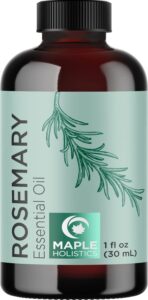
Maple Holistics Pure Rosemary Essential Oil is a concentrated option rather than a ready-to-use brow oil.
This is a pure essential oil, so it is more flexible than a pre-blended brow oil but also requires more care. It may suit shoppers who want one rosemary product for aromatherapy or scalp use and are comfortable diluting it separately for the brows.
Because it is concentrated, do not assume it is ready for direct skin application. Dilute it according to the current label and patch test the finished mixture before using it around the eyebrows.
For eyebrow use, its main advantage is customisation: you control the carrier oil and how rich or lightweight the finished blend feels. There is not good evidence that a pure essential oil will directly stimulate new eyebrow follicles.
Maple Holistics states that the rosemary oil is produced using steam distillation. Check the current listing and package if extraction method or certification matters to you.
For brow use, pure rosemary essential oil should be diluted with a suitable carrier according to the product directions.
Using rosemary essential oil on its own can increase the risk of skin irritation. Follow the stated dilution ratio rather than relying on a generic number of drops without knowing the amount of carrier oil.
Maple Holistics markets the oil for hair, skin, and aromatherapy uses. Treat those as brand claims rather than a guarantee of eyebrow regrowth.
Expect a noticeable herbal rosemary scent. If fragrance around the face bothers you, a different product may be more comfortable.
Use a clean brow brush or spoolie for precise application and keep the finished mixture away from the eyes, eyelids, and lash line.
2. Aliver Rosemary Essential Oil For Hair Growth
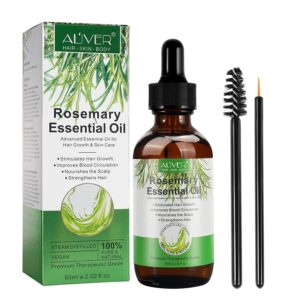
Aliver’s rosemary oil is marketed for hair care and comes with tools that can make small, targeted applications easier.
That can be convenient if you want one product for both the scalp and brows, although eyebrow-growth results are not guaranteed.
Aliver also provides a small spoolie and liner brush, which can help with precise application if the current label permits use around the eyebrows.
The formula is marketed to support stronger-looking hair. For the eyebrows, the more realistic benefit is conditioning existing hairs and the surrounding skin.
It includes rosemary and biotin, but topical biotin and rosemary claims should not be treated as proof that a sparse eyebrow will regrow. The precise applicators are the more practical selling point for brow use.
Use only the amount recommended on the current label. With concentrated essential oil, more is not better and can increase the chance of irritation.
If this is sold as a concentrated rosemary essential oil, follow the current directions for dilution before skin application.
Aliver recommends adding these drops to shampoo, lotion, or carrier oil.
Individual skin tolerance varies, so patch test the finished formula and stop using it if the brow area develops burning, redness, itching, or swelling.
If you dislike very heavy oils, this may be easier to work into a grooming routine. Any change in eyebrow fullness will vary, and visible regrowth should not be promised from an oil alone.
3. Mielle Organics Rosemary Mint Scalp & Hair Oil
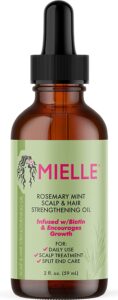
If you prefer a ready-made oil blend rather than measuring a pure essential oil yourself, this format is more convenient.
The Mielle Organics Rosemary Mint Scalp & Hair Strengthening Oil is a pre-blended hair oil, which can be more convenient than working with concentrated rosemary essential oil.
Because this formula was developed for hair and scalp use, check the label before bringing it close to the eyes and start with a very small amount on the brows.
This is primarily a hair and scalp oil, so follow the brand’s directions for hair use and treat brow application as a separate eye-area consideration.
The formula also contains biotin and multiple botanical oils. Their presence does not prove that the product will regrow sparse eyebrows.
Its oil blend may help condition dry hair and reduce the rough feel of brittle ends. Those cosmetic benefits are more established than claims that it creates new eyebrow growth.
The Rosemary Mint Scalp & Hair Strengthening Oil is marketed for a wide range of hair types. Eyebrow use is a separate consideration because the eye area is more sensitive than the scalp.
Mielle recommends applying a small amount to the hair for daily use, massaging it into the scalp for a scalp treatment.
Or coating the ends and letting it rest for up to 10 minutes as a pre-wash conditioning step.
If the current label does not warn against facial use, a clean spoolie can help distribute a very small amount over the brows. The formula contains multiple essential oils and carrier oils, so patch testing is especially useful for sensitive skin.
4. Gya Labs Organic Rosemary Essential Oils
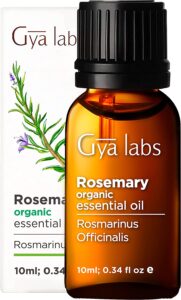
A bottle of pure rosemary essential oil gives you control over the carrier and dilution, but it also requires more careful handling than a pre-blended oil.
Before skin application, follow the product directions to dilute the essential oil in a suitable carrier.
The Gya Labs Organic Rosemary Essential Oil is another concentrated option for shoppers who want to make their own diluted blend.
Because the bottle contains essential oil rather than a ready-to-use facial oil, a little goes a long way.
Gya markets this oil for hair-related uses, but there is not strong clinical evidence showing that applying it to eyebrows increases circulation enough to produce new brow growth.
Avoid automatically adding other essential oils around the eyebrows. Combining multiple fragrant oils may increase irritation without proven extra benefit for brow growth.
Gya Labs states that its Organic Rosemary Essential Oil is naturally sourced and cruelty-free. Check current brand information if those claims are important to you.
For topical use, follow the current instructions for mixing the rosemary essential oil with a carrier oil before applying it to the hair, scalp, or brow area.
If you use the diluted mixture elsewhere on the skin, follow the label and stop if you notice burning, redness, or itching.
The Organic Rosemary Essential Oil has the characteristic herbal scent of rosemary. Choose it for flexibility and dilution control rather than expecting guaranteed eyebrow-growth results.
5. Soulflower Indian Castor Rosemary Oil
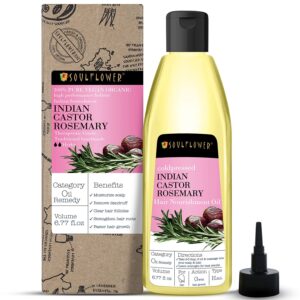
If you want a pre-blended rosemary and castor oil without measuring a separate carrier yourself, this is one of the simpler formats on the list.
The Soulflower Indian Castor Rosemary Oil may appeal to people who prefer a pre-blended oil instead of measuring a separate carrier oil.
Rosemary essential oil is concentrated, so products containing it should be used according to the manufacturer’s dilution and application directions.
Castor oil is a common carrier oil because of its thick, emollient texture. It can make brow hairs feel conditioned, although evidence that castor oil itself stimulates new hair growth is limited.
The listed formula contains castor seed oil and rosemary leaf oil. Check the current package if ingredient simplicity, vegan status, or processing method matters to you.
Soulflower recommends adding a few drops to the hair or eyebrows, then massaging the product in.
The rich oil blend can soften and coat existing hairs, which may make dry or coarse brows feel more conditioned. It may be too heavy if you prefer a lightweight, fast-absorbing product.
It’s also formulated for dry, damaged, and curly hair.
The Indian Castor Rosemary Oil may feel heavy or sticky. On the brows, use only a thin coating so removal does not require aggressive cleansing around the eye area.
Soulflower recommends avoiding this product on the eyes or conducting a patch test if you’re extremely sensitive.
6. UpNature Rosemary Essential Oil Roll-On Topical
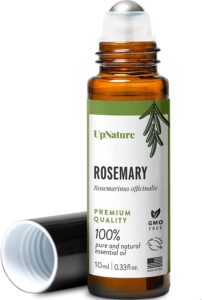
UpNature packages rosemary oil in a roll-on format designed for controlled topical application.
The rollerball format can make portion control easier than pouring oil directly from a bottle.
The Rosemary Essential Oil Roll-On is a convenient format when you want controlled, mess-free application.
UpNature markets this as a rosemary essential-oil roll-on. Check the current ingredient list to confirm the carrier and dilution before using it near the brows.
The product is marketed as pre-diluted and steam-distilled. Check the current label for the full ingredient list and brand claims before purchase.
They also recommend conducting a patch test.
After patch testing and checking the label, use only a small amount on the brow area and keep the roller well away from the eyelids and lash line.
Please ensure the formula does not come into contact with the eyes.
The brand also markets it for aromatherapy and topical use, but that does not make every facial area equally appropriate.
Apply a thin layer only where needed. A roll-on makes portion control easier, which is useful when working close to the eyes.
Do not rely on the roll-on to create new brow growth. Its practical value is the pre-diluted, targeted application.
Use it sparingly and as directed, and stop if you notice irritation around the brow area.
7. Sunny Isle Rosemary Jamaican Black Castor Oil
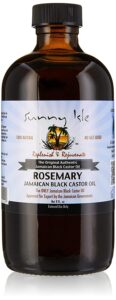
Sunny Isle offers a pre-blended rosemary and Jamaican black castor oil for people who do not want to mix a separate carrier oil at home.
This item also contains castor oil, a popular conditioning oil for brows and hair, although evidence that castor oil directly increases hair growth is limited.
The Rosemary Jamaican Black Castor Oil is a rich, multipurpose blend that may suit people who like heavier oils for hair and brow conditioning.
Use only a small amount on the eyebrows. Its heavier texture may also appeal to people with dry, curly, or coily hair who already use castor-oil-based products.
On the scalp, the oil can add slip and reduce the dry feel of hair and skin. It should not be presented as a treatment for dandruff or another scalp condition.
Jamaican black castor oil acts as the carrier in this blend. A pre-diluted formula can be more convenient, but it can still irritate sensitive skin, so patch testing remains useful.
Do not apply a rosemary-and-castor-oil blend to the eyelashes or waterline unless the product is specifically formulated and labelled for that use.
The Sunny Isle Rosemary Jamaican Black Castor Oil has an emollient texture that can also leave dry skin feeling softer, but facial tolerance varies.
You’ll receive 8 fl oz of product, so this makes more sense if you also plan to use the oil on your scalp or hair rather than only on the small eyebrow area.
8. SVA Organics Rosemary Essential Oil
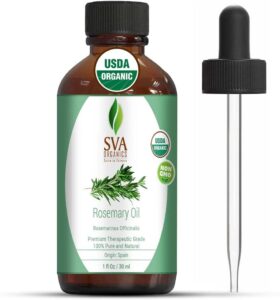
SVA Organics Rosemary Essential Oil is another straightforward concentrated option.
The SVA Organics Rosemary Essential Oil may suit shoppers looking for a single-ingredient-style essential-oil format they can dilute themselves.
It is a multipurpose essential oil marketed for hair, skin, and aromatherapy uses, but it still requires appropriate dilution for topical application.
SVA states that they’ve created this rosemary oil through the steam distillation of the herb Rosmarinus officinalis.
Because it is a 100% pure essential oil, it gives you control over the carrier oil and finished texture of a DIY brow blend.
When diluted appropriately, rosemary essential oil can be incorporated into a scalp or hair-conditioning routine.
For sparse eyebrows, keep expectations modest: conditioning existing hairs is more predictable than creating new growth.
SVA recommends mixing it with a carrier oil before topical use. Follow the current dilution directions rather than increasing the essential-oil concentration yourself.
You may also conduct a patch test, as pure rosemary essential oil is highly potent and can cause irritation when used alone or in large amounts.
Once diluted with the carrier oil of your choice, you can customise the mixture to feel lighter or richer depending on your skin and brow-hair needs.
You can create a simple DIY oil blend with a carrier oil or use the essential oil in other products only when the manufacturer’s directions say that method is appropriate.
9. De La Cruz Rosemary Essential Oil For Skin And Hair
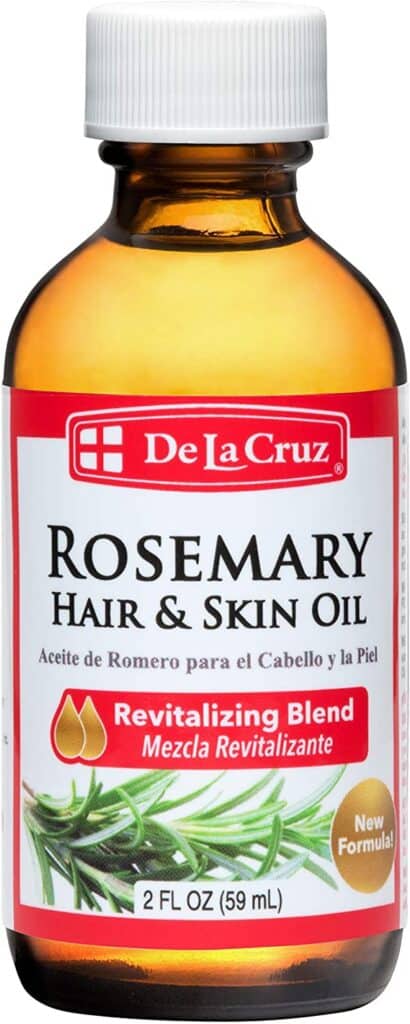
If you prefer a pre-blended rosemary oil rather than concentrated essential oil, this formula removes the need to choose a separate carrier.
The carrier-oil blend also makes it easier to apply a very small amount to dry brow hairs without mixing a DIY formula.
The De La Cruz Rosemary Essential Oil for Skin and Hair combines rosemary with several carrier oils, making it simpler for people who do not want to mix their own formula.
This rosemary product already contains a blend of carrier oils such as castor, avocado, and olive oil.
These carrier oils can add slip and emollience, which may make brow hairs and dry skin feel softer. Hair-growth claims for the carrier oils themselves are not well established.
Even with a pre-blended product, patch test first and avoid the eyes, especially if your skin is sensitive to botanical oils or fragrance.
De La Cruz recommends using the product as a conditioning treatment. For eyebrows, a very small amount is more practical than the generous application you might use on scalp hair.
For scalp use, follow the brand’s directions. On the brows, use a thin coating rather than saturating the area, and stop if you notice stinging, redness, or itching.
The carrier-oil blend makes it easier to use than undiluted essential oil, although individual skin tolerance still varies.
Because the blend can feel rich or sticky, use a very small amount on the brows and remove residue gently rather than repeatedly scrubbing the eye area.
Which Rosemary Oil Is Easiest To Use On Eyebrows?
The best format depends on how much mixing you want to do. Pure essential oils such as Maple Holistics, Gya Labs, and SVA give you control over the carrier oil and finished texture, but they require careful dilution.
Pre-blended oils such as Mielle, Soulflower, Sunny Isle, and De La Cruz are more convenient if you do not want to formulate your own mixture. Their downside is that some can feel heavy around the brows, and a scalp-friendly blend may still contain ingredients that bother sensitive facial skin.
If portion control is your biggest concern, the UpNature roll-on offers targeted application. Whatever format you choose, use a small amount, keep it away from the eyes, and judge the product first by comfort and conditioning rather than by dramatic growth promises.
Final Thoughts
Rosemary oil has limited human evidence for scalp hair growth, but research does not show that it reliably regrows eyebrows. For brows, a good product is one you can use safely and sparingly without irritation.
If your goal is simply softer, healthier-looking brow hairs, a pre-diluted oil can be the easiest option. If you prefer DIY beauty and are comfortable following precise dilution directions, a pure rosemary essential oil offers more flexibility.
For sudden, patchy, itchy, scaly, or otherwise unexplained eyebrow loss, consider a professional evaluation so an underlying cause is not missed.
Related Articles
Surprising Benefits Of Oregano Oil For Hair