
7 Best Oils For Eyelashes
Eyelashes do more than frame the eyes. They help protect the eye surface by catching dust and small debris and by triggering the blink reflex when something approaches the eye.
Eyelash hairs are relatively fine and can become brittle or break with repeated rubbing, rough makeup removal, lash glue, extensions, or mechanical stress.
If the lash line itself feels tender, itchy, swollen, crusted, or painful, however, that points to an eyelid or eye-area issue rather than simply “dry lashes” and is worth addressing separately.
A small amount of an emollient oil can coat dry lash hairs, reduce friction, and improve softness, but oils should not be treated as proven eyelash-growth treatments.
Using an oil may help the lashes you already have feel softer, look glossier, and seem a little more defined, but there is not good clinical evidence that household oils make eyelashes grow longer, thicker, or faster.
Because the eyelids are sensitive, the bigger priority is choosing a simple product you tolerate and keeping it out of the eye and waterline.
So, what are the best oils for eyelashes?
Coconut, argan, jojoba, castor, olive, sweet almond, and vitamin E oils can act as cosmetic conditioners for lash hairs, but none should be presented as a proven lash-growth treatment. Household carrier oils are also not ophthalmic products, so use only a tiny amount, keep them out of the eye, and stop if you develop burning, itching, redness, swelling, or blurred vision.
They are inexpensive compared with many dedicated lash serums, but “natural” does not automatically mean safer around the eyes.
If you choose to try one, remove contact lenses first, use a clean applicator, apply the smallest possible amount to the lash hairs rather than the inner lid margin, and avoid essential oils or fragranced blends near the eyes.
Best Oils For Eyelashes
Eyelash serums can be expensive, and formulas vary widely. Some dedicated growth serums use biologically active ingredients, while simple carrier oils mainly act as emollients on the lash hair itself.
A plain carrier oil may improve softness and reduce the dry, brittle feel of lash hairs, but claims about faster growth, new growth, or stronger follicles are not well supported.
Carrier oils are accessible and affordable, but the eye area is sensitive, so even a simple oil should be used sparingly and kept out of the eye itself.

Many options below are carrier oils, but there is no advantage to creating a complicated DIY blend. Mixing several oils can increase the number of potential irritants and makes it harder to identify the cause if your eyelids react.
Below are seven commonly used oils, with the focus on realistic conditioning benefits and eye-area safety rather than unsupported growth claims.
1. Coconut Oil For Eyelashes
Coconut oil is a common household carrier oil used in both food and personal-care routines, and its main appeal for lashes is its ability to coat and condition the hair fiber.
In hair research, coconut oil has been shown to help reduce protein loss from scalp hair fibers. That finding is useful for understanding its conditioning properties, but it does not prove eyelash growth.
Its high lauric-acid content gives coconut oil an affinity for hair fibers, so a tiny amount may help coat and condition dry lash hairs.
Do not expect coconut oil to make eyelashes grow thicker or longer. It can also blur vision or irritate the eye if too much migrates past the lash line, so keep the application minimal.
Viva Naturals Organic Coconut Oil Cold-Pressed
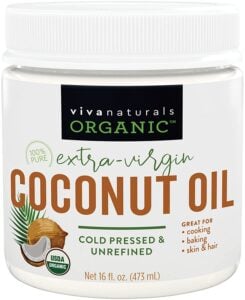
Viva Naturals currently sells this as organic extra-virgin coconut oil made with a single ingredient: organic cold-pressed coconut oil.
The brand markets it for both cooking and general skin or hair moisturization. It is not specifically formulated or tested as an ophthalmic eyelash product.
If you use it cosmetically on lashes, apply only a trace amount to the lash hairs for conditioning rather than expecting growth.
The current brand page lists it as USDA organic, Non-GMO Project Verified, gluten-free, keto, and paleo certified. Those food certifications do not make it safer for direct eye contact.
2. Olive Oil For Eyelashes
Olive oil is another emollient household oil that can coat dry hair fibers and skin.
Oil can dissolve some makeup, but pure olive oil is not designed as a sterile eye cleanser and can leave residue or blur vision if it gets into the eye.
Olive oil contains fatty acids and minor antioxidant compounds, but applying it to the lashes does not “feed” the follicles in the same way dietary nutrients reach living tissue.
Its main realistic role on lashes is surface conditioning, not proven protection from environmental damage.
Olive oil naturally contains some vitamin E, but there is no good evidence that coating lashes with olive oil corrects a deficiency or increases lash growth.
3 Argan Oil For Eyelashes
Argan oil is a lightweight plant oil widely used in hair and skin products.
It contains fatty acids and antioxidant compounds and can make dry hair fibers feel smoother.
A systematic review found no significant evidence that argan oil improves hair growth, and there is even less direct evidence for eyelashes. Treat it as a conditioner rather than a lash-growth active.
A tiny amount may make lash hairs feel softer, smoother, and less dry, but that cosmetic effect should not be confused with faster growth.
Argan oil is traditionally associated with Morocco and is widely used in hair and skin products.
Mountain Top Argan Oil USDA Organic 100% Pure Cold Pressed
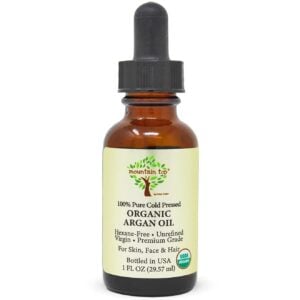
The linked Mountain Top argan oil is a simple carrier-oil option for people who prefer argan over heavier oils.
It can be used as an emollient on hair or skin, but the product should not be assumed to be specifically tested for direct eye-area use.
On lashes, the realistic benefit is a temporary conditioned, glossy feel.
If the current bottle is still labeled as 100% pure argan oil, that keeps the ingredient list simple, but not everyone will tolerate any cosmetic oil around the eyes.
4. Jojoba Oil For Eyelashes
Jojoba oil is technically a liquid wax ester derived from jojoba seeds and is widely used as a lightweight emollient in skin and hair products.
Claims that jojoba is antibacterial, reparative, or universally non-comedogenic should not be used to promise eyelash or eyelid benefits.
There is not strong clinical evidence that topical jojoba increases eyelash growth.
Its main cosmetic advantage is that it can form a light emollient layer on dry hair or skin without feeling as heavy as some thicker oils.
It may make the lash hairs feel softer, but avoid putting it directly into the eye or along the waterline.
NOW Solutions Organic Jojoba Oil
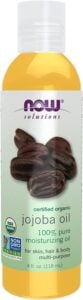
NOW Solutions Organic Jojoba Oil is currently a single-ingredient jojoba seed oil sold as a moisturizing carrier oil.
The current brand page lists it as organic jojoba seed oil and says the product is not tested on animals.
NOW markets it for hair and skin conditioning, not as an eyelash-growth treatment.
Importantly, the current NOW label says to avoid direct contact with the eyes and to stop use if skin sensitivity occurs.
If you choose to use it on lash hairs, use only a trace amount and keep it away from the eye itself.
5. Castor Oil For Eyelashes
Castor oil is probably the most famous DIY lash oil, but its reputation for making eyelashes grow longer or thicker is much stronger than the evidence behind it.
It is thick and highly emollient, so it can coat lash hairs, reduce a dry feel, and make them look glossier or slightly more defined.
A systematic review found no strong evidence that castor oil promotes hair growth, although it may improve hair luster. Research on specially formulated periocular castor-oil preparations for certain eyelid conditions should not be generalized to household castor oil as a lash-growth remedy.
Castor oil can still cause irritation or allergy in some users, and a cosmetic bottle is not an eye drop. Keep it out of the eye.
PURA D’OR Organic Castor Oil 100% Cold-Pressed Hexane-Free
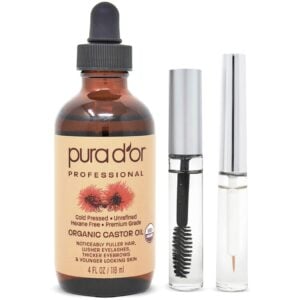
The linked PURA D’OR castor oil is sold with applicators that make small-area cosmetic use easier.
If the current product is still a single-ingredient cold-pressed castor oil, treat “growth” language as a marketing claim rather than established clinical evidence for eyelashes.
It may make lash hairs look shinier or more conditioned, but it is not proven to create new lash growth.
PURA D’OR provides an entire bottle of castor oil and two pre-filled bonus applicators to efficiently distribute the oil to your lashes, brows, and hair.
Use the applicator sparingly so excess oil does not migrate into the eye.
6. Sweet Almond Oil For Eyelashes
Sweet almond oil is another lightweight carrier oil that can soften and condition dry hair fibers, but it is not a proven eyelash-growth treatment.
Applying almond oil does not provide lashes with a meaningful “daily dose” of biotin or correct a nutritional deficiency at the follicle.
Do not rely on sweet almond oil to treat an eyelid infection, blepharitis, or fungal condition. Those problems need appropriate diagnosis and treatment.
Its practical cosmetic role is as an emollient for skin and hair, not as a treatment for lash loss or eyelid disease.
Pure Body Naturals Sweet Almond Oil For Hair And Skin
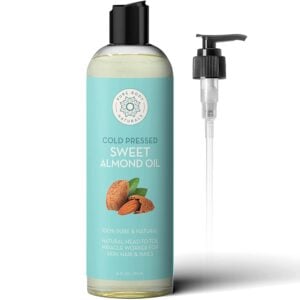
Sweet almond oil is commonly used as a carrier oil. Around the eyes, keeping the formula simple is preferable to mixing several DIY ingredients together.
Pure Body Naturals still sells cold-pressed sweet almond oil. Avoid “chemical-free” or “non-toxic” language, since the oil itself is made of chemicals and any cosmetic can irritate a susceptible person.
The linked bottle is much larger than you would need for lash conditioning alone, so storage and freshness matter if you keep it for a long time.
Its fatty-acid profile makes it useful as an emollient, but topical nutrient claims should not be confused with evidence for eyelash growth.
It also comes with a pump, making it easy to dispense the product.
7. Vitamin E Oil For Eyelashes
Vitamin E refers to a family of fat-soluble antioxidant compounds, including tocopherols and tocotrienols.
Many plant oils naturally contain some vitamin E, but applying vitamin E oil to eyelashes has not been shown to make them grow.
Vitamin E is an essential dietary nutrient, but that does not mean topical vitamin E oil is required for healthy lashes.
Topical vitamin E can function as an emollient and antioxidant ingredient in cosmetics, but evidence for eyelash growth is lacking.
Horbaach Natural Vitamin E Oil 5000 IU For Skin, Hair & Face
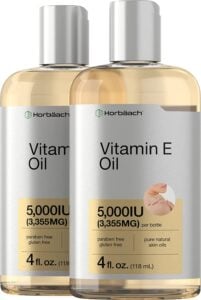
Horbäach Vitamin E Oil 5000 IU is currently sold as a general skin oil rather than a dedicated eyelash product.
It is a blend rather than pure vitamin E, so check the current ingredient list if you have nut or cosmetic sensitivities.
The current brand page says the formula contains no parabens, SLS, petroleum, or artificial fragrance. Those exclusions do not guarantee that the oil cannot irritate the eyelids.
Because this is not an ophthalmic product, do not place drops directly on the eye or lash line. If you use it cosmetically on lash hairs, use the smallest possible amount and stop if irritation develops.
Takeaway
Simple carrier oils can condition eyelash hairs, but current evidence does not support presenting coconut, olive, argan, jojoba, castor, sweet almond, or vitamin E oil as reliable eyelash-growth treatments.
You may notice softer or glossier lashes because oil coats the hair shaft. A “thicker” look can come from that coating, not from proven new follicle growth.
Even familiar plant oils can trigger irritant or allergic contact dermatitis. If you are prone to sensitivity, testing a small amount on skin away from the eyes can help identify obvious irritation, but it cannot guarantee that the eyelids will tolerate the product.
If you have sudden lash loss, persistent eyelid redness, crusting, swelling, pain, discharge, or ongoing eye irritation, consult a dermatologist, optometrist, or ophthalmologist rather than trying to treat the problem with oil.
Related Articles
How To Make Your Eyelashes Grow Overnight
Does Jojoba Oil Work For Eyelashes?
Best Rosemary Oils For Eyebrows