Benefits of Pomegranate Oil For Hair
Pomegranate seed oil is best known as a lightweight, fatty-acid-rich oil that can be used on skin and hair for softness, slip, and shine.
There are several ways to incorporate pomegranate seed oil into a routine, including as a finishing oil, a pre-shampoo treatment, or an ingredient in a blended hair product.
Its usefulness depends on your hair type, scalp tolerance, and how much you apply. Fine hair may only need a drop or two, while thicker or drier textures can usually handle more.
Because it is an oil rather than a water-based moisturiser, pomegranate seed oil is best at softening the hair and helping reduce moisture loss, rather than adding water to dry strands on its own.
Pomegranate has a long history as a food and cosmetic ingredient, and the seed oil is valued for its distinctive fatty-acid profile.
For hair care, the most realistic benefits are cosmetic: more slip, less roughness, added shine, and help sealing in moisture. Claims that the oil treats joint pain, stimulates hair growth, or cures scalp conditions go beyond what topical hair-care evidence can support.
Pomegranate seed oil contains fatty acids and antioxidant compounds. These can make it a useful conditioning oil, but the results depend on the formula and how your hair responds.
What are the benefits of using pomegranate oil in your hair?
Pomegranate seed oil can help hair feel softer, smoother, and shinier by coating the strands and reducing friction. It may be especially useful on dry, curly, coarse, or chemically treated hair, but there is not strong evidence that applying it to the scalp directly stimulates new hair growth.
Below, we explain what pomegranate seed oil is, the hair benefits it can realistically offer, and practical ways to use it without weighing your hair down.
What Is Pomegranate Oil?
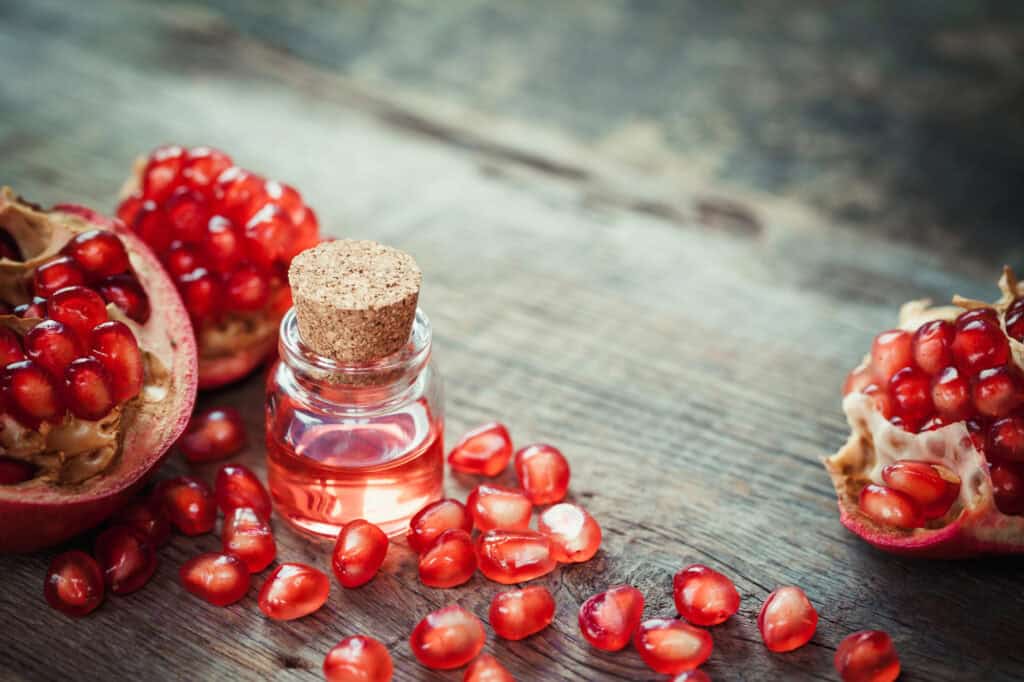
Pomegranate seeds can be pressed to produce an oil that is used in cosmetic and personal-care products.
The result is the production of pomegranate oil, an extract from the fruit’s seeds. Cold-pressed versions can have a rich colour and a mild natural scent, although appearance varies by processing method.
Pomegranate seed oil contains fatty acids and antioxidant compounds that make it useful as an emollient in skin and hair products.
It is mainly used cosmetically to condition, soften, and reduce dryness. It should not be treated as a substitute for medical care for skin, scalp, or other health conditions.
Pomegranate Oil Benefits For Hair
Pomegranate seed oil is rich in fatty acids, so it can help coat dry strands, improve slip, and add lustre and shine.
Pomegranate oil can be used by many hair types, but the amount matters. Curly, coarse, or dry hair may tolerate more, while fine hair often needs only a very small amount to avoid looking greasy.
Its antioxidant content is one reason it is used in cosmetic formulas, but claims that pomegranate oil provides meaningful environmental protection, antifungal treatment, or medical anti-inflammatory effects on the scalp are not well established for everyday topical hair use.
If your scalp feels dry or tight, a small amount of oil may help it feel more comfortable. However, persistent flaking, itching, redness, or dandruff can have several causes and may need a medicated product or professional evaluation.
Pomegranate oil can help reduce friction and improve the feel of brittle-looking hair, but there is not good evidence that it strengthens hair follicles or directly promotes new growth.
Scalp massage may feel relaxing and can temporarily increase surface blood flow, but that does not mean pomegranate oil has been shown to make hair grow faster or thicker.
Where pomegranate oil is most useful is in helping dry or dull hair look smoother and shinier when used in an appropriate amount.
Other Uses For Pomegranate Oil
While pomegranate seed oil works well as a hair-conditioning oil, it is also used in skin and body-care products.
Its fatty acids can help soften the skin and support the feel of the skin barrier, while antioxidant compounds make it a popular ingredient in cosmetic formulas.
Some people find facial or body oils soothing on dry skin, but pomegranate oil is not a treatment for inflamed or irritated skin conditions.
It can feel lightweight compared with heavier butters and oils, although how it behaves on the skin depends on the product and how much you use.
If you are acne-prone, introduce facial oils cautiously. Pomegranate oil is not proven to prevent breakouts or fade acne marks, and any oil can feel too occlusive for some complexions.
Pomegranate seed oil is sometimes marketed in anti-ageing products, but a topical oil should not be expected to rebuild collagen or erase fine lines on its own.
Its most reliable cosmetic role is to soften and condition the skin, which can temporarily make dryness and rough texture look less noticeable.
Pomegranate oil should not be relied on as a medical treatment for joint pain, arthritis, or other health conditions.
Likewise, applying the oil does not treat or control blood pressure, diabetes, or immune function. Those concerns require evidence-based medical care.
How To Use Pomegranate Oil In Hair

There are several practical ways to use pomegranate oil for your hair, depending on your hair density, texture, porosity, and level of dryness.
The goal is usually to improve softness, slip, and shine without making the hair feel coated or greasy.
One of the easiest ways to use pomegranate oil is as a finishing oil after styling.
Apply it to damp or dry hair, concentrating on the mid-lengths and ends. On fine hair, start with one drop rubbed between your palms. Thicker or curlier hair may need a little more. It can help smooth frizz and add shine.
You can also apply a small amount to the scalp if it tolerates oils well. Massage gently with your fingertips and avoid scratching or applying so much that the scalp feels heavily coated.
Scalp massage can feel pleasant, but it should not be presented as a proven way to increase hair growth. If you are experiencing thinning or shedding, it is better to address the cause rather than rely on an oil.
For a more intensive pre-shampoo treatment, apply the oil to the lengths before washing and leave it on for around 20 to 60 minutes.
You can use it by itself or combine it with other hair-loving oils. Focus on enough product to lightly coat dry areas rather than saturating the hair.
You do not need to make the oil very hot. If you prefer a warm-oil treatment, warm it only slightly in your hands or in a closed container placed in warm water, then test the temperature before applying.
Pomegranate oil can also be used as an overnight treatment, but this is optional. Apply a small amount to the lengths, protect your pillowcase, and shampoo it out the next morning if your hair feels coated.
Very fine or oily hair may find an overnight treatment too heavy, so a shorter pre-shampoo treatment or a tiny amount on the ends may work better.
Best Hair Types For Pomegranate Oil
Pomegranate oil can work for many hair types, but it tends to be easiest to use on hair that is dry, coarse, curly, chemically treated, or prone to frizz.
Although the oil contains fatty acids and antioxidant compounds, whether it feels lightweight depends on your hair density and how much you apply.
Curly and coily hair often benefits from products that reduce friction and help seal in moisture, which is where a small amount of oil can be useful.
Use enough to smooth the hair without flattening the curl pattern or leaving the strands greasy.
Pomegranate oil can help soften the surface of the hair and reduce the look of frizz, especially when applied over a water-based leave-in or conditioner.
Longer hair lengths can also benefit from pomegranate oil, particularly on dry ends that need extra slip and shine.
For thin or fine hair, use a very small amount and keep most of it away from the roots. The oil can make the ends feel smoother, but it does not strengthen follicles or prevent all breakage.
If your strands feel brittle, pomegranate oil may help reduce roughness and friction. Pair it with a suitable conditioner and gentle handling rather than relying on oil alone to “strengthen” the scalp or hair follicles.
If you struggle with dandruff or ongoing scalp irritation, be cautious about adding oils directly to the scalp.
Its cosmetic properties may help a dry scalp feel softer, but pomegranate oil is not a proven treatment for dandruff, seborrhoeic dermatitis, or other scalp conditions.
If you want to try it on the scalp, patch test first and use a small amount. Stop if you notice more itching, redness, flaking, or bumps, and seek professional advice for persistent symptoms.
Conclusion
Pomegranate seed oil can be a useful addition to a hair routine when you want more softness, slip, and shine.
It can work with many hair types, although curly, coarse, dry, or brittle-looking hair may benefit most from its smoothing effect. Fine hair can still use it, but usually in much smaller amounts.
If your goal is healthier-looking hair, use pomegranate oil as a conditioning and finishing product rather than as a treatment that promises to stimulate follicles or regrow hair.
Related Articles
Is Coconut Oil Good For Curly Hair?