
Why Do My Eyebrows Grow Upwards?
Eyebrow trends may change every few years, but the way your natural brow hairs grow is mostly determined by follicle direction, hair texture, and anatomy rather than fashion.
From the thin brows of the 1990s to the fuller, brushed-up brows of the 2020s, styling trends can make naturally upward-growing hairs more or less noticeable.
If some of your eyebrow hairs point straight up or stick out, especially near the inner corners, that is often completely normal. The direction of each hair is influenced by the angle of its follicle, and brow hairs naturally become more horizontal as they move toward the tail.
So, why do your eyebrows grow upwards?
The most common reason eyebrows grow upward is the natural direction of the hair follicles. Hairs near the inner brow are often more vertical, while hairs usually angle more horizontally toward the tail. Age can also change brow hair length, texture, color, and density, making unruly hairs more noticeable, but an upward growth pattern is often normal.
If the hairs are simply long or unruly, careful trimming can make them easier to style without changing the direction of the follicles themselves.
A brow gel or wax can also hold upward-growing hairs closer to the shape you prefer.
There is no reliable way to permanently “train” an eyebrow follicle to grow in a different direction with brushing, oils, skincare, or brow gel alone.
What you can do is keep the hairs manageable, avoid over-trimming or over-plucking, and use styling products that make the brow look neater without stressing the hair.
Below, we look at why eyebrow hairs grow upward, what changes with age, and the easiest ways to make brows lie flatter without over-grooming them.
We also cover common grooming mistakes and the signs that a sudden change in eyebrow density, texture, or skin condition is worth discussing with a dermatologist.
Why Eyebrow Hair Grows Upward Or In Different Directions
If a few brow hairs point in different directions, you are not necessarily dealing with a problem.
Eyebrow hairs do not all point in the same direction. The inner, middle, and outer brow naturally have different growth patterns.
With age, eyebrow hairs can become longer, coarser, finer, greyer, or less uniform from person to person. Those changes can make individual hairs stand out more than they did before.
Here are the main factors that can affect how upward-growing or unruly eyebrows look and behave.
Age And Brow Hair Changes
Aging can change the texture, thickness, color, density, and length of eyebrow hair, although the pattern varies widely between people.
That can make a long, wiry, or upright hair look more obvious, especially if the surrounding brow has become thinner or lighter.
The direction itself comes largely from the angle of the hair follicle. A clinical review of eyebrow anatomy notes that hairs near the inner brow are nearly vertical and become progressively more horizontal toward the outer brow.
So, an upward-growing inner brow is often normal anatomy, not a sign that the skin has stopped “directing” the hair correctly.
Sun Exposure And Smoking
Sun exposure and smoking can affect skin health and visible signs of aging, but they are not established causes of eyebrow follicles suddenly changing direction.
It is better to think of sun exposure and smoking as overall skin and hair health factors rather than direct explanations for one brow hair pointing upward.

Daily sun protection can help limit UV-related skin damage around the brow area, while avoiding smoking supports broader skin and hair health.
If your main concern is that the brows have become noticeably thinner, focus on the thinning itself rather than assuming the hair direction is the cause.
New or progressive eyebrow loss can have several possible explanations, so it deserves a different approach from a few stubborn hairs that simply stick up.
If thinning is sudden, patchy, or accompanied by irritation, scaling, or hair loss elsewhere, consider checking in with a dermatologist.
Genetics And Natural Follicle Direction
For many people, eyebrow growth direction is simply part of their natural brow pattern.
Family traits can influence brow shape, density, hair texture, and the natural angle at which individual hairs sit.
You cannot change your genetics, but you can usually make upward-growing eyebrow hairs easier to manage with grooming and styling.
The key is to work with the natural pattern instead of repeatedly cutting, plucking, or thinning hairs that refuse to lie the way you want.
If your brows have always grown this way, there is usually no reason to treat the direction itself as a problem.
It is especially common for hairs closest to the nose to point upward before gradually angling outward across the brow.
You may not be able to change that growth angle permanently, but you can style the hairs so they temporarily sit flatter or follow a more controlled shape.
How To Get Eyebrows To Lay Flat
If your eyebrows are growing upward or sticking out, start with the least aggressive option. Brushing, gel, filling sparse areas, and light trimming are usually enough for everyday grooming.
Fill Them In
If your brows are sparse in a few areas, a pencil such as this one from Anastasia Beverly Hills, or a brow powder in a flattering shade, can help balance the overall shape.
The goal is to create the appearance of a fuller, more even brow without drawing one heavy solid line through the entire shape.
Use short, light, hair-like strokes and follow the natural brow shape rather than trying to redraw every upward-growing hair.
This will not change the natural hair direction, but it can make a few upward-growing or uneven hairs look much less noticeable.
Use A Shaping Gel
If you want the actual hairs to stay in place, try a brow gel. For example, Anastasia Beverly Hills makes a clear option, and the brand also offers brow gels designed to hold the hairs in a chosen shape.
A gel can hold hairs closer to the direction you brush them and make the brow look more polished.
Shaping gels come in clear and tinted formulas, with different levels of hold depending on how coarse, long, or stubborn your brow hairs are.
If you mainly need hold and do not want extra color, a clear gel is usually the simplest option.
If you also want to disguise sparse areas, a tinted gel can add a little definition while setting the hairs.
Brush the gel through the brow with a clean spoolie, then gently press especially stubborn hairs into place while the product sets.
For many people, this is one of the easiest temporary fixes for eyebrow hairs that grow upward or stick out.
Trim Them Regularly
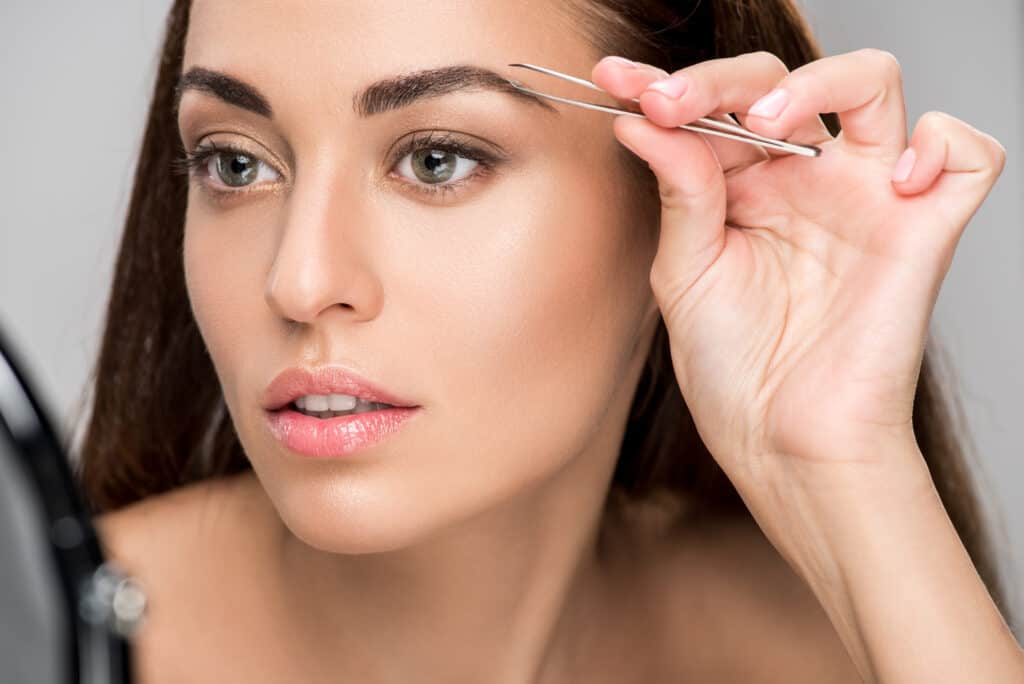
Trimming can help when a few long eyebrow hairs extend well beyond the shape of the brow, but cutting too much can create blunt, patchy-looking sections.
Start by brushing the hairs upward with a clean spoolie. Only trim the very tips that clearly extend past the brow line.
Use small eyebrow scissors and good lighting rather than large scissors or a full-size hair trimmer near the eye area.
Trim one or two hairs at a time, then brush the brow back into place before deciding whether any additional length actually needs to come off.
Be especially conservative with the inner brow, where hairs naturally grow more vertically and can look sparse or uneven if cut too short.
If the hairs are not actually too long, a stronger gel is usually a better choice than repeatedly trimming them shorter.
The same approach works for hairs that point downward: brush first, trim only obvious excess length, and use gel to guide the finished shape.
How To Tame Eyebrows That Stick Out
Filling, gel, and conservative trimming are the quickest ways to make upward-growing brows look tidier.
You can also make the hairs softer and easier to brush into place by avoiding harsh grooming and keeping the surrounding skin comfortable.
These habits will not permanently change your follicle angle, but they can help your eyebrows stay healthy-looking and easier to manage.
Condition
Conditioning eyebrow hairs can be useful if they feel dry, coarse, or difficult to shape, especially when frequent styling products make them feel stiff.
You can use a small amount of a simple conditioning product or a dedicated brow formula such as this one by Revitalash. Conditioning may make the hairs feel softer and more manageable, but it does not permanently change the direction in which the follicles grow.
Use a clean spoolie to distribute the product lightly through the brow rather than saturating the surrounding skin or getting product into the eyes.
Follow the product directions, and stop using it if you notice stinging, redness, swelling, or persistent irritation.
Once the hairs feel softer, they may be easier to brush into your preferred shape with gel or wax.
Skincare
The skin around your eyebrows benefits from the same gentle, consistent skincare as the rest of your face, without needing a special routine solely because the hairs point upward.
Because the eye and brow area can be sensitive, avoid scrubbing it aggressively or layering products that repeatedly sting or irritate the skin.
A simple routine is enough: keep the area clean, moisturized, and protected from excessive sun exposure.
Use a gentle cleanser and a moisturizer that suits your skin type.
An eye cream is optional. It can add hydration, but no special eye product can reliably make eyebrow hairs grow in a different direction.
Likewise, topical collagen products should not be expected to redirect eyebrow follicles. Choose skincare for hydration and skin comfort rather than as a way to train brow growth.
And of course, daily sunscreen is a useful step for protecting exposed skin from UV damage.
That can support the appearance and health of the skin around your brows, even though sunscreen will not change the angle of an existing hair follicle.
Can You Train Your Eyebrows To Grow In The Right Direction?
If your eyebrows keep returning to the same growth direction, it is reasonable to wonder whether daily brushing can eventually train them permanently.
There is no reliable evidence that brushing, trimming, oils, or brow gel can permanently change the direction of the follicle.
What those methods can do is make the hairs more manageable and help them stay in a preferred position temporarily while the product is holding them.
If your eyebrows have always grown in the same unusual direction, that pattern is likely part of your natural follicle orientation and hair texture.
In that case, focus on styling the hairs rather than fighting the growth pattern. A spoolie, suitable brow gel or wax, and conservative trimming are usually the most practical combination.
When A Change In Your Eyebrows Is Worth Checking
A few stubborn hairs that have always pointed upward are usually just part of your natural brow pattern. A sudden change is different, especially when it happens alongside noticeable hair loss.
Consider speaking with a dermatologist if you develop patchy eyebrow loss, significant thinning, scaling, persistent redness, scarring, pain, or itching, or if eyebrow loss appears along with hair loss elsewhere.
Those symptoms do not automatically mean something serious is wrong, but they are not problems that brow gel, oils, or extra trimming are designed to diagnose or treat.
Frequently Asked Questions
Why Do The Inner Parts Of My Eyebrows Grow Straight Up?
That is a normal eyebrow growth pattern for many people. The hairs near the nose tend to sit more vertically, then gradually angle outward and flatter as you move toward the tail of the brow.
Does Trimming Eyebrows Make Them Grow Back Thicker?
No. Trimming cuts the visible hair shaft, so the freshly cut end can feel blunter or look more noticeable as it grows out, but trimming does not make the follicle produce a thicker hair.
Can Brow Gel Train Eyebrows To Grow Sideways Instead?
Brow gel can hold the hairs in a different position for the day, but it does not permanently rotate or redirect the follicle underneath the skin.
Final Thoughts
Your natural brow direction is part of your facial anatomy, and more vertical hairs are especially common near the inner brow.
Age can make some brow hairs look longer, coarser, thinner, or more noticeable, but an upward direction is not automatically caused by aging or loss of skin elasticity.
For everyday grooming, start with a clean spoolie and shaping gel or wax, then trim only the hairs that are genuinely too long.
While you cannot reliably change the direction of a follicle at home, you can make upward-growing brows look neat, controlled, and intentional.
Try to work with your natural eyebrow texture and growth pattern rather than over-plucking or over-trimming it.
And if the change is sudden or comes with patchy loss, scaling, redness, or other symptoms, a dermatologist can help determine whether something beyond normal brow growth is going on.
Related Articles
Can You Use Hair Dye On Eyebrows?