
Does Toothpaste Get Rid of Blackheads?
Toothpaste is not a reliable way to get rid of blackheads. A dab on your nose may leave the skin feeling dry or tingly, but that is not evidence that it has cleared the clogged pores.
This DIY tip is easy to try because the tube is already in your bathroom. Unfortunately, a product made to clean teeth is not a substitute for a facial acne treatment.
However, does it actually work? Toothpaste is designed for oral care, so it makes sense to question whether it belongs on facial skin at all.
Blackheads are open clogged pores, also called open comedones. Oil and dead skin collect inside the pore, and exposure to air darkens the material at the surface.
That dark tip is not simply dirt you can scrub off. Drying the surrounding skin with toothpaste does not reliably remove the plug.
Likewise, a minty cooling sensation does not mean the pore is being cleaned. Tingling can accompany irritation, so it is not a useful sign of effectiveness.
So, does toothpaste get rid of blackheads?
No, toothpaste is not a recommended treatment for blackheads. It can cause dryness, stinging, or irritation without clearing the pore. A product formulated for acne, such as a salicylic acid cleanser or leave-on treatment, is a more appropriate option.
The American Academy of Dermatology advises against using toothpaste for acne and recommends proven acne-treatment ingredients instead.
If you have already tried toothpaste, remove it rather than leaving it on overnight. Below, we’ll cover what to do next and how to approach blackheads more gently.
Why You Shouldn’t Treat Blackheads With Toothpaste
Many household DIY treatments are not formulated or tested for facial skin, which makes them less predictable than skincare products designed for that purpose.
Even when a household product contains an ingredient that also appears in skincare, the concentration, pH, supporting ingredients, and intended use can be completely different.
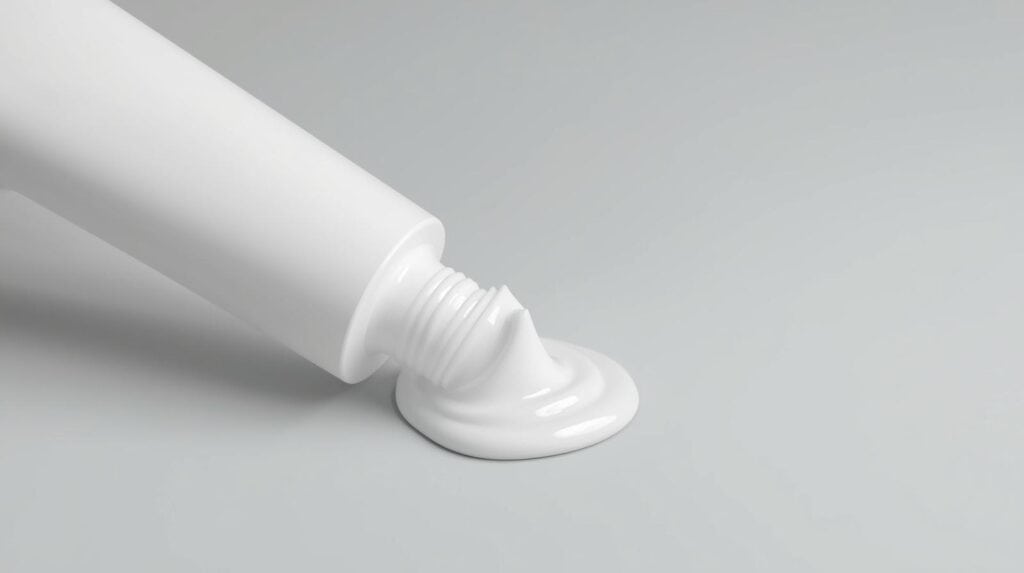
Because toothpaste is formulated to care for your teeth rather than your skin, its ingredients can be harsh.
Some toothpaste formulas contain baking soda, peroxide, strong flavouring agents, or detergents that can be irritating or drying when left on facial skin.
Leaving toothpaste on until it dries, covering it with a patch, or applying it repeatedly does not make it a better blackhead treatment.
You may end up with dryness, stinging, redness, or a disrupted skin barrier without actually treating the clogged pore that created the blackhead.
Just because it’s minty and tingling doesn’t mean it’s working.
Healthline also discusses irritation from toothpaste used on blemishes. The practical issue is the same for blackheads: drying or irritating the skin is not the same as treating the blockage.
Already applied toothpaste? Gently rinse it away with lukewarm water without scrubbing. If the skin feels dry, follow with a plain, fragrance-free moisturizer that you normally tolerate.
Do not immediately apply salicylic acid, a scrub, or another strong treatment to an area that is burning or peeling. Let irritation settle first, and get medical advice for blistering, significant swelling, or pain that persists.
Mixing toothpaste with salt or baking soda is not a fix. Adding gritty ingredients and rubbing the mixture over your nose can create more irritation.
A “natural”, fluoride-free, or whitening toothpaste is still not formulated as a blackhead treatment. Changing the type of toothpaste does not solve the underlying problem.
Also check whether the dots you see are actually blackheads. Small, evenly spaced greyish dots on the nose may be sebaceous filaments, normal structures that help oil move through pores.
As Cleveland Clinic explains, sebaceous filaments differ from blackheads. They are a normal part of skin, and trying to squeeze out every visible dot can leave your nose sore without permanently removing them.
How to Treat Blackheads
The goal is to reduce the buildup of oil and dead skin inside pores while keeping the surrounding skin comfortable. Start with one treatment rather than several acids, masks, and scrubs at once.
BHAs: Salicylic Acid For Blackheads
Salicylic acid is a beta hydroxy acid, or BHA, used in acne products to help clear clogged pores. It is a more relevant choice for blackheads than a drying household remedy.
You can find it in both rinse-off cleansers and leave-on products. Choose one format to begin with; using an acid cleanser and an acid serum together is not automatically more effective.
BHAs like salicylic acid help loosen dead skin cells and oily debris inside pores, which can gradually reduce blackheads and help prevent new clogs.
Follow the product’s directions and introduce it cautiously, especially if your skin is sensitive. Reduce use or stop if you develop persistent stinging, peeling, or redness rather than treating irritation as proof it is working.
A leave-on BHA exfoliant serum is one option for blackhead-prone areas. Apply it as directed, keep it away from the eyes and broken skin, and avoid adding it to skin that is still irritated from toothpaste.
Give treatment time. The AAD recommends allowing six to eight weeks for blackhead and whitehead treatment to work before considering further help. An overnight transformation is not a realistic expectation.
Keep the rest of your routine simple: gentle cleansing, a non-comedogenic moisturizer, and daily broad-spectrum sunscreen with SPF 30 or higher. Sunscreen does not unclog pores, but it remains part of everyday skin protection.
Choose a sunscreen you will use consistently. Elta MD’s Clear Facial sunscreen is one option to compare; check the current formula and label for your skin’s needs rather than assuming every sunscreen suits everyone.
Hydrocolloid Patches
Hydrocolloid patches can be helpful for some raised pimples, but they are not one of the best tools for blackheads.
Hydrocolloid is an absorbent dressing material commonly used to protect moist wounds and draw out surface fluid.
They tend to help most when a pimple has surface fluid to absorb. A blackhead is a plug in an open pore, so a plain hydrocolloid patch does not address it in the same way.
According to Healthline, hydrocolloid patches can absorb fluid from certain pimples and help protect the spot from touching or picking.
That protective effect can be useful for some inflamed blemishes, but it does not mean a patch will pull a blackhead out of the pore.
Do not squeeze or puncture a blackhead just to make a patch “work”. For blackheads, a pore-clearing treatment is the more useful step.
Apply patches to clean, dry skin as directed and do not layer them over toothpaste. Medicated patches contain additional ingredients, so check their labels separately rather than treating every pimple sticker as plain hydrocolloid.
Summary
The takeaway is simple: toothpaste is not a blackhead treatment.
Toothpaste is formulated for oral care, not facial skincare, so there is little reason to risk irritation when better options are available.
If toothpaste has already irritated your face, focus on gentle cleansing and moisturizing before introducing a new acne product.
Avoid harsh scrubs, picking, and repeated squeezing. Blackheads can recur, and aggressive removal can leave irritation or marks behind.
For stubborn blackheads, a dermatologist can discuss other treatments, including topical retinoids or professional extraction. These are options to assess for your skin, not a reason to start several strong products at once.
Salicylic acid can help over time, but choose a formula you tolerate and use it consistently according to its directions.
Plain hydrocolloid patches do not pull out blackheads. Save them for the types of fluid-producing blemishes described on the package.
If blackheads persist despite a consistent routine, or you also have painful acne or scarring, seek dermatology advice. Keep toothpaste for your teeth.
Related Articles