
9 Best Lactic Acid Cleansers
Cleansers remove sunscreen, makeup, excess oil, sweat, and daily debris, but the best formula depends on what your skin actually needs.
If you also want mild exfoliation, a lactic acid cleanser can combine cleansing with a short-contact alpha hydroxy acid step.
The right choice depends on your skin type, tolerance, other active products, and whether you want a daily cleanser or an occasional exfoliating treatment.
Because cleansers are rinsed off, their exfoliating effect is generally more limited than a leave-on acid serum or toner, but they can still be useful for roughness, dullness, and mild congestion.
Exfoliating cleansers may suit people dealing with uneven texture, dullness, or some acne-related concerns, but a plain gentle cleanser may be the better choice if your routine already contains several active treatments.
Some are designed for daily use, while stronger formulas are intended only a few times per week, so frequency should come from the specific product rather than from the ingredient name alone.
Exfoliating cleansers can use physical particles, chemical exfoliants, or both.
Physical exfoliants rely on friction from particles or textured ingredients, while chemical exfoliants commonly use AHAs such as lactic or glycolic acid and BHAs such as salicylic acid.
AHAs are water-soluble and mainly act at the skin surface, while oil-soluble salicylic acid can also work inside oily follicles.
Lactic acid is an AHA that is often considered gentler than glycolic acid because its molecule is larger, although concentration, pH, contact time, and the rest of the formula still matter. In modern skincare, it may be produced through fermentation or other manufacturing methods rather than being literally sourced from milk.
It helps loosen bonds between surface cells and also has humectant properties, so it can support smoother texture and a brighter-looking surface when the strength, formula, and frequency suit your skin.
You can find lactic acid in various cleansers.
What are the best lactic acid cleansers?
The best lactic acid cleanser should contain lactic acid in a formula your skin can tolerate. Dry or sensitive skin may prefer a creamier cleanser with humectants and soothing ingredients, while oily or congestion-prone skin may prefer a formula that combines lactic acid with salicylic acid. Stronger is not automatically better, especially in a rinse-off product.
No cleanser can create “perfect” skin, but the right one can support a balanced routine without adding unnecessary irritation or duplicating stronger leave-on treatments.
Below are nine lactic-acid cleansers and rinse-off exfoliating products, including notes on current names, formulas, and how often each one is intended to be used.
Choosing A Lactic Acid Cleanser
Lactic Acid
First, read the ingredient labels on your products to ensure they contain lactic acid.
AHA is a category that also includes glycolic, mandelic, citric, and other acids.
So, if you specifically want lactic acid, double-check the ingredient list rather than assuming every product marketed as an AHA cleanser uses it.
Daily Face Wash or Weekly Treatment
Usage frequency varies widely: some lactic acid cleansers are designed for daily cleansing, while others are exfoliating treatments used only a few times per week.
Avoid stacking a new acid cleanser with several strong leave-on acids or retinoids at once. Start according to the product directions and reduce frequency if your skin becomes persistently tight, red, stinging, or flaky.
Too much exfoliation can contribute to redness, burning, dryness, flaking, and barrier irritation.
Irritation can also make acne-prone skin look more inflamed, so worsening breakouts are not a reason to keep increasing exfoliation.
If you are new to lactic acid, follow the individual label rather than applying one blanket schedule to every cleanser. A treatment cleanser may start at once or twice weekly, while a mild daily cleanser may be designed for more frequent use.
Hydrating
If your skin runs dry or sensitive, look for a lactic acid cleanser with glycerin, sodium PCA, aloe, ceramides, or other humectant and barrier-supporting ingredients.
These ingredients are better described as emollients, humectants, and barrier-supporting ingredients rather than “nutritional” components.
If your face feels persistently tight, squeaky, stinging, or flaky after cleansing, the formula or frequency may be too stripping for your skin.
Skin-Clearing
If you have oily or acne-prone skin, a cleanser that combines an AHA with salicylic acid can be useful, but it is not mandatory if a simpler cleanser already works for you.
Lactic acid mainly exfoliates the surface, while salicylic acid is oil-soluble and can work inside oily follicles.
The combination may help with texture and clogged pores, but persistent, painful, or inflammatory acne usually needs a dedicated acne treatment rather than relying on a rinse-off cleanser alone.
Pair With Sunscreen
Many AHA products carry a sunburn warning because AHAs can increase sun sensitivity. Whether you cleanse in the morning or evening, daily broad-spectrum sunscreen is a good habit.
Sunscreen does not make an acid cleanser “work,” but it helps protect against UV exposure and pigment changes while you are using exfoliating products.
There is no universal rule that lactic acid cleansers must be used only at night. Follow the label and your skin’s tolerance.
Consult With A Derm
You do not need a dermatologist’s approval for every mild cosmetic cleanser, but professional advice can be helpful if your skin is very reactive, repeatedly irritated, or you are treating a medical skin condition.
Consider a dermatologist if you have eczema, rosacea, painful acne, persistent irritation, or a history of strong reactions to exfoliating acids.
They can help decide whether an exfoliating cleanser adds anything useful or whether a simpler cleanser and a separate targeted treatment would be more appropriate.
Best Lactic Acid Cleansers
| Rank | Product | Key Features |
|---|---|---|
| 1. | Priori Skincare Gentle Face Cleanser With Lactic Acid | Vitamins A, C, and E, hydrating, cruelty-free |
| 2. | PCA SKIN Gentle Lactic Acid Facial Cleanser | Gentle exfoliation, morning and night |
| 3. | Dermalogica Skin Resurfacing Cleanser | Antioxidants, hydrating, plumping, smoothing |
| 4. | Murad AHA/BHA Exfoliating Cleanser | Promotes smooth and even complexion |
| 5. | CLNS Gentle Clarifying Cleanser | Gentle exfoliant, French grey sea salt |
| 6. | TOULON Gentle Milk Cleanser | Gentle exfoliation, hydrating, vitamins A+D |
| 7. | Glo Skin Beauty Hydra-Bright AHA Cleanser | Sulfate-free, hydrating, brightening |
| 8. | Sanitas Skincare Vitamin C Lactic Cleanser | Prevents signs of aging, vitamin C |
| 9. | Blithe Patting Splash Mask Face Exfoliator | Prevents damage to skin barrier |
1. PRIORI Gentle Cleanser With Lactic Acid
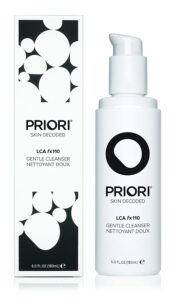
PRIORI Gentle Cleanser is still a current product, although the older LCA fx100 wording used in past listings has shifted to the simpler Gentle Cleanser name.
The current brand formula is built around its LCA complex, which includes lactic acid alongside antioxidant vitamins and other conditioning ingredients.
It is sold directly by PRIORI as a daily cleanser for a broad range of skin types.
If you see LCA fx100 Gentle Cleanser in an older listing, compare the packaging and ingredient list with the current PRIORI Gentle Cleanser before purchasing.
This is one of the gentler-looking picks in the roundup if you want lactic acid without choosing a dedicated high-intensity exfoliating wash, although individual tolerance still matters.
PRIORI positions it as a cleansing, smoothing, and calming formula.
Lactic acid is an AHA chemical exfoliant, but in a rinse-off cleanser its effect is generally milder than in a leave-on acid treatment.
In this rinse-off format, lactic acid provides mild surface exfoliation while humectants and emollients help offset dryness.
The brand markets it as suitable even for sensitive skin, but individual reactions still vary, especially because the current formula also contains salicylic acid and other active ingredients.
The current PRIORI page lists vitamins A, C, and E as part of its LCA complex.
PRIORI also markets it as a makeup remover. Heavy or waterproof makeup may still come off more reliably with a dedicated first cleanse.
The current cleanser has a creamy gel-like texture, which may appeal if you dislike the feel of strongly foaming cleansers.
PRIORI currently recommends it for all skin types, including sensitive skin, but “all skin types” is a brand positioning statement rather than a guarantee of zero irritation.
The Gentle Face Cleanser can fit into a simple routine without requiring a separate exfoliating step every time you use it.
Priori recommends dispensing one or two pumps into your palms, adding water, and massaging onto the face.
The brand also suggests leaving it on for up to five minutes in the shower as an AHA “flash mask”. Skip that extended contact if your skin is reactive or already irritated.
Because formulas can change, check the current package if fragrance, preservatives, or cruelty-free status are important purchase criteria.
2. PCA SKIN Facial Wash
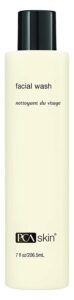
PCA SKIN Facial Wash is the current product name for this lactic-acid cleanser.
The current formula combines lactic acid, aloe vera leaf juice, allantoin, and willow bark extract.
It sits at a higher price point than a basic cleanser, so the value depends on whether you specifically want a gently exfoliating professional-style formula.
PCA SKIN Facial Wash is designed to remove makeup, oil, and daily impurities while providing mild exfoliation.
Compared with a stronger treatment cleanser, it is positioned as a more balanced daily cleansing option with mild exfoliation rather than intensive resurfacing.
This cleanser is formulated with lactic acid to exfoliate the skin’s surface gently.
Lactic acid can be gentler than some AHAs, but no acid cleanser is guaranteed not to dry or irritate every skin type.
The supporting ingredients help make the formula feel more balanced than an acid-only treatment, although they do not eliminate the possibility of irritation.
For example, PCA SKIN also formulated this face wash with aloe vera leaf juice, allantoin, and salix negra (willow) bark extract.
Aloe and allantoin are commonly used for their soothing feel, while willow bark contributes additional botanical components.
PCA SKIN describes the Facial Wash as gentle, but very sensitive or barrier-impaired skin should still introduce it cautiously.
The product is designed as a regular cleanser and can be used according to the current brand directions and your tolerance.
For acne-prone skin, note that PCA SKIN also sells a separate Facial Wash Oily/Problem with lactic acid and gluconolactone, so choose the version that matches your skin goals.
If your skin feels persistently tight, rough, or stingy after cleansing, reduce use or switch to a non-exfoliating cleanser.
Whether the price is worthwhile depends on how much you value the formula and whether you already use a separate leave-on exfoliant.
Use only the amount recommended on the current label rather than assuming more cleanser will exfoliate more effectively.
A balanced cleanser can still irritate individual skin, so pH alone should not be used as a guarantee against sensitivity.
Overall, this is a useful option if you want mild lactic-acid exfoliation in a straightforward daily face wash.
3. Dermalogica Skin Resurfacing Cleanser
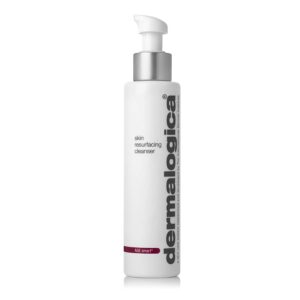
Dermalogica Skin Resurfacing Cleanser is still current and is now prominently described as a lactic acid cleanser.
The current product is aimed more at dullness, uneven texture, and visible signs of skin aging than at treating acne specifically.
It is a more active option than a plain daily cleanser, and lactic acid appears prominently in the formula, so sensitive skin may need a slower introduction.
The brand recommends it for all skin types, but reactive skin may need lower frequency than the label’s standard daily use.
It functions as a cleanser and exfoliant in one product, which can be useful if you prefer fewer steps in your routine.
The current formula combines lactic acid with botanical oils and antioxidant ingredients.
Lactic acid is the key exfoliating ingredient in this cleanser.
In this formula, the AHA helps lift dull surface buildup and smooth rough texture over time.
It may improve the appearance of fine surface lines and dullness, but a cleanser should not be expected to deliver the same anti-aging effect as a leave-on retinoid or acid treatment.
The current ingredient list also includes rose, clove, lemon, eucalyptus, and other aromatic botanical oils, which may be a drawback if your skin is highly fragrance-sensitive.
If you tolerate the formula, it is best viewed as a two-in-one cleanser and exfoliant rather than a guaranteed hydrating treatment.
Its two-in-one format makes the most sense for someone who wants cleansing and mild resurfacing in a single step.
The Skin Resurfacing Cleanser combines cleansing with short-contact exfoliation, so there is less need to add another acid step at the same time.
If your skin tolerates it, it can replace a plain cleanser on the days you want mild exfoliation.
Dermalogica currently says it can be used morning and evening after PreCleanse, with frequency reduced if sensitivity develops.
The brand recommends massaging it for at least 30 seconds, avoiding the eye area, then rinsing and following with sunscreen during the day.
If vegan, cruelty-free, or ingredient-exclusion claims influence your purchase, verify the latest brand policy and package because formulas and standards can change.
4. Murad AHA/BHA Exfoliating Cleanser
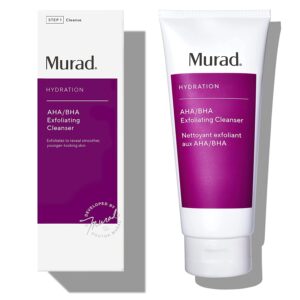
Murad AHA/BHA Exfoliating Cleanser remains a current product and is the strongest treatment-style cleanser in this roundup.
It combines chemical and manual exfoliation rather than relying on lactic acid alone.
This makes it a better fit for someone who specifically wants an occasional exfoliating cleanser rather than a mild twice-daily wash, especially if the rest of the routine is simple.
The formula contains glycolic acid, lactic acid, salicylic acid, and jojoba esters.
The three acids target surface buildup and clogged follicles in different ways, while the jojoba esters add a manual exfoliating component, so light pressure is important.
Murad currently recommends using it 2-3 times per week, which is an important distinction from the daily cleansers elsewhere in this list.
If you already use a retinoid, benzoyl peroxide, leave-on AHA/BHA, or prescription acne treatment, watch for cumulative irritation rather than adding this automatically.
The AHA/BHA blend is aimed at smoothing dull, rough surface texture and helping clear buildup.
For persistent acne or significant signs of aging, use it as a supporting cleanser rather than the main treatment.
You’ll also find that this face wash has jojoba beads.
The current formula lists jojoba esters for manual exfoliation.
Murad also includes sodium PCA and soothing licorice-derived ingredients to support the formula’s feel on skin.
Use light pressure during massage because adding aggressive scrubbing on top of multiple acids can increase irritation.
You can use it at the time of day that fits your routine, but the brand’s 2-3 times weekly frequency matters more than morning versus night.
Because it contains AHAs, use daily broad-spectrum sunscreen and avoid combining it with so many exfoliants that your skin becomes irritated.
For this product, 2-3 times a week is the current brand recommendation.
Because this cleanser already combines several exfoliating mechanisms, pair it with a simple moisturizer rather than assuming you need more active products from the same brand.
5. CLNS Gentle Clarifying Cleanser
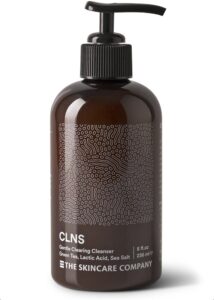
CLNS Gentle Clarifying Cleanser is an older niche product that still appears in marketplace listings, but current first-party brand information is difficult to verify.
Because of that, treat older ingredient and performance claims as legacy information and confirm the current package before buying.
Older product descriptions list decyl glucoside as a mild cleansing surfactant.
A mild surfactant can reduce the stripped feeling of a cleanser, but it does not guarantee hydration or zero irritation.
If you use this type of cleanser for acne-prone face or body skin, remember that a rinse-off exfoliant is supportive care rather than a complete acne treatment.
The product has historically been marketed for both face and body.
Its main appeal is the combination of cleansing with mild acid exfoliation rather than a claim to “detox” or eliminate impurities.
Older manufacturer and retailer descriptions list 2% lactic acid and 2% French grey sea salt.
If the current formula matches those older listings, the lactic acid provides chemical exfoliation while the salt may add a mild textural component.
A lower-pH cleanser should not be presented as a medical treatment that prevents pathogenic bacteria from forming.
If ceramides are still present in the version you find, they can support barrier-focused skincare, but verify the current ingredient list rather than relying on older copy.
With any older marketplace product, also check the seller, expiration or period-after-opening information, and whether the packaging appears current and sealed.
If you find a current, sealed version, use it according to the package directions rather than relying on older marketplace copy.
Apply it to wet skin as directed, rinse thoroughly, and reduce frequency if you notice persistent tightness, stinging, or flaking.
Do not default to twice-daily use unless the current package specifically recommends that frequency and your skin tolerates it.
6. TOULON Gentle Milk Cleanser
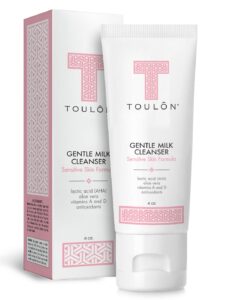
TOULON Gentle Milk Cleanser is still listed by the brand as a sensitive-skin formula with lactic acid.
Its milky format may appeal to dry or sensitive skin, although sensitivity to acids is individual and the marketing label does not guarantee tolerance.
The formula is positioned as a gentle, milky cleanser that combines mild exfoliation with a creamier cleansing base.
The brand markets it for texture, brightness, and moisturized-feeling skin, but a cleanser cannot physically shrink pore size.
The formula is positioned as a gentler exfoliating cleanser rather than an intensive peel.
You will find that this cleanser is formulated with vitamins A & D and aloe vera.
A rinse-off cleanser may make skin feel smoother, but do not expect vitamins A and D in a cleanser to erase wrinkles or permanently minimize pores.
If your skin tolerates it, the milky base may leave less of a tight feeling than a stronger foaming acid cleanser.
The squeeze-tube packaging is straightforward and practical for dispensing a creamier cleanser.
It can be convenient if you wash your face in the shower, although the packaging does not change how strong or gentle the formula is.
The squeeze tube also makes it easier to control how much product you dispense.
TOULON markets it for all skin types, including sensitive skin, but introduce it cautiously if your barrier is already irritated.
Lactic acid provides the exfoliating component, while aloe and the creamier base contribute to the formula’s conditioning feel.
Expect gradual smoothing and a cleaner feel rather than an overnight change in dullness or dryness.
Use it according to the current label and your tolerance. Morning use is not automatically unsafe, but daily sunscreen is still important with AHA products.
AHAs can increase sun sensitivity, and irritated skin may also be more vulnerable to visible pigment changes after UV exposure.
TOULON’s Gentle Milk Cleanser is the softer-textured option in this list for people who dislike strong foaming cleansers.
Treat any anti-aging benefit as secondary to cleansing and mild exfoliation rather than as the reason to choose the product.
This product is cruelty-free and fragrance-free.
7. Glo Skin Beauty Hydra-Bright AHA Cleanser
Glo Skin Beauty Hydra-Bright AHA Cleanser remains a current product and is one of the clearest modern lactic-acid cleanser picks in this list.
The current formula is a light-foaming, sulfate-free cleanser built around vegan lactic acid, moringa seed extract, and other botanical ingredients, with aromatic components that may matter for fragrance-sensitive skin.
No exfoliating cleanser can be guaranteed irritation-free, even when it is described as gentle or non-comedogenic.
It is a good fit if you want daily cleansing plus mild AHA exfoliation in one product.
This is a gel cleanser that foams up when it comes into contact with water, and it’s sulfate-free.
Glo says it removes makeup, excess oil, and impurities, although heavy waterproof makeup may still benefit from a separate first cleanse.
Glo uses vegan lactic acid to support smoother texture and a brighter-looking surface.
The current formula also includes moringa seed extract, blue lotus, carnosine, and several fragrant botanical oils.
Glo positions the cleanser around smoothing, hydration support, and brightening.
The brand positions those benefits as smoothing, hydration support, and brightening, but the rinse-off format means results should still be expected to be modest.
If you are highly fragrance-sensitive, note that the current ingredient list also includes bergamot, grapefruit, rosewood, and lemon-derived aromatic ingredients.
Glo currently describes it as suitable for all skin types and non-comedogenic.
It is best suited to someone who wants one exfoliating cleanser rather than layering several separate acid products.
Use it at the time of day that fits your routine. The more important point is consistent daytime sun protection.
Like most cleansers on this list, the Hydra-Bright AHA Cleanser is a 2-in-1 product that cleanses and exfoliates.
The brand markets it as non-stripping, but reduce frequency if your skin still feels tight, dry, or irritated.
Follow the current Glo directions for massage time and rinsing rather than extending contact in an attempt to make the acid stronger.
If twice-daily use feels too active for your skin, once daily or alternating with a plain cleanser may be more comfortable. Use sunscreen each morning.
8. Sanitas Skincare Vitamin C Lactic Cleanser
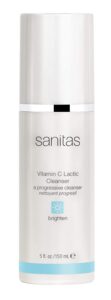
Sanitas Vitamin C Lactic Cleanser is still current, but the brand’s present directions are more conservative than the older daily-use advice often repeated online.
Avoid “non-toxic” language when judging skincare safety. What matters here is the actual ingredient list, frequency, and how your skin tolerates the formula.
The cleanser combines lactic acid, ascorbyl glucoside, sodium PCA, glycerin, hyaluronic acid, and phospholipids.
That combination makes it particularly relevant for dry or mature-feeling skin that still wants periodic exfoliation.
Sanitas markets it for dullness, dark spots, and visible signs of aging, but a rinse-off cleanser should still be viewed as a supporting step rather than a high-impact pigment treatment.
Lactic acid provides the exfoliating step, while the humectants help reduce the stripped feeling that can follow acid cleansing.
Expect subtle smoothing rather than dramatic wrinkle correction from a cleanser.
Overall, lactic acid is often a well-tolerated AHA, but “gentle” is relative and depends on concentration, pH, formula, and frequency.
Next, you’ll see that this cleanser is formulated with Sodium PCA. What is this ingredient?
Sodium PCA is a humectant that helps attract and retain water. It supports hydration but does not by itself prevent skin aging.
The current formula uses ascorbyl glucoside, a vitamin C derivative.
Because this is a rinse-off product, keep expectations modest compared with a well-formulated leave-on vitamin C serum.
Together, the formula makes sense for someone who wants gentle brightening and hydration support in one rinse-off step.
Sanitas currently recommends using this cleanser up to four times per week, not automatically every day.
If you are extra sensitive, start below the maximum frequency and use a plain cleanser on off days.
The current Sanitas label includes an AHA sunburn alert, so use sunscreen, protective clothing, and sensible sun exposure while using it.
Sanitas currently identifies the brand as cruelty-free; if that matters to your purchase, verify the latest policy alongside the current ingredient list.
Do not interpret “free from” claims as proof that a product contains no potential irritants. The current formula includes lemon peel oil, for example, which some sensitive users may not tolerate.
9. Blithe Patting Splash Mask Rejuvenating Purple Berry
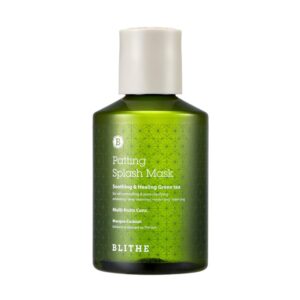
Blithe Patting Splash Mask Rejuvenating Purple Berry is the outlier in this list because it is a diluted splash-on exfoliating treatment, not a conventional face wash.
It remains a current product and is designed to be mixed with water before use.
The current brand ingredient list clearly includes lactic acid plus multiple fruit extracts. Older retailer descriptions refer to a broader fruit-acid complex, but exact percentage claims are not consistently presented across current first-party listings.
The concentrate must be diluted with water exactly as directed. Do not use the concentrate straight on the face.
Lactic acid provides the main clearly identified AHA exfoliation in the current formula.
Some retailer descriptions have marketed the product around a 20% fruit-acid concentrate, but current brand information is more useful for confirming how the product should actually be diluted and used.
The current ingredient list includes bilberry, sugarcane, orange, lemon, maple, and several berry extracts alongside lactic acid.
Do not rely on older claims about green tea or tea tree unless they appear on the package you are buying; the current first-party ingredient list should take priority.
Blithe’s current directions call for diluting one capful in a bowl of water and splashing it onto the face for about 15 seconds.
Because it is concentrated before dilution and contains fragrance and fruit-derived ingredients, sensitive skin should approach it cautiously.
Stop if you develop persistent burning, swelling, or significant redness rather than assuming that irritation is part of the exfoliation process.
The current brand directions specify one capful of product diluted into about 23 oz of water.
Then, Blithe says to splash the face with the mixture for 15 seconds.
Use only the methods listed on the current package or brand instructions rather than adapting a strong acid concentrate to the scalp or other areas on your own.
This is the most unconventional option in the roundup and is better thought of as a short-contact exfoliating treatment than as your everyday cleanser.
It will not tackle every skincare concern, and sensitive, compromised, or already-overexfoliated skin may be better served by a simpler non-acid cleanser.
Follow the current frequency directions and avoid combining it with multiple other exfoliating products in the same routine.
As with the other AHA products here, use daily broad-spectrum sunscreen.
Related Articles