
Best Makeup For Burgundy And Dark Red Hair
Makeup can either echo the richness of burgundy and dark red hair, create deliberate contrast, or stay neutral so the hair remains the strongest colour in the look.
For example, a brown eye pencil can soften the eye area, while black, navy, plum, or green liner can create stronger contrast depending on the effect you want.
A bright or richly pigmented blush can show up beautifully on deeper complexions, while sheer mauve, peach, rose, or terracotta can create a softer finish at any skin depth.
The easiest way to find a balanced palette is to consider your hair undertone, eye colour, complexion, and preferred level of contrast rather than trying to match the hair exactly.
Burgundy and dark red hair create a rich base that works well with muted neutrals, warm metallics, jewel tones, and deeper lip colours.
These deep reds can lean cool and wine-toned, warmer and coppery, or fairly neutral, so the most flattering version of a makeup shade can change with the hair colour itself.
If the hair colour is new, your usual makeup may read differently beside it, so test a few neutral, jewel-toned, and warm palettes before deciding what feels most balanced.
What is the best makeup to apply to burgundy and dark red hair?
Burgundy and dark red hair pair especially well with forest green, sapphire, plum, bronze, taupe, and brown around the eyes, while mauve, berry, peach, terracotta, nude, and red work well on the cheeks and lips. Cool burgundy often suits blue-reds, mauves, plums, and cool jewel tones, while warmer dark red hair can look especially cohesive with bronze, copper, peach, terracotta, and warm red.
Finding a makeup palette for dark red hair is mostly about choosing whether you want harmony, contrast, or neutrality, then adjusting the depth and saturation to your features.
Below are the easiest colour families to start with, plus ways to adapt them for everyday, soft-glam, and bolder looks.
Burgundy Hair Makeup At A Glance
- For everyday makeup: taupe or brown eyes, mauve or peach blush, and a rose-brown or nude lip.
- For soft glam: bronze or plum eyes, defined lashes, a muted berry or terracotta cheek, and a satin nude or red lip.
- For high contrast: forest green, sapphire, navy, cobalt, or jewel-toned purple around the eyes.
- For cool burgundy hair: mauve, berry, plum, blue-red, navy, forest green, and cool bronze are easy starting points.
- For warmer dark red hair: copper, bronze, peach, terracotta, gold, warm brown, and brick red create a more harmonious palette.
What Makeup Colours Flatter Dark Red Hair?
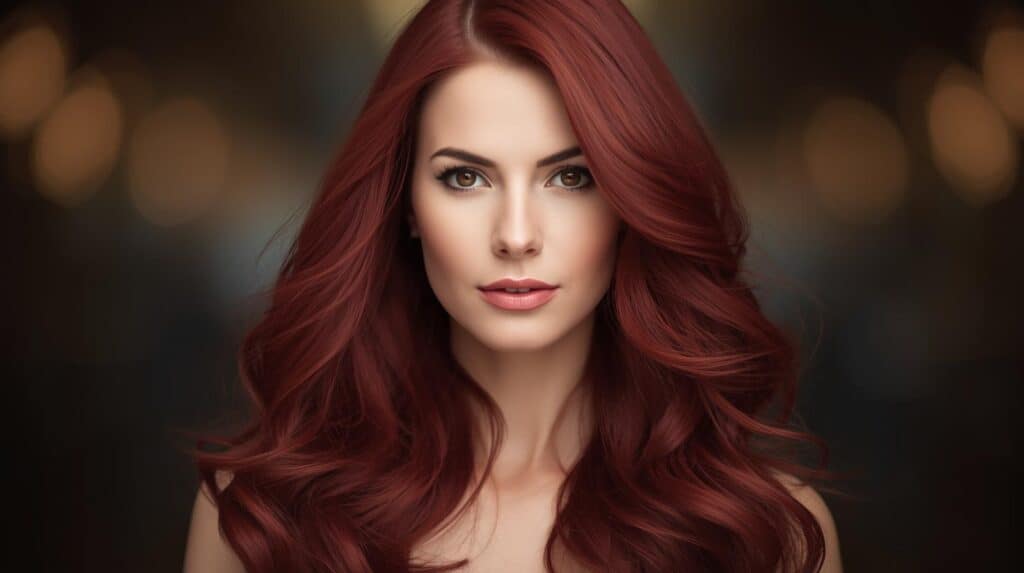
Dark red or burgundy hair colours can work with a wide range of makeup shades.
Because of their rich depth, jewel tones can create an especially striking contrast.
You can also pair dark red strands with bright colours for a more graphic look, or use neutrals when you want the hair to remain the main focal point.
Use the ideas below as starting points rather than rules. The same colour can look completely different when you switch from sheer to opaque, matte to metallic, or pale to deep.
Personal preference still matters most, so wear the colours and finishes that fit your style even when they fall outside a traditional “flattering” palette.
What Else To Consider When Applying Makeup
Your Shade Of Burgundy Or Dark Red
Not all dark red hair has the same undertone. That is why one burgundy shade may look amazing with mauve and navy while another looks more cohesive with copper and terracotta.
- Cool wine or berry burgundy: plum, mauve, blue-red, forest green, navy, sapphire, and cool taupe.
- Warm burgundy or dark cherry: bronze, warm brown, copper, peach, brick red, terracotta, and gold.
- Very deep red-black: jewel tones, black liner, smoked brown, oxblood, berry, and richer metallics can hold their own beside the hair.
- Muted or faded burgundy: softer taupe, dusty mauve, rose-brown, sage, and muted peach keep the overall contrast gentler.
To narrow down shades, look at the undertone of the hair, your complexion, your eye colour, and how much contrast you want.
Several factors can influence how a makeup shade reads on you.
Dark red hair can work across every complexion and eye colour, so avoid building the whole palette around one stereotypical combination.
Consider your eye colour, complexion, undertone, hair undertone, and desired contrast level when choosing shades to pair with burgundy hair.
These factors can help narrow down a few flattering choices when experimenting with makeup.
Eye Color
Your eye colour is one useful reference point when choosing eyeshadow and liner shades.
If you want stronger contrast around the eyes, try shades that sit opposite or near your eye colour on the colour wheel.
For example, brown eyes can look striking with baby blue, navy, metallic gold, bronze, or green.
Your hair and eye colour can suggest easy starting points, but they do not make any colour automatically off-limits.
This is especially useful when you want the eyes to stand out without making the hair and eye makeup compete at the same intensity.
Complexion
Your skin tone helps determine how light, deep, or saturated a colour needs to be to show up the way you want.
On deeper complexions, richer or more saturated blushes and lip colours may show up more visibly, while sheer formulas can create a softer effect.
Adjusting the saturation and depth of a colour can help it show up the way you want against both your skin tone and dark red hair.
Your complexion can help you decide how light, deep, sheer, or saturated you want a shade to be.
For example, a dark brown lip creates stronger contrast on lighter skin and a softer tonal effect on some deeper skin tones, but either can be intentional.
Undertone
Your undertone can help you choose between warmer, cooler, or more neutral versions of the same shade.
Undertone can help you choose between warmer, cooler, or more neutral versions of the same makeup colour.
For example, if you’re cool-toned, a blue-red may feel especially harmonious, while an orange-red creates more contrast.
If you’re a neutral olive, you may prefer the contrast of richer jewel tones, although pastels can still work with the right depth and placement.
Your undertone is commonly described as cool, warm, neutral, or olive.
Makeup colours can also lean warm, cool, neutral, muted, or saturated, which is why two mauves or two reds can behave very differently on the face.
Easy Complete Makeup Looks
Everyday Neutral
- Taupe or soft brown eyeshadow with brown or black mascara.
- Muted mauve, rose, or peach blush.
- Rose-brown, caramel, nude, or sheer berry lip.
Soft Glam
- Bronze, plum, or espresso shadow with a softly smoked outer corner.
- Defined lashes and optional black, brown, or plum liner.
- Terracotta, berry-mauve, or warm rose blush.
- Satin nude, brick red, berry, or classic red lip.
Jewel-Tone Contrast
- Forest green, sapphire, cobalt, navy, or aubergine on the eyes.
- Keep the cheeks softer with mauve, peach, or neutral rose.
- Use a muted nude or rose-brown lip if you want the eyes to stay dominant.
Makeup For Burgundy And Dark Red Hair
Once you’ve considered your eye colour, complexion, undertone, and preferred level of contrast, it becomes easier to narrow down shades to try.
If you are still unsure where to start, choose one of three routes: neutral soft glam, jewel-tone contrast, or warm monochromatic makeup.
Once you find a colour family you like, change the depth, texture, and placement until it feels right with both your hair and complexion.
Eyes
The eye area is one of the easiest places to create either contrast or harmony with burgundy hair.
You can keep the eye makeup neutral and smoky, or use a jewel tone when you want a stronger colour statement.
The easiest shades to experiment with are bronze, green, blue, purple, taupe, brown, and soft gold.
Metallic and jewel-toned shades can create a cohesive, high-impact look next to deep hair colours such as burgundy.
Deep blues, forest greens, plums, aubergines, and smoky neutrals all give burgundy hair enough depth to feel intentional rather than mismatched.
Bronze
Bronze shades can add warmth and dimension to an eye look and are available in everything from pale champagne-bronze to deep copper-brown.
Choosing a lighter, deeper, warmer, or cooler bronze lets you adjust the contrast to your complexion and eye colour.
Bronze works well as a single wash over the lid, a metallic centre-lid accent, or part of a brown smoky eye.
Bronze can lean gold, copper, brown, or even slightly taupe, so it is easy to customize.
For a softer finish, pair bronze with brown pencil liner; for more definition, use black, plum, or deep espresso.
Green
Green and red are opposite on the colour wheel, making them complementary colours.
If you enjoy contrast, try a green eyeshadow or liner with dark red or burgundy hair.
Forest green creates a deep jewel-toned effect, while sage gives a softer, more muted contrast.
You can use green as a full shadow, a lower-lash accent, liner, or even mascara if you want the contrast to stay concentrated near the lashes.
Blue
Blue can create a striking cool contrast against dark red hair, from subtle navy liner to vivid cobalt shadow.
If you want a more understated blue look, try deep navy, sapphire, denim, or blue-grey. Brighter blues work too when you want a more graphic finish.
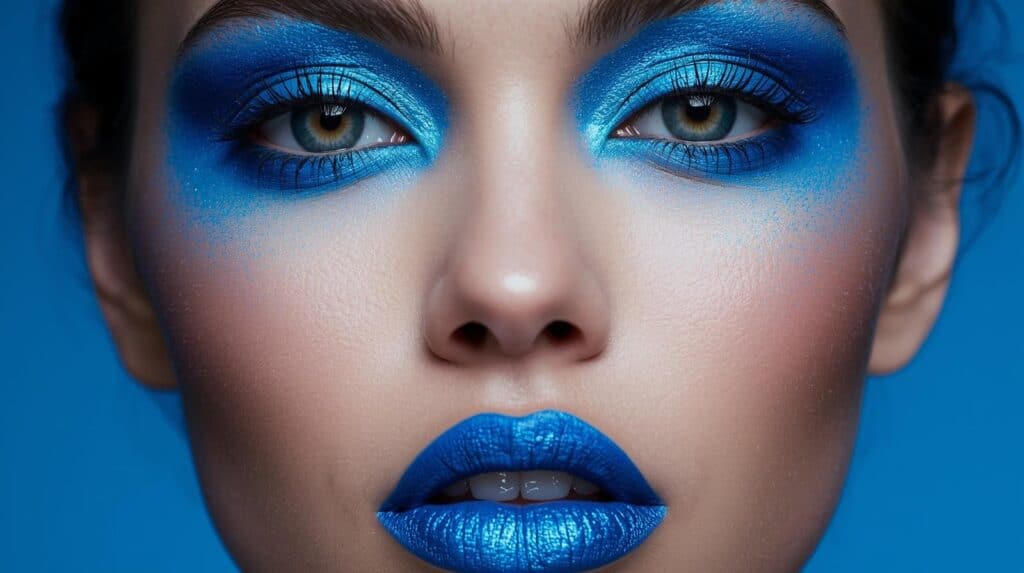
A shimmering sapphire pencil or a deep navy shadow can add cool contrast without taking over the entire look.
If cobalt feels too vivid, navy or blue-grey gives you the same cool contrast in a more wearable way.
Purple
Purple is another flexible option, ranging from cool lavender and plum to saturated violet and aubergine.
If a muted purple makes the eye area look dull on you, switch the depth, saturation, or undertone rather than assuming purple itself is the problem.
A cool-toned lavender creates a softer contrast, while plum and aubergine can add more depth.
On warm or olive undertones, jewel-toned violet and red-purple can create a rich effect, but cooler purples are still an option if you prefer the contrast.
You can also use purple mascara or a plum liner if a full purple eyeshadow look feels too intense.
Brows
Your brows do not need to match burgundy hair. Keeping them close to your natural brow colour usually gives the face more structure and prevents the red hair from taking over every feature.
- Blonde or light brows: taupe, neutral blonde, or soft auburn can work depending on your natural depth.
- Medium brown brows: neutral or slightly warm brown usually blends well with burgundy hair.
- Very dark brows: deep brown or soft black keeps definition without forcing a red tone into the brow.
- Fashion-colour brows: burgundy or red-toned brow products can work if you want an intentionally monochromatic effect.
Cheek
Blush, bronzer, and contour can add colour, warmth, or shadow to the face depending on the finish you want.
Some cream blush formulas can also double as lip colour when the product is specifically labeled for use on both lips and cheeks.
Blush can either echo the red family or deliberately soften it. Mauve, berry, peach, rose, and terracotta are easy places to start.
Mauve
Mauve is a versatile everyday blush option if you like a slightly cool pink-purple undertone.
Mauve sits between pink, purple, and neutral tones, which makes it especially useful with cooler burgundy hair.
It ranges from pale dusty mauve to deep berry-mauve, so the category works across a wide range of skin depths.
A deep berry creates stronger colour payoff, while a sheer mauve gives a softer wash. Choose the depth based on the effect you want and how pigmented the formula is.
Mauve can create a muted rosy flush that pairs easily with burgundy hair without repeating the exact hair tone.
If you want more colour, move from soft mauve into berry, plum-rose, or true pink.
Peach
Peach is a warmer alternative that can brighten the face beside burgundy or dark red hair.
Another option is a peach blush. Peach adds warmth and comes in pale, muted, orange-leaning, and deeper terracotta versions.
It can give the face a warm flush that contrasts softly with cool burgundy or echoes warmer red hair.
If peach works well on you, deeper terracotta, coral, warm rose, or muted orange can create a richer version of the same effect.
Lips
Lipstick is an easy way to shift the balance of a makeup look without changing the eye makeup.
A strong lip can also carry the whole look when the eyes and cheeks are kept simple.
Useful lip families include nude, rose-brown, berry, plum, brick, true red, oxblood, and warm terracotta.
Nude
Nude lipstick is a useful option when you want the hair or eye makeup to remain the focal point.
A nude is generally a neutral lip colour chosen to sit close to your natural lip tone or complexion rather than one single beige shade.
Nude shades range from pink-beige and peach to caramel, rose-brown, cocoa, and deep neutral brown, so the category is easy to customize.
It’s crucial to remember that nude is not just a pale concealer-like shade of lipstick.
Nude should be chosen relative to your own lip and skin tone, so the most flattering nude may be peach, rose, caramel, cocoa, or brown rather than beige.
Red
Red lipstick can work beautifully with burgundy or dark red hair, either by echoing the hair colour or creating deliberate contrast.
Different red lipsticks can either echo the hair or deliberately contrast with it depending on their undertone and depth.
Blue-red, true red, brick, cherry, oxblood, and orange-red all create different relationships with burgundy hair.
A dark red lip gives a deeper monochromatic effect, while a bright red creates more contrast against dark burgundy hair.
Makeup For Burgundy Hair FAQs
What Lipstick Looks Best With Burgundy Hair?
Rose-brown, nude, berry, plum, brick, classic red, oxblood, and terracotta can all work. Choose a muted lip when the eyes are bold, or use a deeper red or berry when you want a richer monochromatic effect.
What Eyeshadow Works With Dark Red Hair?
Bronze, taupe, brown, forest green, sapphire, navy, plum, aubergine, and soft gold are easy starting points. Neutrals create a softer look, while jewel tones produce stronger contrast.
Should Blush Match Burgundy Hair?
Not exactly. Mauve and berry echo cooler burgundy, while peach, terracotta, and warm rose can soften or warm the look. The best depth depends more on your complexion and the intensity you want than on matching the hair precisely.
Should Eyebrows Match Dark Red Hair?
No. Natural-looking brows usually stay close to your own brow depth in taupe, brown, auburn, or soft black. A burgundy-toned brow is better treated as an intentional fashion choice rather than a requirement.
Can You Wear Red Lipstick With Burgundy Hair?
Yes. A dark wine or oxblood lip gives a deeper monochromatic effect, while true red or brighter red creates more contrast. Adjust the undertone to your complexion and the tone of the hair.
Wrap-Up
Useful makeup colours to try with dark red hair include mauve, red, nude, peach, berry, and terracotta for the lips and cheeks.
For the eyes, bronze, purple, blue, green, taupe, and brown all work as starting points. Adjust the depth and undertone to your eye colour, complexion, and personal preference.
These are general starting points, not restrictions. Adjust the depth, undertone, texture, and intensity until the makeup feels balanced with your own features and style.
Related Articles