
How Much Makeup Is Too Much?
Makeup is so expressive, and it’s a creative outlet to showcase not only your good looks but also your personality.
In addition, most people state that makeup is a form of art, therapy, and relaxation.
However, most of us can agree that no one wants to look overdone or cakey.
Nothing is worse than applying the wrong shade of foundation or overdoing it with the powder when it comes to makeup.
Nowadays, we are so used to seeing beauty gurus pile on the lashes, concealer, and bronzer, but is it convenient for everyday wear?
Unless you’re someone who loves to apply as much makeup as possible, a professional makeup artist, or a beauty lover, not everyone wants to look overdone.
For most people, less is more. However, it can be challenging to work with a light hand and look natural.
How much makeup is too much?
Thankfully, there are a few tell-tale signs that point to makeup overload. For example, your foundation breaking apart, pairing too many bold colors together at once, too much blush, or overdrawn lips can leave you looking over-the-top.
A lot of makeup applied well can look flattering, cohesive, and even natural, but if your application or colors just aren’t quite right, it can leave you looking like there’s too much going on.
Most people don’t want to look like their face is layered with products. In addition, some makeup techniques are outdated and can create a cakey effect.
Layering your products lightly and with ease can ensure you aren’t wearing too much makeup.
How To Avoid Wearing Too Much Makeup
Thankfully, some tell-tale signs suggest you may be wearing too much makeup.
In addition, if you find out what could be going wrong with your makeup regimen, you can rest assured that there is an easy solution.
But of course, we have to state that everyone has their own unique style and personality that shines through in the way they like to do their makeup.
For this article, we’ll be addressing what makes it look like you may be wearing too much makeup, specifically for everyday wear, according to the average person.
1. Orange Cake Face
The number one fear we all have is our foundation turning orange.
Foundation can be tricky to match to your skin tone, and if it’s a heavy formula, it can pile up on your skin.
So it’s crucial to find the right shade and formula for your skin type/tone.
A heavy foundation with irritating ingredients can make your base look cakey and cause it to separate or break up throughout the day.
In addition, the orange foundation can create a line of demarcation, indicating poor blending.
Thankfully, both of these have an easy fix.
When choosing a foundation, choose a formula tailored to your skin type and your concerns.
For example, choose thicker foundations to cover blemishes and discoloration, and lighter foundations to even your skin tone and smooth your skin texture.
Some foundations are formulated for acne-prone skin to avoid breakouts, others to hydrate your skin, and more.
Next, you need to select the right shade. Color-match your foundation to your neck and chest for the most accurate match.
Make sure to check the color swatch under different lighting conditions to ensure it looks right in every setting.
Lastly, blend your foundation down your neck to avoid any lines of demarcation or streaks, so you never have to worry about orange, cakey foundation ever again.
Finally, you don’t have to overthink your foundation any longer!
2. Too Many Bold Colors
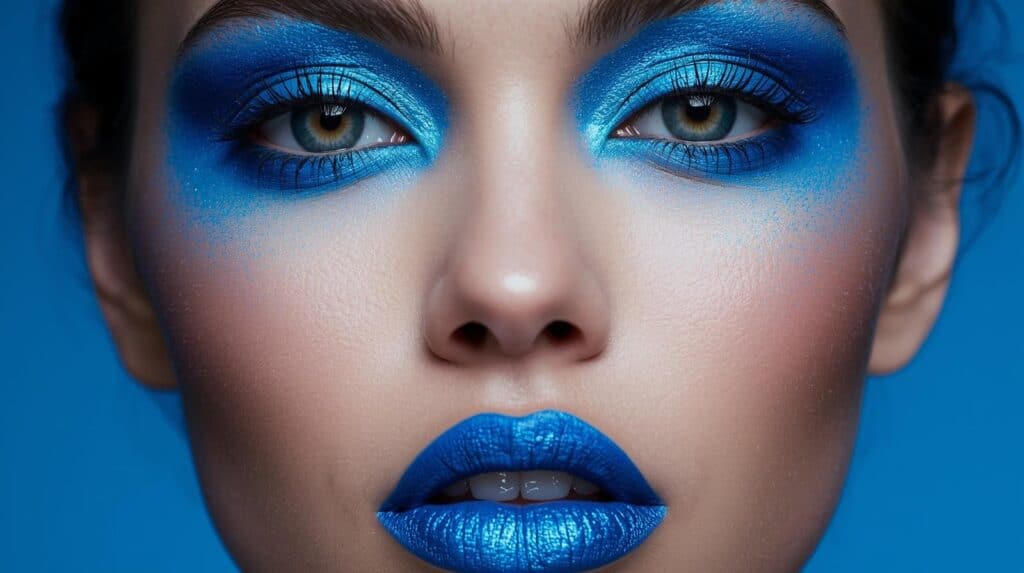
We all love to make a statement; it’s hard to resist a bold lip color or a blue smoky eye.
However, pairing these two statements together can be overwhelming.
In addition, it may be fun to play with color, but it’s crucial to choose the right balance.
It can be tempting to pair an intense blush with blue eyeshadow and a red lip, but it’s more flattering to stick to one focal point.
As mentioned earlier, you’ll want to strike a balance when choosing your main statement look.
For example, if you love blue eyeshadow, pair it with a subtle peach blush and a nude lip color.
This lip color and blush will accentuate your features without taking away from the drama of your blue eyeshadow.
In addition, peach (a light orange) is complementary to blue.
Stick to one bold statement and add other products to support your main focal point.
You will look fresh and put together instead of having too many focal points at once.
3. Powder Overload
One outdated technique that can cause a cakey foundation is applying too much powder.
Most of us in our teens were taught to powder our entire face to achieve a flawless matte finish.
However, that can do more harm than good.
Powder can add an unnecessary layer to our base makeup.
In addition, it can become overly drying and even draw attention to the skin’s texture.
However, powder can work wonders when it’s applied strategically to the face.
First, opt for a finely milled, translucent powder.
These powders are lightweight and won’t add or take away color.
Then, only apply a light dusting of powder where you are the oiliest or where your makeup tends to disappear the quickest.
The most common areas to powder are under your eyes, the t-zone, and the jawline.
This will ensure your makeup stays in place while your skin looks natural. No more powder overload!
4. Spider Lashes
Whether you use mascara or false lashes, overpowering eyelashes can look heavy and unflattering if they aren’t balanced.
Mascara is great for achieving length, volume, and definition, but it is unnecessary to layer it on until it becomes clumpy, as it can cause a messy, harsh effect.
In addition, false lashes that are not cut to the length of your eyelid or that are too full for your eyes can cause an unnatural outcome.
Clumpy, thick lashes are most often dubbed spider lashes because of their resemblance.
To avoid spider lashes, grab a spoolie wand and apply a thin layer of mascara.
You’ll want to focus the majority of the product on the base of your lashes and slowly wiggle up.
This will ensure your lashes are wispy, lengthy, and evenly coated.
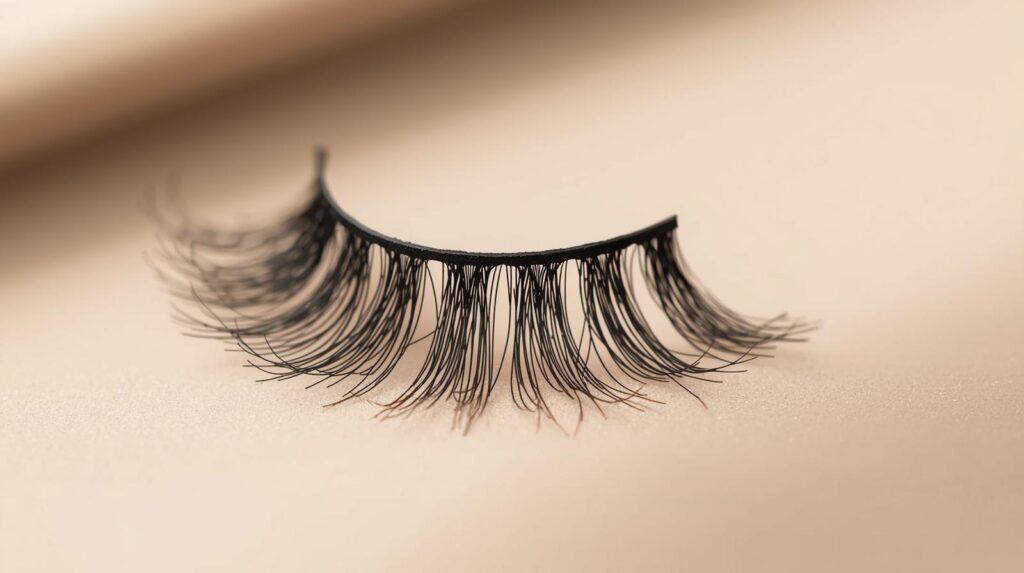
If you love false lashes, opt for lightweight individual lashes to add length or volume where needed.
Lashes frame your beautiful eyes, so you don’t want to take anything away from your unique eye color.
Lashes can be a beautiful accent to your makeup.
5. Improper Lighting
Surprisingly, your environment can affect how much makeup you apply.
For example, if you do your makeup in a dimly lit area or a dark space, you may overcompensate by using too much makeup.
Thankfully, this problem is a quick fix. First, work in a well-lit area to see how much makeup you are applying.
This will ensure you get a realistic idea of what your makeup will look like as soon as you leave the house.
However, if you live in a rainy city, a dark apartment, or a place where natural light is scarce, you can always check your makeup outside before leaving your house.
This will help show you if you’ve made any errors and what to fix or touch up.
In addition, nothing beats the outdoor lighting, no matter the weather, since it gives you an accurate preview of what your makeup will look like on the go.
6. Layering Multiple Products
Layering multiple makeup products can sound exciting at first, but beauty gurus have led us astray.
There is no need to apply four different types of concealer all at once.
In addition, you don’t need three other bronzers either.
Sure, it might look good on camera, but once that thick layer of makeup starts cracking, it’ll be a different story.
So, stick to one product at a time and then reassess if you need to add anything more.
Layering all the same products at once can lead to so many issues.
For starters, you risk getting a cakey complexion, you can look orange or washed out, or it can look extremely unblended or ashy.
In addition, your skin will feel weighed down, and your pores won’t be able to breathe.
All you need to do is stick to one product in each category that you know will work well for you.
In addition, if you are afraid of using too many powder products, you can opt for cream products.
Creams are much easier to blend, and they offer a natural finish.
In addition, they can easily blend into the skin, so you can look airbrushed instead of like powder just sitting on top of your face.
7. Dirty Tools
Surprisingly enough, your brushes could be the culprit for your over-application.
Dirty brushes hold onto leftover product, and if they aren’t washed at least once a week, it can lead to product buildup and an unflattering result.
Dirty brushes are also a breeding ground for bacteria, which can lead to more severe skin issues like infections, rashes, or acne.
On the other hand, clean brushes will allow for smooth and even makeup application, whether for the eyes or the face.
Washing brushes doesn’t have to be a chore.
If you want to invest in the brush-cleaning process, you can purchase a cleaning mat and a dry rack.
However, gentle antibacterial soap is all you really need to ensure that your brushes are squeaky clean.
Dirty brushes are one of the least suspected reasons why you may look like you’re wearing too much makeup.
A quick clean after every use will ensure you aren’t left with cakey or patchy makeup.
8. Overly Filled Brows
If you’ve been active in the beauty community in 2016, then you are no stranger to Instagram brows.
Instagram brows consist of using a pigmented brow pomade to draw on the eyebrows, then using an extra-light concealer to carve them out.
Overly filled brows can be a dead giveaway that you’ve applied too much makeup.
However, eyebrows can be personal, so if that’s one thing you refuse to give up, do what makes you happy.
But there is a way to tone down overly filled brows.
Avoid brow pomade and opt for something lighter, like a brow pencil or felt-tip eyebrow pen.
Both of these products can allow you to draw hair-like strokes and offer a more natural finish.
You’ll achieve full brows without the boxy look.
In addition, brow pencils and pens are easy to use, and they can create fullness and dimension with a flick of the wrist.
9. Under Blending Or Over Blending
We know the importance of blending your foundation, bronzer, and eyeshadow.
However, when you’re in a rush or need a quick routine, you can risk harsh lines or shadows if you don’t take the time to blend.
So blending is crucial, but did you know you can overblend your makeup, too?
Over-blending will result in a muddy finish.
In addition, the more products you mix together, the greater your risk of looking too orange or gray in tone.
Blending takes time to learn, but it’s a valuable technique everyone should know to create a flawless face.
In addition, blending allows you to avoid applying too much product at once.
You can slowly add and blend pigment until you reach your desired outcome.
This tip goes hand in hand with clean brushes.
It’s a match made in heaven that will help you avoid accidentally wearing too much makeup.
10. Intense Blush
Blush has always been intimidating. But nowadays, it’s the hottest product in makeup.
Multiple brands are formulating every kind of blush imaginable in a wide array of finishes and colors.
But we all know that too much blush, applied the wrong way, can make you look like a clown.
Thankfully, blush is the first product to disappear from your face, which is why most people amp it up.
However, nobody wants red or pink clown cheeks.
It can look unflattering, and if you use the wrong placement, it can even drag you down.
Surprisingly enough, there is a magical erasing trick to tone down blush if you go overboard.
All you need to do is take your foundation brush with your leftover foundation and gently pat and buff over the blush.
This trick will instantly take your blush down a notch without removing the rest of your makeup.
In addition, apply the blush to the tops of your cheekbones and towards your temples for a lifting effect.
11. Smeared Or Overdrawn Lipstick
Lipstick can come with too many struggles, mainly if you apply too much of it.
For example, most people experience their lipstick smudging, bleeding, or even getting it on their teeth.
In addition, bold lipstick colors are the trickiest to apply perfectly.
One thing no one should be without is lip liner.
A lip liner will ensure your lipstick goes on smoothly and with precision.
In addition, lip liner acts as a primer and provides a base of color before you even apply your lipstick.
This lip liner base will allow you to apply less lipstick or lip gloss, reducing the risk of it transferring.
Lipstick can quickly pile up on the lips, leaving you with a weird film and chapped skin, or even disappear into thin air. So, lip liner can be life-saving.
But don’t overdo it on the lip liner either! Overdrawn lips are one of the quickest ways to look overdone and “fake.”
For an extra step, prep your lips with a lip scrub and lip balm to ensure you have a smooth canvas to work on.
12. Makeup Transferring
How many times have you found makeup stains around the collars of your shirts?
Or have you ever made a phone call only to find a layer of foundation transferred to your phone screen?
If your makeup tends to move, you may be applying too much.
Makeup transferring can be annoying, but you can make some easy adjustments to ensure your base is bulletproof. For starters, invest in a setting spray and makeup sponge.
A setting spray is a fine mist that locks your foundation in place.
What’s the best method to set your face? First, dampen your beauty sponge, then mist it with your setting spray.
Then, lightly pat the makeup sponge over your makeup to set it in place.
Not only will this technique set your makeup, but it will also soak up any excess product that could disrupt it later.
You can even use this method to touch up your face throughout the day.
Related Articles
Can You Wear Eyeshadow Without Foundation?
13 Best Setting Powders For Dry Skin Of 2025
Eyeliner On Lower Lid Only (What To Do + What To Avoid)