Why Has My Hair Started Parting In The Back?
Hairstyling can feel like a chore, and it’s tempting to fix the front strands while neglecting the back.
The back of your hair can also be harder to style on yourself because it is more difficult to see and reach evenly.
How often do you grab a mirror to look at the back of your head?
Even with a low-maintenance haircut, natural growth patterns can make the hair separate in unexpected places, especially around the crown.
So, why has your hair started parting in the back?
Hair parting in the back is often caused by a cowlick, crown growth pattern, hair length, or the way the hair dries and is styled. In many cases it can be made less noticeable with styling, but a new or widening back part can also make thinning hair more visible.
A visible back part is often harmless when it matches your natural crown pattern and has not changed over time.
It does not automatically mean thinning or balding, but a part that is progressively widening, showing more scalp, or accompanied by increased shedding deserves a closer look.
You usually cannot permanently change the direction a follicle grows, but you can temporarily redirect how the hair lies with wet styling, blow-drying, clipping, and haircut choices.
Simple adjustments in your styling routine or haircut can make a back part look much less noticeable.
And, you won’t have to do much to maintain it. So, why do these back parts appear, and how can you fix them?
What Is the Back Hair Part?
A hair part is the visible line where strands fall in different directions. It can be created by styling, but natural growth patterns strongly influence where the hair wants to separate.
For example, your hair part could be in the middle of your head, or it can be combed on the side.
A hair part can change the way a haircut frames the face, and styling or cutting can make some part lines more or less noticeable.
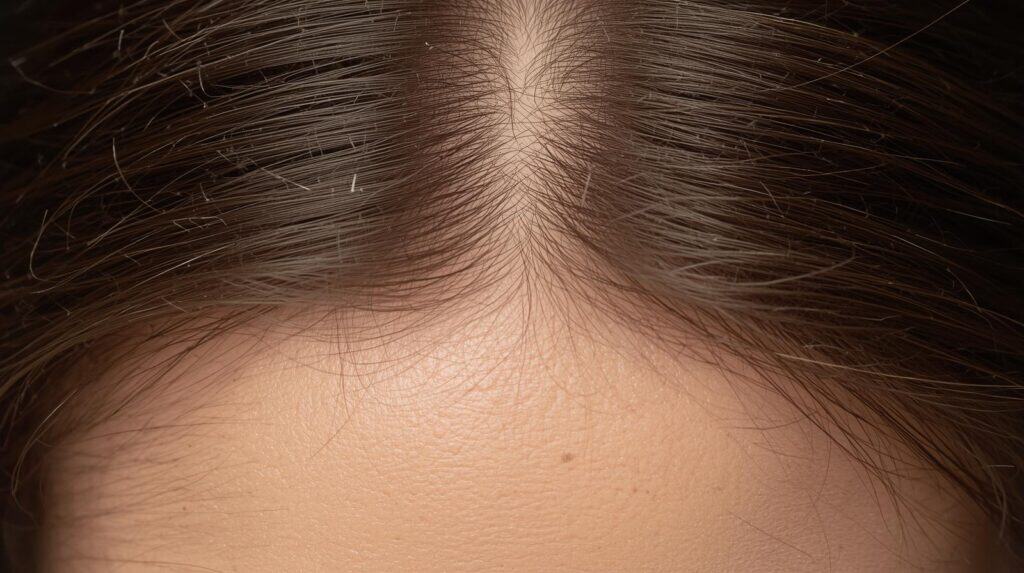
A back part is a visible separation that extends through or behind the crown, exposing more scalp in that area. Whether you want to conceal it is entirely a styling preference.
Why Does Hair Part In The Back?
So, what creates that part in the back of the head to appear?
Common explanations include natural crown growth patterns, cowlicks, hair length, styling habits, breakage, or reduced density.
When the cause is mainly a cowlick or styling pattern, strategic drying and cutting can often make the separation less visible.
Knowing whether you are dealing with a cowlick, heavy length, breakage, or thinning helps you choose a more realistic fix.
1. Cowlicks/Hair Growth Pattern
A cowlick or crown whorl is one of the most common reasons hair separates at the back of the head.
Cowlicks reflect the direction in which follicles around a section of the scalp are oriented.
You cannot permanently erase that growth pattern with styling, but the right cut and drying direction can make it much easier to disguise.
Also, any age, gender, or hair length can be prone to cowlicks.
Natural crown and whorl patterns are largely determined by anatomy and genetics.
You cannot change follicle direction with a haircut, but you can work with it using the right length, layering, part placement, and styling technique.
2. Excessive Heat/Chemical Damage
While styling your hair can help diminish the appearance of cowlicks in the back of the head, too much can also cause some concerns.
Heat and chemical damage can make strands drier, rougher, weaker, and less predictable, which may make separation or breakage around the crown more noticeable.
There is no universal once- or twice-a-week limit for heat styling. Use the lowest effective temperature, avoid repeated passes, keep the tool moving, and use a heat protectant when appropriate.
3. Your Hair Is Weighing You Down
Longer or heavier hair can sometimes lie flatter around the crown, making an existing part or cowlick easier to see.
The added weight can pull strands downward and reduce root lift; it does not literally create unhealthy “pressure” on the scalp in normal wear.
If the roots lose volume around a natural whorl, the hair may separate enough to expose more scalp.
A fresh cut, especially with strategically placed layers, can reduce bulk and make the crown easier to style.
4. You Wear The Same Hairstyle Often
Do you like to wear tight buns or high ponytails frequently?
Frequently wearing very tight ponytails or buns can place repeated tension on the hairline and other stressed areas. That tension is more relevant to breakage or traction alopecia than to permanently changing a crown whorl.
If tight styles make the separation more obvious or create breakage, alternate with looser styles and reduce tension.
Rotating styles and avoiding repeated pulling in the same spots can also be gentler on the hair.
Can You Prevent Hair Parting On The Back Of The Head?
Many styling-related back parts can be made less noticeable, although a natural cowlick cannot always be prevented.
If hair density is decreasing or strands are breaking around the crown, the scalp can become more visible through the same natural part.
If the part is becoming wider, shedding has increased, or you notice bald patches, scalp symptoms, or obvious breakage, a dermatologist is better suited than a stylist to assess possible hair loss.
When A Back Part Could Be Hair Thinning
A cowlick usually stays fairly consistent over time. Hair thinning is more likely when the visible scalp area is gradually widening, the ponytail feels smaller, shedding has increased, or you notice short broken hairs, bald patches, or a change in density around the crown.
- Compare photos over time: Pictures taken in similar lighting and from the same angle can help you tell a stable cowlick from a widening area.
- Look at the scalp: Redness, scale, pain, pustules, or significant itching point to a scalp issue rather than a simple styling problem.
- Check for breakage: Repeated heat, bleaching, or tight styling can create shorter broken hairs that make the crown look less dense.
- See a dermatologist if it is progressing: Early evaluation is useful when a part is clearly widening or hair loss is increasing, because different causes require different treatment.
Back Hair Part FAQs
Can You Permanently Train A Cowlick Away?
Usually no. Styling can temporarily redirect the strands, but it does not change the direction in which the follicles grow. A haircut that works with the cowlick is often more reliable than trying to fight it every day.
Does Sleeping With Wet Hair Cause A Back Part?
It does not create a new cowlick, but hair that dries pressed against a pillow can set flat or separate along its natural growth pattern, making an existing back part more noticeable the next morning.
Can Long Hair Make A Back Part More Visible?
Yes. Longer, heavier hair can lie flatter at the roots and reduce volume around the crown. Strategic layers or slightly shorter length may make the separation easier to conceal.
Can Tight Ponytails Cause A Back Part?
They do not usually change the natural crown whorl, but frequent high-tension styles can cause breakage and, over time, traction alopecia in stressed areas. Looser styles and rotating placement reduce repeated pulling.
How To Stop Your Hair Parting In The Back
What can you do to stop your hair from parting past the crown?
You can make small adjustments to your styling routine to make the separation less visible.
For example, you might change your drying direction, add root lift, use a lightweight hold product, or adjust your haircut.
A new routine may take some practice, and a strong cowlick may still remain visible on some days.
1. Avoid Sleeping On Wet Hair
It can be tempting to sleep with wet hair, especially if you don’t like to style your hair.
Hair that dries while pressed against a pillow may set in a direction you did not intend, particularly around the crown.
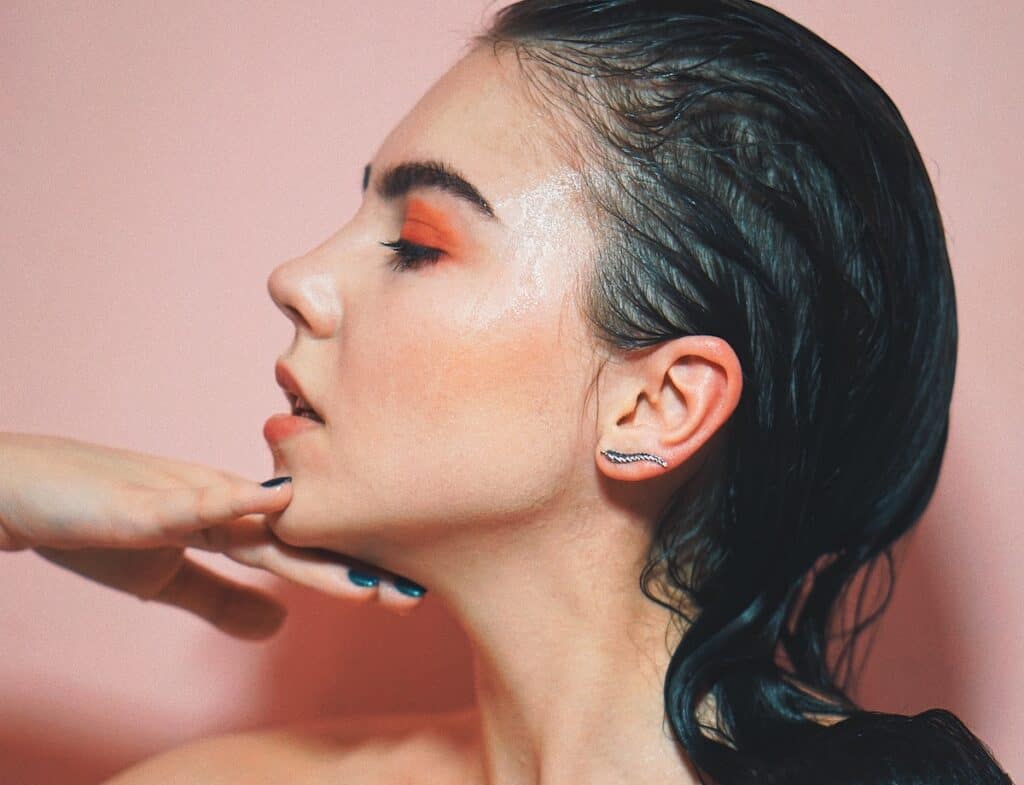
For example, you might wake up with an unruly bedhead.
Sleeping on wet hair does not create a new cowlick, but it can make an existing growth pattern or flattened section more noticeable once the hair dries.
If you want more control over the crown, partially or fully drying it in your chosen direction with low or moderate heat can help.
2. Blow-dry Your Strands
Blow-drying can temporarily redirect the way strands sit around a cowlick or back part.
Heat plus airflow and brush tension can set the strands in a different direction until the next wash or enough moisture resets them.
However, you’ll want to avoid excessively styling because heat damage can harm your strands.
A heat protectant can reduce some thermal damage, but it does not make high heat harmless. Keep the dryer moving and avoid unnecessarily high temperatures.
Brushing or blow-drying across the natural split rather than directly along it can help disguise the separation.
3. Use Styling Products For Hold
Sometimes, heat styling may not be enough, especially for fine strands.
So, you might want to invest in some hair styling products.
A lightweight hairspray, mousse, or root-lifting product can help hold the redirected strands in place after styling.
You can have fun during this step and find which products work the best for you.
4. Switch Your Directions
Changing the direction of your front or crown part can redistribute volume and sometimes make a back split less noticeable.
For example, if you usually wear a side part, try switching to the middle or the opposite side so the hair can lie in a new direction.
Moving the part can create temporary root lift because the strands are being directed against their usual fall.
5. Incorporate No-Crease Clips
Do you notice your back part still appears even after heat styling?
One styling trick is to let the redirected crown section cool while held in place with a creaseless clip.
For example, once you finish heat styling, to hide your back part, secure it into place with a no-crease clip.
Cooling the hair in position can help the shape hold longer, although humidity, hair texture, and the strength of the cowlick still affect the result.
Once you are done styling and the back has cooled, remove the clip and enjoy your results.
How To Freshen Up Your Hair To Prevent Back Parts
Your hair may still part in the back because of its natural crown pattern.
An experienced stylist can assess the crown and choose a length or layering pattern that works with, rather than against, the growth direction.
If it still separates between washes, you can restyle just the crown instead of redoing your whole head.
1. Wet The Desired Section
First, wet the desired section of hair wherever it may be splitting.
Dampening the section helps reset the temporary shape so you can redirect it while drying.
If the roots have already dried flat in the cowlick pattern, a little water often makes restyling easier.
2. Blow-dry
Next, apply your heat protectant and get ready to blow dry.
You can use a round brush for more volume or a paddle brush for a sleek finish.
Then, blow-dry the roots across the separation, directing the strands where you want them to sit.
Finish with the cool-shot setting if your dryer has one to help the styled shape set as it cools.
3. Set In Place
You can clip your section into place and let it cool down.
You can remove the clip whenever you finish getting ready.
Also, this would be a great time to add extra hold with hairstyling products such as hairspray.
4. Wrap-Up
A visible part extending past the crown is common, especially when it follows a natural whorl.
A back hair part is often related to a cowlick or crown growth pattern, although hair density, breakage, and styling can influence how visible it looks.
You cannot permanently change follicle direction with styling, but you can redirect the strands temporarily.
Changing your part, adjusting the haircut, adding root lift, or modifying your drying technique can all help conceal the separation.
A back part may look more obvious when hair is very long and flat at the roots or when overall density is lower.
For styling questions, a hairstylist can help. For a new widening part, increased shedding, bald patches, scalp pain, scaling, or progressive thinning, consult a dermatologist or other qualified clinician.
Related Articles
Side Effects Of Not Combing Hair