
Does Salicylic Acid Make Acne Worse Before It Gets Better?
We all strive for clear, even skin, but achieving it often requires a long process of trial and error.
Finding the right combination of products that work for your skin type addresses your specific needs.
And finding ingredients that work well together takes time, and not everyone has the money to drop on frequent dermatologist appointments.
Addressing acne-prone skin can take some trial and error because different types of acne respond to different ingredients and routines.
Salicylic acid is a well-established acne ingredient, especially for blackheads, whiteheads, and clogged pores, because it is oil-soluble and helps loosen debris inside the follicle.
When you introduce salicylic acid, you may notice temporary changes in breakouts, dryness, or irritation. Not every increase in acne is a true “purge,” so it is important to watch the pattern rather than assuming worsening skin means the product is working.
So, does salicylic acid make acne worse before it gets better?
Salicylic acid can sometimes coincide with a temporary increase in blemishes when you first add it to your routine, but it should not be assumed that every breakout is “purging.” Irritation, overuse, a formula that does not suit your skin, or acne that is naturally worsening can look similar.
Some people notice an adjustment period with salicylic acid, while others do not experience any increase in blemishes at all.
If your skin is improving overall, continue only as tolerated. A temporary flare does not guarantee that the product will eventually give you completely clear skin.
What Is Salicylic Acid?
Salicylic acid is an ingredient often used to treat acne breakouts due to its exfoliating properties.
Salicylic acid is a beta-hydroxy acid used in acne care because it is oil-soluble and can help loosen compacted oil and dead cells within pores.
Beta hydroxy acids (BHAs) are useful in skincare because their oil-soluble nature makes them well suited to oily and clog-prone skin.
By comparison, alpha hydroxy acids (AHAs) mainly exfoliate the skin surface and can help with rough texture and uneven tone.
Salicylic acid can move into the oily environment of the pore more readily than water-soluble exfoliants. That does not mean it “purges from the inside out” or penetrates all deep skin layers.
Types Of Products That Use Salicylic Acid
Salicylic acid can be used as both an over-the-counter treatment (such as this exfoliant from Paula’s Choice) and as a prescription medication.
The concentration, intended use, formulation, and local regulations all affect whether a salicylic-acid product is sold over the counter or used professionally.
Most often, high levels of salicylic acid are found in certain chemical peels and treatments performed by trained professionals.
Lower levels of salicylic acid are found in over-the-counter products, such as cleansers and exfoliators, for use as an all-over treatment.
If you want to target a specific area, spot treatment gels are also formulated with salicylic acid.
Many over-the-counter acne products use relatively low concentrations of salicylic acid, but the exact strength and legal limits vary by product type and country, so check the current label.
How Does Salicylic Acid Treat Acne?
Because salicylic acid is oil-soluble, it can work within oily pores and help reduce the buildup that contributes to comedones.
Salicylic acid helps loosen the adhesion between dead surface cells and reduce the mixture of oil and keratin that can contribute to clogged pores.
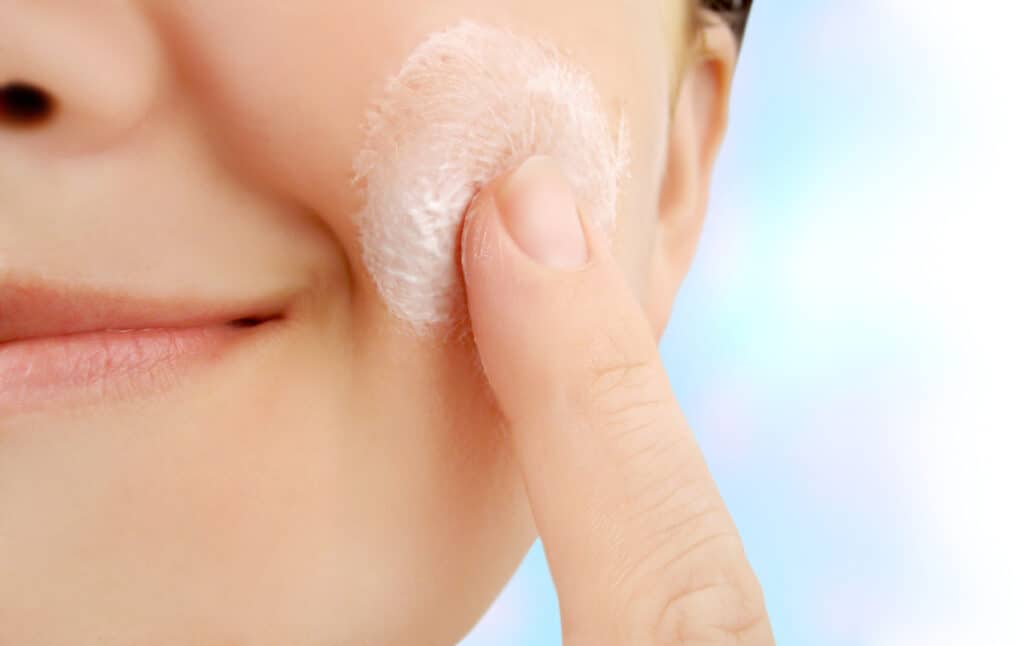
As that buildup loosens, pores may be less likely to stay blocked over time.
Salicylic acid products are used to treat acne-prone skin, including pimples, whiteheads, and blackheads, often caused by blocked or clogged pores.
Blackheads are open comedones formed when a pore becomes plugged with sebum and keratin; the exposed material oxidizes and appears dark.
Whiteheads are closed comedones in which the pore opening remains covered by skin.
Salicylic acid can reduce oily buildup and help keep pores clearer, but it does not simply switch off sebum production.
However, based on your skin type, using it too frequently or in excess can cause skin dryness.
Does Salicylic Acid Bring Pimples To The Surface?
When starting a salicylic acid product, you may notice a temporary increase in blemishes, but it is not always possible to tell immediately whether this is an adjustment period, irritation, or ordinary acne progression.
Salicylic acid changes how dead cells shed and can help clear comedonal buildup. Your skin may also react negatively if the product is too strong or used too often.
Temporary worsening is sometimes reported after starting exfoliating acids or retinoids, but the term “purging” is often overused online and should not be used to dismiss irritation.
By helping loosen dead skin and oily pore buildup, salicylic acid can gradually reduce clogged pores.
Its main acne benefit is keratolytic and comedolytic activity rather than a guaranteed dramatic acceleration of all skin-cell turnover.
If pimples appear after you start the product, look at where they occur, whether the skin is also burning or peeling, and whether the overall trend is improving or worsening.
A commonly used rule of thumb is that an adjustment-related flare tends to occur in areas where you already break out, while irritation or a product-related breakout may appear more diffusely or in unusual areas.
This pattern is not perfectly reliable, so do not keep using a painful or clearly irritating product just because you hope the breakouts will eventually clear.
The idea behind “purging” is that pre-existing microcomedones may become visible sooner, but you usually cannot prove that any individual pimple was guaranteed to appear later.
Although salicylic acid is one of the ingredients known to cause skin purging-related breakouts, it does not occur in everyone, nor does it happen all the time.
How your skin responds individually to the ingredient, along with your unique skin type, will determine if you experience purging when introducing the new product to your routine.
Signs Salicylic Acid Is Irritating Your Skin
- Burning or persistent stinging: a mild brief tingle can happen with acids, but pain is not a sign that the product is working better.
- Widespread redness or peeling: this can mean the product is too strong, too frequent, or being combined with too many other actives.
- Breakouts in unusual areas: acne appearing where you rarely break out is less consistent with the usual idea of purging.
- Itching, swelling, or rash: stop using the product and consider medical advice, especially if the reaction is severe.
If your skin becomes irritated, simplify the routine with a gentle cleanser, moisturiser, and sunscreen while it recovers. Do not add stronger acids or scrub the skin to “speed up” the process.
The Difference Between A Purge And A Breakout
When new acne spots appear after introducing a product, the key question is whether you are seeing a tolerable adjustment or a product that is irritating or clogging your skin.
If the skin is not painful or inflamed, it can take several weeks of consistent acne treatment to judge whether the routine is helping overall.
Timing, location, and accompanying irritation can provide clues, but there is no perfect home test that always distinguishes a “purge” from a breakout.
If you develop burning, marked redness, swelling, itching, rawness, or widespread peeling, treat that as irritation rather than something you need to endure.
Some adjustment-related blemishes may resolve more quickly than your usual acne, but duration alone is not a reliable diagnostic sign.
Breakouts limited to your usual acne-prone areas are more compatible with an adjustment period than acne suddenly appearing in places where you rarely break out.
Still, this is only a clue. A new formula can also trigger breakouts through irritation, occlusive ingredients, or disruption of your routine.
If acne is appearing in new areas, rapidly worsening, or accompanied by irritation, consider reducing frequency or stopping the product rather than assuming it is purging.
For skin purging breakouts, it is best to avoid irritating them and allow them to run their course on the skin.
As with any breakout, avoid picking at or trying to pop the pimples.
There is no universal three-week cutoff. Acne treatments often need several weeks to show a clear trend, while significant irritation should be addressed immediately rather than waited out.
If your breakouts continue to worsen, remain painful, or show no meaningful improvement after a reasonable trial period,
consider reducing use, stopping the product, or asking a dermatologist whether salicylic acid is appropriate for your type of acne.
As with any breakout, it’s essential to maintain your skin’s moisture and keep it hydrated.
A temporary increase in blemishes does not prove that a product is working. The better sign is an overall reduction in clogged pores and breakouts without persistent irritation.
Acne improvement is usually gradual, and completely blemish-free skin is not a realistic guarantee.
How To Start Salicylic Acid Without Overdoing It
- Start with one salicylic-acid product rather than using a cleanser, toner, serum, and spot treatment together.
- If you are using a leave-on product, begin less frequently than the maximum label directions if your skin is sensitive.
- Use a moisturiser to reduce dryness and sunscreen during the day, especially if your routine also contains other exfoliating or acne treatments.
- Be cautious when combining salicylic acid with retinoids, benzoyl peroxide, scrubs, or other acids. The combination can be effective for some people but may be too irritating when started all at once.
When Will You See Results?
Depending on the type of product you use and your individual concerns, results may vary.
A salicylic-acid spot treatment may make a small blemish feel less congested over time, but do not expect every pimple to noticeably shrink overnight.
With an all-over cleanser or leave-on treatment, give the routine several weeks rather than judging it after only a few days. Acne improvement is usually gradual.
If you aren’t noticing results, or if you are experiencing breakouts that are not related to a skin purge,
Salicylic acid may not be the ideal ingredient for treating acne on your skin type.
It is also possible that your overall routine is too irritating or that another product is contributing to breakouts. Introduce new actives one at a time when possible.
So, if you’re ready to see results but unsure about applying salicylic acid to your face correctly, here’s an excellent tutorial from Melissa Van Dijk on YouTube.
Conclusion
Overall, salicylic acid can be useful for clogged pores, blackheads, whiteheads, and some acne-prone skin, but worsening acne is not something you always need to “push through.”
If you struggle with blackheads, whiteheads, or clogged pores, a well-tolerated salicylic-acid product may be worth considering.
From cleansers to leave-on exfoliants and spot treatments, choose one format that fits your skin rather than stacking several salicylic-acid products at once.
Salicylic Acid Purging FAQs
How Long Does Salicylic Acid Purging Last?
There is no exact timeline that applies to everyone. If blemishes are mild and limited to your usual acne-prone areas, watch the overall trend over several weeks. If acne keeps worsening or the skin is irritated, do not wait indefinitely for a “purge” to end.
Can Salicylic Acid Cause New Acne?
Yes, a salicylic-acid product can coincide with new breakouts if the formula irritates your skin, is too heavy for you, or disrupts your routine. Not every new pimple should be labeled as purging.
Should You Stop Salicylic Acid If Your Acne Gets Worse?
If worsening acne comes with burning, marked redness, swelling, itching, or heavy peeling, stop and let the skin recover. If the breakout is mild and your skin otherwise feels comfortable, you may be able to reduce frequency and reassess over time.
Does Salicylic Acid Work Better As A Cleanser Or Leave-On Treatment?
Both can be useful. Cleansers have shorter contact time and may be easier for sensitive skin, while leave-on products give salicylic acid more time on the skin but may also be more irritating. Choose based on your tolerance and the rest of your routine.
Related Articles
Does Azelaic Acid Cause Purging?