
7 Best Korean Retinols
Adding a retinol to your skincare routine can be useful for concerns such as fine lines, uneven tone, texture, or mild acne, but the best formula is one your skin can tolerate consistently.
For some people, that means branching out from a basic cleanser-and-moisturizer routine and exploring Korean-made or K-beauty retinol products with different textures and supporting ingredients.
K-beauty retinol formulas often pair vitamin A derivatives with ingredients such as centella asiatica, niacinamide, ceramides, peptides, or humectants, which can make the category appealing if you want a more moisturizing or barrier-supportive texture.
But what are the best Korean retinols?
When choosing a Korean retinol, look at the specific retinoid, disclosed concentration, supporting ingredients, texture, packaging, and directions. A higher percentage is not automatically better, especially if irritation prevents you from using the product consistently.
If you are new to retinoids, the labels can be confusing because “retinol,” “retinal,” “retinoid,” concentration claims, and moisturizing support ingredients do not all mean the same thing.
Below, we’ll compare the products in this roundup and flag where current concentration, formula, or brand-origin claims need extra care before you buy.
Features Of A Good Korean Retinol
Correct Percentage
Retinol can be a challenging ingredient to introduce because irritation is more likely when the formula is too strong, used too often, or layered with several other irritating actives.
Retinoids can improve skin-cell turnover and normalize how follicles shed cells, which is one reason they are used for acne, uneven pigmentation, and signs of photoaging. A temporary acne flare can happen for some users, but “purging” should not be treated as proof that a product is working.
Retinol can cause dryness, peeling, burning, or redness when introduced too quickly. Retinoids should also be avoided during pregnancy; if you are pregnant, trying to conceive, or unsure about breastfeeding use, ask your clinician before using one.
If this is your first time using retinol, start with a lower-strength formula or less-frequent application, such as two or three nights per week, then increase only if your skin remains comfortable. More frequent use is not helpful if it causes persistent burning, peeling, or inflammation.
Being comfortable with AHAs or BHAs does not necessarily mean your skin will tolerate a strong retinol, and hyaluronic acid is a hydrating ingredient rather than an exfoliating active. Introduce retinol based on your skin’s response, not your experience with unrelated ingredients.
Ingredient Cocktail
Retinol is normally used at low concentrations within a complete cosmetic formula, not as a 100% product.
The rest of the ingredient list matters because humectants, emollients, barrier-supporting lipids, fragrance, and other actives can change how comfortable the retinol feels on your skin.
Common supporting ingredients include vitamin E, niacinamide, ceramides, panthenol, glycerin, and hyaluronic acid. These can support hydration or barrier comfort, but they do not cancel out retinol irritation if the product is used too aggressively.
For sensitive skin, a simpler fragrance-free formula and a slow introduction may matter more than broad “free-from” lists. Parabens, sulfates, and phthalates are not what determines whether a retinol product will irritate your skin.
Retinol Form
We all have our ideal skincare textures.
Although retinol is typically sold in serum form, several Korean brands are also introducing retinol creams.
Both serums and creams can deliver retinol effectively; the better format depends on the complete formula, concentration, packaging, and how it fits into your routine.
Do not assume a serum is automatically stronger or that a cream is automatically gentler. Texture alone does not reveal retinol potency.
A serum can feel lighter than a cream, but it does not necessarily penetrate deeper or contain more retinol.
Regardless of texture, retinol can become drying or irritating when overused, so increase frequency gradually rather than assuming a cream can be used more often than a serum.
Sensitive or dry skin may prefer a retinol moisturizer or cream because the richer base can reduce the need for extra layering, although fragrance and retinol strength still matter.
A retinol cream can be useful if you prefer a more emollient texture, but its strength still depends on the actual formula. Visible retinol results usually take weeks to months, not a few days.
Best Korean Retinols
| Rank | Product | Key Features |
|---|---|---|
| 1. | K Collection Retinol | Anti-aging, vitamin C, brightening |
| 2. | Elizavecca Milky Piggy Retinol Cream | All skin types, moisturizing, elasticity |
| 3. | YEOUTH Retinol Serum | Hyaluronic acid, helps dark spots, aloe vera |
| 4. | Cos De BAHA Retinol Serum | 2.5% retinol, age spot remover, niacinamide |
| 5. | Sefite Beauty Retinol Cream | Green tea, dry skin, vegan formula |
| 6. | Meebak Cica Cream With Retinol | Healing, day and night, cica |
| 7. | Saturday Skin Sleep Mask | Vitamin C, deeply moisturizing, vegan |
1. K Collection Retinol
Retinol is best known for helping improve the appearance of fine lines, uneven pigmentation, and skin texture with consistent use.
It is not a substitute for injectable or procedural treatments, but it is one of the better-studied over-the-counter ingredient categories for visible photoaging.
A retinol routine can be a non-procedural option if your goal is gradual improvement in texture and fine lines.
Retinol cannot stop aging, but it can support collagen production and improve some visible signs of sun-related skin aging over time.
With consistent use, retinol may help the skin look smoother and more even and may soften the appearance of fine lines. Results vary with concentration, formula stability, frequency, and sun protection.
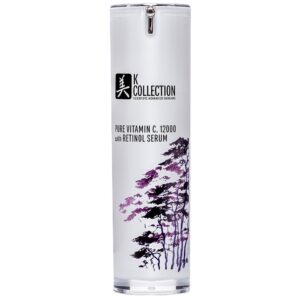
For the linked K Collection retinol serum, treat the current label as the source of truth for concentration, directions, and supporting ingredients.
The linked K Collection product has been marketed with vitamin C alongside retinol, but current concentration and full formula details should be checked on the latest label before purchase.
Retinol and vitamin C can both support a more even-looking complexion, but the formula should still be introduced gradually and should not be expected to produce a rapid transformation.
Terms such as “clean” do not have one standardized meaning, so judge the product by its current ingredient list and your own sensitivities.
Current cruelty-free or ingredient-exclusion claims should be verified directly with the manufacturer because brand policies and formulations can change.
Do not expect a fixed 7-10 day transformation. Retinol benefits usually require consistent use over several weeks or longer, and irritation can delay progress if you start too aggressively.
2. Elizavecca Milky Piggy Retinol Cream
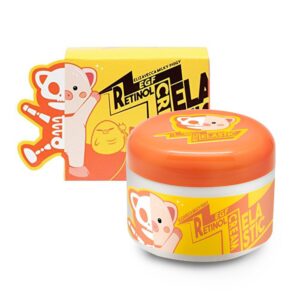
Elizavecca Milky Piggy EGF Elastic Retinol Cream is a richer cream option, so the main questions are its current retinol labeling, supporting ingredients, fragrance, and how the texture fits your skin.
Packaging style does not tell you how strong or gentle a retinol formula will be.
Elizavecca is a Korean skincare brand known for affordable formulas and eye-catching packaging.
Its products come in eye-catching packaging.
Its lower price point can make the product appealing, but value still depends on whether the formula suits your skin and whether the current ingredient list matches what you want from a retinol cream.
Its cream texture may appeal to dry skin, but the formula also contains fragrance and alcohol, so “cream” does not automatically make it ideal for every beginner or sensitive skin type.
Elizavecca’s current ingredient information lists retinol at 2500 IU. The brand does not present that as a simple consumer-facing percentage on its current official product page, so avoid converting it into an exact percentage unless your own package states one.
The current ingredient list actually includes alcohol and fragrance, so users sensitive to either should take that into account.
Retinol is only one part of the formula, so the supporting moisturizing and brightening ingredients also affect how the cream feels in a routine.
The formula contains a high amount of swiftlet nest extract, plus moisturizers and niacinamide. That does not guarantee oil balancing or a measurable increase in skin elasticity.
The ingredient list also includes sh-Oligopeptide-1, sometimes marketed as an EGF-related cosmetic ingredient. This cream should not be presented as a treatment that clears active acne or guarantees faster skin-cell production.
3. YEOUTH Retinol Serum
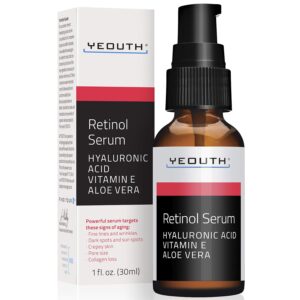
YEOUTH Retinol Serum is included here as an alternative retinol serum, but it does not fit a strict Korean-made roundup based on the brand’s current manufacturing claim.
YEOUTH Retinol Serum is a straightforward retinol serum with hyaluronic acid, vitamin E, and aloe vera.
One important correction: YEOUTH currently states that this serum is made in the USA, so it does not fit a strict list of Korean-made retinols.
We’re keeping it in this roundup because it was part of the original list, but it is more accurate to compare it as a retinol alternative rather than as K-beauty.
The current brand page lists retinol as a key ingredient but does not present a simple percentage in its consumer directions. Start slowly rather than assuming it is appropriate for every sensitive skin type.
Avoid relying on older “2.5% retinol” marketing for this serum unless that concentration appears on your current package. The present brand page focuses on the ingredient blend rather than an exact retinol percentage.
Because it remains part of the original roundup, it is best read as a comparison point rather than as a verified K-beauty pick.
Any retinol can irritate the moisture barrier if used too often. The brand currently recommends night use, starting every other night to assess tolerance and increasing gradually.
Hyaluronic acid and vitamin E add hydration and antioxidant support, but they do not make the retinol irritation-proof.
The supporting humectants and antioxidants make the formula more balanced, but tolerance is still individual.
4. Cos De BAHA Retinol Serum
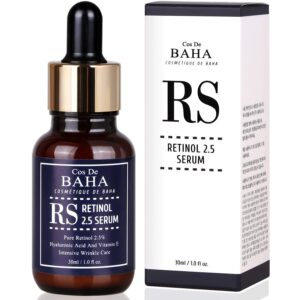
Cos De BAHA offers an ingredient-focused retinol serum, but its product naming needs to be read carefully so “2.5 Solution” is not mistaken for a verified 2.5% pure-retinol concentration.
Cos De BAHA is a Korean skincare brand with a retinol serum built around retinol plus niacinamide, hyaluronic acid, and other supporting ingredients.
The formula is relatively ingredient-focused, but it should still be introduced gradually like any other retinol product.
Retinol is itself a vitamin A derivative. A finished cosmetic serum is not “undiluted retinol,” even when the product name highlights a 2.5 solution.
The brand positions the serum for visible texture, fine lines, and uneven tone, but “tightening” should not be interpreted as a lifting effect.
Cos De BAHA is positioned as an affordable, ingredient-focused brand, which can make it appealing if you want a straightforward serum format.
The practical comparison should still come down to the current formula, disclosed retinoid strength, texture, and your tolerance.
The current product is named Retinol 2.5 Solution. That wording should not automatically be interpreted as 2.5% pure retinol unless the manufacturer explicitly states the active retinol concentration.
Retinol is sensitive to light, air, and storage conditions, so keep the bottle closed and stored as directed and pay attention to the product’s shelf-life guidance.
Retinol is not reserved for a particular age group. It is more useful to choose it based on concerns such as acne, uneven tone, texture, or photoaging and on whether your skin can tolerate it.
In this formula, ingredients such as niacinamide, hyaluronic acid, and arginine provide additional hydration or skin-conditioning support alongside the retinol.
A more realistic goal is gradual improvement in texture, tone, and the appearance of fine lines.
5. Sefite Beauty Retinol Cream
For acne-prone or sensitive skin, one of the biggest retinol concerns is irritation, especially redness, stinging, dryness, and peeling during the adjustment period.
It’s a fair question, and it is, unfortunately, true that retinol can temporarily exaggerate the look of redness on the skin.
Mild adjustment symptoms can settle for some users, but persistent burning, swelling, marked redness, or worsening irritation is a reason to reduce frequency or stop rather than push through it.
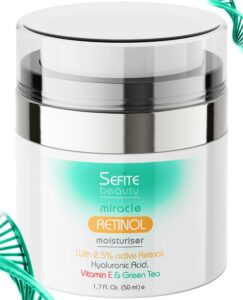
The linked Sefite cream has been marketed with retinol, green tea, hyaluronic acid, and vitamin E. Current retinol concentration and brand-origin details are difficult to verify from a reliable official source, so check the latest package before treating it as a Korean formula or a specific-strength retinol.
Green tea can provide antioxidant and soothing support, but it cannot guarantee that retinol-related redness, dryness, or flaking will not occur.
Green tea may be a useful supporting ingredient, but the overall formulation and your retinol tolerance matter more than whether an ingredient is “natural.”
Do not assume this product contains 2.5% pure retinol without current manufacturer confirmation. Retinol may help some post-acne discoloration over time, but irritation can also worsen hyperpigmentation, particularly in deeper skin tones.
Vitamin E and hyaluronic acid can support moisturization, but they do not erase true acne scars.
6. Meebak Cica Cream With Retinol
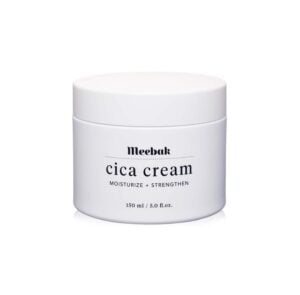
For a retinol beginner, a moisturizing cream with a low or undisclosed retinol level can be easier to fit into a routine, but gradual introduction is still important.
Meebak’s current Cica Cream ingredient list includes retinol relatively low in the ingredient list, but the brand does not publish a simple retinol percentage on the current product page.
Start slowly and increase only if your skin remains comfortable.
This is a rich moisturizing cream with humectants, emollients, shea butter, silicones, ceramide, cica-derived ingredients, and retinol. Dry skin may appreciate the texture, while oily skin may prefer something lighter.
Centella asiatica, or cica, is included alongside madecassoside, panthenol, ceramide NP, and other barrier-supporting ingredients. These may help the formula feel more soothing, but they do not prevent all retinol irritation.
The current formula also contains fragrance, so fragrance-sensitive users should take that into account.
Meebak currently markets the product as made in Korea and free of parabens and sulfates. Avoid judging cosmetic safety by whether an ingredient name is easy to pronounce.
As with any retinol product, patch-test and introduce it gradually if your skin is reactive.
Its moisturizing base may make it easier to tolerate than a bare-bones retinol serum for some users, but no retinol formula is automatically suitable for every skin type.
7. Saturday Skin Sleep Mask
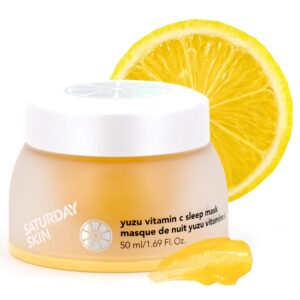
Saturday Skin is a K-beauty brand, and its Yuzu Vitamin C Sleep Mask combines moisturizing and brightening ingredients with retinol appearing relatively low in the ingredient list.
This is a different type of option from a dedicated retinol serum because it functions primarily as an overnight moisturizing mask.
Choose it for the overall formula and texture rather than assuming it delivers the same retinol exposure as a product that discloses a dedicated retinol percentage.
The current Yuzu Vitamin C Sleep Mask includes niacinamide, yuzu-derived ingredients, vitamin C, ceramide NP, and retinol.
It is designed to be applied over moisturizer at night and left on overnight. The current brand directions suggest using it several times per week rather than automatically every night.
Expect hydration and a smoother feel rather than an overnight anti-aging transformation.
The current brand page describes the mask as dermatologist tested and lists retinol among the ingredients. It also contains fragrant yuzu peel and fruit oils, so botanical ingredients are not automatically irritation-free.
Related Questions
Which products should you avoid mixing with retinol?
You do not need a universal 24-hour ban on every active, but using retinol in the same routine as strong AHAs, BHAs, benzoyl peroxide, or another retinoid can increase irritation. Tretinoin is itself a retinoid, so do not add an over-the-counter retinol on top unless your prescriber specifically tells you to.
If your routine includes several potentially irritating actives, introduce them separately, alternate nights if needed, and reduce frequency if you develop persistent stinging, peeling, or redness.
Should I use retinol in the morning or at night?
Most over-the-counter retinol products are easiest to use at night because many formulas are directed for evening use and the nighttime routine makes gradual introduction easier.
Follow the directions on your specific formula. Regardless of application time, protect your skin from the sun during the day.
Should I wear sunscreen when I use retinol?
Daily broad-spectrum sunscreen is important whether or not you use retinol, and it becomes especially relevant when your routine is focused on photoaging or uneven pigmentation.
Retinol can cause irritation and make sun protection especially important, but there is no reliable universal “tenfold” increase in sunburn risk.
Even if you only apply your retinoid at night, use broad-spectrum SPF 30 or higher the following morning and reapply as appropriate for your exposure.
Related Articles