Pore Looks Like A Hole – What To Do
It can be tempting to analyse your skin with a magnifying mirror.
You may notice how different your skin looks up close, or it can bring attention to specific facial areas.
It can also highlight a common skincare concern: visible or enlarged-looking pores.
Pores serve a purpose, and they’re present on your face for a reason.
Most of the pores you notice on the face are openings of hair follicles connected to sebaceous glands, which allow sebum to reach the skin’s surface. Sweat comes from separate sweat-gland openings.
Your skin type and genetics can impact your pores.
For example, if you have oily skin, pores around the nose, cheeks, or forehead may look more noticeable. If one spot looks much deeper than the surrounding pores, it could also be an enlarged follicular opening or an acne scar.
Visible pore size is influenced by genetics, oil production, follicle structure, skin elasticity, and whether the opening is stretched by buildup.
There are a lot of myths surrounding pores.
The most popular is that pores open and close, or that you can shrink or erase pores.
You can’t make pores permanently open or close like doors, but you can often minimise their appearance by keeping them clear, controlling excess oil, protecting the skin from UV damage, and improving overall texture.
So, what can you do if a pore looks like a hole?
Start with a gentle cleanser, non-comedogenic moisturizer, and daily sunscreen. If congestion is making the pore look larger, a salicylic-acid product may help keep the follicle clear. If one deep “hole” does not behave like your other pores, a dermatologist can check whether it is actually an acne scar or another skin feature.
So if open pores are a problem you’re struggling with, don’t worry – you’re not alone!
We’ll walk you through the most practical ways to make visible pores look less prominent, plus when a pore-like hole may actually be something else.
What Are Pores?
Pores often appear in areas where you are the oiliest, like the t-zone.
They look like tiny openings on the surface of your skin. Facial follicular pores allow sebum to reach the surface, while sweat is released through separate sweat ducts.
Their visibility is influenced by genetics, oil production, follicle size, skin elasticity, age, and buildup inside the pore.
Pores can vary from person to person.
Some people may have one enlarged pore that is more visible than the rest.
Is It An Enlarged Pore Or An Acne Scar?
If you have one spot that looks like a deep hole while the surrounding pores look normal, it may not be an enlarged pore at all. A small depressed acne scar, especially an ice-pick scar, can look similar from a distance.
An enlarged pore usually resembles the other visible pores around it and may become more noticeable when it fills with oil or debris. A depressed acne scar tends to stay indented even when the skin is clean.
If you are unsure, avoid squeezing or trying to “extract” the hole. A dermatologist can tell the difference and discuss options such as professional peels, microneedling, laser treatments, or other procedures if the concern is actually scarring.
What Causes Enlarged Pores?
We mentioned a few reasons why you can have enlarged pores.
For example, genetics plays a major role in your natural pore structure. You cannot erase pores, but their visible appearance can change with oiliness, congestion, sun damage, and skincare.
Some daily habits can also make pores look more noticeable, particularly if they contribute to congestion, irritation, or sun damage.
Skincare has a more direct effect on pore appearance than any single food. Diet may influence acne for some people, but it is not a reliable way to shrink or erase pores.
Excess Oil
If your skin produces a lot of oil, pores can look more noticeable, especially when sebum mixes with dead skin cells inside the follicle.
When excess sebum and dead skin build up in a follicle, the opening can look darker, wider, or more obvious.
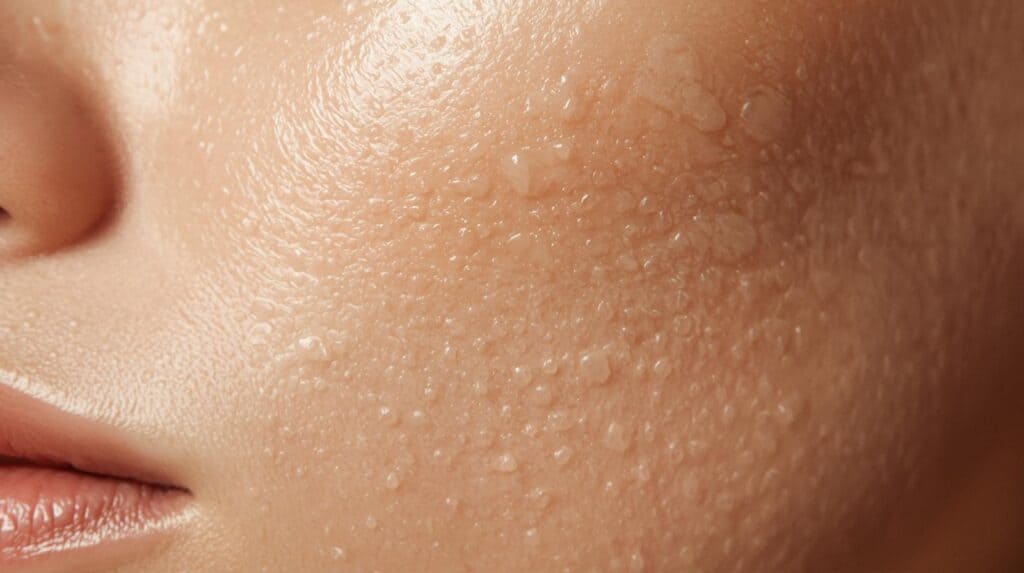
This is common for acne-prone or oily skin types.
Skincare ingredients such as salicylic acid can help keep oily pores clearer, while ingredients such as niacinamide may help some people manage excess shine.
Genetics
Another cause of an enlarged pore is genetics.
Unfortunately, there is not much you can do to change your genetics.
So, if you tend to have more visible pores on your face, focus on keeping them clear, maintaining hydration, and protecting the skin from UV damage rather than trying to permanently shrink them.
In addition, seeking help from a dermatologist can also minimise the appearance of pores.
Buildup
Do you apply makeup or skincare daily? What kind of environment do you live in?
These factors can contribute to the build-up or clogging of pores.
So, if you tend to skip washing your face or don’t remove your makeup properly, it can affect your pores.
Buildup can make a pore look larger or darker because the follicle opening becomes more noticeable.
Diet
A balanced diet supports overall health, but pore size is not determined by whether you eat “perfectly.”
Some dietary patterns may influence acne in certain people, but the relationship is complex and does not mean processed foods directly enlarge pores.
Eating a varied, balanced diet is a sensible health habit, but skincare is a more direct way to address congestion and visible pores.
If a single pore looks like a hole, changing your diet is unlikely to alter that spot significantly.
If you notice that particular foods consistently seem to worsen your acne, you can discuss that pattern with a healthcare professional rather than following a highly restrictive “anti-inflammatory” diet.
Stress
Did you know stress can also impact your skin?
Intense stress can potentially cause your skin to flare up.
Stress can worsen some inflammatory skin conditions or acne in certain people, which may indirectly make texture and pores look more noticeable.
Stress can also be visible on more sensitive skin types.
Managing stress can support overall well-being and may help if stress is one of your personal acne or skin-flare triggers.
Skin Type
Your skin type can also affect your pores.
For example, we mentioned that oily and acne-prone skin could struggle with larger pores.
If your skin is very dry or dehydrated, rough texture can make pores look more obvious. That does not necessarily mean the skin will compensate by producing excess sebum.
You should apply moisturiser daily, no matter your skin type.
Moisturisers help support the skin barrier and smooth dry surface texture, which can make pores look less prominent.
Neglecting Skincare
You do not need an elaborate skincare regimen to manage visible pores. Consistency with a few well-chosen basics is usually more useful than adding many products.
For example, we mentioned that not washing the face or moisturising can make pores look more visible.
Exfoliation can help if you are prone to congestion, but it does not need to be frequent for everyone. Daily sunscreen is useful because cumulative UV damage can reduce skin elasticity and make pores look more noticeable.
The goal is to remove excess buildup without over-exfoliating, while sunscreen helps protect the skin from further UV damage.
How To Minimise the Appearance Of Enlarged Pores
Your natural follicle structure is largely genetic, and no topical product can permanently erase a pore.
While many brands or products claim to shrink pores, most skincare works by making the openings look less visible through oil control, exfoliation, hydration, or improved skin texture.
However, you can reduce their appearance by creating a healthy skincare routine.
These tips won’t change the size of an enlarged pore, but they can help it become less noticeable.
Wash Your Face Twice A Day
Dust, dirt, makeup, and debris can clog the pores or increase the chance of build-up.
For many people, cleansing once at night and again in the morning if needed is enough. Over-cleansing can leave some skin types tight or irritated.
You can even splash the face with water in the morning for a gentle pick-me-up.
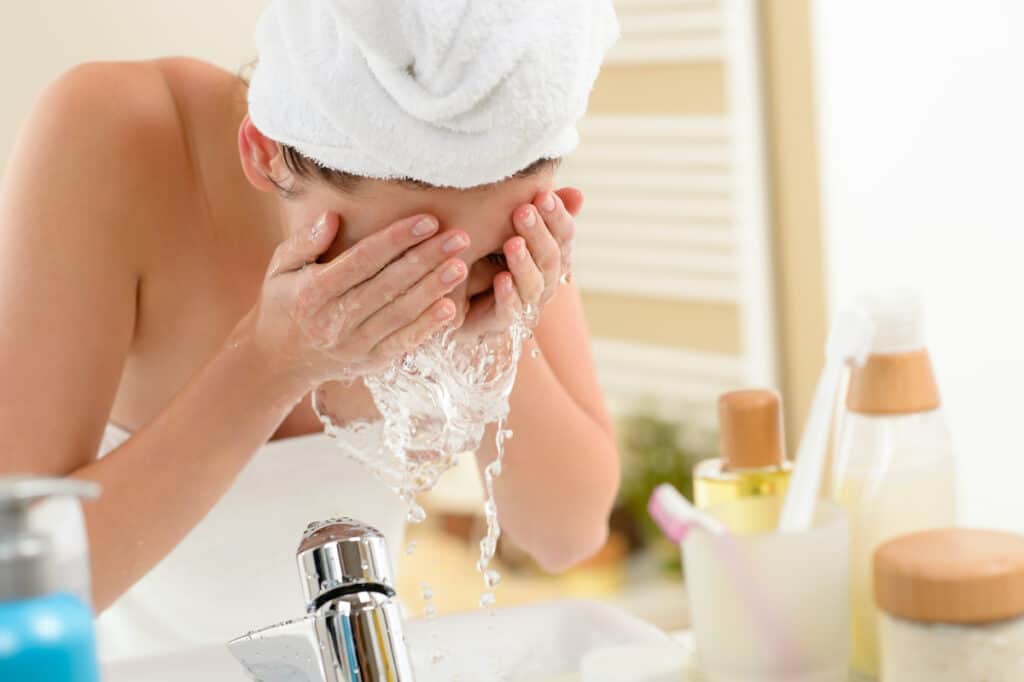
The aim is to remove sunscreen, makeup, sweat, and excess oil without scrubbing or stripping the skin.
Double Cleanse At Night
Another face washing tip is to double cleanse at night!
Double cleansing involves using two cleansers to wash your face thoroughly.
First, you want to use an oil-based cleanser to remove makeup, sunscreen, and dirt.
Then, use a water-based cleanser to clean or treat the skin.
Double cleansing can be helpful when you wear long-wear makeup or water-resistant sunscreen, but it is optional rather than a requirement for smaller-looking pores.
Use A BHA To Exfoliate
Incorporating a chemical exfoliant can also minimise the look of an enlarged pore.
BHAs, especially salicylic acid, are useful for oily or congested pores because they are oil-soluble and can help loosen dead cells and sebum inside the follicle.
Daily SPF is still important because UV damage can worsen uneven texture and loss of skin elasticity, especially when you are using active skincare.
A popular BHA is salicylic acid. It can be used in the morning or evening if your skin tolerates it and you follow the product directions; the important part is avoiding overuse and wearing sunscreen during the day.
Consider A Retinoid For Texture
Retinoids can improve cell turnover and support collagen over time, which may make pores and uneven texture look less noticeable. They are not an instant fix and can be irritating when introduced too quickly.
If you use a retinoid, start gradually, moisturize, and avoid stacking it with multiple strong exfoliants in the same routine until you know what your skin tolerates. Follow the current product directions, and ask a dermatologist if you are unsure which retinoid is appropriate for you.
Apply Moisturizer
We mentioned earlier that moisturisers could help reduce the look of an enlarged pore.
If your skin lacks moisture, surface roughness can make texture and pores look more obvious.
A moisturiser helps support the skin barrier and can improve the smoothness of the surface around visible pores.
No matter how oily or acne-prone your skin may be, it still needs to be moisturised!
Wear Sunscreen Daily
Sun protection matters for pore appearance because cumulative UV exposure can break down supporting collagen and elastin over time.
In addition, the sun can increase the visibility of pores and wrinkles.
UV exposure can also worsen uneven tone and texture, so protecting the skin is especially useful when your routine includes exfoliants or retinoids.
Wearing broad-spectrum sunscreen daily helps prevent additional UV-related damage that can make pores and fine lines look more noticeable.
Avoid Squeezing The Skin
Popping a pimple or squeezing your pores can be tempting.
It may even feel satisfying to extract gunk from your face.
However, it won’t be doing your pores any favours.
Instead, it can increase the appearance of pores due to irritation.
Also, squeezing your pores can increase redness or inflammation, bringing even more attention to your pores.
Address Your Diet, Environment, And Lifestyle
Lifestyle and environment can affect the way your skin feels and behaves, but they are not simple on-off switches for pore size.
For example, you may be prone to congestion if you live in a polluted area.
Your skin can also look different when you are dehydrated, irritated, sleep-deprived, or dealing with acne, but there is no universal list of “inflammatory foods” that determines pore visibility.
Your daily habits can support general skin health, but visible pores are still driven mainly by genetics, oiliness, congestion, elasticity, and sun exposure.
A balanced diet is worthwhile for overall health, but do not expect a specific food to noticeably shrink a pore that looks like a hole.
Consult A Dermatologist
Lastly, working with a dermatologist can help your skin in the long run.
For example, you may discover that chemical peels can also help reduce the visibility of enlarged pores.
Or, a dermatologist may recommend products to use at home.
Regardless, you will get products and services tailored to your skin’s needs.
If you’d like to hear from a dermatologist but don’t have the time to go in for an appointment,
Watch this video from Doctorly explaining how to minimise the appearance of large pores.
The Takeaway
Pores and gland openings serve important functions in the skin. The visible follicular pores on the face allow sebum to reach the surface, while separate sweat ducts release sweat.
The size of your pores can be determined by various factors, like genetics and skin type.
They do not actively open and close, and skincare cannot permanently erase them. Their visible diameter can still look different depending on oil, buildup, skin elasticity, and surrounding texture.
You can often reduce their visibility with a consistent routine that keeps pores clear, moisturizes the skin, and protects it from UV damage.
Related Questions
Do Pores Open And Close?
It’s a common misconception that pores behave like tiny doors that can be opened or closed on command.
Also, it’s been said that your pores can open and close.
Pores do not contain muscles that make them open and close. What can change is how visible the opening looks when oil, debris, swelling, or skin texture changes.
So why does hot water make it feel like your pores are opening?
Warm water can soften surface oil and residue, which may make cleansing easier, but very hot water can irritate or dry the skin.
However, it doesn’t mean your pores are opening.
Visible Pore FAQs
Why Does One Pore Look Much Bigger Than The Others?
A single pore may look larger because it is clogged, naturally wider, or surrounded by uneven texture. If it looks like a deep permanent indentation, an acne scar is another possibility.
Can Salicylic Acid Make A Large Pore Look Smaller?
It can help if oil and dead skin are making the pore look stretched or dark. Salicylic acid clears buildup inside oily follicles, which may make the opening appear less noticeable over time.
Can You Permanently Close A Large Pore?
No. Pores do not open and close like doors. Skincare can make them look less visible, while professional treatments may improve surrounding texture when enlarged pores or acne scars are a persistent concern.
Should You Squeeze A Pore That Looks Like A Hole?
No. Squeezing can cause irritation, broken skin, post-inflammatory marks, or scarring. If the spot repeatedly fills with debris or looks unusually deep, have it assessed rather than repeatedly extracting it yourself.
Related Articles
Best Magnifying Mirrors For Tweezing
Best Moisturisers For Fungal Acne
Is Salt Water Good For Your Skin And Hair?