
DIY Body Shimmer Oil
A little body shimmer can make shoulders, collarbones, legs, and other exposed areas look more luminous without covering the skin in obvious glitter.
One of the easiest ways to get that effect is with body shimmer oil, a lightweight oil blend suspended with fine reflective pigment.
Body shimmer oil adds a luminous sheen by combining a skin-friendly base oil with tiny reflective particles that catch and diffuse light.
It can work for summer, evenings, events, or photos, and you can make the finish as subtle or noticeable as you like. The key to that glowing effect is choosing the right shimmer and dispersing it evenly in the oil.
Fine pearlescent particles stay suspended temporarily in the oil and reflect light across the surface of the skin. Because they settle over time, the bottle needs to be shaken before each use.
You can buy a body shimmer oil or make it yourself.
Making your own version gives you control over the base oil, shimmer level, fragrance, and finish, which is especially useful if you prefer a lighter texture or want to leave fragrance out completely.
Body shimmer oil is also one of the simpler DIY beauty products because an anhydrous formula, meaning one without water, requires only a few ingredients.
So, how do you make DIY body shimmer oil?
You need two basic ingredients: a skin-friendly base oil and cosmetic-grade mica approved for topical use. Fragrance and vitamin E are optional, not essential.
Below, we will cover how to choose the ingredients, adjust the shimmer level, mix the oil evenly, apply it without streaks, and store it properly.
Body Shimmer Oil Tutorial
At its core, body shimmer oil needs only two ingredients: a base oil and cosmetic-grade mica.
You can then add optional ingredients if you want fragrance, a slightly richer feel, or an antioxidant such as vitamin E. Keeping the formula simple is often best if your skin is easily irritated.
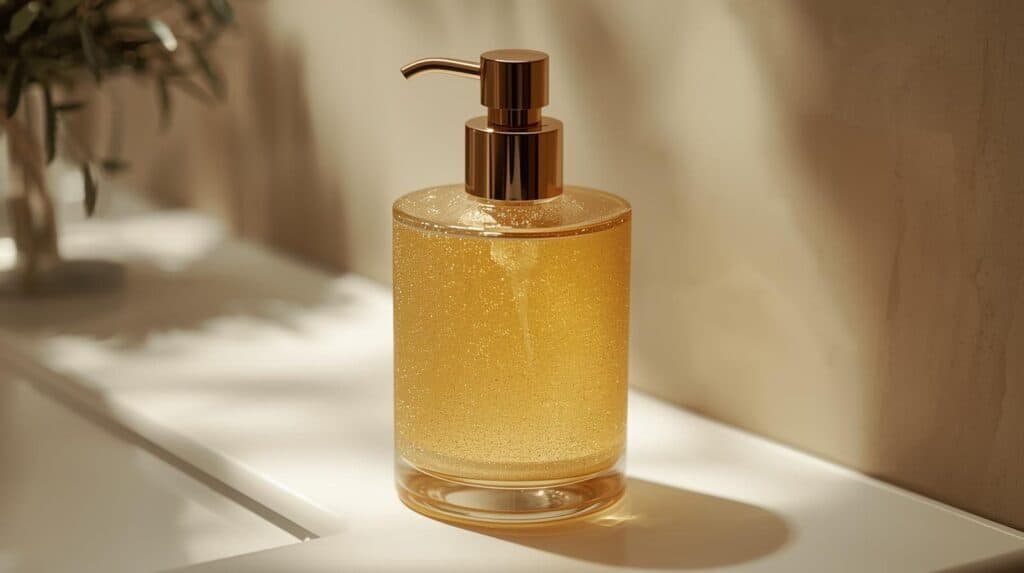
Here are some tips on picking your ingredients:
Base Oil
For this recipe, use about 100 grams of base oil. Measuring by weight is more repeatable than estimating by volume, especially if you plan to remake the same blend.
For the base oil, choose something that spreads easily and gives you the finish you prefer, from dry and lightweight to richer and more emollient.
Your choice can depend on skin feel, sensitivities, fragrance tolerance, and how quickly you want the oil to absorb.
Here are some popular oil options for body shimmers:
- Fractionated coconut oil – this lightweight oil is easy to find, spreads easily, and leaves a smooth finish on the skin
- Baobab oil – this richer plant oil can help soften dry-feeling skin and gives the blend a more nourishing texture
- Jojoba oil – this oil is lightweight, spreads well, and tends to leave a less greasy finish than heavier oils.
There are plenty of other cosmetic carrier oils you can use. The best choice is the one that feels comfortable on your skin and stays stable enough for the way you plan to store the finished product.
Each option has a different slip, absorption rate, and richness. If you dislike a greasy finish, start with a lighter-feeling oil and make a small test batch before committing to a full bottle.
For our recipe today, we’ll be using jojoba oil (find it on Amazon).
Mica Powder
The other key ingredient is mica powder, which creates the visible shimmer.
Mica is commonly used to create shimmer in cosmetics. Depending on the product, the mica may be natural or synthetic and may be coated or blended with approved colourants to create different shades.
For a body product, use only cosmetic-grade mica specifically approved for topical skin use. Craft, resin, soap-making, or industrial pigments are not automatically suitable for leave-on cosmetics, even if the colour looks identical.
Mica powder comes in different colours, so you can customise the way your body shimmer oil looks by selecting the shades of shimmer you want.
Here are a few mica colour ideas for a body shimmer oil. Treat the linked products as shade references and verify the exact product is cosmetic-grade before applying it to skin:
- Gold mica powder can create a warm, golden shimmer. Before using any pigment from a craft or resin listing on skin, confirm that the exact product is labelled cosmetic-grade and approved for topical use.
- Bronze mica powder can add a deeper bronzed effect. As with any pigment, verify that the exact powder is cosmetic-grade before applying it to skin.
- Rose quartz mica powder can add a soft pearlescent pink shimmer. Confirm cosmetic suitability before using any pigment sold primarily for resin or crafts.
Mica comes in a wide range of colours. For a classic body shimmer oil, shades such as gold, pink, peach, bronze, and warm brown tend to create a wearable highlight rather than an obvious coloured stripe.
You can choose to use just one of these shimmers or opt for all three and mix them to get the colour you want.
We will use about 5 grams of cosmetic-grade mica for 100 grams of oil. That creates a noticeable shimmer, so start with less if you want a sheer glow and increase gradually. Mix a small sample first because too much pigment can look streaky, transfer more easily, or settle heavily at the bottom of the bottle.
Optional Ingredients
Nothing else is necessary for a basic shimmer oil. If you want fragrance, use only an essential oil or cosmetic fragrance that is suitable for leave-on skin products and stay within the supplier’s dermal-use limit for that exact ingredient.
Be especially careful with phototoxic citrus essential oils because shimmer oil is often worn on shoulders, legs, and other sun-exposed areas.
Some expressed citrus oils, particularly certain lemon, lime, bergamot, and bitter orange oils, can increase the risk of a phototoxic skin reaction after UV exposure. Not every citrus oil has the same risk, so check the specific ingredient before using it.
Fragrance options sometimes used in body oils include:
- Lavender essential oil, if used within its skin-safe dilution limit
- Geranium essential oil, if used within its skin-safe dilution limit
- A skin-safe coconut fragrance oil formulated for cosmetics, if desired
- Ylang ylang essential oil, which should be used conservatively and within its dermal-use limit
In addition to fragrance, you can add a small amount of vitamin E oil if you like the feel it gives the blend.
Vitamin E is oil-soluble and is often included in cosmetic oils as an antioxidant. It can help slow oxidation of the oil phase, but it is not a preservative and does not make a contaminated product safe.
DIY Body Shimmer Oil Steps
Here is the step-by-step on how you can make your body shimmer oil using the ingredients we discussed:
Begin by deciding what ingredients you’ll use and gathering all of your supplies. You will need:
- 100g of base oil (we are using jojoba)
- 5g of mica powder (we are combining 1g bronze, 2.5g gold, and 1.5g pink)
- A skin-safe essential oil or cosmetic fragrance (optional; use only within the supplier’s dermal-use limit for a leave-on product)
- 1g vitamin E oil (optional)
- Empty glass bottle about 3.5oz – 4oz with a lid
- Medium mixing bowl with a whisk
Directions:
- In a clean, dry medium-sized bowl, mix the base oil with the mica pigments until the colour looks even and no visible clumps remain. Start with less mica if you are unsure about the intensity.
- If using essential oil or cosmetic fragrance, weigh or measure it according to the supplier’s maximum skin-safe usage rate for a leave-on product. There is no single drop count that is appropriate for every fragrance material.
- If using vitamin E oil, add it to the bowl and remix everything.
- Carefully pour the mixture into a clean, completely dry glass bottle. A small funnel can make this easier and reduce spills.
- Close the bottle, shake well, and test a small amount on your skin before using it more widely. Stop using the blend if it causes burning, persistent redness, itching, or another reaction.
For a visual tutorial, take a look at this video from WholeElise on YouTube.
How To Use DIY Body Shimmer Oil
If you’ve never used a body shimmer oil, a few small application details can make the finish look smoother and reduce transfer onto clothes.
Shake Before Using
DIY body shimmer oils naturally separate because mica particles are heavier than the oil and can settle at the bottom.
This is normal, not a sign that the product has failed. Shake the bottle thoroughly before each use so the shimmer redistributes evenly.
Where To Apply Body Shimmer Oil?
Body shimmer oil looks best on areas of the body that would usually catch light.
Think shoulders, collarbones, chest, thighs, and shins. If you want to use the blend on your face, make sure every ingredient is facial-skin appropriate and non-irritating for you, and keep fragranced versions away from the eye area.
Apply a small amount and blend it over the skin in a thin layer. Give the oil time to settle before getting dressed, especially around pale, delicate, or dry-clean-only fabrics because shimmer and oil can transfer.
For a more polished effect, concentrate the shimmer on a few areas rather than spreading it over the entire body. You can always add another thin layer if you want more glow.
Think of it like a body highlighter: place it where light naturally hits, then blend the edges so there is no obvious line of pigment.
Should You Use A Brush?
You can use your hands or a large stippling brush. If you use your hands, expect a lot of the oil to cling to your palms.
A large stippling brush can make application cleaner and help distribute shimmer across shoulders, collarbones, or legs, but it is optional.
If you don’t have a stippling brush, a large clean makeup brush can work. Apply a small amount at a time and buff gently to avoid concentrated streaks of mica.
Does It Expire?
Like all cosmetics, body shimmer oil can expire.
Because this recipe is anhydrous, meaning it contains no water, it does not need the same broad-spectrum preservative system as a water-based lotion. However, the oils can still oxidise and go rancid over time.
The shelf life of your DIY body shimmer oil depends mainly on the freshness and stability of the oils you use. Rather than assuming a fixed 2-3 year lifespan, use the shortest best-by period among your ingredients as a practical guide.
Store the finished oil in a clean, dry bottle away from heat and direct sunlight. Avoid introducing water into the container, since water contamination can change the product’s safety and shelf life.
Separation is expected because mica settles, but changes such as an unusual odour, unexpected cloudiness, or a major colour or texture shift can be reasons to discard the batch.
Smell is one useful clue: if the body shimmer oil develops a rancid, stale, or noticeably different odour, throw it out rather than trying to mask the smell with fragrance.
Prep Your Skin
To make your oil look smoother on the skin, you can gently exfoliate beforehand and moisturise if your skin feels dry.
If you exfoliate, use a gentle scrub or soft exfoliating cloth and avoid over-scrubbing irritated, freshly shaved, or sunburned skin.
Gentle exfoliation can help loosen surface flakes so the shimmer applies more evenly.
In addition to exfoliation, make sure to moisturise your skin with a cream or lotion before putting the oil on.
If you’re going to be out in the sun, use a broad-spectrum sunscreen with SPF 30 or higher on exposed skin and reapply according to the sunscreen directions. Let sunscreen set before adding shimmer oil so you do not rub away an uneven layer.
A plain cosmetic oil does not replace sunscreen and should not be relied on for UV protection. If your shimmer contains any potentially phototoxic essential oil, avoid sun exposure according to that ingredient’s safety guidance.
Wash Off With Soap
If you don’t want to wake up to oil stains and glitter on your bed sheets, make sure you wash off your shimmering body oil before you go to bed.
To wash off the oil, use warm water and soap.
Gently massage the cleanser over the skin and rinse thoroughly. If shimmer remains, repeat rather than scrubbing aggressively.
Bonus: Depending on the base oil you choose, your skin may feel softer and more conditioned after wearing it.
Final Thoughts
DIY body shimmer oil is a simple, customisable beauty project. Start with a base oil you enjoy, use only cosmetic-grade shimmer approved for skin, keep fragrance optional, make a small test batch if you are unsure about the finish, and shake before every application. The result should be a comfortable sheen that enhances the skin without feeling complicated to use.
Related Articles
Can You Use Fragrance Oils On Skin?
Rosehip Oil Vs Rosehip Seed Oil