
What Happens When You Leave Shampoo In Your Hair?
Shampooing your hair with the correct products can leave your hair healthy and resilient.
Shampoo removes oil, sweat, styling residue, and debris from the scalp and hair. A clean scalp can support normal scalp comfort, but shampoo itself does not directly stimulate faster hair growth.
However, shampoo needs to be used correctly for the best results.
It seems like we are always waiting for the next big hair trends and techniques.
Some of us are even brave enough to experiment with our own strands.
Unfortunately, some of these trends or methods can do a lot more harm than good for your hair.
For example, leaving regular rinse-out shampoo sitting in your hair is not more nourishing. Shampoo is formulated to cleanse and then be rinsed away.
In this case, too much of a good thing isn’t such a good thing.
Shampoo is supposed to be rinsed thoroughly from the hair and scalp after it has done its cleansing job.
But what happens when you leave shampoo in your hair?
If regular shampoo is not rinsed out, your hair may feel coated, stiff, sticky, greasy, or difficult to style. Residue can also irritate a sensitive scalp. Accidentally leaving some shampoo behind once is unlikely to cause hair loss, but repeated irritation or scratching can contribute to breakage and scalp discomfort.
Leaving shampoo in your hair can lead to unwanted and uncomfortable results.
Many individuals may confuse leaving shampoo in their hair with using a co-wash.
Both products are incredibly different because a co-wash is a cleansing conditioner.
So, before you try experimenting with leaving your shampoo in your hair, read on to understand more about why this isn’t such a brilliant idea after all.
What Happens When You Don’t Rinse Shampoo?
If you shampoo but do not rinse thoroughly, some of the cleanser and loosened residue can remain on the hair and scalp.
Your hair care routine needs to include shampooing, but there are some things to avoid and be careful of when shampooing your hair.
When shampooing your hair, you need to work it into your hair to remove any dirt, oil, and build-up.
But if you leave the shampoo in your hair too long or don’t rinse it out properly, then it could lead to some damage.
Leave-in conditioners are formulated to remain on the hair, while rinse-out conditioners and masks should be used for the time stated on their directions.
However, shampoo is the complete opposite.
Conditioners mainly coat, smooth, and reduce friction along the hair fiber, while shampoo uses cleansing agents to remove oil and buildup from the scalp and hair.
Shampoo and conditioner have two different purposes.

They are formulated for different jobs: conditioner improves slip and softness, while shampoo focuses on cleansing.
Some shampoos contain cleansing agents, fragrance, preservatives, or medicated ingredients that can irritate sensitive skin if they are not used as directed.
Shampoo is meant to remove excess oil, sweat, flakes, and product residue. It does not need to “nourish” the follicles or promote hair growth to do its job well.
Shampoos aren’t as hydrating as conditioners, and their texture can be gooey and even leave a residue if not rinsed out.
If regular shampoo is left on much longer than directed or repeatedly left as residue, the hair and scalp may feel dry, tight, coated, or irritated, especially with a strong cleanser.
Residue can also irritate the scalp or worsen itching and flaking in some people. It does not directly cause every case of dandruff, which can have several causes.
So, from dryness to dandruff, there are multiple reasons why you shouldn’t leave shampoo in your hair.
1. Scalp Irritation
Leftover shampoo in your strands can cause uncomfortable reactions on your scalp.
First, it’s crucial to check the ingredients in your shampoo.
Any shampoo ingredient can be a problem if your skin is sensitive to it, but sulfates, parabens, and phthalates should not automatically be grouped together as “harsh cleansing agents.” Sulfates are surfactants, while parabens are preservatives and phthalates serve different formulation roles.
The scalp is skin, and keeping it comfortable and free of excessive buildup supports a healthy environment for existing hair follicles.
Leaving shampoo in your hair, especially with sensitising ingredients, can cause damage to the scalp.
For example, it can lead to redness, itchiness, irritation, dryness, and other skin/scalp conditions.
A cleanser that is too strong for your scalp may leave it feeling dry, tight, or flaky. That does not necessarily mean the scalp will compensate by producing excess oil.
Natural sebum helps lubricate the scalp and hair near the roots, although it does not always travel easily to the ends, especially on curly, coily, long, or highly textured hair.
Leftover shampoo can contribute to residue, itching, or visible flakes. If you already have dandruff or seborrheic dermatitis, irritation from an unsuitable product may make the scalp feel worse.
Shampoo residue does not normally “block” hair from growing out of the follicle. Persistent scalp inflammation, however, is worth addressing if you notice significant itching, soreness, scaling, or unusual shedding.
Accidentally leaving shampoo residue behind is not expected to cause severe hair loss. If you are experiencing ongoing shedding or bald patches, look beyond shampoo residue and consider medical evaluation.
Hair grows from follicles beneath the skin, so growth does not depend on the scalp being perfectly “clean” at all times.
Choose a shampoo that suits your scalp and hair, and rinse thoroughly with every wash to avoid unnecessary residue.
2. Greasy Strands
Shampoo that’s been left in your hair can also result in greasy strands.
Your strands will feel stiff, and there will be a weird, filmy residue on the hair.
This can make it feel like your hair has never dried down, but it’s not wet either.
Both your roots and lengths can feel coated by residue, which can leave hair less smooth and make styling products or conditioner feel uneven.
Residue can also weigh the hair down, but it does not stop new hair from growing from the follicle.
While your hair may look greasy, it can also feel dry and crunchy due to harsh cleansing agents that over-strip the hair and lack moisture.
The crunchy texture can leave the hair looking and feeling like straw.
For many hair types, concentrating shampoo on the scalp and root area is enough because the lather runs through the lengths during rinsing. If the lengths have heavy buildup, they may also need gentle cleansing.
Rinsing the shampoo from the scalp will allow the product to gently trickle down your ends to cleanse and prep for conditioner.
Unfortunately, there are more negative impacts to leaving shampoo in your hair than positive.
So make sure to rinse your hair thoroughly and choose a formula that suits your scalp, hair type, and styling habits.
What To Do If You Accidentally Leave Shampoo In Your Hair
If you notice dried shampoo or residue after your hair has already dried, rinse the hair and scalp thoroughly with lukewarm water. You usually do not need to shampoo again unless the hair still feels dirty after the residue is gone.
If the lengths feel dry afterward, apply your normal rinse-out conditioner or a leave-in conditioner as directed. Avoid adding several new treatments at once if the scalp already feels irritated.
If you develop persistent burning, swelling, a rash, or significant scalp pain after leaving a product on too long, stop using it and seek medical advice.
How Long Can Shampoo Be Left In Your Hair?
For a regular cosmetic shampoo, you generally do not need a long contact time. Work it through the scalp long enough to loosen oil and buildup, then rinse.
After applying shampoo, gently massage it over the scalp with your fingertips. There is no universal 2-3 minute rule for regular shampoo, so follow the label if the product gives a specific contact time.
This gives you enough time to clean your scalp and hair with the shampoo before rinsing it out.
Shampoo does not work like a conditioner, and it does not have to sit in your hair for too long in order to work.
Its purpose is to clean your scalp and hair, and it can do this quite quickly.
After you have massaged the shampoo into your hair, make sure you rinse it out thoroughly and remove any excess shampoo from your scalp.
The main exception is a medicated or treatment shampoo, which may need to stay on the scalp for a specified time before rinsing.
You do not automatically need a sulfate-free shampoo. Some sulfate-free formulas are gentle, but well-formulated sulfate shampoos can also cleanse effectively without causing problems for everyone.
If your shampoo contains sulfates, use it according to the product directions. There is no universal one-minute cutoff that applies to every sulfate-containing shampoo.
How drying a shampoo feels depends on the complete formula, concentration, frequency of use, and your scalp and hair rather than on sulfates alone.
What If I Leave Shampoo In My Hair Often?
Not rinsing the shampoo out of your hair properly now and then is not going to be too disastrous.
If you repeatedly leave shampoo residue in the hair or on the scalp, you may develop ongoing dryness, buildup, itching, or irritation.
Depending on the formula and your hair type, repeated residue can make hair feel dry, coated, stiff, dull, or harder to style.
Residue may contribute to irritation or buildup, but it does not automatically clog follicles or cause dandruff and scalp acne in everyone.
It can be really difficult to treat scalp acne if you do not stop the bad shampooing habits.
So it is important to properly rinse the shampoo out of your hair and not leave it in for longer than a few minutes.
If you develop persistent itching, flaking, scalp tenderness, or unusual shedding, stop the habit and consider having the scalp assessed rather than assuming shampoo residue is the only cause.
How To Tell If You Have Left Shampoo In For Too Long
If you notice that your hair is not as healthy or soft as it used to be, you need to pinpoint what has changed.
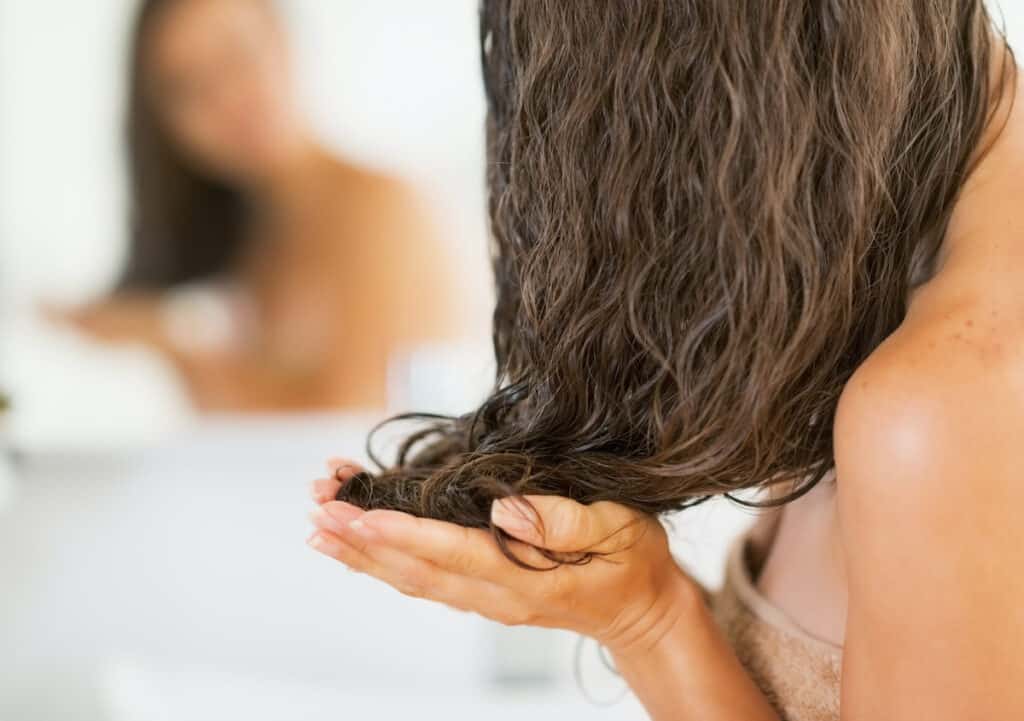
It might help to check for signs that you might be leaving your shampoo in for too long.
These are the signs to look for that you have left shampoo in for too long:
- You have difficulty styling your hair after shampooing it. Washing your hair with shampoo should make it easy to style, but if there is product left in your hair, it makes styling harder.
- Your hair still looks dirty and dull after washing it.
- You notice new itching or flakes after washing and suspect product residue may be contributing.
- Your hair appears lifeless and flat, even though it has just been washed and even if it has just been conditioned.
How Do You Properly Use Shampoo?
Shampoo is an important cleansing step for removing oil, sweat, debris, and styling buildup from the scalp and hair.
Using shampoo appropriately helps you cleanse effectively without unnecessary dryness, tangling, or residue.
This is how to use shampoo properly:
- Wet your hair thoroughly with warm water.
- Apply a small amount of shampoo to your scalp and massage gently with your fingertips. Not all shampoos create a large lather, and more foam does not necessarily mean better cleansing.
- Massage gently long enough to cleanse the scalp, following the label if the shampoo specifies a contact time.
- Rinse the shampoo out of your hair with running warm water, ensuring that your scalp and the length of your hair are free from all shampoo residue.
- Continue to either dry your hair or condition it to finish up your haircare routine.
Remember that the time the shampoo spends on your hair will depend on the shampoo itself.
If the shampoo is medicated or designed for dandruff, psoriasis, or another scalp concern, follow its specific timing instructions before rinsing.
For more information, here’s a visual tutorial from Haley Navarro on YouTube.
Related Questions
How long should I leave anti-dandruff shampoo for?
Anti-dandruff shampoo works differently from normal shampoo.
Many anti-dandruff shampoos need some contact time on the scalp so the active ingredient can work, but the exact time varies by product.
Massage the anti-dandruff shampoo into the scalp and leave it on for the time stated on the current label before rinsing thoroughly.
You usually do not need to follow a medicated shampoo immediately with another shampoo unless the product directions or your clinician recommend it. Use conditioner on the lengths if needed.
Keep in mind that anti-dandruff shampoo can be quite drying to your hair, so try to concentrate it on your scalp, and make sure that it is all rinsed out properly.
If you don’t already have a shampoo to control your dandruff, we recommend trying out this awesome one from Biolage!
How often should I shampoo my hair?
Leaving shampoo residue behind can be irritating, but there is also no single ideal wash schedule for everyone.
Your scalp produces sebum, which helps lubricate the scalp and hair near the roots.
For some people, washing too often with a strong cleanser can leave the scalp or lengths dry. Others, especially those with oily scalps or frequent sweating, may need to shampoo more often.
How often you wash your hair depends on your hair type.
Wash frequency can range from daily to weekly depending on scalp oiliness, hair texture, styling habits, exercise, and any scalp condition. Cleanse when your scalp and hair need it rather than forcing a universal one-to-two-times-a-week schedule.
What happens if I leave shampoo in my hair overnight?
Leaving regular rinse-out shampoo in your hair overnight is not recommended, regardless of whether the formula contains sulfates.
Extended contact may cause dryness, residue, itching, or irritation, particularly if your scalp is sensitive or the shampoo contains medicated or fragranced ingredients.
Can I leave conditioner in my hair overnight?
Rinse-out conditioner should be left on for the time recommended by the manufacturer and then rinsed. It does not need to stay in overnight.
There are leave-in conditioners, but these are different from the normal conditioners you rinse out after a few minutes.
There is no universal 5-10 minute rule for every conditioner. Some work within a few minutes, while masks may call for longer. Follow the directions for the specific product.
Shampoo Residue FAQs
Can Leaving Shampoo In Your Hair Cause Hair Loss?
Accidentally leaving some shampoo residue behind is unlikely to cause hair loss. Repeated irritation, scratching, or an untreated scalp condition can contribute to breakage or shedding, so ongoing symptoms deserve a closer look.
Why Does My Hair Feel Waxy After Shampooing?
A waxy or coated feel can come from incomplete rinsing, heavy product buildup, hard water, too much shampoo, or a formula that does not suit your hair. Rinse thoroughly first before adding more product.
Should Shampoo Sit On Your Scalp Before Rinsing?
Regular shampoo usually only needs enough time to be massaged through the scalp and loosen oil and buildup. Medicated shampoos are different and may need a specific contact time listed on the label.
Is It Bad To Leave A Little Shampoo In Curly Hair?
Yes, rinse-out shampoo should still be rinsed from curly or coily hair. If you want a product that stays in the hair, use a leave-in conditioner or styling product formulated for that purpose.
Related Articles
Can You Use Conditioner Without Shampoo?
The Best The Ordinary Products For Fungal Acne
Best Non-Comedogenic Drugstore Foundations