
How To Use Gel In Dry Hair
Your hair is already dry, but a few flyaways or flat sections still need extra hold. Can you reach for hair gel without starting your style again?
Yes, but a large scoop can quickly turn a small touch-up into stiff, sticky clumps. On dry hair, placement matters as much as the amount.
A crunchy finish is not always a mistake: some curl routines deliberately use a gel cast to hold the shape while drying. For a quick dry-hair touch-up, though, you may prefer a lighter application.
Used carefully, gel can be a useful styling product for flyaways, definition, slicked-back styles, spikes, waves, and wet-look finishes.
So, how do you use gel in dry hair?
You can use gel on dry hair, but start with a very small amount. Rub it between your palms or fingertips, then smooth, scrunch, or define only the areas that need hold. Dry-hair application works best for finishing and shaping. For all-over curl definition, damp or wet hair usually makes gel easier to distribute. A firm cast can still form, depending on the formula and amount.
For a sleek or editorial finish, gel on dry hair can work especially well because you can place the product exactly where you want structure and shine.
The key is control. Adding more gel is easy, but removing too much product usually means washing or re-wetting your hair.
Below, we’ll break down which hold level to choose, how to apply gel to short and long hair, what to do with curls, and how to wash gel out without making your hair feel stripped.
Here, dry hair means hair that is no longer wet, not necessarily hair that lacks moisture. If your strands feel rough or brittle, gel provides styling hold rather than replacing conditioner.
Can You Put Hair Gel On Dry Hair?
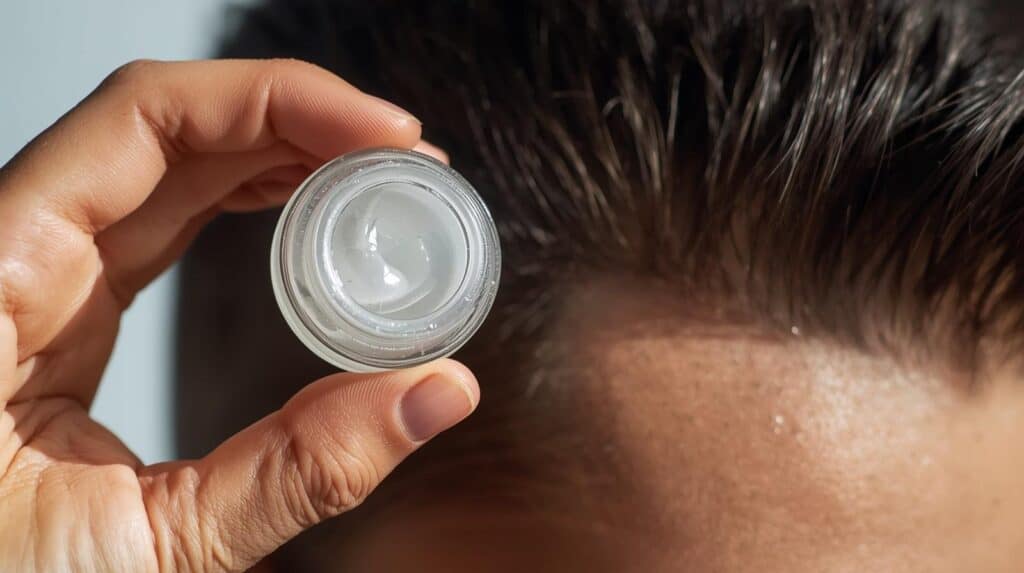
Hair gel is a styling product designed to add hold and shape. Depending on the formula, it can leave anything from a flexible, touchable finish to a firm cast.
On dry hair, gel tends to feel more concentrated because there is no water helping to distribute it. That is why a small amount can go a long way.
Hair gel can smooth flyaways, define individual sections, create spikes, polish a ponytail or bun, and help build a slick or wet-looking style.
The finish depends on how much you use and where you place it.
Even a light or medium-hold formula can make dry hair feel stiff, sticky, or overly shiny if too much is applied at once.
A good rule is to start smaller than you think you need. For a few flyaways, try a dab smaller than a pea; for several short sections, a pea-sized amount may be a starting point. Spread it thinly before touching the hair and follow the product’s directions.
If you want a softer or more reworkable finish, consider a styling cream, pomade, or wax intended for dry hair. Check the directions: mousse and some curl products are designed mainly for damp-hair application.
You usually do not need several gels at once. A light or medium-hold gel covers most everyday styles, while a strong-hold option is useful for very structured looks.
Short and cropped hair can be especially easy to style with gel because you can work through small sections without coating the entire head.
On longer hair, concentrate gel around the hairline, crown, ends, or specific sections instead of saturating the lengths. This helps avoid a heavy or stringy finish.
What Strength Hair Gel Should You Use?
For fine hair or longer lengths, start with a light-hold gel or a small amount of medium-hold gel so the style keeps some movement.
A lighter application can help control flyaways and add definition without making individual strands clump together too heavily.
For dry hair in particular, the amount matters as much as the hold level. Too much product can create stiffness and buildup, even when the gel itself is lightweight.
A medium-hold gel is a versatile choice for slicked styles, defined texture, and wet-look finishes where you want more control than a light formula provides.
You can avoid overloading the hair by applying a thin layer, but flexibility still depends on the formula. Finish arranging each section before the gel sets rather than repeatedly adding product over a hard layer.
Choose a strong-hold gel when you need a very structured finish, such as sharp spikes, sculpted waves, or a sleek style that needs to stay in place.
Strong hold does not automatically mean damaging, but these formulas can feel stiffer and may create more noticeable buildup. Avoid repeatedly combing or brushing hair once the gel has dried hard.
For editorial, event, or highly polished styles, strong-hold gel can provide the extra control that lighter products may not.
How To Use Gel On Short Hair
For short, spiked, or piecey styles, dry-hair application gives you precise control. The biggest mistake is using a large scoop and coating every strand.
Instead, put a small dab of gel between your index finger and thumb. You can always pick up a little more if one section needs extra hold.
Make sure your hair is detangled first, then use your gel-coated fingers to pinch, twist, or lift small sections into place.
This targeted method keeps the style defined without leaving the entire cut hard or overloaded with product.
For a visual tutorial, take a look at this video from Ben Arthur on YouTube.
How To Create A Sleek Short-Hair Style
For pixie cuts and other short styles, the same small-section technique works well when you want definition without coating the whole head.
For a sleeker finish, spread the product more evenly through your hands before touching your hair.
Spread a small amount of medium-hold gel between your palms, then lightly finger-comb it over the surface and through the sections you want to control.
If your gel feels too firm, avoid automatically mixing it with conditioner in your palm because some formulas can flake or lose hold when mixed. Try a smaller amount or a more flexible gel first. If you also need leave-in conditioner, choose a compatible product and test the combination on a small section; layering can cause flakes too.
How To Use Gel On Long Hair
Long hair can also benefit from gel, especially when you want a clean bun, ponytail, or polished hairline.
A light to medium-hold gel is usually enough for smoothing without making the lengths feel unnecessarily rigid.
You can leave most of the hair product-free and focus gel only where you need control.
For formal or polished styles, a little gel around the hairline and crown can add structure and sheen while keeping the rest of the hair soft.
When pulling hair into a bun or ponytail, start with a dime-sized amount or less and smooth it around the hairline, crown, and nape where flyaways tend to appear.
Use your fingertips, a soft brush, or a clean edge brush to smooth those areas before the gel sets. Keep the ponytail or bun comfortable; a sleek surface does not require pulling tightly at the scalp.
If your hair still looks fuzzy after the first pass, add another tiny amount rather than applying one heavy layer. This gives you more control over the finish.
For textured or curly hair, a leave-in conditioner or moisturizing styling product can be applied before gel if your hair needs extra softness.
Check that the products layer well together. A test between your fingers may reveal obvious clumping, but it cannot guarantee how the combination will dry on hair. Test a hidden section, let it dry, and use fewer layers if you see residue.
How To Create A Wet Look On Long Hair
Gel is also useful for the sleek, glossy wet-look style often seen in editorial and red-carpet hair.
For this style, look for a gel described as giving a glossy or wet-look finish. Hold strength alone does not tell you how shiny it will look once dry.
The secret to the wet look is controlled prep. Dry hair can work, but it should be detangled and smooth before you start applying sticky styling products.
If you want extra texture or body, use a light mist of a compatible styling spray. If your hair is already dry or rough, skip salt-heavy products that make it feel even drier.
Naturally wavy hair can keep some of its texture and movement underneath the polished finish.
Next, spread a small amount of medium-hold gel through your fingers and work section by section, smoothing or scrunching until the shape looks intentional.
If you notice clumps, uneven patches, or flyaways, correct them before the gel fully dries. A comb can help on sleek sections, while fingers are often gentler on textured areas.
For more shine, you can apply a very small amount of hair oil or shine serum where needed, especially through the mid-lengths and ends.
Keep oil away from the roots if your hair gets greasy easily. The goal is a controlled shine, not a saturated look.
Gel can also help with vintage and sculpted hairstyles that need a defined shape.
Classic Hollywood-inspired waves rely on consistent curl direction, brushing, and careful shaping to create that smooth, cascading pattern.
Create the waves before applying finishing gel. If using a curling iron, work on fully dry hair with suitable heat protection, then let the curls cool. Do not clamp hot tools over fresh gel to try to set it.
Once the curls are released, gently brush or comb them together until they form larger, connected waves.
Use a small amount of strong-hold gel only where the wave needs extra control, rather than coating every curl.
Gently smooth the surface and use duckbill clips to reinforce the bends of the wave while the style sets.
If you use a hairdryer to help set the shape, choose a low airflow and low or medium heat. High heat is not necessary for gel to hold and may increase dryness or heat damage.
For a visual tutorial, take a look at this one from eHow Beauty explaining how to gel long hair back in a ponytail.
Should You Put Gel On Dry Curls?
Curly and coily hair can be naturally prone to dryness because scalp oils may not travel as easily along bends and coils as they do along straighter strands.
That does not mean gel is automatically drying or damaging. However, applying a lot of gel to very dry curls can make them feel stiff and may emphasize frizz if the product is not distributed evenly.
For curl definition, gel is usually easier to distribute on damp or wet hair. Water also helps curls clump together before the gel forms a cast around them.
If you are refreshing second-day curls, you do not need to soak your hair. Lightly mist the section with water or a compatible leave-in spray and reshape it first. Existing gel may soften enough that you do not need more. If extra hold is needed, add a tiny amount and let the section dry without repeatedly touching it.
What If Gel Leaves Hair Crunchy Or Flaky?
Crunch and flakes are different problems. A firm cast around curls may be intentional. Once the hair is completely dry, gently scrunch it with clean hands to soften the cast without brushing apart the curls. A slicked or sculpted style may need that firmness to retain its shape.
White flakes can appear when too much product builds up, products do not layer well, or dried gel is repeatedly disturbed. Do not keep adding gel to hide them. Soften and wash out the residue, then try less product or fewer layers next time. If flakes come from the scalp and persist after washing, especially with itching, do not assume gel is the only cause.
Related Questions
How do I properly remove hair gel from my hair?
Removing hair gel is usually straightforward. Most water-based gels rinse out with water and a regular shampoo, although heavier buildup may need a more thorough cleanse.
If the gel has dried into a firm cast, avoid aggressively brushing it out. Wet the hair first so the product softens before detangling.
Once the gel softens, rinse and cleanse gently. Detangle curls with conditioner for slip; for straight hair, allow it to dry a little before gentle combing. Work from the ends upward to limit unnecessary tugging and breakage.
Rinse with lukewarm water, which is more comfortable for the scalp and is usually enough to soften water-based styling products.
You do not need extremely hot water to remove gel. In fact, very hot water can leave the hair and scalp feeling dry or irritated.
Massage your regular shampoo into the scalp and through areas with buildup, then rinse thoroughly.
If hair still feels coated after thorough rinsing, an occasional clarifying shampoo may help. Check suitability for color-treated hair and follow the directions rather than adding it automatically to every wash.
Finish with your usual conditioner, paying extra attention to the mid-lengths and ends if they feel dry.
Can I use hair gel every day?
You can use hair gel regularly if the formula works for your hair and scalp. Gel itself does not automatically cause thinning or damage.
What matters is how you use it. Heavy buildup, harsh removal, frequent high-tension styles, or repeatedly brushing through hardened gel can make hair more prone to breakage.
If you style with gel every day, use only as much as you need and wash your hair often enough for your scalp and hair type so residue does not keep accumulating.
Mousse, styling cream, pomade, and curl cream can be useful alternatives when you want a softer finish. Aloe vera-based styling products may also work for some people, but plain aloe gel will not provide the same hold as a formulated hair gel and can irritate sensitive skin in some cases.
Related Articles