
How To Make Your Lips Look Smaller
Full lips have been a prominent beauty trend for years, but not everyone wants to emphasise lip volume in every makeup look.
Full lips have been a major beauty trend for years, but makeup is personal, and not everyone wants to emphasise lip size in every look.
If you have naturally full lips, there may be times when you want them to look less prominent so the focus shifts toward your eyes, brows, or the rest of your makeup.
You can create a smaller-looking lip shape with makeup without changing your natural lip anatomy.
So, how do you make your lips look smaller?
Makeup can make lips look smaller by softening the natural lip border, slightly underlining the lips, and choosing lower-shine finishes or less attention-grabbing colours. Lip care keeps the surface smooth, but it does not permanently reduce lip size.
If you are considering a permanent physical change, lip reduction surgery exists, but it is an elective procedure with real risks, scarring, and recovery, so it should only be discussed with an appropriately qualified plastic surgeon.
Below, we cover the most practical ways to make lips look smaller with makeup, how to care for irritated or dry lips, and what to know before considering a permanent procedure.
Makeup Techniques To Make Lips Look Smaller
Makeup is the simplest way to create the illusion of a smaller lip shape because you can adjust the visible border, colour, contrast, and finish without changing the lips themselves.
What you’ll need:
- Lip balm
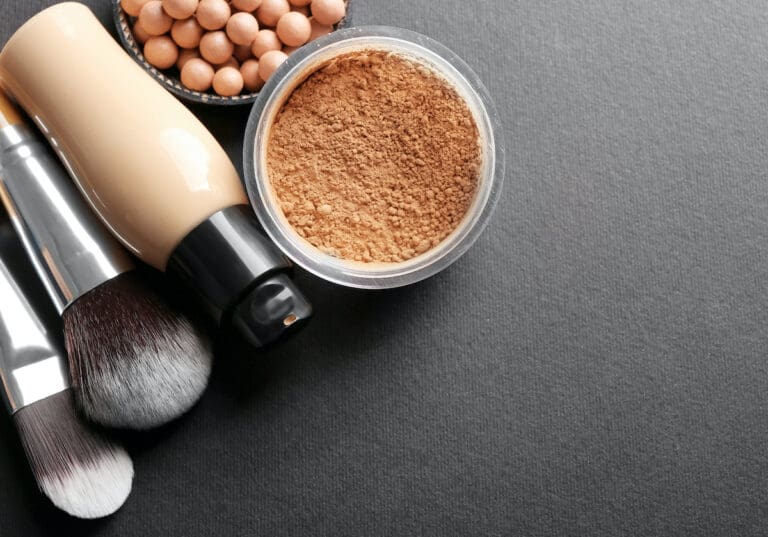
- Foundation or concealer
- A precise lip pencil
- A coordinating lipstick colour
What to do:
Moisturise your lips
- Start with comfortable, moisturised lips. Dry flakes can make liner and lipstick catch unevenly, which makes a carefully redrawn lip edge harder to blend.
A smoother surface helps the finished shape look more intentional and even. - Apply a simple lip balm or lip mask before doing the rest of your makeup. Use enough to soften dry areas without leaving a thick, slippery layer.
- Before lining, blot away excess balm so the pencil does not slide around or break through the base makeup.
Conceal
- Using a concealer or foundation close to your skin tone, tap a very thin layer around the outer lip border with a sponge or small brush.
The goal is to soften the natural edge, not erase the lips completely or build a thick layer over the mouth. - If your natural lip border still shows through, use a little more concealer only where you need coverage.
A lighter base, including a BB cream (like our favourite from Jane Iredale), can be enough when you only want to soften the outline rather than erase it. - Use the lightest hand possible. Too much complexion product can look dry, crease around the mouth, or make the lipstick layer feel heavy.
- If your lips still feel slippery from balm, blot them gently with a tissue before applying the base and liner.
Line Lips
- Choose a lip liner with a fine, controlled point (we love this one from Haus Laboratories by Lady Gaga). Precision matters because you are working close to the natural border.
- Instead of tracing directly on the natural lip border, place the liner slightly inside the vermilion border. Keep the adjustment subtle, especially around the corners, so the shape still follows your anatomy.
Underlining too far can look obvious when you talk or smile, so a very small adjustment is usually easier to blend convincingly. - Fill in the new shape lightly with your lip pencil. This can create a more even base and may help the lipstick wear more evenly, although no liner can guarantee all-day wear.
- If you’re going for an understated look, try going for a muted lip colour or one closer to your natural lip shade.
Lipstick
- Fill in your new lip shape with your matching lipstick (we love this line from Perricone MD), then check the result while your face is relaxed and while smiling.
Underlining takes practice because you are intentionally drawing inside the natural border rather than tracing it exactly.
If one section looks uneven or the new edge sits too far inside the lip, correct only that area.
A small concealer brush with a little of your base product can help clean up the edge and make the new lip line look more deliberate.
If your goal is to make the lips look less prominent, a very glossy finish can reflect more light and draw attention to the mouth. A satin, soft-matte, or velvet finish may be easier to control.
A liner with good staying power can also help keep the redrawn edge looking crisp, especially around the corners of the mouth.
A matte liquid lipstick can make the redrawn shape more resistant to transfer, but fast-setting formulas are usually harder to correct once they dry.
You can still choose any lip colour you enjoy, but colour and contrast affect how much attention the mouth attracts.
However, there are some things to keep in mind when it comes to drawing attention to your lips.
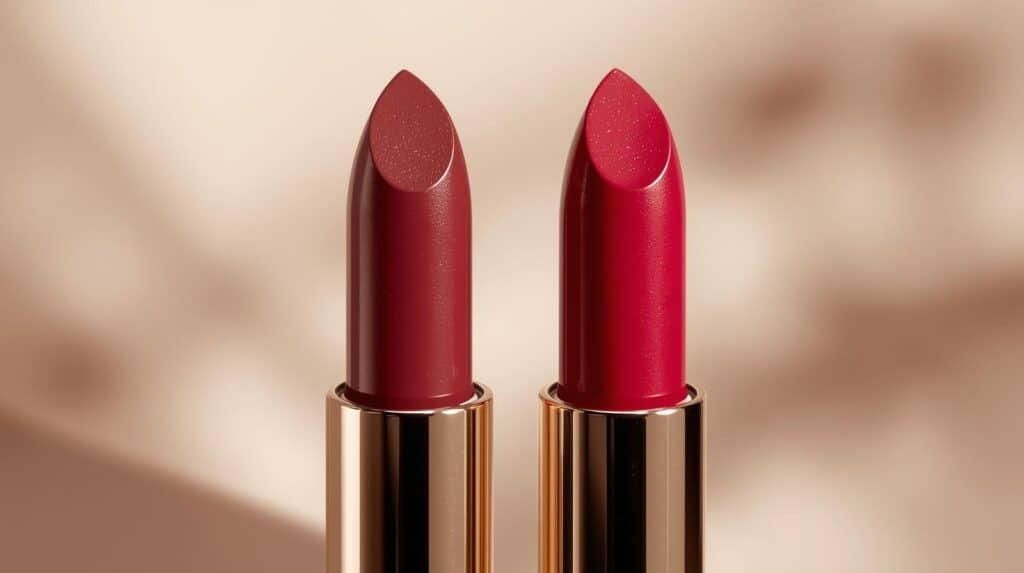
Bright or highly contrasting colours can draw more attention to the mouth, which may make the lips feel more visually prominent even though the physical size has not changed.
Muted or lower-contrast shades, including soft pinks, mauves, and neutral browns, can make the lip area look more understated.
Lip Health 101
Moisturised lips can look smoother and slightly more reflective, but normal lip care does not meaningfully enlarge your natural lip anatomy.
Do not neglect lip care simply because you want the lips to appear smaller.
Trying to make lips look smaller by allowing them to become dry or irritated is not a useful strategy. Dryness can make makeup patchy and may lead to cracking, soreness, or inflammation.
If the lips become irritated or chapped, they may feel sore and the border can look less smooth or defined.
Some forms of irritation or an allergic reaction can also cause swelling, but swelling is not an inevitable result of ordinary dryness.
Persistent changes in lip colour can have many causes, including irritation, sun exposure, habits, medications, or skin conditions, so they should not automatically be blamed on inadequate cleansing or dehydration.
If you notice a new or unexplained colour change that does not settle, it is worth discussing it with a healthcare professional rather than trying to scrub it away.
If your lips are flaky but not cracked or irritated, very gentle exfoliation can remove loose surface flakes. It is optional, and over-exfoliating can make dryness worse.
Avoid aggressive scrubbing, especially if your lips are split, sore, or inflamed. In that situation, a bland moisturising ointment and time are usually kinder than a gritty scrub.
Keep your lips moisturised with a balm or ointment that you tolerate well. Drinking enough fluids is important for general hydration, but extra water does not act like a topical lip moisturiser if you are already adequately hydrated.
For easily irritated lips, a simple fragrance-free balm or ointment is often a practical choice. You do not need tingling, plumping, flavouring, or botanical extracts for basic moisture.
Go as simple as possible if your lips are sensitive. Fragrance, flavouring agents, and some botanical extracts can irritate certain people, but an allergy does not always cause swelling.
Ingredients such as petrolatum, shea butter, or jojoba oil can work well for some people. If a balm stings or makes your lips red or itchy, stop using it rather than assuming the tingling means it is working.
If the air in your home is very dry, a humidifier may make the environment more comfortable for dry skin and lips.
It is still important to clean the humidifier as directed so it does not become a source of mould or bacteria.
Keep lip care consistent throughout the year, and increase occlusive moisture when cold, dry, or windy weather makes chapping more likely.
If your lips repeatedly swell or become irritated without an obvious trigger, treat that as a health issue rather than a cosmetic problem.
Recurring lip swelling can have many possible causes, including irritation, contact allergy, food reactions, medication effects, or other medical conditions.
If swelling keeps happening or you cannot identify the trigger, talk with a doctor, dermatologist, or allergist. Sudden swelling of the lips, tongue, face, or throat with trouble breathing or swallowing requires urgent medical attention.
Do not take allergy medication solely to make your lips look thinner. Treatment depends on the cause of the swelling, so medication should be used according to a clinician’s advice or the product directions for a known allergy.
Shaving, Waxing, or Tweezing
Hair removal around the mouth does not change lip size, but it can change the contrast and finish of the skin around the lips if facial hair is something you personally prefer to remove.
Fine facial hair around the upper lip and chin is normal. Its density, colour, and texture vary widely from person to person.
Darker facial hair can create visible contrast around the mouth, so removing it may make complexion makeup look more even. Whether that makes the lips appear smaller is subjective.
If you choose to remove facial hair, use a method that suits your skin, medications, and comfort level. Hair removal is optional and is not necessary for making the makeup technique work.
Options include facial shaving, threading, tweezing, or waxing. Avoid waxing irritated or broken skin, and be cautious if you use retinoids, exfoliating acids, or other treatments that can make the skin more fragile.
Waxing removes hair from the root, so regrowth may take longer than shaving, but it does not reliably make every hair grow back permanently thinner.
For longer-term hair reduction, you can ask a qualified provider whether laser hair removal is appropriate for your hair colour and skin tone.
Laser treatment usually requires multiple sessions and is described as hair reduction rather than a guarantee of permanent hair removal. Results and discomfort vary by device, treatment area, and individual response.
Shaving does not change the follicle so that facial hair grows back permanently darker, thicker, or faster.
Shaved hair can feel stubbly as it grows because the shaft was cut bluntly, but shaving does not change the follicle so that it produces thicker or faster-growing hair.
If shaving suits your skin and routine, it is a reasonable temporary hair-removal option.
You can also tweeze a few individual hairs. Temporary redness or irritation can happen, so use clean tweezers and avoid repeatedly picking at the same spot.
Do Lip Exercises Make Lips Smaller?
Facial yoga and lip exercises are popular online, but there is no good evidence that they permanently reduce natural lip volume.
Current evidence does not establish that facial exercises can make naturally full lips permanently thinner or replace medical or cosmetic procedures.
What to know before trying facial exercises:
- Lip movements change position, not lip tissue. Pursing, smiling, or stretching can temporarily alter the shape of the mouth, but they do not remove lip volume.
- Temporary shape changes are normal. Your lips can look thinner while they are stretched or tucked inward, then return to their usual shape when your face relaxes.
- There is no established exercise schedule for lip reduction. Claims that a certain number of repetitions will shrink the lips are not well supported.
- Do not push through pain or jaw strain. Facial exercises are optional, and they should not leave the lips, jaw, or surrounding muscles sore.
- If your goal is simply a smaller-looking lip shape, makeup gives a faster and more predictable visual effect than exercises.
Repeating these movements as a daily habit has not been shown to progressively shrink the lips.
If you enjoy facial exercises for relaxation or awareness, keep them gentle and comfortable rather than repeating them excessively.
They should not be treated as a substitute for medical care or evidence-based cosmetic procedures if you are seeking an actual physical change.
If your lip size looks different suddenly, especially with swelling, pain, hives, or breathing symptoms, that is a health issue rather than something to exercise away.
For cosmetic appearance alone, focus on lining, colour, finish, and contrast, which are the techniques most likely to create the visual change you want.
Lip Reduction Surgery
If you have naturally full lips and are considering a permanent reduction, cosmetic surgery is one option to discuss with an appropriately qualified specialist after understanding the tradeoffs.
Start with a consultation with a board-certified or appropriately credentialed plastic surgeon who has experience with lip procedures and can explain whether reduction cheiloplasty is suitable for your anatomy, health, and goals.
A lip reduction, also called reduction cheiloplasty, removes a planned amount of lip tissue to decrease volume in the upper lip, lower lip, or both.
During a consultation, the surgeon should discuss your goals, facial proportions, medical history, expected scarring, healing, and the limits of what surgery can achieve.
The procedure generally involves removing a carefully planned strip of soft tissue from inside the lip and closing the incision to reduce volume.
The exact incision design, amount removed, and anaesthesia plan depend on the surgeon, your anatomy, and the desired change.
Ask your surgeon to explain the technique they recommend, where the scar will sit, what recovery is likely to involve, and how they handle asymmetry or revision if the result is not as expected.
Even though lip reduction is usually an outpatient procedure, it is still surgery and should not be treated as a minor beauty treatment.
Anaesthesia type and procedure time vary. Some cases may use local anaesthesia, while others may involve sedation or another plan chosen by the surgeon and patient.
Expect follow-up visits and a period of swelling and healing. The final shape can take time to settle, and some people may need additional treatment or revision.
Possible risks include scarring, asymmetry, infection, bleeding, changes in sensation, wound-healing problems, and dissatisfaction with the amount of reduction. Incisions are often placed inside the mouth, but that does not make complications impossible.
Whether someone is a good candidate depends on their anatomy, health, expectations, and the reason they want the procedure.
Smoking can interfere with wound healing, and your surgeon may ask about medications, health conditions, dental or oral issues, and other factors that could affect recovery.
A responsible consultation should also include realistic expectations, alternatives, and whether the decision is being made freely rather than under outside pressure.
Cosmetic surgery is optional. Give yourself time to understand the risks, alternatives, recovery, and likely result before deciding whether it fits your goals.
Related Questions
What lip colours should I avoid when it comes to making my lips look thinner?
- Bright, very dark, or high-contrast colours can draw attention to the mouth. If your goal is to make the lips look less prominent, a more muted or medium-depth shade may create a quieter effect.
- A high-shine gloss reflects light and can make the mouth stand out more. A soft-matte, velvet, or satin finish can look more understated without forcing you into an ultra-dry matte formula.
You can also soften a sharply defined cupid’s bow if that suits the look you want, but there is no single lip shape you need to follow.
Can ice make my lips thinner?
- Ice does not make normal lips meaningfully thinner. Cold can temporarily reduce some types of swelling, but applying ice directly to delicate lip skin can cause irritation or cold injury. If your lips are swollen for an unexplained reason, address the cause rather than using ice as a cosmetic lip-reduction method.
Related Articles
What Can I Use Instead Of Nail Foil Glue?