
Can You Get Lash Extensions Wet?
Eyelash extensions need gentle, regular care to keep them looking neat between appointments.
Your aftercare routine matters, but that does not mean keeping your lashes dry for as long as you wear them.
One of the most confusing questions is when you can get a fresh set wet. Advice varies because lash adhesives and finishing products have different instructions.
Once your lash technician confirms it is time to wash them, cleaning is part of looking after both your extensions and your lash line.
A suitable lash cleanser helps remove makeup, skin oils, and everyday debris. Avoiding washing altogether allows residue to build up.
So, can you get lash extensions wet?
Yes, you can get lash extensions wet. Follow the initial waiting time for the adhesive used at your appointment, then cleanse your lashes regularly and rinse them gently. Some systems require a waiting period; others allow water exposure immediately after the service.
Ask your technician when you can first shower, cleanse your lashes, and swim. The answer should come from the directions for the products they used, rather than a universal rule.
After that initial period, normal washing and exercise can usually fit into your routine. Swimming and steam call for a little more care.
Here is how to handle water, sweat, and daily cleansing without unnecessary rubbing or tugging.
Should You Wet Your Lash Extensions?
Yes, regular cleansing involves wetting your extensions. The important distinction is between the initial aftercare period and caring for an established set.
Some systems advise keeping lashes dry for around 24 hours or longer, while others have different requirements. Confirm your own instructions before leaving the salon.
Lash adhesive needs to cure, but its initial grip is not necessarily the same as being ready for every activity.
The adhesive formula, application conditions, and any compatible finishing product can affect the aftercare advice.
For example, NovaLash describes its system as immediately waterproof after the service. That claim applies to its system and should not be assumed for every lash set.
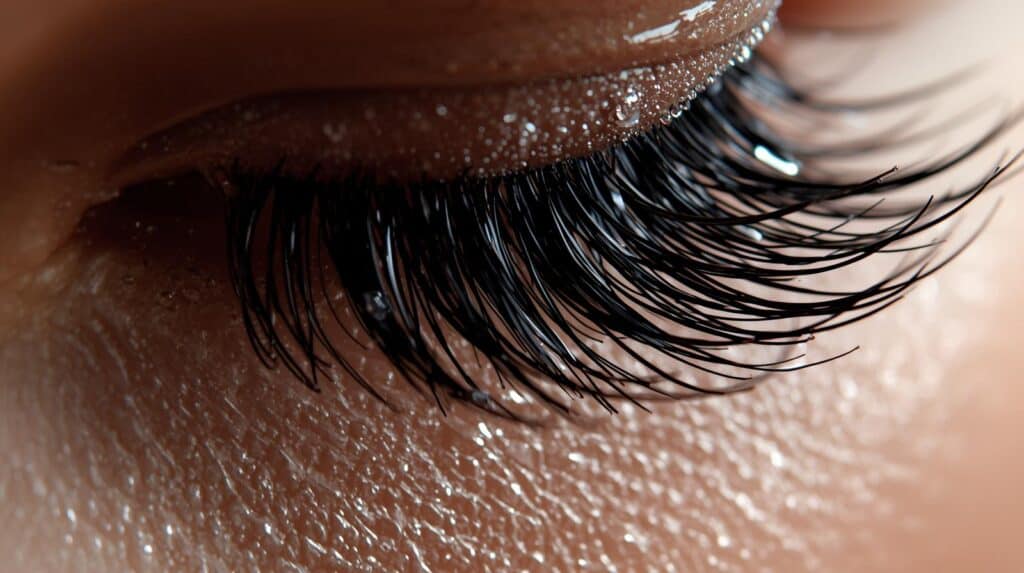
If your technician gives you a waiting period, plan swimming, strenuous workouts, and steamy showers around it. You can still wash the rest of your face carefully.
Some professional bonding products change the waiting time. London Lash discusses this distinction in its aftercare guidance.
Follow instructions for your exact lash service, including the recommended cleanser and when to start using it.
If you accidentally splash a fresh set, do not panic or rub it dry. Let the lashes air-dry and contact your technician if you are unsure what to do next.
Crying or sweating does not mean you have ruined your extensions. Avoid wiping repeatedly across the lashes, which can pull on the extensions and your natural lashes.
Once cleansing is permitted, gently remove sweat or tear residue with your recommended routine. Do not let concern about retention stop you from addressing eye discomfort.
Eye pain, marked redness, swelling, discharge, or changes in vision need medical advice. Pain or vision changes warrant prompt assessment. The American Academy of Ophthalmology’s EyeWiki describes irritation and other complications associated with extensions.
1. Daily Cleaning
Use a cleanser intended for the eye area and compatible with your extensions. Many technicians recommend an oil-free lash shampoo, but compatibility depends on the lash system.
Do not assume that all oils dissolve every lash adhesive. Some systems permit oil-containing aftercare products, so follow the instructions for yours.
Avoid experimenting with household soaps or products that sting your eyes. A product being labelled oil-free does not by itself make it suitable for the lash line.
Wash your hands, close your eyes, and apply the recommended cleanser using a clean, soft lash-cleansing brush or the method shown by your technician.
Gently clean along the lash line without scrubbing or pulling, then rinse away the cleanser with clean, lukewarm water.
Clean your lashes daily once your aftercare instructions allow it, and remove makeup before bed. Follow any different schedule given by an eye-care professional.
Let the lashes air-dry. Once dry, use a clean spoolie to gently separate and tidy them, without forcing the brush through a snag.
Keep your cleansing brush and spoolie clean, and do not share them. If cleansing repeatedly causes stinging or soreness, stop using the product and seek advice.
2. Showering/Bathing
Showering or bathing is usually the most frequent way your extensions will get wet.
After the required waiting period, a normal shower is generally compatible with lash extensions. You do not need to keep avoiding water indefinitely.
Keep the water comfortably warm and avoid prolonged, intense steam, particularly during the initial aftercare period.
Turn your face away from a strong shower jet. Rinse the eye area gently rather than letting water blast directly onto your lashes.
Try to keep shampoo and conditioner out of your eyes. If they reach the lash area, rinse them off instead of leaving residue behind.
Wet lash fans can temporarily look clumped together. This alone does not mean the set has been damaged.
Allow your extensions to dry before gently brushing them back into place with a clean spoolie.
Blot the surrounding skin carefully with a clean towel, keeping towel fibres away from the extensions so they do not snag.
Do not use a hot hairdryer on your lashes or pull apart wet fans with your fingers.
If an extension remains twisted, pulls on a natural lash, or feels uncomfortable, let your technician check it rather than trying to reposition the glue bond.
3. Swimming
Pool water can leave residue on your lashes as well as affect other parts of your beauty routine. If your blonde hair has turned green in a pool, that is a separate hair-care issue rather than a guide to what happens to lash glue.
Wait until your technician says your set is ready before swimming. The appropriate timing depends on the adhesive system.
Repeated pool exposure may affect retention, but it is too simple to say that chlorine always dissolves lash adhesive.
Long periods in the water, rubbing your eyes, and leaving pool residue on the lashes can all complicate aftercare.
An occasional swim does not automatically ruin a set. However, no one can promise that a particular session will have no effect on retention.
After swimming, rinse gently with fresh water and cleanse as directed. London Lash recommends a fresh-water rinse after a swim.
If you swim frequently, tell your technician before your appointment so you can discuss a suitable routine and realistic maintenance.
Well-fitting swimming goggles can reduce exposure, provided the lenses have enough room for your extensions and do not press them against your eyelids.
The ocean calls for similar rinsing and gentle handling, with the added consideration of salt residue.
4. Salt Water
Salt water and chlorinated pool water are different exposures, so avoid assuming they affect every adhesive in exactly the same way.
Once your initial waiting period is over, ocean swimming may be possible with your set. Check the guidance for your lash system before a beach trip.
Salt residue can remain as seawater dries. Rubbing gritty or sticky lashes can tug on them, so rinse instead of wiping.
Keep your hands away from your eyes, especially when they are sandy or covered in sunscreen.
Rinse your lashes gently with fresh water after leaving the sea, then follow your normal cleansing routine when practical.
Let them dry before brushing. Whether you are at the beach or in the bathroom, gentle handling matters.
5. Water Pressure
A direct jet of water is different from a gentle rinse. You do not need strong pressure to clean the lash line.
In the shower, face away from the spray while washing your body and hair.
Use a gentle flow or carefully cupped water when rinsing your closed eyes.
Avoid aiming handheld showerheads, massage jets, or other forceful streams at the extensions.
Rubbing afterwards can be just as unhelpful as a forceful rinse. Resist the urge to scrub lashes dry with a towel.
If lashes are tangled, let them dry and gently tidy them with a spoolie. Stop if the brush catches or pulls.
Do not pick at the adhesive or try to remove a loose-looking extension yourself.
When choosing swimming goggles, check that you can blink comfortably without your lashes touching the lenses.
Remove goggles gently and avoid dragging them across the lash line. They can help limit exposure, but they do not guarantee perfect retention.
6. Saunas
Saunas and steam rooms create more intense conditions than an ordinary shower, so check your aftercare instructions before using them.
A dry sauna mainly exposes you to heat; a steam room adds high humidity. Both can make you sweat.
Avoid these activities during any initial restriction given by your technician.

After that period, the advice depends on the adhesive and extension materials used. Do not assume every set tolerates prolonged heat equally.
If sweat runs toward your eyes, gently blot your forehead rather than wiping across your lashes.
Keep your face away from steam outlets and avoid directing a facial steamer at the eye area.
If sauna sessions are a regular habit, mention this when discussing your lash service so the aftercare plan fits your routine.
There is no universal number of sauna sessions that a set can withstand. Watch for discomfort or changes in retention and speak to your technician if either occurs.
Do You Need A Lash Sealant?
A lash sealant is optional, not a requirement for every set. Ask whether your adhesive system calls for one before adding another product.
Some sealants are marketed as protective coatings, but they should not be treated as a guarantee against water, sweat, steam, or rubbing.
A retail aftercare coating is not necessarily the same as a professional bonder used at the end of an appointment.
Use only a compatible product as directed. Do not apply professional adhesive or bonding treatments to your own lash line.
A sealant cannot repair poor application or replace regular cleansing. If extensions are falling out unusually quickly, have your technician assess the set.
Final Thoughts
Yes, lash extensions can get wet. Start with the waiting time specified for your adhesive system rather than assuming every set needs 24–48 hours.
Once washing is allowed, gently cleanse your lash line every day with a compatible product.
Normal showers and baths can be part of that routine. Avoid rubbing and strong water jets.
Let wet lashes dry before gently brushing them with a clean spoolie.
After swimming, rinse away pool water or salt water rather than leaving residue behind.
If you exercise regularly, plan your first workout around any initial aftercare restriction and cleanse away sweat as directed.
Keep towels, fingers, and goggles from tugging at the extensions.
Some shedding will still happen as natural lashes cycle. Sudden gaps or uncomfortable attachments are reasons to check in with your technician.
Persistent irritation needs attention, and eye pain or vision changes should be assessed promptly by an eye-care professional.
The goal is a clean, comfortable lash line and gentle handling, with aftercare tailored to the products actually used on your lashes.
Related Articles
Can You Get Lash Extensions While Pregnant?
Waxing Temperature For The Best Results
When Can You Shower After Waxing?