
How To Cover Eyebrows Without Glue
In drag, cosplay, and creative makeup, learning how to disguise or reshape the eyebrows can completely change the proportions of an eye look.
Eyebrow covering can take some practice because the goal is not only to hide the brow color but also to minimise the texture and height of the hairs.
Everyone’s eyebrows are different, so fine, sparse brows may be easier to disguise than thick or coarse brows.
A common technique is to smooth the hairs down with a washable glue stick before adding complexion products. If you use this method, choose a product intended to be non-toxic, keep it out of the eyes, and stop if your skin becomes irritated.
Once the adhesive is fully dry, color corrector, concealer, foundation, and powder can be layered as needed to reduce visible brow color and texture.
However, not everyone wants to use an adhesive on the brows, and a full glue-block technique is not necessary for every makeup look.
So, can you cover your eyebrows without using glue?
Yes. You can make eyebrows look much less noticeable without glue by using opaque complexion products or a light-toned brow product. Bleaching can also reduce contrast, but it is a chemical service rather than a temporary covering method and requires much more caution around the eyes.
Glue usually gives the flattest finish for very full brows, but adhesive-free methods can still work well when you only need the brows to look lighter or less defined.
The Best Ways To Cover Your Brows
For the smoothest “browless” effect, many makeup artists use an adhesive technique because it helps flatten the hairs before coverage.
A washable glue stick can hold brow hairs close to the skin, which makes the surface easier to cover with makeup.
Once the hairs are flattened and set, color correction, concealer, foundation, and powder can create a smoother canvas for drawing a different brow shape.
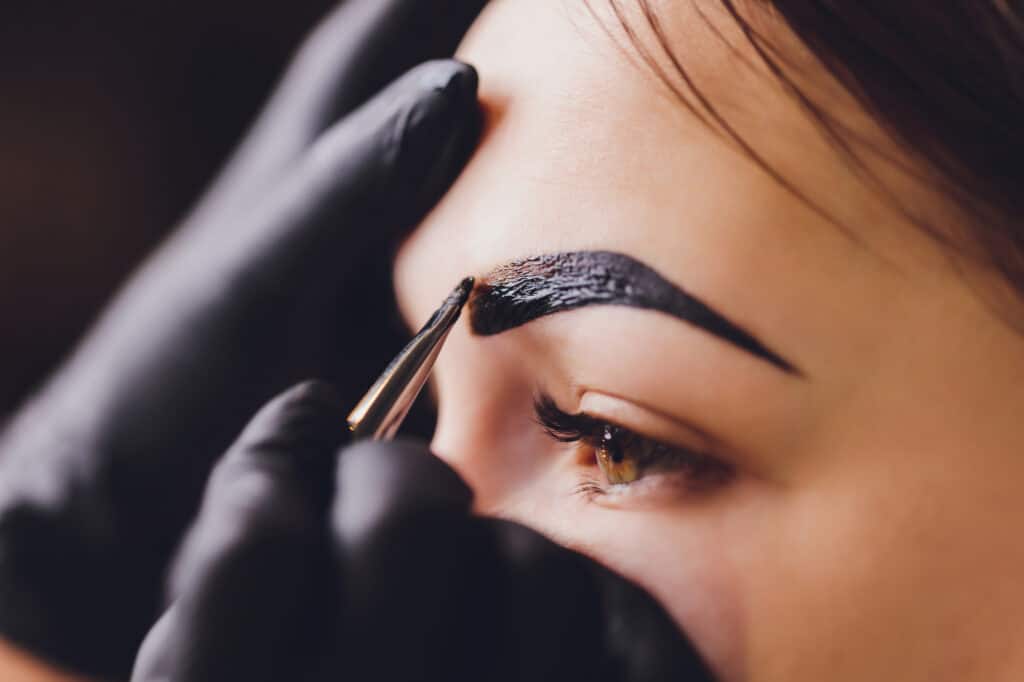
The glue-stick method can take practice, and it may be more effort than you need for a quick costume or everyday creative look.
Thick or coarse brows may need several very thin layers to lie flat, while fine brows can often be disguised with less product.
If you want to stay completely adhesive-free, concealer, foundation, powder, and light-colored brow products are the most practical options. Bleaching changes the hair itself, so treat it as a separate chemical service rather than a simple makeup alternative.
How To Cover Your Brows Without Glue
Concealer and color correction can reduce the contrast of the brow without glue. Bleaching can make brow hairs lighter for longer, but it does not flatten them and should only be done with a product specifically intended for eyebrow or facial-hair lightening.
Without glue or another adhesive to press the hairs flat, some brow texture will remain visible, especially under side lighting or close-up photography.
The goal is therefore not always to make every hair disappear. For many looks, simply reducing the color contrast and definition is enough.
Here are the most useful options:
Concealer
If you want to try covering your brows with concealer, you will find that the brow will blend in effortlessly into the skin in the surrounding area.
This is a quick, fully temporary method that is easy to remove at the end of the day.
Remove the brow makeup gently along with the rest of your face makeup rather than rubbing aggressively through the hairs.
Using concealer can also help you preview how a lighter brow would change your makeup before committing to any chemical lightening.
If you want the brows to look more discreet without adhesive, concealer is usually the simplest place to start.
You can also use a light, opaque brow gel, cream color, or pencil to mute the natural brow shade.
Bleaching Your Eyebrows
Bleaching the brows creates a very different effect from covering them with makeup. It lightens the hair itself rather than hiding or flattening it.
Lightening the brow can reduce contrast against the skin, which makes the hairs less obvious from a distance. The hairs will still have their normal texture and may remain visible up close.
A very pale or bleached brow can create a dramatic editorial look, but the result depends on your natural hair color and the product used.
The lightened portion of the brow will remain that color until it grows out, is tinted again, or sheds naturally.
Because brow hairs continue their normal growth cycle, darker new growth may gradually become visible at the roots.
Avoid repeated overlapping applications on already-lightened hairs because chemical overprocessing can make brow hair dry, brittle, or more prone to breakage.
A light-colored brow gel can help blend new growth while you wait before another professional lightening service.
Here’s a tutorial for the visual effect of bleached eyebrows from Celine Bernaerts on YouTube. If you try chemical lightening, follow the instructions for a product specifically labelled for eyebrow or facial-hair use and keep it out of the eyes.
Pros-Aide
If you do not mind using an adhesive but simply want an alternative to a glue stick, professional makeup adhesives are another option.
In that case, another popular method is to use a professional adhesive, such as Pros-Aide, to lay the brows flat, making it easy to cover with concealer and powder.
The Pros-Aide method works on a similar principle to a glue block: the adhesive helps flatten the hairs so complexion products can sit more smoothly over them.
A stronger cosmetic adhesive may be useful for thick or coarse brows, but stronger hold also means removal needs to be careful.
Start with clean, dry brows and follow the adhesive manufacturer’s directions. Keep professional adhesives away from the eyes and stop if you feel burning or significant irritation.
Use thin layers rather than one heavy coat, let each layer become appropriately tacky or dry according to the product instructions, then add color corrector, concealer, and powder.
Because professional adhesives can bond strongly to skin and hair, use the recommended remover and dissolve the adhesive gently instead of pulling it from the brows.
This technique can create a very smooth result, but it takes practice and usually adds more time than a simple concealer-only method.
Here’s a visual tutorial for using Pros-Aide from Goldiestarling on YouTube. Follow the adhesive and remover instructions for the specific product you use.
Glueless Methods
To cover the brows with concealer, it is essential to have a clean, disposable spoolie to comb through the brows to have the hair lying flat as well as thoroughly covered.
Brush the spoolie through the brow hairs in the direction that makes them lie as flat as possible.
You can then use the spoolie to work a small amount of concealer or cream product through the brow, making sure the visible hairs are coated rather than clumped together.
Work the product through from different angles if needed, but avoid repeatedly scrubbing the skin underneath.
Blend excess product around the brow so the transition into the surrounding complexion looks seamless.
You can lightly set the brows with a lightened brow gel to keep them in place, or a light dusting of translucent powder.
Once the brows are muted and set, continue with your eye or complexion makeup. Expect some natural texture to remain if you have skipped adhesive.
Bleaching the brows requires more caution because the treatment takes place close to the eyes and can irritate both the hair and surrounding skin.
Do not use regular scalp-hair bleach or improvise with products that are not labelled for eyebrow or facial-hair use.
At-home brow-lightening products do exist, but you should follow the package directions exactly and avoid using them on irritated, broken, or recently sensitized skin.
A professional brow artist or licensed beauty professional can help choose an appropriate product and monitor the development more carefully, although no chemical service is completely risk-free.
Do not repeatedly reapply bleach simply to chase a lighter shade. Follow the processing time and repeat-use interval given by the product manufacturer.
Dark brows can pass through warm yellow or orange stages as they lighten, so the final shade may not become neutral or “invisible.”
Conclusion
Using an adhesive is still the most reliable way to flatten thick brow hairs before covering them, but it is not the only way to make brows less noticeable.
Adhesive-free makeup can reduce brow contrast, while chemical lightening offers a longer-lasting change in color rather than true coverage.
If you are unsure about glue, start with the temporary makeup methods first so you can see how much coverage you actually need.
Working concealer or cream pigment through the brows can mute their color, but the natural hair texture will still be visible.
That makes it a practical option for beginners, photoshoots, costumes, or looks where a perfectly flat brow is not essential.
The products can be removed with your usual makeup remover, provided you cleanse gently around the hairs and eyes.
For a stronger illusion, combine color correction, concealer, foundation, and powder in thin layers rather than relying on one very thick coat.
Bleaching is different because it changes the brow hair for weeks rather than for one makeup application.
It may suit someone who regularly enjoys a light-brow editorial or cosplay look, but it is not necessary simply to cover brows for one event.
The lightened hair remains until it grows out, sheds, or is recolored, so consider that commitment before bleaching.
If you choose to lighten your brows, use a product specifically intended for the area and follow its safety instructions. Professional application can reduce guesswork, but you should still report any stinging, burning, swelling, or eye exposure immediately.
You can also use a professional cosmetic adhesive instead of a glue stick if you still want the brows physically flattened.
This is most useful when you need a very smooth base for redrawing the brow in a completely different position or shape.
If you choose a professional adhesive such as Pros-Aide, make sure the exact product is suitable for skin use in the area, keep it away from the eyes, and use the proper remover.
The technique is similar to a glue-block method, so practice on a low-stakes makeup day before using it for an event.
No matter which option you choose, covering or softening the brows can dramatically change a drag, cosplay, editorial, or everyday makeup look.
The best method is simply the one that gives you the level of coverage you want without unnecessary irritation or damage.
Related Articles
Best Eyeshadow Palettes for Cosplay