
Can You Get Microblading For Alopecia (A Complete Guide)
Hair loss can be especially noticeable when it affects the eyebrows or eyelashes, and it can change how familiar your face looks to you.
Eyebrows help define the eye area and can play a noticeable role in facial expression and symmetry.
When brow hairs are lost because of a condition such as alopecia areata, regrowth can be unpredictable. Some people regrow eyebrow hair spontaneously or with treatment, while others have persistent or recurrent loss.
Alopecia is an umbrella term for hair loss, not one single diagnosis. In alopecia areata, the follicles are usually not destroyed, so regrowth is possible even after significant loss, although the course can be unpredictable.
Alopecia areata is an autoimmune disease in which the immune system attacks hair follicles. Genetics can influence susceptibility, while stress may precede or accompany flares in some people but is not considered the sole cause.
Although hair loss can affect any area of the body where hair is present, advancements in beauty treatments can help alleviate the concern and assist in regaining the appearance of hair, depending on the affected area.
A common area where hair loss can be seen is the eyelashes and eyebrows, and the beauty space has been exploding with brow treatments for the past several years.
One cosmetic option for creating the appearance of eyebrow hair is microblading.
The procedure uses pigment strokes to create the appearance of fuller or more defined brows. Results fade over time, but residual pigment may remain longer than expected.
However, can microblading be done if you are experiencing brow loss due to alopecia?
Microblading may be an option for some people with alopecia-related eyebrow loss, including partial or complete brow loss. Suitability depends on the exact diagnosis, whether the skin is healthy and stable, current medications or immune-suppressing treatments, scarring tendency, and the practitioner’s experience with alopecia.
Below, we’ll cover what microblading can and cannot do for alopecia-related brow loss, what to ask before treatment, realistic risks, and aftercare considerations.
What Is Microblading?
Microblading is a form of cosmetic tattooing that uses fine pigment strokes to create the appearance of fuller or more defined eyebrows.
The process uses a small handheld tool with fine needles or blades to make controlled superficial openings in the skin and deposit pigment in hair-like strokes.
Microblading can be used to add extra hair strokes to sparse areas, to enhance or define the shape, or to create an entire brow overall.
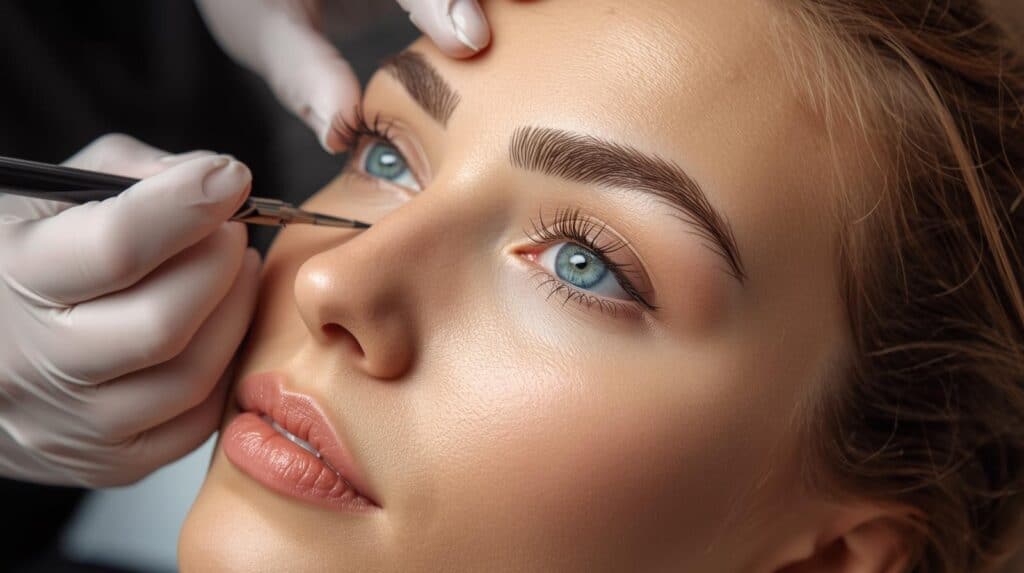
Microblading is a type of tattooing, but it differs from many conventional machine tattoos in tool, technique, depth, pigment formulation, and intended appearance.
Microblading is often described as semi-permanent because the strokes usually fade, but the timeline varies widely and some pigment can remain visible for years. Touch-up needs also vary by skin, pigment, technique, sun exposure, and skincare.
Microblading pigments are formulated for cosmetic tattooing, but they can still fade unevenly or shift tone over time. Color change is possible with any implanted pigment.
Along with a different type of pigment, the needling tool used for microblading is also different than a tattoo needle.
The microblading tool is smaller and allows for more precise control when working in the specific area of the eyebrows.
While a tattooing needle can create fine lines, the microblading tool is for the specific purpose of adding the appearance of hairlike strokes to create an eyebrow.
Appointment length and the number of sessions vary by practitioner, the amount of brow reconstruction needed, and how the pigment heals. Many artists schedule a follow-up after initial healing, but a second session is not identical for every client.
Microblading is a beauty treatment that can be customized to suit your unique face and brow shape, meeting your specific needs.
Can You Get Microblading With Alopecia?
Microblading can be performed across many skin tones and may be considered for brow loss related to alopecia areata or other causes, but the skin and medical situation need to be appropriate for cosmetic tattooing.
Microblading should not be described as automatically safer than other permanent-makeup techniques. It still breaks the skin and carries risks such as infection, allergic reaction, scarring, granulomas, pigment changes, and difficult removal.
Its main visual advantage is the ability to place fine hair-like strokes in selected areas of the brow.
Microblading can address various types of brow loss associated with alopecia.
That can include small gaps, partial brow loss, or complete brow loss. The final look depends heavily on mapping, pigment choice, skin behavior, and the artist’s technique.
If you’d like to hear some first-hand advice on getting microblading for alopecia, here’s a helpful video from Alopecia Queen, Samantha Katz, on YouTube.
What Is Alopecia?
Alopecia means hair loss and has many possible causes. Alopecia areata is the autoimmune form in which the immune system attacks hair follicles.
Alopecia areata commonly affects the scalp, but it can also involve the eyebrows, eyelashes, beard, and other hair-bearing areas.
Alopecia areata often causes round or patchy areas of hair loss, although more extensive forms can affect most of the scalp or body.
There is no single guaranteed cure for alopecia areata, but regrowth is possible. The American Academy of Dermatology notes that many people with limited patches regrow hair spontaneously, while more extensive disease can be harder to treat.
Medical treatments can help some people regrow hair, including eyebrow hair, while cosmetic options such as brow makeup, temporary brow products, prosthetic brows, or microblading can camouflage loss.
Side Effects Of Microblading With Alopecia
Microblading has the same core tattoo-related risks whether or not someone has alopecia,
but individual risk may change if the person has active skin inflammation, immune-suppressing treatment, poor wound healing, a history of keloids, or another medical factor.
Expected short-term effects can include redness, tenderness, mild swelling, flaking, and temporary color changes. More serious complications include infection, allergic reaction, scarring, and persistent pigment problems.
During the recovery time, the microblading begins to flake and scab as the skin is healing.
This can cause the color and appearance of the brows to change throughout the recovery. This is called the ghosting phase.
Surface healing occurs sooner than full color settling. Many artists wait several weeks before judging the healed result or scheduling a touch-up, but there is no universal four-to-six-week schedule for every client.
There is not good evidence that alopecia areata by itself always makes microblading heal more slowly. Healing depends more on skin health, procedure depth, aftercare, medications, and individual wound healing.
It is best to discuss with your microblading specialist when to book your next session to ensure you have an adequate amount of time to recover properly.
Having alopecia areata does not automatically mean someone is immunocompromised or unusually prone to infection. However, some treatments for autoimmune disease can affect immune function, so discuss current medications with the clinician managing your alopecia and the microblading practitioner.
Microblading does create small breaks in the skin, which is why sterile technique and careful aftercare are important for everyone.
Microblading longevity is variable. There is not a reliable rule that alopecia itself causes pigment to fade faster than it does in people without alopecia.
Differences Between Microblading With Or Without Alopecia
The biggest differences relate to how much brow hair is present, whether the hair loss is active, and whether the person is using treatments that affect skin healing or immunity.
Pigment fading varies by skin type, pigment, technique, sun exposure, skincare, and aftercare rather than by a simple alopecia-versus-no-alopecia rule.
Microblading commonly fades over time, but visible pigment may persist from months to several years. Touch-up frequency should be based on the healed result rather than a fixed calendar.
Some clients may want earlier touch-ups for cosmetic reasons, but alopecia alone does not prove they will need them sooner.
Do not choose an intentionally darker pigment simply to make the result last longer. Pigment should be selected conservatively for your skin tone, brow goal, and expected healed color.
Hair-like strokes can soften or blur over time as pigment fades and disperses, which is one reason conservative placement and color choice matter.
Repeated touch-ups are not always better. Adding pigment too frequently can lead to oversaturation, so the artist should evaluate healed skin before recommending another session.
Process Of Microblading With Alopecia
Research the microblading practitioner, licensing requirements, infection-control practices, pigments, healed portfolio, and aftercare protocol before booking.
However, if you are looking to have the treatment done for alopecia-related hair loss, it is crucial to know and feel confident in your technician.
Because alopecia-related brow loss can range from small gaps to complete absence of hair, experience reconstructing brows with little or no natural hair is especially valuable.
A good practitioner should also be willing to postpone treatment if the skin is inflamed, infected, recently traumatized, or medically unsuitable for tattooing.
After meeting with your microblading specialist,
You will collaborate on a brow shape that works with your features, preferences, and any existing brow hairs.
When it comes time to start the procedure, a numbing cream is applied to the sections that will be worked on, and the brow shape will be mapped out.
A small, handheld needling tool is used to create small incisions on the skin that will deliver the brow-colored pigment.
During the collaboration discussion, discuss the goals you have for your eyebrows.
It could be helpful to show your specialist photos of your eyebrows before the loss.
It can give an idea of what style and shape you are familiar with and how your brows naturally appear.
Reference photos can also help communicate your preferences, but the final shape should be agreed on before pigment is implanted.
A topical anaesthetic may be used when permitted and appropriate to reduce discomfort, but it cannot guarantee a pain-free procedure.
Even with numbing, some people feel pressure, scratching, stinging, or tenderness during the session.
If you experience severe pain, burning, dizziness, or another concerning symptom, tell the practitioner immediately and stop the procedure if needed rather than simply adding more numbing product.
Appointment length varies, and the pigment appearance continues to settle over the following weeks.
Depending on how the pigment takes to the skin and brow area, the number of touch-up appointments needed or recommended will be determined.
How To Prepare For Microblading With Alopecia And Aftercare
Following the practitioner’s evidence-based preparation instructions can reduce avoidable irritation and help the appointment go more smoothly, but no preparation can guarantee a pain-free procedure.
Appropriate aftercare helps reduce complications, but healing still varies from person to person.
Do not stop aspirin, ibuprofen, fish oil, prescription blood thinners, or other medications on your own. Tell the practitioner what you take and ask the clinician who prescribed or recommended it before making any changes.
Some medicines and supplements can affect bleeding, but the medical reason you take them is more important than cosmetic-procedure convenience.
If you use medication for alopecia or another immune condition, discuss microblading with the clinician managing your treatment, especially if the medication affects immunity or wound healing.
Your practitioner may ask you to avoid alcohol before the appointment because it can affect bleeding, judgment, and skin sensitivity. Follow the provider’s written preparation policy.
Your practitioner may also give guidance about caffeine, although this is not a substitute for medication advice from a clinician.
Do not microblade over sunburned, irritated, infected, or otherwise compromised skin. Avoiding unnecessary sun exposure before the appointment helps keep the brow area in a stable condition for assessment.
Strong exfoliants, peels, waxing, or retinoids can increase irritation around the brow area. Follow the practitioner’s timing instructions and ask your prescriber before stopping a prescription retinoid.
Extra sun exposure should be avoided during the recovery period as well.
Everyone should monitor healing. Alopecia areata alone does not automatically make you infection-prone, although immune-suppressing treatment or other medical conditions may change your risk.
Aftercare protocols differ, so follow the written instructions from your practitioner about cleansing, water exposure, sweating, and exercise rather than relying on a universal 48-hour no-water rule.
During healing, avoid applying unapproved skincare, makeup, exfoliating acids, retinoids, or fragranced products directly over the treated area unless your practitioner advises otherwise.
Fresh microblading should not be covered with arbitrary oils or occlusives. Use only the aftercare product and amount recommended for your specific procedure.
After the numbing cream from the appointment starts to wear off, you may begin to experience some soreness or tenderness throughout the brow area.
Your practitioner may provide or recommend an aftercare balm, cleanser, or dry-healing protocol depending on the technique used.
Follow those specific directions rather than applying a thick layer of ointment by default, because too much occlusion can interfere with healing in some protocols.
During the recovery process, you will see your brows begin to scab or flake, as well as adjust in color.
It is essential to let the brows scab off and flake naturally, so as not to disrupt the healing process.
There is no consistent evidence that alopecia areata alone extends the healing period. If you use immune-modifying medication or have another condition that affects healing, ask your clinician what to expect.
Any subsequent follow-up appointments will be scheduled according to your needs.
However, the same pre- and post-treatment recommendations will remain the same.
Conclusion
If you are experiencing brow loss related to alopecia,
cosmetic options such as brow makeup, prosthetic brows, and microblading can recreate the appearance of eyebrow hair while medical treatment addresses the underlying condition when appropriate.
Microblading can work for some people with sparse or absent brows, but it is not suitable for every skin type, medical situation, or stage of active disease.
In a way that is customized and suitable for each unique face and eye shape.
Microblading usually fades more than a conventional tattoo, but it is still implanted pigment and should be approached as a cosmetic tattoo rather than a completely temporary treatment.
The microblading hand tool is designed to create fine, hair-like strokes, while other permanent-makeup techniques can create different effects such as shading or machine-drawn hairstrokes.
And the pigment that is used during the appointment is meant to mimic natural hair colors.
Microblading pigments are selected to resemble brow hair and skin undertones, but implanted pigment can still fade unevenly or shift color over time.
Fading is expected, but it is not always perfectly even or complete.
Especially for those with alopecia, doing extensive research on the salon and microblading specialist will allow you to feel even more confident in your choice and in the procedure overall.
The hair loss from alopecia can range from sparse gap areas to losing hair in only one brow to losing both brows completely.
Working with a trained, legally permitted specialist experienced with reconstructive brow work can improve the chances of a result that matches your goals, but no practitioner can guarantee a specific cosmetic outcome.
Microblading can be uncomfortable even with topical numbing, and pain tolerance varies.
A qualified practitioner should explain the limits, risks, healed appearance, touch-up policy, and removal challenges so you can decide whether microblading is the right cosmetic option for you.
When To Pause Before Microblading
- Active brow inflammation or infection: Do not microblade over broken, infected, sunburned, or significantly irritated skin.
- Rapidly changing hair loss: If your eyebrow loss is new, unexplained, or progressing quickly, see a dermatologist first so the cause and treatment options are clear before adding cosmetic tattooing.
- Immune-suppressing medication: Some alopecia treatments can affect infection risk or healing. Ask the clinician managing your treatment whether microblading is appropriate for you.
- History of keloids or problematic scars: Cosmetic tattooing intentionally injures the skin, so discuss this history with a dermatologist and the practitioner before proceeding.
- Previous pigment or tattoo allergy: Tell the practitioner about any prior reaction to tattoo ink, permanent makeup, hair dye, adhesives, or topical anaesthetics.
Microblading With Alopecia FAQs
Can Eyebrows Grow Back After Alopecia Areata?
Yes, regrowth is possible because alopecia areata usually does not destroy the hair follicle. Some people regrow hair spontaneously, while others need treatment or experience repeated episodes of loss.
Does Microblading Treat Alopecia?
No. Microblading only changes the appearance of the brows. It does not stop the autoimmune process or make eyebrow follicles regrow hair.
Is Microblading Safe If You Have Alopecia Areata?
It may be appropriate for some people, but safety depends on skin condition, medications, immune status, scarring history, and practitioner hygiene. Alopecia areata itself does not automatically make someone immunocompromised.
Will Microblading Fade Faster If You Have Alopecia?
There is no reliable evidence that alopecia alone makes microblading pigment fade faster. Skin type, pigment, technique, sun exposure, skincare, and aftercare are more established influences on how the result ages.
Can You Microblade Completely Hairless Brows?
Yes, an experienced artist can map and create a full brow where little or no hair remains. This is a more reconstructive service, so healed examples on clients with significant brow loss are especially useful when choosing a practitioner.
Related Articles
What Is The Microblading Ghosting Phase? – And What To Expect
Eyebrow Tinting Vs Microblading (Which Is Right For You?)
White Peony For Hair Loss And Growth – Does It Work?