
Can You Mix Developers?
The process of coloring your hair involves a range of products, tools, time, and patience, especially when done at home.
There are many pre-made kits for hair dye available for at-home use.
Having a full understanding of what each product does in the color treatment process will help you feel more prepared and skilled to apply your color treatment like a pro.
Hair developer is a product often mentioned alongside hair dye, as it is a crucial step that allows the dye or bleach to penetrate the hair shaft completely.
In most hair-dyeing, whether at home or in a salon, a developer is used.
This will allow the dye to achieve the desired color and create a long-lasting effect that withstands multiple hair washes.
Can you mix developers when coloring your hair?
Generally, yes, you can mix developers, but do so cautiously. There may be circumstances that require a developer volume that falls between two levels, so mixing the developers in the correct ratio will help achieve your hair color goals.
Below, we’ll discuss what hair dye developers are, whether it is safe to mix them, and how to do so properly.
What Is a Developer?
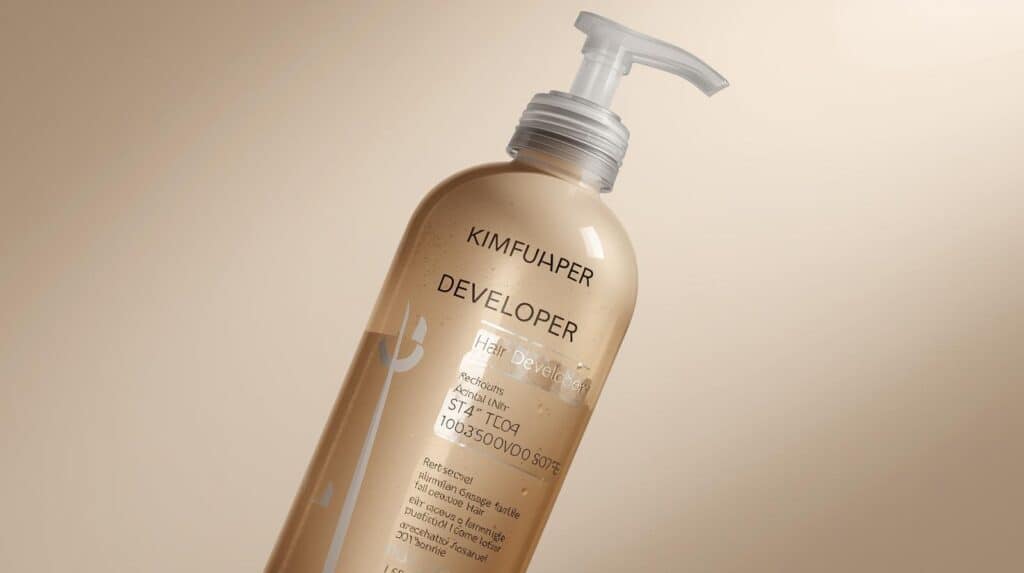
Hair developer is a product that is mixed with hair bleach or dye to activate the color before it is applied to the hair.
The developer is also often referred to as activator or peroxide, as it is formulated with hydrogen peroxide to stimulate the hair shaft and facilitate dye application.
The developer is mixed with the hair dye or bleach to deliver the color treatment to the hair, allowing the product to fully absorb into each strand.
Developers are used to lighten or color hair and contain varying levels of hydrogen peroxide, which determine the volume, or level, of each developer.
Although hair dye can be used without developer to achieve permanent, long-lasting results, a developer is required for the color treatment.
Often, hair dyes that do not require developers are semi-permanent, while hair dyes with developers permanently alter the hair shaft to change its color.
Hair dye with developer will last longer than semi-permanent results and require less frequent touch-ups to maintain the color.
If you’re not sure which ones to choose, take a look at this video by Brittnee Alexus explaining developers on YouTube.
How Are Developers Categorized?
Developers are categorized by volume, which indicates the level at which they will lighten the existing hair color.
The most commonly used volumes range from 10 to 40, increasing in 10-unit increments.
Although some developers are older than 40, it is best to reserve them for professional use, as they can be challenging to work with.
A hair developer enables hair color or bleach to penetrate the hair’s layers, permanently changing the existing color to the desired one.
The change occurs when the developer opens the cuticle layer of the hair shaft, allowing the hair bleach or dye to penetrate deeply and take effect.
Lower-level developers, such as those at levels 10 and 20, do not open the cuticle as much as higher-level developers, like those at levels 30 or 40.
If you are looking to lighten your hair with bleach, you will need higher-volume developers to achieve the desired results.
If you are looking to add color to the hair without lifting the existing shade too much, lower levels are best for the best outcome.
The more hydrogen peroxide in the developer, the more the hair cuticle will open, and the lighter the hair will appear after being lifted.
Can You Mix Different Developers?
Overall, yes, you can mix hair developers together; however, it must be done carefully.
If the developer is overmixed, it can cause more damage to the hair than usual.
Over-mixed developers can dry out the hair, making it look and feel more brittle.
However, there will be instances where intermediate volumes are needed to achieve the desired hair results.
In that case, you can mix the required developers in equal proportions to achieve the intermediate volume.
What Are The Different Types of Developers?
As mentioned, there are many different volumes of developers that achieve varying results on the hair.
Level 10 is the lowest level developer, with each volume increasing slightly in strength.
The level of developers is determined by the amount of hydrogen peroxide they are formulated with, which in turn determines how much they will lighten or change the existing hair color.
Vol 10
A Level 10 developer is best suited for color treatments that do not require lifting and that maintain a close match to the existing hair tones.
It is also the volume recommended for use with toners to add a tint of color to the hair.
Vol 20
Level 20 is the most commonly used developer for coloring hair. It lifts the hair’s existing tones by one to two levels and is best used when subtly lightening the hair.
It is also recommended for developers to use it, as it helps create an even tone in the hair.
Vol 30
Level 30 is a commonly used volume for lightening the hair, as it will lift the existing color up to three levels.
This is an ideal developer for light to medium brown hair shades that want to start the process of lightening their hair.
Vol 40
A Level 40 developer is meant to lighten hair for bleaching. It can lift hair color up to four shades and can be used to lighten any brunette shade to a lighter blonde.
It works well for adding lighter highlights to the hair, too.
Higher-level developers should be used by a salon professional, as they can be damaging to the hair if not applied properly.
There is a Level 50 developer that can cause significant damage to the hair and is only recommended, if at all, for professional use.
Best Ways To Mix Developers
After understanding what developers are used for and which volume works best to achieve specific results, knowing how to mix different volumes is a crucial step in coloring your hair.
Most of the time, you do not need to combine the different volumes; however, there may be times when a different volume is necessary for optimal results.
The best way to mix different-volume developers is to split the ratio evenly between the two.
It is also important to know the volume you are aiming for when mixing the two developers, especially if you are looking for an in-between volume.
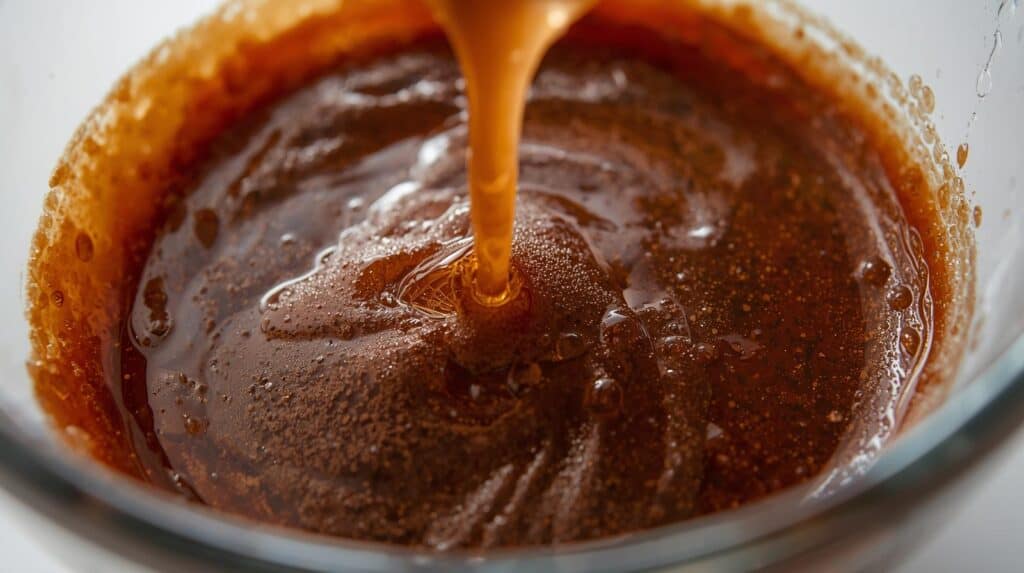
When mixing the two developers, take half of each volume and combine them in the correct ratio.
If you are looking to achieve an intermediate volume, such as a 25-level developer, then mixing half the volume of a Level 20 and half the volume of a Level 30 will yield the desired result.
You may need to create this in-between level if you are looking to lighten the hair more than what a Level 20 can offer; however, you do not need the intensity of a Level 30 developer.
You can also mix developers from different brands if needed; however, ensure they are labeled as developers only.
If they are developers mixed with another product or hair color, do not mix them with anything else.
Mixing two developers who are only activators together will avoid any potential negative reaction that can occur when combining two products that achieve different results.
There may also be instances where you need to dilute a higher-level developer to reduce its strength and not lighten the hair as much.
For example, if there is only a Level 40 volume developer available but you do not want your hair lifted to four levels, diluting the developer will help achieve the desired results.
To dilute a higher-level developer, such as a Level 40, mix a small amount with a cream conditioner or water to reduce its intensity.
Conclusion
Coloring your hair, especially at home, can be tricky, so it’s important to ensure you achieve the desired results.
However, understanding how hair dye is absorbed into the hair and which products will achieve the desired look can help make the process easier to carry out.
Developers are key to achieving the right results for your hair color and creating long-lasting results.
The different volumes of hair developer will react differently with your hair.
So it is crucial that you understand what each volume can achieve, how to apply the product, and, if needed, how to mix the developers together for your ultimate hair color results.
Related Articles
Can You Use Toner Without Developer?
How To Mix Developer And Bleach