
How To Use Tea Tree Oil In The Bath (+ Our Favorite Products)
Tea tree oil has a fresh, medicinal scent and is commonly used in skin, hair, cleansing, and aromatherapy products. Using it in a bath takes more care than simply adding a few drops to the water.
Essential oils are not water-soluble, so undiluted drops can float on the surface and come into concentrated contact with your skin.
Tea tree oil is promoted for concerns such as acne, athlete’s foot, and fungal nail infections, but the evidence varies by condition and comes from topical use rather than simply soaking in a diluted bath.
Its scent may make a bath feel more spa-like, but tea tree oil should not be presented as a proven treatment for stress or anxiety.
If you want tea tree oil in a bath, the safest practical choice is usually a ready-made bath product formulated with tea tree oil or a properly designed dispersing bath base.
Do not expect a few drops in bathwater to treat muscle tension, acne, fungal infections, or other skin conditions. A warm bath can feel relaxing on its own, while tea tree oil mainly adds scent and potential topical exposure.
How can you use tea tree oil in the bath?
Never drip undiluted tea tree oil directly into bathwater. Essential oils do not dissolve in water. For the simplest option, choose a pre-formulated tea tree bath product and follow its directions. If you make a DIY bath product, use a base or dispersant specifically designed to distribute essential oils in water. A carrier oil can dilute tea tree oil on the skin, but it will still float in the bath and can make the tub slippery.
Tea tree oil can add a distinct herbal scent to a bath, but its benefits should not be overstated.
Here is how to use it more safely, what not to use as a dispersant, and which tea tree bath products may be easier than DIY mixing.
What Is Tea Tree Oil?
Tea tree oil is an essential oil distilled from Melaleuca alternifolia leaves and is widely used in topical and aromatherapy products.
You will find it in products ranging from facial cleansers and shampoos to soaps, foot-care products, and household cleaners.
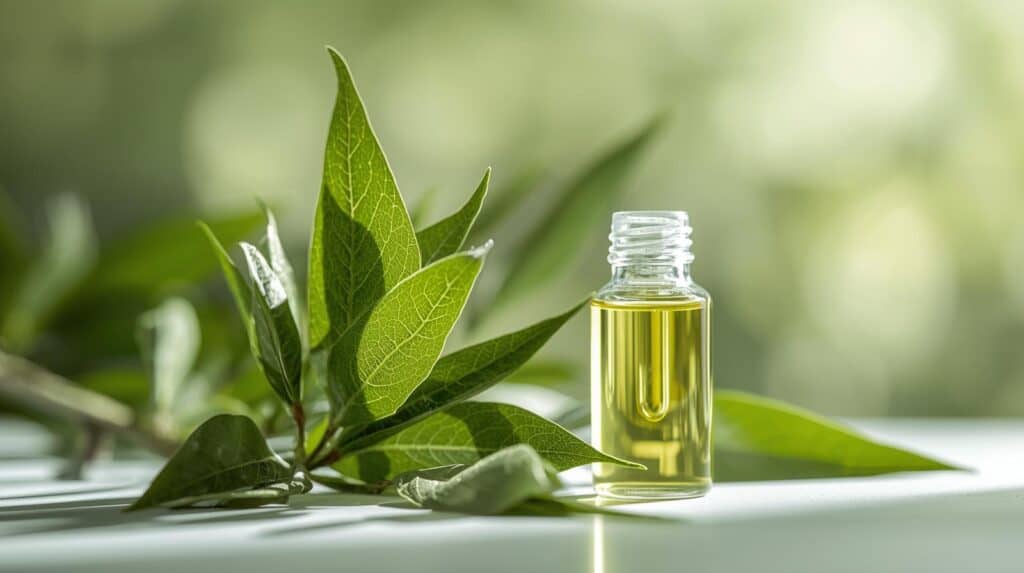
Tea tree oil, also called melaleuca oil, comes from steam-distilling the leaves of Melaleuca alternifolia, a plant native to Australia.
Laboratory research shows antimicrobial activity, but that does not mean a tea tree bath can reliably treat a bacterial or fungal skin condition.
Benefits Of Tea Tree Oil
Tea tree oil has several proposed topical uses, but the quality of human evidence is limited and condition-specific.
A tea tree bath should be treated as a fragranced bathing option, not as a proven treatment for sore muscles, anxiety, or acne.
If you enjoy the scent, it can still make an ordinary bath feel more like an at-home spa experience.
Tea tree oil has been studied for athlete’s foot and nail fungus, but evidence for nail fungus is too limited to draw firm conclusions, and a bath is not equivalent to a studied topical treatment.
What About Acne-Prone Skin?
A small amount of research suggests that topical tea tree oil may help acne, but the evidence is not strong enough to treat it as a first-line acne therapy.
Adding tea tree oil to a full bath has not been shown to treat body acne, and direct undiluted drops can irritate already-inflamed skin.
Some tea tree oil studies have reported improvements in acne lesions, but comparisons with benzoyl peroxide should not be generalized to every tea tree product or to bathwater use.
Tea tree oil can cause redness, irritation, or allergic contact dermatitis, especially when used undiluted or when the oil has oxidized with age, heat, light, or air exposure.
Anti-Fungal
Tea tree oil has shown some topical activity against athlete’s foot, although standard antifungal treatments may work better.
For fungal nail infections, evidence is insufficient to conclude that tea tree oil works, and simply soaking the feet in tea tree bathwater should not replace diagnosis or proven antifungal treatment.
Tea tree oil is often promoted for nail fungus, but current evidence is too limited to say that it reliably clears fungal nails or causes fewer side effects than standard medication.
Risks Of Tea Tree Oil
Tea tree oil is not suitable for every person, particularly if you have very reactive skin, active dermatitis, or a known essential-oil allergy.
Essential oils are highly concentrated, so safe use depends on both dilution and how the oil is distributed in the bathwater.
Too much tea tree oil, undiluted skin contact, or poorly dispersed droplets can cause burning, redness, itching, and irritation.
Some people can also develop allergic contact dermatitis. Stop using the product if you develop persistent itching, swelling, rash, or worsening irritation.
Allergic Reaction
Allergic sensitization is different from simple irritation and can occur even when a product has been tolerated before.
Incorrect dilution increases irritation risk, but a carrier oil is not the same thing as a water dispersant. It dilutes the essential oil on contact with skin yet still floats on bathwater.
Also keep tea tree oil away from the mouth and do not swallow it. Oral ingestion can cause serious neurologic symptoms.
How To Use Tea Tree Oil Safely
Essential-oil bath guidance should begin with one rule: do not drip undiluted tea tree oil directly into bathwater.
Tea tree oil does not dissolve in water, so droplets can remain concentrated on the surface and attach to the skin.
If you buy pure tea tree oil, look for Melaleuca alternifolia as the botanical name, clear storage directions, and intact packaging from a reputable seller.
Store the bottle away from heat and light because older or oxidized tea tree oil may be more irritating. Never apply it neat to the skin simply because the label says “pure.”
Less Is More
Less is more, but the safest amount depends on the final bath base and its formulation. A carrier oil such as jojoba or fractionated coconut oil can dilute tea tree oil, but the mixture will float rather than disperse through the water and can make the tub slippery.
Do not assume that Epsom salts, bath bombs, plain soap, milk, or baking soda automatically disperse essential oil. Use only a bath base that is designed to accept added essential oils, or choose a ready-made product already formulated with them.
Combining tea tree with another essential oil such as eucalyptus increases total essential-oil exposure, so adding more oils is not automatically better.
Conduct A Patch Test
Another way to use tea tree oil safely in the bath is by conducting a patch test.
A small skin test may reveal obvious irritation before a full-body bath, but it cannot guarantee that you will never develop an allergic reaction.
For a finished bath product, follow the manufacturer’s directions and stop if you develop burning, itching, swelling, or a rash.
Consult A Dermatologist
A dermatologist can help if you are considering tea tree oil specifically to manage acne, eczema, psoriasis, recurrent rashes, or another skin condition.
For a medical skin problem, a tea tree bath should not replace a proven treatment plan. Ask whether an essential-oil product is likely to irritate your particular condition.
How To Add Tea Tree Essential Oil To A Bath
How can you use tea tree oil in your bath?
The key distinction is between diluting the oil for skin contact and dispersing it throughout water. For the lowest-effort option, use a finished tea tree bath product according to its label.
If your goal is relaxation rather than a skin treatment, the warm bath itself may be doing most of the work.
Do not add tea tree oil indiscriminately to bubble baths, bath bombs, shower gels, or Epsom salts. Some formulated cleansing bases can disperse small amounts of essential oil, while salts and bath bombs alone do not.
The options below explain which DIY methods are reasonable and which common methods need a safety correction.
Use A Few Drops
Do not start by counting drops directly over the tub. First choose a proper bath base or dispersing method, then follow its usage directions.
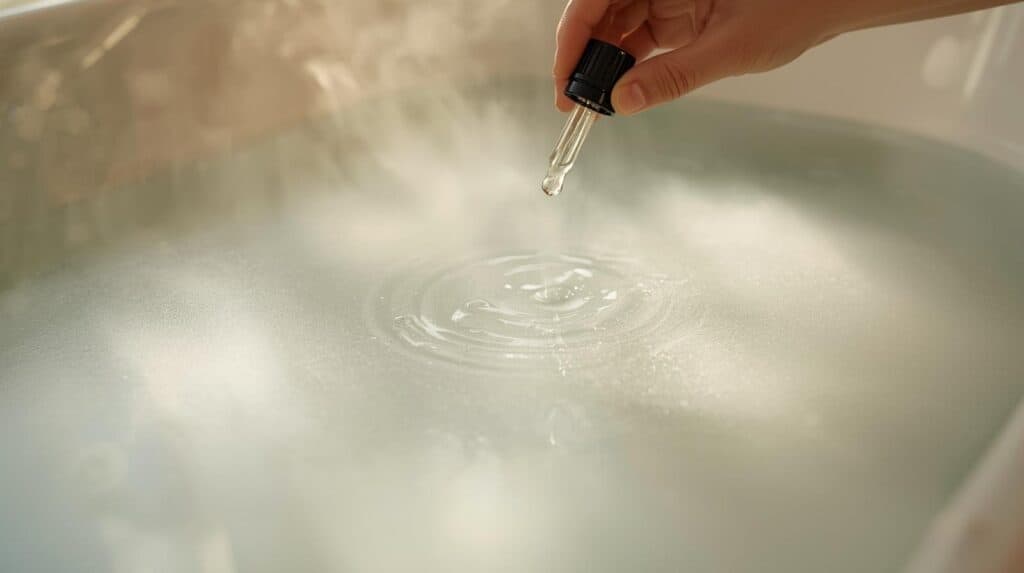
Bath dilution guidance varies with the oil and the base. The Tisserand Institute emphasizes that the essential oil must be properly diluted or dispersed before it reaches the bathwater, rather than relying on water itself to dilute it.
Avoid treating two to five drops as a universal safe dose. The final concentration depends on how much bath base you use and whether that base is actually formulated to disperse essential oil.
Using less reduces exposure, but even a small amount can irritate sensitive skin if it remains in concentrated droplets.
Mix With Carrier Oil
A carrier oil can safely dilute tea tree oil for skin contact, but it does not make the blend water-soluble.
Dilution lowers the risk of irritation, but it cannot guarantee that your skin will not react.
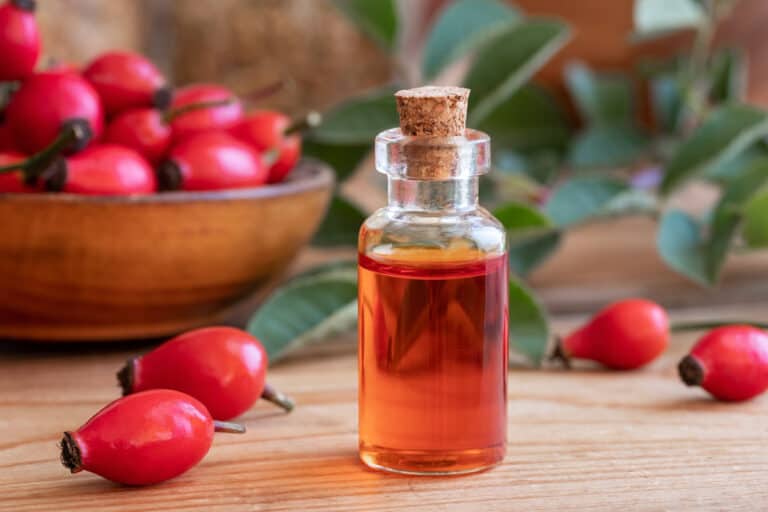
Examples include jojoba, fractionated coconut oil, sweet almond, argan, and rosehip oil. Remember that this creates a floating bath oil, so the tub may become slippery.
Combine With A Bath Bomb
Bath bombs can contain fragrance, oils, salts, colorants, and other ingredients.
Do not “boost” a finished bath bomb by dripping extra tea tree oil on it unless the manufacturer specifically designed it for customization.
Use a bath bomb according to its package directions rather than altering its formula.
A fizzing bath bomb does not automatically disperse separately added essential oil, so adding tea tree oil afterward can leave undiluted droplets floating on the water.
If you want a bath bomb with tea tree oil, choose one that is already formulated with it and follow the product directions.
Infuse With Epsom Salts
Epsom salt dissolves in water and is a common bath additive, but it does not disperse essential oils.
Mixing tea tree oil into dry Epsom salt may look evenly distributed at first, but the salt dissolves in the bath and releases the oil back to the surface.
So do not use Epsom salt itself as the diluent or dispersant.
If you use a properly diluted carrier-oil blend, understand that the oil will still float and make the bath slippery.
For better water dispersion, use a bath-safe solubilizing or emulsifying base intended for essential oils rather than relying on salts.
Add To Bubble Bath
A formulated bubble bath or shower-gel base can sometimes disperse a small amount of essential oil more effectively than salt or plain water.
However, manufactured products were not necessarily designed for extra ingredients, so adding essential oil can alter their stability or preservation.
If the manufacturer allows customization, mix the essential oil thoroughly into only the amount of bath base you plan to use immediately.
Do not drip tea tree oil into the running bathwater first and assume the bubbles will fix the dispersion afterward.
A better option is a commercial tea tree bubble bath in which the essential oil has already been incorporated into the finished formula.
Purchase Tea Tree-Based Bath Products
A ready-made tea tree bath product is the simplest route if you do not want to work with essential-oil dilution and dispersion yourself.
They are formulated as complete products, although you should still follow the label, check for fragrance or allergens, and stop if irritation develops.
Tea tree oil-based bath products also reduce the temptation to pour concentrated essential oil straight into the tub.
You can still create a relaxing atmosphere with less effort.
Best Tea Tree Oil Bath Products
If you prefer a ready-made option, the products below represent several formats, including a bath bomb, pure essential oil, bubble bath, body soak, and soap.
For most people, a finished product is easier to use consistently than a DIY essential-oil blend.
Always check the current listing and package because formulas and availability can change.
If you choose pure tea tree oil, remember that it requires an appropriate bath base or dispersing method before skin contact.
1. Nature’s Beauty Eucalyptus & Tea Tree Bath Bomb
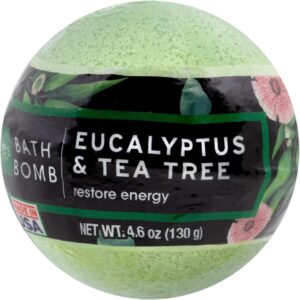
The linked Nature’s Beauty Eucalyptus & Tea Tree Bath Bomb is a pre-formulated option, which is preferable to dripping separate tea tree and eucalyptus oils into the tub.
Older product descriptions list ingredients such as coconut oil and witch hazel. Check the current package if ingredient sensitivities matter to you.
Use the bath bomb according to the current package directions and avoid adding extra essential oil on top of it.
Expect fragrance and a conditioned skin feel rather than a treatment for acne, fungus, eczema, or another medical skin condition.
2. Gya Labs Pure Australian Tea Tree Oil
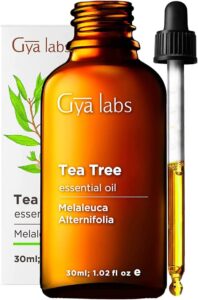
Gya Labs Tea Tree Essential Oil remains a current pure-essential-oil option.
The current brand page identifies the botanical as Melaleuca alternifolia, steam-distilled from leaves sourced from Australia.
Gya Labs markets the oil for aromatherapy and diluted skin or hair use. That does not mean the concentrated oil should be poured directly into bathwater.
If you use this product in a bath, follow an appropriate bath-safe dilution and dispersion method. Keep the undiluted oil away from the eyes and mouth, and do not ingest it.
3. Everybody Loves Soap Plant-Derived Calming Bubble Bath Infused
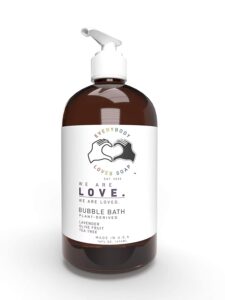
The linked Everybody Loves Soap Plant-Derived Calming Bubble Bath is a finished cleansing product rather than a bottle of concentrated essential oil.
Older listings describe a blend that includes tea tree and lavender. Verify the current ingredient list before buying if fragrance or essential-oil sensitivity is a concern.
A pre-formulated bubble bath is simpler than trying to disperse several separate essential oils yourself.
Expect a fragranced bath and cleansing experience rather than a medical skin treatment.
4. Daily Remedy Skin Relief Body Soak Tea Tree
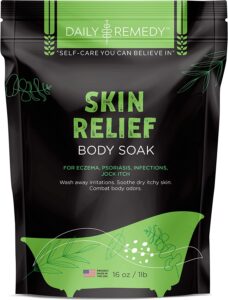
The linked Daily Remedy Skin Relief Body Soak is a tea tree-scented salt-soak format.
Do not rely on a bath soak to heal a skin condition. Check the current ingredient list if you are sensitive to tea tree, eucalyptus, fragrance, or other botanical ingredients.
If you have eczema, psoriasis, broken skin, or a persistent itchy rash, fragranced essential-oil products may aggravate symptoms, so ask a dermatologist before using them as a treatment.
Use it for the bathing experience and follow the label rather than expecting it to replace medical treatment.
5. Heydrate Handmade Tea Tree Oil Soap For The Face And Body
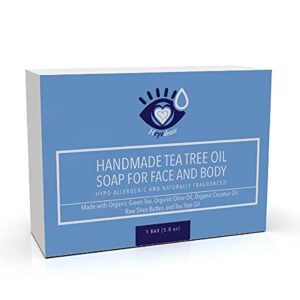
A tea tree soap bar is another way to use tea tree in a finished wash-off formula rather than handling concentrated oil.
Soap can cleanse the skin, although a true soap bar may feel drying on some skin types.
The linked Heyedrate Handmade Tea Tree Oil Soap is a wash-off product, not a pure tea tree oil treatment.
Lather and rinse according to the current label. Avoid using it as a leave-on spot treatment unless the manufacturer explicitly instructs you to do so.
Related Questions
Tea tree is only one of many essential oils, and each oil has its own scent profile, irritation potential, and safety limits.
If you combine essential oils, calculate safety based on the total essential-oil concentration, not each oil separately.
Can You Mix Tea Tree Oil With Other Essential Oils In Your Bath?
You can blend tea tree with other aromas such as lavender or eucalyptus, but combining oils also combines their irritation and sensitization potential.
Ready-made bath products are generally easier because the essential oils have been incorporated into a complete formula, although you should still follow the label and watch for irritation.
If you make your own blend, use a bath-safe dispersing base and stay within the safety limits for every essential oil in the mixture.
A small skin test can help identify immediate irritation, but it does not guarantee that repeated use will never cause sensitization.
Takeaway
Tea tree oil can be an enjoyable fragrance or supporting ingredient in a bath product when it is formulated safely.
It has antimicrobial activity and limited evidence for a few topical uses, but a tea tree bath should not be described as healing acne, fungal infections, eczema, psoriasis, or other skin disease.
Because tea tree oil is highly concentrated, it must be properly diluted for skin contact and appropriately dispersed if it is going into water.
Jojoba or fractionated coconut oil can dilute tea tree oil, but the mixture will float in bathwater. A dedicated bath dispersant or pre-formulated bath base distributes the oil more evenly.
Do not rely on Epsom salts or a bath bomb to disperse separately added tea tree oil. A ready-made tea tree-infused bath product is the simplest option.
If you choose DIY, prioritize safe formulation over adding extra drops for a stronger scent.
Most importantly, never add even one or two undiluted drops directly to the bathwater.
If you do use tea tree oil in your next bath, choose a properly formulated product or dispersion method, keep it out of the eyes and mouth, and stop if your skin becomes irritated.
Related Article
How To Use A Bath Bomb – Everything You Need To Know