
Open Eye Vs Doll Eye Lash Extensions
Open eye and doll eye lash extensions often describe the same center-focused look. Some salons distinguish between them, while others use the names interchangeably.
Eyelash extensions should be adapted to your eye shape, natural lashes, lid space, and preferred style rather than following one rigid map for everyone.
A small change in where the longest lashes sit can change the silhouette, even when two sets use similar lengths.
For example, someone with round eyes who wants a more elongated appearance may like a cat-eye-inspired placement, while someone who prefers a rounder, more open effect may choose a different map.
That is why a reference photo is often more useful than choosing a style name from a booking menu.
Start with the effect you want: a soft central lift, a fuller rounded shape, or more length toward the outer corners.
You can also customize curl, length, density, spikes, and transition points to make a standard map feel more personal.
Here is how to compare open eye and doll eye lash extensions without getting caught up in the terminology.
What’s the difference between open eye and doll eye lash extensions?
There is no universal difference between open-eye and doll-eye extensions. Both usually emphasize the middle of the lash line and taper toward the corners. When a salon separates the styles, “open eye” may mean a softer central peak and “doll eye” a broader, fuller rounded shape. Neither name guarantees a particular length, curl, or level of volume, so ask to see examples.
Below, we’ll break down the usual characteristics of each style, how they differ, and how they can be adapted to different eyes.
Open Eye Lash Extensions
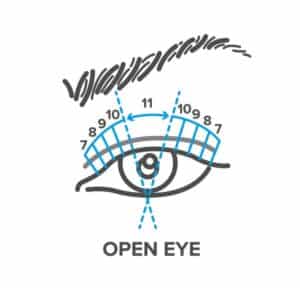
An open-eye lash map arranges lengths to emphasize the center of the eye rather than stretching the shape mainly outward.
A lash map is the artist’s plan for where different lengths and curls will go. It describes placement, not how many extensions are applied.
Its visual goal is usually to draw attention upward through the center of the eye, which can make the eyes appear rounder or more open.
Open-eye extensions can look natural or dramatic depending on the chosen length, curl, and volume.
A typical open-eye map places the longest extensions around the center or just beside the center, with shorter lengths toward the inner and outer corners.
This mapping can create a more rounded, lifted-looking center, while actual volume comes from the lash technique and fan density rather than the map itself.
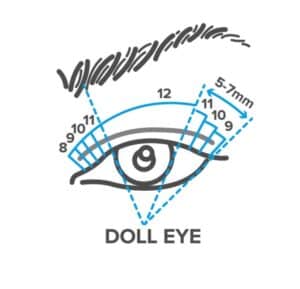
Doll Eye Lash Extensions
Doll-eye extensions aim for a rounded, wide-eyed effect. The name may describe the same map another artist calls open eye.
For example, London Lash’s mapping guide describes dolly styling as also being called open-eye styling. A booking menu that lists both may use its own distinction.
Where the salon treats them as separate looks, a doll-eye map may keep more length across the middle sections instead of using one narrower peak.
That broader center can create a fuller-looking outline, but actual lash density still depends on the application technique.
A doll-eye set can appear more dramatic if the artist uses longer lengths, stronger curl, darker density, or volume fans, but those choices should still stay within what the natural lashes can safely support.
Compare And Contrast
Compare the artist’s finished sets, especially photos taken with the client’s eyes open.
Look at where the length peaks, how wide that peak is, and how quickly the corners shorten. These details tell you more than the label.
If the salon’s doll-eye examples look fuller than its open-eye examples, ask whether that comes from the map, extra volume, a stronger curl, or a combination.
Two sets can share the same map and still look quite different when their curl, length, and density change.
Similarities
Both styles belong to the same family of center-focused lash shapes.
The longest extensions are often placed near the centre of the lash line, which can create a rounder, more vertically open appearance.
Both can be created as classic, hybrid, or volume sets. Those terms describe the application approach, while open eye and doll eye describe the intended shape.
Both styles need similar aftercare, including gentle cleansing, avoiding picking or pulling, and returning for maintenance when needed.
Differences
If your artist distinguishes the two, ask them to point out the difference in their own photos or maps.
A softer open-eye version may have a narrower central peak with a gradual taper. That is a styling choice, not a guarantee of greater comfort.
A doll-eye version may keep neighboring sections closer to the maximum length. It does not automatically require longer or heavier extensions.
For a subtle look, you can ask for shorter lengths and a lighter finish in either style. For a bolder outline, discuss fullness without assuming extra length is the only option.
Comfort depends on the application and what your natural lashes can support, not on whether the set is called open eye or doll eye.
Which Lash Style Is Best For You?
Choose the finish first, then work with your artist on the map that will create it.
This is worth discussing with your lash technician. A good consultation should consider your natural lash strength, eye shape, lid space, brow position, glasses, styling preferences, and how dramatic you want the result to be.
For a softer everyday result, bring a photo with visible separation between the lashes. For a fuller look, show how dark and rounded you want the lash line to appear.
Also point out what you do not want, such as very long center lashes, dense coverage, or extended outer corners.
Open Eye
Ask for a soft center-focused shape if you want a more open look without a dense, dramatic outline.
They can create a soft, open effect when shorter lengths and lower density are used, or a stronger look when the map is paired with volume or more curl.
The map can be adjusted for many eye shapes by shifting the peak, changing curl, and altering how quickly the lengths taper.
The peak does not need to sit at an identical point on every client. Your artist should assess the placement with your eyes open.
If you wear glasses, bring them to the consultation so length and projection can be considered.
Almond Eyes
Almond-shaped eyes can suit a range of maps. Your preferred effect matters more than finding one supposedly correct style.
Decide whether you want to emphasize their length or create a rounder-looking center.
An open-eye map can emphasize the center of almond-shaped eyes if you want a rounder or more open effect.
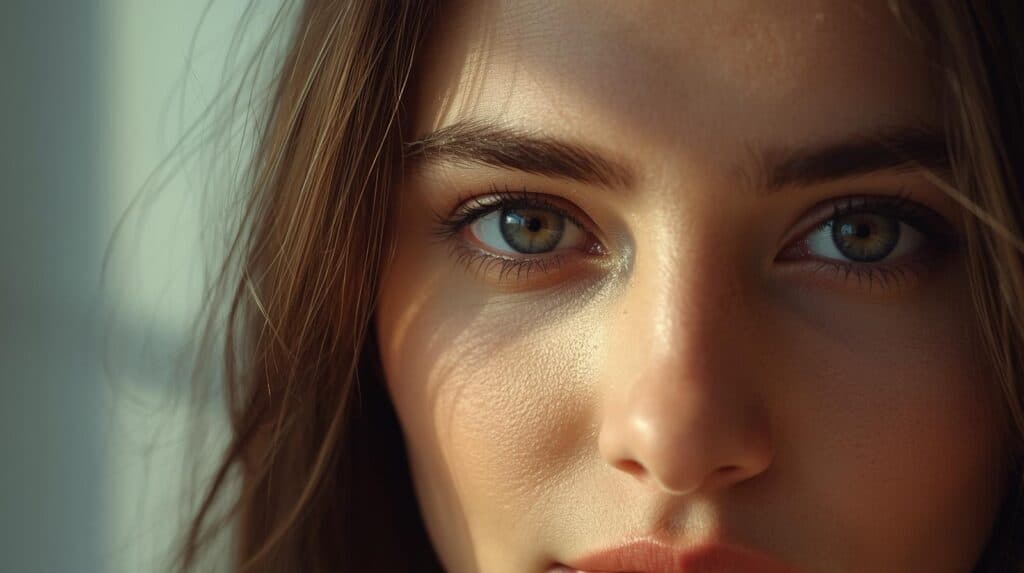
If you prefer to keep an elongated outline, ask for a less pronounced center peak or discuss an outward-shifted map.
A photo of a set on similarly shaped eyes can help communicate your preference, although your result will still be individual.
Hooded Eyes
Hooded eyes can work with many lash maps, but curl and length need to account for lid space so the extensions do not brush uncomfortably against the skin.
An open-eye map may suit hooded eyes when the peak is positioned where it remains visible with the eyes open.
The map can be adjusted around the fold, brow position, and natural lash direction rather than assuming one placement works for every hooded eye.
A stronger curl is not always the answer. The artist needs to check how the extensions sit against the lid as well as how they look from the front.
Ask to see examples on hooded eyes with a similar fold, rather than relying only on close-ups taken with the eyes shut.
Doll Eye
If your salon uses doll eye for a fuller rounded style, it may suit you when you want the center of the lash line to stand out.
Doll lashes are generally designed to create a wide-eyed, rounded effect and may use more length or density through the center.
You can still request a lighter version. Doll eye describes a shape, not a requirement for maximum volume.
Ask whether the rounded effect will come from a wider area of longer lashes, extra density, or both.
Monolid Eyes
Monolid describes the eyelid crease pattern rather than one fixed eye shape. It does not limit you to a doll-eye map.
With monolid eyes, curl choice and the distance between the natural lash line and lid can matter more than following a fixed eye-shape rule.
A doll-eye map paired with an appropriate curl can make the center lashes look more prominent, but curl should be chosen according to the natural lash angle and lid anatomy.
Have the artist assess your lashes with your eyes open and relaxed, since the visible shape can change when the lid moves.
You can also combine a rounded center with some outer emphasis if you want both openness and length.
Deep-Set Eyes
Deep-set eyes sit farther back relative to the brow bone, which can affect which curls and lengths remain visible.
That means the artist may need to adjust curl and projection so the extensions do not disappear under the brow bone.
A doll-eye map is one option if you want more emphasis through the center.
Check the shape from the front and side: a set that looks long in a close-up may sit differently beneath a prominent brow bone.
An artist can also shift the peak slightly and choose a curl that clears the lid without using unnecessary length or weight.
When Open Eye Or Doll Eye May Need Adjusting
Open-eye and doll-eye maps can be adjusted for many eye shapes, but the standard version may not create the effect every client wants.
For example, someone with round eyes who wants a more elongated look may prefer the peak moved outward instead of using a strongly centered map.
If you enjoy the roundness of your eyes, a centered map can emphasize it. There is no need to choose elongation just because a chart suggests it.
If your outer corners turn downward, ask how the artist will taper that area rather than simply adding the longest lashes at the very end.
A cat-eye or squirrel-style map can shift attention outward, but this is a styling preference rather than a rule about which eye shape is “flattering.”
Mix And Match Eyelash Styles
You can use these style names as a starting point, then adjust the details.
For example, you might want the rounded center of a doll-eye set with lighter density and shorter corners.
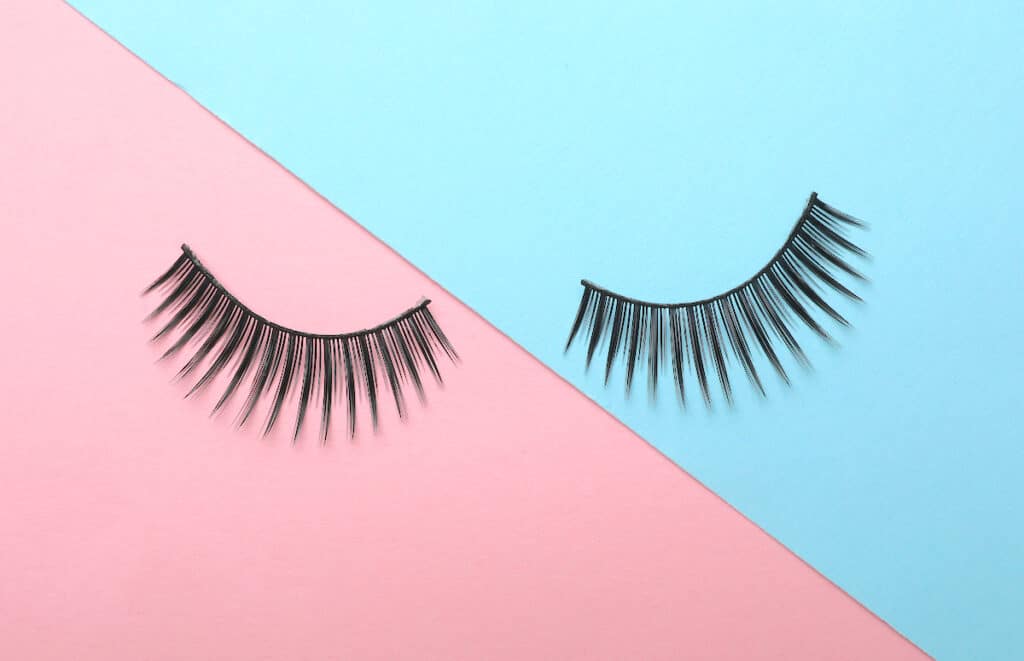
Or you could keep an open-eye shape while shifting the peak slightly outward for a little more elongation.
Mixing map ideas is different from a hybrid lash set, which usually combines classic extensions and volume fans. Tell your artist whether you mean a mixed shape, a mixed application technique, or both.
Always Consult With Your Lash Tech
Consult with your lash technician to choose a style that matches your eye shape, natural lashes, comfort, and aesthetic preference.
A trained lash artist should choose length, curl, diameter, and density that your natural lashes can support while creating the effect you want.
Ask the artist to explain where the longest section will sit and how they will adapt it if your two eyes or natural lash lines differ slightly.
Before booking, confirm the application type, expected appointment length, price, and maintenance plan. The map name alone does not tell you those details.
Wrap-Up
Open eye and doll eye are overlapping style names, not two universally separate lash maps.
They both commonly emphasize the middle of the lash line, which creates a rounder, more vertically open effect.
Some salons use doll eye for a fuller rounded finish, but either label can describe a subtle or dramatic set.
Choose the amount of length, curl, and fullness you want, then let the artist adapt the placement to your natural lashes.
If you’re choosing between the two, bring reference photos to your appointment and discuss the exact level of roundness, length, curl, and density you want.
Related Articles