
What Not To Do After Lip Injections
After lip filler, it is normal to have questions about swelling, eating, exercise, skincare, and when you can safely return to your usual routine.
The most useful starting point is your injector’s written aftercare plan, plus a clear way to contact them if recovery does not look or feel as expected.
Lip filler can add volume or adjust lip shape, but it is still a medical procedure with possible complications, not simply another beauty or skincare step.
This guide concerns injectable lip filler, particularly hyaluronic acid filler. A Botox lip flip is a different treatment with its own instructions.
Good aftercare focuses on comfort, gentle hygiene, and recognising warning signs early enough to act on them.
Different filler products, injection techniques, and treatment areas can lead to different recovery experiences.
Your medical history and the amount and placement of filler also matter.
Discuss the look you want, realistic limits, and treatment risks with a qualified healthcare professional before proceeding.
Some aftercare advice is broadly similar, but restrictions and timing should still be tailored to your treatment, filler, and medical history.
Keep your provider’s contact details and ask who handles concerns outside normal opening hours.
What should you do or not do after lip injections?
Follow your injector’s directions, avoid rubbing or massaging your lips unless specifically instructed, wait for numbness to wear off before eating, and pause strenuous exercise and alcohol for the period advised. Mild swelling, tenderness, and bruising can be expected. Unusual or worsening pain, pale, grey, blue, or mottled skin, or any vision change needs urgent medical assessment.
Do not wait for a routine follow-up if you suspect a complication. Contact your injector immediately for urgent assessment of concerning lip symptoms. Vision changes, stroke-like symptoms, severe allergic symptoms, or difficulty breathing are emergencies and need immediate medical care.
What Are Lip Injections?
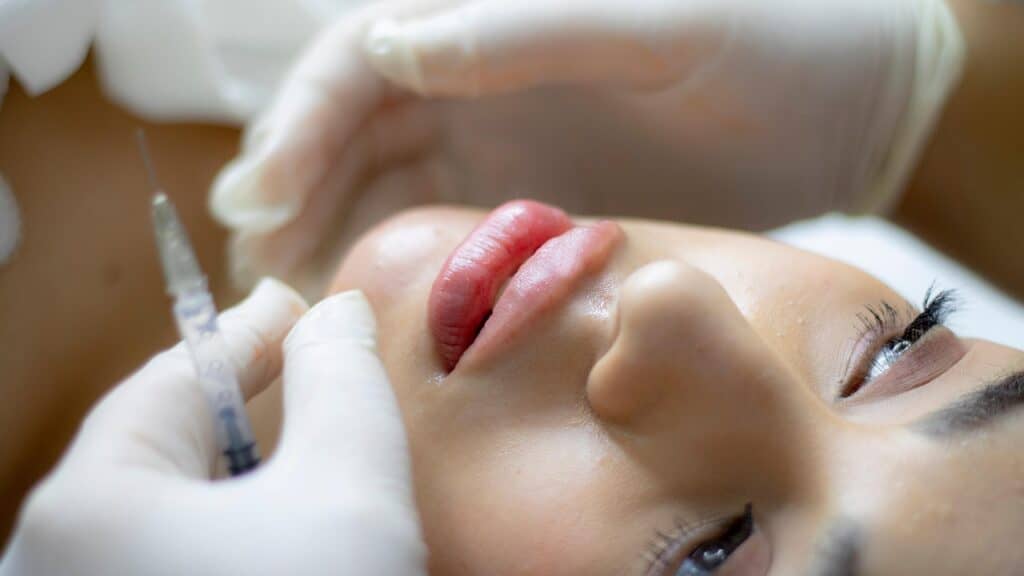
Lip filler injections place a gel into selected areas of the lips or lip border to change volume, shape, or definition.
Many commonly used lip fillers contain manufactured hyaluronic acid, or HA, formulated specifically for injection.
HA occurs naturally in the body and binds water, but an injectable filler is a manufactured medical product with its own formulation and risks.
A topical HA serum and an injectable filler are not interchangeable and do not have the same risks.
The fact that HA occurs naturally does not make filler injections risk-free or guarantee a natural-looking result.
People may consider filler for many personal reasons, from restoring volume to making a subtle change in shape or proportion.
Some want to replace volume lost over time; others want a modest change in proportion.
Your existing anatomy influences what changes are realistic and how much filler can be placed safely.
Choosing not to have treatment is also a valid option, and no cosmetic procedure can guarantee greater confidence.
Ask for the exact product name and whether it is authorised for the intended treatment in your country.
Juvéderm and Restylane are product families. Volbella is a product within the Juvéderm range, rather than a separate filler brand.
A qualified injector should explain why a particular product, placement, and amount suit your anatomy and goals.
The visible result can last for different lengths of time depending on the product, amount, placement, metabolism, and individual response. There is no single lifespan for every lip filler.
Ask about the expected duration of the specific product and what follow-up is included.
Do not book automatic top-ups every few months without assessing the remaining result and whether more filler is appropriate.
The embedded video below shows a treatment example. It cannot establish whether injections are suitable for you or replace a clinical consultation.
Side Effects Of Lip Injections
Lip injections can be uncomfortable despite numbing measures, because the lips are highly sensitive and treatment involves multiple injection points.
The lips are sensitive, so discuss pain relief and any previous reactions to anaesthetics beforehand.
Your clinician may use topical anaesthetic or another numbing technique.
Some fillers also contain lidocaine; disclose any known allergy before treatment.
Temporary tenderness, swelling, bruising, and mild asymmetry can occur after injections.
Swelling often improves over the first few days, while residual puffiness or bruising can last longer. Ask your injector what is typical for the specific filler and technique used.
Early swelling can exaggerate volume or make one side look fuller than the other. A review after the initial swelling has settled is more useful than judging the final cosmetic result immediately.
Seek urgent help for unusual or increasing pain or pale, grey, blue, or mottled skin. These can signal impaired blood flow. The FDA’s dermal filler guidance also identifies vision changes and stroke symptoms as emergency warning signs.
Increasing redness, heat, worsening swelling, discharge, or fever should prompt medical assessment for possible infection. New blisters also need advice rather than home treatment alone.
Ordinary bruising should gradually improve. If you are unsure whether a dark or pale area is routine bruising or a concerning colour change, contact your injector promptly rather than assuming it is normal.
What Not To Do After Lip Injections
Aftercare can reduce avoidable irritation and help you monitor recovery, but it cannot prevent every filler complication.
The instructions below are general precautions. Your treating clinician should provide the timing appropriate for you.
You may be able to resume light activities fairly soon, but give numb or tender lips time to recover and avoid unnecessary heat, pressure, and friction:
- Wait until numbness has worn off before eating. Reduced sensation makes accidental lip biting, chewing injury, or burns from hot food easier.
- Avoid very hot food and drinks while numb or tender. Choose comfortable temperatures, and do not place ice directly against the lips.
- Follow your injector’s advice about straws. Some recommend avoiding them during the first day to reduce puckering and discomfort, but an ordinary sip does not automatically displace filler.
- Avoid smoking and vaping during early healing as advised. Heat, irritation, repeated lip movement, and pressure on tender tissue are reasons to pause; ask your clinician for a suitable plan.
- Do not rub, squeeze, or massage your lips unless your injector specifically instructs you. Ask about a lump rather than trying to flatten it yourself.
- Keep skincare gentle around the treated area. Avoid scrubs, exfoliating acids, retinoids near the lips, and irritating lip plumpers until your clinician says they can be resumed.
- Avoid intense heat, such as saunas, steam rooms, and very hot showers, during the initial recovery period advised. Heat can make swelling and flushing more noticeable.
- Pause strenuous exercise for the period your injector recommends. Light activity may be fine, but higher-intensity exercise can temporarily increase swelling or bruising.
- Avoid alcohol initially for the period advised. Alcohol can worsen bruising or swelling in some people, so follow your injector’s timing.
- Do not stop prescribed blood-thinning medicines on your own. Ask your prescriber and injector about medication before and after treatment. For discomfort, ask which pain reliever is suitable for you rather than adding aspirin or ibuprofen solely to manage filler soreness.
- Avoid firm kissing or other sustained pressure on the lips while they are tender and for the period your clinician advises. Recommendations vary, so follow your own aftercare plan rather than a universal deadline.
Resume restricted activities according to your clinician’s guidance and how recovery is progressing. Contact them if pain, swelling, redness, or other symptoms worsen instead of steadily improving.
How To Prepare For Lip Injections
Before your appointment, disclose previous filler, allergies, a history of cold sores, medical conditions, medicines, supplements, and any recent or planned dental work. Ask whether treatment should be postponed and whether a history of cold sores warrants preventive medication.
Tell your injector about all medicines and supplements, but do not stop prescribed aspirin, anticoagulants, or other medication on your own. Any change must be agreed with the prescribing clinician. Ask separately about alcohol and non-prescription products before treatment.
What To Do Post-Treatment
Simple, gentle care is usually more useful than layering multiple home remedies in an attempt to speed up recovery.
Keep the area clean and follow the injector’s instructions for touching or washing it.
Drink normally to stay hydrated, following any medical fluid restrictions. Extra water is not proven to make filler settle faster or last longer.
Sip gently from a cup while your lips are tender, and follow any short-term advice about straws.
If your injector recommends cooling, use a clean cool compress with very light contact rather than pressing on the treated area.
Wrap any cold pack in a cloth, apply briefly, and take breaks. Do not press hard or place ice directly against the lips, particularly while sensation is reduced.
Do not assume arnica will speed healing. Discuss it with your clinician before use, and avoid applying unapproved remedies to puncture sites or the inside of the mouth.
Ask when you may restart lip balm, lipstick, gloss, and other lip products. Use clean hands and applicators, and avoid plumping or exfoliating products while the area is healing.
There is no universal requirement to stay upright for a fixed number of hours to make filler “settle.” Follow any positioning advice that is specific to your treatment.
Avoid sleeping with direct pressure on tender lips. Your injector may suggest a comfortable, slightly elevated sleeping position initially if swelling is bothersome.
Normal facial movement does not automatically ruin the result. Persistent lumps, marked asymmetry, or increasing tenderness should be assessed rather than repeatedly pressed or massaged at home.
Is It Permanent?
Allow the initial swelling to settle before making an elective decision about the cosmetic result. Many injectors review results after the early swelling has resolved, at the time they recommend for your treatment.
That waiting period applies to judging appearance, not to investigating pain, skin colour changes, or other warning signs.
If you remain unhappy, ask for a clinical assessment rather than immediately adding more filler or requesting dissolution without discussing the risks.
Hyaluronidase can be used by a qualified clinician to break down hyaluronic acid filler. It does not dissolve every type of filler.
The amount needed and the response vary; more than one treatment may be necessary.
Dissolving filler is another medical procedure with its own risks, consent discussion, and aftercare.
Possible effects include swelling, bruising, and allergic reactions, including rare serious reactions.
An exact return to your pre-filler appearance is not guaranteed. Cleveland Clinic’s guide to dissolving lip filler explains the process and its limitations.
HA fillers are generally temporary, but “temporary” does not mean the visible effect disappears on a predictable date or at the same rate in everyone.
Persistence depends on the product, amount, placement, and individual response.
Use the information for your specific filler rather than relying on a universal six-month or one-year promise.
Maintenance is optional and should follow an assessment of your lips, not a fixed schedule for an “extra boost”.
Conclusion
Lip filler can change volume, shape, and definition, but it also involves discomfort, recovery time, and genuine medical risks.
The safest plan starts with realistic expectations, an appropriately qualified clinician, and clear instructions for what to do if something feels wrong afterward.
Ask about the proposed amount and why it is suitable for your anatomy.
Its popularity does not make the procedure risk-free.
HA’s presence in the body does not remove the risks of injecting a manufactured gel.
Likewise, a smooth-looking result immediately afterward does not mean swelling has settled or recovery is complete.
Dissolving HA filler may be an option if needed, but it is not a guaranteed undo button.
Let the initial swelling settle before deciding whether you want any elective adjustment.
Do not assume repeated top-ups will reliably build collagen or reduce future treatment needs.
Keep a record of the product used and know how to reach your injector for advice.
Be gentle with your lips, follow your individual aftercare instructions, and seek prompt medical assessment for concerning symptoms. Never stop prescribed medication solely to reduce cosmetic bruising without your prescriber’s advice.
Related Articles
How To Get Bigger Lips Permanently Without Surgery
Eyeliner As Lip Liner – Does It Work?