What Is A Russian Manicure? (Safety, Cost, At-Home Tools)
If you’ve seen a manicure on your feed that looks impossibly clean, with polish that seems to start from under the skin and no cuticle in sight, you were probably looking at a Russian manicure.
It’s the technique nail techs themselves get done, and it’s everywhere right now.
It’s also the most debated manicure on the internet, because the thing that makes it look so good is the same thing dermatologists keep warning about.
So what is a Russian manicure? It’s a dry manicure technique where the cuticle area is cleaned and removed with an electric file and fine bits instead of soaking and clippers. Polish or gel is then applied slightly under the lifted cuticle line, which is why the polish line looks invisible and the grow-out stays clean.
Here’s how it works, whether it’s safe, what it costs, and what a gentler at-home version looks like.
What Is A Russian Manicure?
A Russian manicure, sometimes called a dry manicure or e-file manicure, skips water entirely.
There’s no soaking bowl. Soaking swells the skin around your nails, and swollen skin springs back after your manicure, pushing your polish line out of shape within days.
Instead, the tech uses an electric file, called an e-file, with a series of small precision bits. A flame-shaped bit lifts and opens the cuticle area, a ball bit gently removes the dead cuticle tissue stuck to the nail plate, and a fine polisher smooths everything down.
The result is a completely bare, clean nail plate all the way to the skin line. Gel applied over that surface can be tucked slightly under the lifted skin, which is what creates the signature “grew out of my finger” look.
The whole appointment runs 90 minutes to 2 hours, roughly double a regular manicure.
Why Everyone Wants One
The finish is genuinely different. Because the polish starts under the cuticle line instead of a millimeter away from it, a Russian manicure looks fresh for 3 to 4 weeks instead of 1 to 2.
The grow-out is cleaner too. There’s no obvious gap appearing at the base in week two, just a slow, even shift.
And because there’s no water involved, gel adhesion is better. Less lifting, fewer chipped corners, longer wear.
Is A Russian Manicure Safe?
This is the part you should read before booking.
The cuticle isn’t decoration. The thin seal of skin at the base of your nail, the eponychium, is a barrier that keeps bacteria and fungus out of the nail matrix, where new nail is made.
A Russian manicure removes more of that tissue than any other technique. Done perfectly, by a trained tech with sterilized bits, on healthy nails, it stays on the right side of the line, and millions of people get them routinely with zero problems.
Done aggressively or with poorly sanitized tools, it can mean micro-cuts, infection, and over-filed nail plates that feel thin and sore. Dermatologists tend to be lukewarm on the technique for exactly this reason.
The practical checklist: pick a tech who trained specifically in Russian manicure, make sure bits come out of a sterilization pouch, and speak up if you feel heat or scraping on the nail plate. Tingling is normal. Pain is not.
If your cuticles are prone to infection, you bite your nails, or you’re on any medication that thins skin, this is not the manicure for you.
Russian Manicure Vs Regular Manicure
The core differences come down to water, tools, and how close to the skin the polish gets.
A regular manicure soaks your hands, pushes the cuticle back, trims with clippers, and paints to just before the cuticle line. It’s faster, cheaper, and gentler, and it needs redoing every 1 to 2 weeks.
A Russian manicure is dry, uses an e-file for all cuticle work, and paints under the lifted cuticle line. It takes longer, costs more, and lasts twice as long.
If you’ve had a “combined manicure” at a salon, that’s the middle ground: e-file cuticle work plus some traditional tools. And if you want the opposite philosophy, all nourishment and zero filing, that’s a Japanese manicure.
How Much Does A Russian Manicure Cost?
In most US cities you’ll see $60 to $120 for a Russian manicure with gel, and specialist studios in big cities charge more. That’s roughly double a standard gel manicure, and the price reflects the time: your tech is spending up to two hours on detail work.
The math evens out more than it looks, though. If a regular gel manicure lasts two weeks and a Russian manicure lasts four, the per-week cost lands surprisingly close.
At-Home Russian Manicure Tools
Full disclosure: you should not attempt salon-level cuticle removal on yourself. Working an e-file bit under your own cuticle line, on your non-dominant hand, is how nails get hurt.
But a gentle, home-safe version of the technique absolutely exists, and it gets you most of the clean-cuticle look:
An e-file with fine bits. The MelodySusie USB nail drill is the standard starter pick, with enough speed control to stay gentle. Use a fine ball or cone bit at low speed, only on the dead tissue sitting on the nail plate, never digging into the skin.

A proper cuticle pusher and nipper. Push first, then nip only the loose, lifted dead skin. The Ejiubas cuticle trimmer set is sharp enough to cut cleanly instead of tearing, which is what causes hangnails.
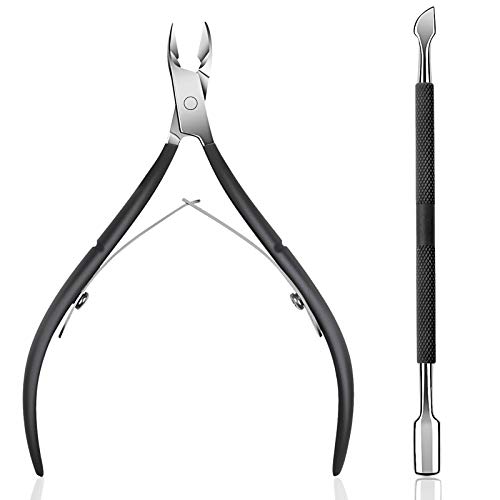
Cuticle oil, daily. The unglamorous secret behind every clean cuticle line on your feed. Softened, hydrated cuticles sit flat and barely need removing.
Work dry, work slow, and stop the moment anything feels warm. You’re going for tidy, not surgical.
How Long Does A Russian Manicure Last?
Three to four weeks with gel is the norm, and the reason is the preparation rather than the polish. A completely clean, dry nail plate with gel tucked under the cuticle line has nowhere to lift from. Most people rebook when the grow-out gap finally shows, not because anything chipped.
Related Questions
Is A Russian Manicure Bad For Your Nails?
Not inherently, but it has the smallest margin for error of any manicure technique. The risk isn’t the method itself so much as aggressive filing or unsterilized bits. With a properly trained tech and healthy nails, it’s considered safe for routine use.
What’s The Difference Between A Russian Manicure And A Dry Manicure?
A Russian manicure is a type of dry manicure. “Dry” just means no soaking. The Russian technique adds the full e-file cuticle removal and the under-cuticle polish application, which is what sets it apart from a basic dry manicure.
Can You Get A Russian Manicure With Regular Polish?
Yes. The cuticle work is independent of what goes on top. That said, most people pair it with gel, because regular polish won’t last the 3 to 4 weeks the prep makes possible, and the combination is where the technique really pays off.
Related Articles
What Is A Japanese Manicure? Plus How To Do One At Home