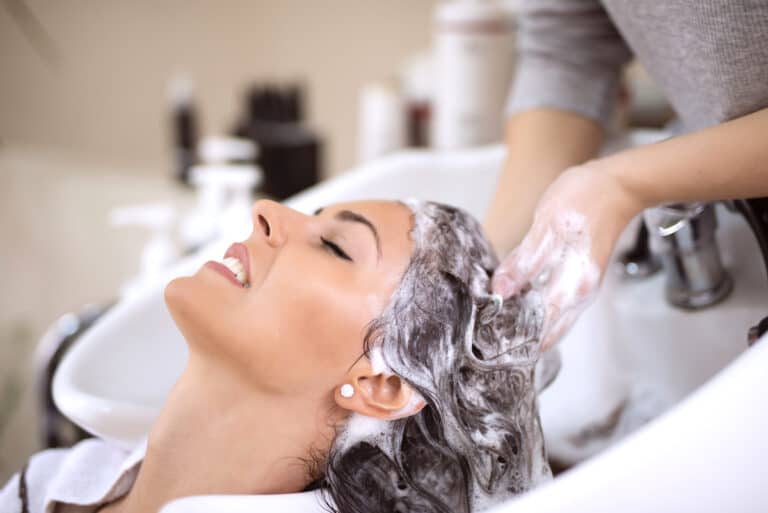

How To Wash Your Hair Without Getting Your Face Wet
Sometimes you need to wash your hair while keeping your face as dry as possible. Maybe you have fresh makeup on, recently had a facial procedure, or simply want to avoid soaking your face while you rinse your hair.
If you recently had your eyebrows microbladed, follow your artist’s specific aftercare instructions. Some providers ask clients to limit moisture on the brows for a period of time, but exact timing varies by technique and provider.
Whatever the reason, the goal is the same: control the direction of the water and keep wet hair from dripping onto your face afterward.
So, how do you wash your hair without getting your face wet?
The easiest options are to rinse your hair while leaning forward or backward, use a handheld faucet or sink for better control, add an absorbent headband near the hairline, or use a purpose-made visor if you need extra protection from drips.
Keeping your face completely dry can be difficult, but a few simple setup changes can reduce splashing and dripping significantly.
We’ve listed some of them below!
1. Lean Forward Or Back
This is the simplest strategy if you have a fixed showerhead and no extra accessories: position your head so the water reaches your hair while your face stays outside the main stream.
Leaning forward can work well with a controlled shower stream or bathtub faucet, but reduce the water pressure if splashing makes it hard to keep your face dry.
Flip your hair forward, face the front of the tub, and lean so the water reaches the scalp and lengths without running directly toward your forehead.
The main challenge is the final step, because wet hair can drip onto your face as you stand upright.
Keep a microfiber towel nearby so you can gently squeeze out excess water and wrap the hair before standing up.
This reduces the chance of water running from the lengths onto your forehead and cheeks.
Leaning backward can also work if the shower stream is narrow and easy to control.
Flip your hair back, stand with your back to the showerhead, and position the stream so it reaches the scalp without flowing over your forehead.
Shampoo, rinse, and condition while keeping your head in a stable, comfortable position.
As with the forward method, wrap or blot the hair before changing position so water does not run down your face afterward.
2. Use An Absorbent Headband
This method works best as an addition to the previous two.
Place an absorbent headband, such as a microfiber makeup headband, just below the hairline.
It can catch small drips that travel toward the forehead while you rinse.
These headbands are usually sold for skincare or makeup, but the absorbent fabric can also help with controlled hair washing.
Think of the headband as backup rather than a waterproof seal. It may absorb drips, but it will not stop a direct stream of water.
Keep the band beneath the hairline and your hair away from your face, then use a low, controlled stream so the fabric only has to catch small amounts of water.
3. Use A Face Shield Or A Visor
If leaning forward or backward is uncomfortable, a shower visor designed to redirect water away from the face may be more convenient.
These products are designed to redirect water away from the forehead and face while you wash the hair.
Plastic visors sit around the hairline and create a small barrier that helps water run outward instead of directly over the face.
They can reduce splashing, but fit matters and they do not guarantee that the face will stay completely dry.
A larger face shield-style guard may cover more of the face, but make sure it is secure, easy to breathe around, and designed for shower use.
To use a visor or face shield, make sure to flip your hair back and put the visor onto your face in an upward motion.
Position it according to the manufacturer’s directions so it sits comfortably at the hairline without pressing too tightly on the skin.
Even with a visor, keep the strongest part of the water stream aimed away from your face for better control.
Before removing the visor, gently squeeze out excess water and wrap the hair so drips do not fall forward.
4. Use A Wash Basin
A portable hair-washing basin can also help because it lets you recline and keep your face angled away from the water.
They look like salon sinks with a cutout in the front for you to lean your neck and head into them while you face the ceiling.
You don’t need a salon to use them, though. You can get one that’s portable (some of them are even inflatable) and use it at home.
Set the basin on a stable surface according to its instructions and make sure your neck is supported comfortably. Avoid improvised setups that could tip, leak, or strain your neck.
Wet the hair using the basin or an attached sprayer, shampoo as usual, and rinse thoroughly so no cleanser is left behind.
If your basin does not have running water or a sprayer, change the rinse water as needed so shampoo and conditioner are removed thoroughly.
Keep a towel nearby and wrap the hair before sitting or standing upright.
5. Use A Sink
A sink is another practical option when you want to wash your hair without soaking your face or the rest of your body.
A bathroom or kitchen sink can work, especially if the faucet has a pull-out sprayer that gives you better control.
Simply face your sink, bend forward, flip your hair forward, and lean under the tap. Use the faucet like a showerhead and wash your hair under the stream.
A narrower stream or handheld sprayer gives you more control over where the water lands.
Keep the water pressure moderate to reduce splashing around the forehead and eyes.
Just like with the lean-forward method, you want to make sure to wring your hair out while it’s still in the sink, and wrap it with a towel before you stand up straight.
This will prevent any water from dribbling down onto your face.
6. Dry Shampoo
Dry shampoo is not a true wash, but it can make oily roots look fresher when you only need a temporary fix.
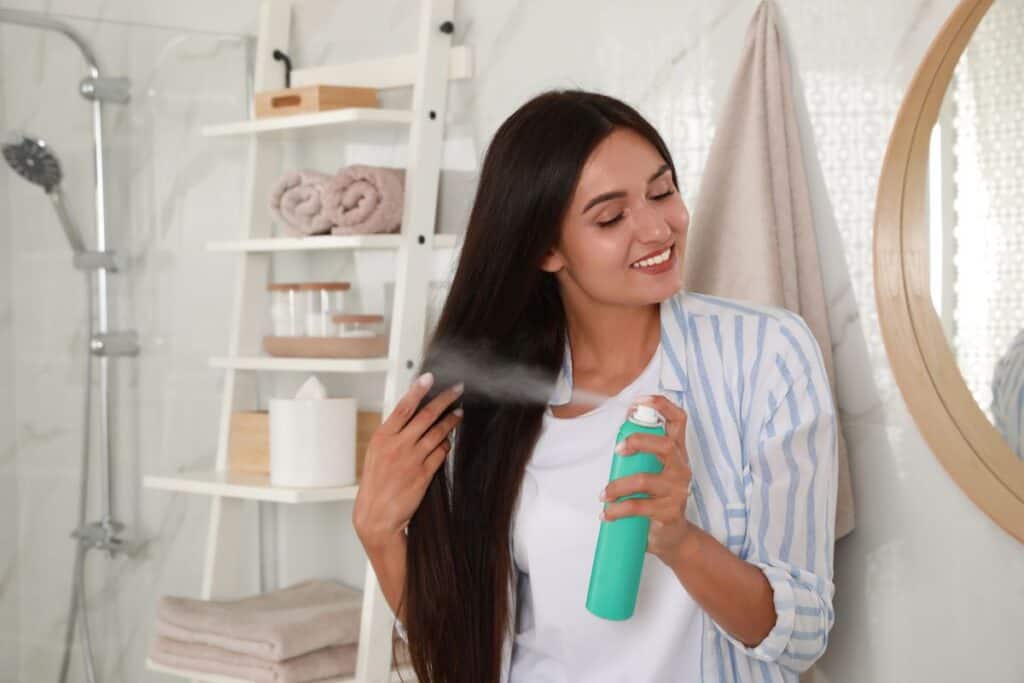
Dry shampoo is applied mainly to the roots to absorb visible oil and add texture or volume.
Absorbent powders such as starches help soak up excess oil, but they do not actually remove oil, sweat, dead skin, or product buildup from the scalp.
Dry shampoo formulas vary. Some contain alcohol, starches, silica, or other absorbent ingredients. Frequent heavy use can contribute to buildup or dryness for some people, so regular shampooing is still important.
Some formulas are scented, which can make the hair smell fresher, but fragrance does not mean the scalp has actually been cleaned.
This is the easiest way to keep your face dry if you only need to reduce visible oil for a day, but dry shampoo should not replace normal cleansing indefinitely.
Can Makeup Last Through A Shower?
There might be a lot of reasons why you’re looking to avoid getting your face wet, but if your main concern is keeping your makeup looking on point, you don’t necessarily have to keep your face perfectly dry.
Water-resistant or waterproof makeup may tolerate a little moisture better than standard formulas, but steam, shampoo, facial oils, and direct water pressure can still break down the finish.
Avoid putting a made-up face directly under the shower stream if you want the makeup to stay intact.
Even small droplets can cause spotting or streaking depending on the products you used, so blot gently rather than rubbing if your face gets splashed.
A setting spray can help makeup wear longer, but it does not create a truly waterproof seal over the face.
If you need to protect eye makeup or false lashes, it is safer to keep the shower stream away from the face than to rely on tight goggles or masks that could press on fresh lash adhesive or sensitive skin.
A shower visor or careful head position is usually more practical because it redirects water without putting pressure around the eyes.
If a small amount of water reaches the face, gently blot it and avoid rubbing the makeup or lashes.
Hair Washing Without Wetting Your Face FAQs
What Is The Easiest Method?
A sink with a pull-out faucet or handheld showerhead usually gives you the most control. Keep your face outside the stream, rinse with moderate water pressure, then wrap the hair before you stand upright.
How Do You Wash Your Hair After Microblading?
Follow the aftercare instructions from your microblading artist because moisture restrictions vary. A sink, handheld sprayer, or backward-rinsing method can help keep water away from the brows, but do not rely on a generic “two-week” rule unless that is what your provider told you.
Can Dry Shampoo Replace Washing?
No. Dry shampoo absorbs some visible oil but does not remove sweat, dead skin, or styling-product buildup. It is best used as a short-term refresh between regular washes.
Will Setting Spray Keep Makeup Waterproof In The Shower?
Not completely. Setting spray can improve wear, but steam and direct water can still break down makeup. Keeping the shower stream away from your face is more reliable.
Related Articles
Why Does My Hair Feel Sticky After Washing