
Can You Use Hair Glue For Lashes?
No, you should not use hair glue for false eyelashes. Hair bonding glue is made for wigs, weaves, tracks, and other hair applications, not for strip lashes, eyelids, or the eye area.
A stronger bond is not an advantage near the eyes. Hair glue can be difficult to remove and may cause skin irritation, allergic reactions, natural-lash loss, eyelid injury, or damage to the eye surface.
Can you use hair glue for lashes?
Use only an adhesive specifically labeled for the type of false lashes you are applying and follow its directions. Hair glue should never be applied to strip lashes, individual lashes, the lash line, or the eyelids.
The FDA guidance says cosmetics should not be used near the eyes unless they are intended for that area.
That remains true even if another adhesive seems stronger, cheaper, faster, or more waterproof. “Latex-free” or “skin-safe” on a hair-glue label does not mean it is suitable for lashes.
Hair Glue vs Lash Glue
| Feature | Lash Glue | Hair Glue |
|---|---|---|
| Intended use | False eyelashes or lash extensions, depending on the product | Wigs, weaves, and hair bonding |
| Eye-area use | Formulated and labeled for a specific lash application | Not intended for the eyes |
| Hold | Designed for lash wear and removal according to the product directions | Designed for the hair application specified on its label |
| Removal | Removed according to the lash adhesive instructions | May require a hair-bond remover that is unsafe near the eyes |
| Main concern | Irritation or allergy is still possible | Eye injury, difficult removal, and lash damage |
What Is Lash Glue?
Lash glue is an adhesive formulated and labeled for a particular type of false-lash application.
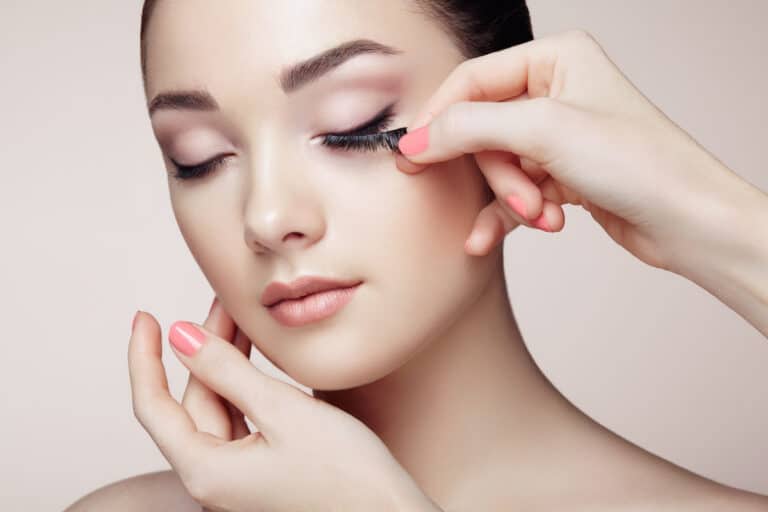
Strip-lash glue is applied to the band of a temporary lash strip. It is designed to hold the strip close to the lash line and be removed according to the product directions, often at the end of the day.
Extension adhesive is a different product. It is used by trained lash professionals to attach individual extensions to natural lashes and should not be substituted for ordinary strip-lash glue.

The FDA classifies false eyelashes, extensions, and their adhesives as cosmetics. Its eye-safety advice warns that the eyelids are delicate and that adhesive reactions or injuries around the eyes can be particularly troublesome.
Even properly labeled lash adhesive can cause irritation or allergy. Check the ingredient list, follow the label, and stop using it if you develop swelling, burning, itching, persistent redness, eye pain, or other unexpected symptoms.
What Is Hair Glue?
Hair glue, also called hair bonding glue, is designed to secure certain wigs, weaves, tracks, or other hair enhancements away from the eye area.
Its formula and removal process depend on the product. Some hair glues are latex-based, while others use different adhesive systems. Similar ingredients or packaging do not make two adhesives interchangeable.
None of that makes hair glue interchangeable with lash adhesive. A product can be appropriate for hair or the scalp and still be unsuitable for the eyelids and lash line.
Online demonstrations do not override the manufacturer’s directions. Do not copy a beauty hack that places a non-eye adhesive on the lash line.
Why Hair Glue Is Unsafe for Lashes
It Is Not Made for the Eye Area
The clearest reason is also the most important: hair glue is not formulated or labeled for false-lash use around the eyes.
The eye surface and eyelid skin are delicate. Fumes, wet adhesive, dried fragments, or product transferred by the fingers can irritate the eye or surrounding skin.
The AAO advice warns that improperly applied glued lashes can irritate the skin or contact the eye surface and scratch the cornea.
It Can Be Extremely Difficult to Remove
Hair bonding products are made for a secure hair bond. Their recommended removers may contain solvents or other ingredients that are not intended for use in or around the eyes.
Trying to peel away a strongly bonded strip can pull out natural lashes, irritate the lid margin, or injure the eyelid skin.
Never cut near a glued eyelid, force the eye open, or pull hard on bonded lashes.
It Can Cause Irritation or an Allergic Reaction
Warning signs after adhesive use include the following. Eye pain and light sensitivity can also indicate an eye injury, so do not assume every symptom is just an allergy:
- Red or swollen eyelids
- Burning or stinging
- Itching
- Watery eyes
- A rash around the lash line
- Light sensitivity
- Eye pain
A reaction can happen immediately or develop after repeated exposure. Previous trouble-free use does not guarantee that you will never become sensitive to an adhesive.
It Can Damage Natural Lashes
Natural lashes can break or be pulled out when a strong adhesive is removed forcefully or incorrectly.
Repeated tugging can also irritate the eyelid margin. The AAO explains that allergy to lash-extension adhesive is one possible contributor to eyelash loss.
For information about professionally applied sets, see our guide to eyelash extensions for men.
It Can Injure the Eye
If hair glue gets into the eye, it may irritate or injure the eye surface. Depending on the adhesive, lashes or eyelids may also stick together. The exact risk depends on the formula and exposure.
Eye pain, blurred vision, marked redness, or sensitivity to light needs prompt medical attention.
What to Do If Hair Glue Gets in Your Eye
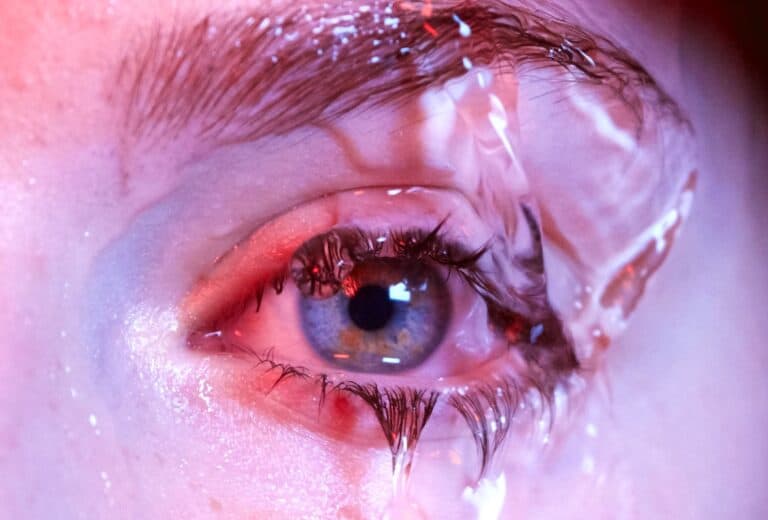
Start rinsing immediately. Use a gentle flow of clean, lukewarm water and rinse continuously for at least 20 minutes. Do not delay rinsing to look up the ingredients. If the eyelids are stuck together, do not force them apart; seek urgent help while gently rinsing the area.
The Poison Control guidance on super glue advises rinsing and not forcing bonded eyelids apart. Hair-glue formulas vary, so contact a poison center or medical professional with the exact product name for advice.
- Remove contact lenses if they come out easily during rinsing, but do not delay irrigation or force out a stuck lens.
- Do not rub the eye.
- Do not use acetone, hair-bond remover, or cosmetic oil inside the eye.
- Do not pull the eyelids or lashes apart.
- Do not use tweezers, scissors, or another sharp tool near the eye.
- Keep the product container so a clinician can review the ingredients.
Get urgent medical help if the eyelids are bonded together, glue remains in the eye, vision changes, pain is significant, or redness and irritation continue after thorough rinsing.
The NHS guidance advises urgent care for severe eye pain, changes in vision, or chemical exposure.
What If Hair Glue Is Stuck on the Eyelid?
Do not tear it off.
If the glue is only on the external eyelid skin and the eye itself was not exposed, check the product label for first-aid directions and contact a medical professional or poison center for advice before trying a remover near the eye.
Do not apply hair-bond remover, acetone, or another solvent near the eye unless a qualified clinician specifically tells you to.
If the lash line is bonded, seek medical assessment rather than experimenting with household removers. Keep the packaging and explain when the glue was applied and whether any entered the eye.
Safer Alternatives to Hair Glue
Strip-Lash Adhesive
Use a fresh strip-lash adhesive clearly labeled for the temporary false-lash application you are performing.
Apply a thin line to the band, wait for the recommended tack time, and place the lash without touching the wet adhesive to the eye. Do not use professional extension adhesive to make a temporary strip last longer.
Sensitive-Eye Adhesive
“Sensitive” does not guarantee that an adhesive will suit you. Latex-free formulas still contain other ingredients that can cause reactions. If you have reacted to lash adhesive before, get advice before trying another formula.
Our guide to lash glue for sensitive eyes discusses extension adhesives. Those professional products are not substitutes for strip-lash glue; match the label to the exact type of lashes you are using.
Magnetic Lashes
Magnetic lashes avoid traditional lash glue, although the liner, magnets, or lash band can still irritate the eye if used incorrectly.
Follow the instructions and stop using them if the lash band scratches or repeatedly touches the eye.
Mascara
If you have false lashes but no properly labeled adhesive, skip the strips and use mascara on healthy, comfortable eyes instead. If your eyes are already irritated or have been exposed to glue, leave eye makeup off while you seek advice.
A lengthening mascara can add volume and definition without improvising with hair glue.
How to Make Strip Lashes Stay on Longer
You do not need hair glue or any other non-eye adhesive to improve strip-lash wear time.
- Prep the lash line. Remove excess oil, heavy moisturizer, and leftover makeup while keeping products out of the eye.
- Trim the lash band. A strip that is too long is more likely to lift at the corners. Follow our guide on how to trim false eyelashes.
- Use the recommended amount. Too much adhesive can take longer to become tacky and may make placement messier.
- Wait for tackiness. Follow the adhesive’s recommended wait time before placing the strip.
- Check the corners. Make sure the inner and outer ends of the strip are seated comfortably without poking the eye.
- Keep the glue fresh. Replace it according to the package guidance or if the texture, smell, color, or performance changes unexpectedly.
Can You Use Wig Glue on Eyebrows?
Do not improvise with hair or wig glue to hold your eyebrows in place. It is not a brow-styling product, and difficult removal can pull out brow hairs or irritate nearby skin.
Use a product made for brows instead. Our roundup of strong-hold brow gels includes options designed for cosmetic use on that area.
Can You Use Nail Glue for Lashes?
No. Nail glue, craft glue, super glue, wig glue, and hair-bonding glue are not substitutes for properly labeled eyelash adhesive.
Only use a product clearly labeled for the exact lash application you are performing. Do not dilute another glue, mix adhesives, or assume a household glue becomes eye-safe once it dries.
The Takeaway
Hair glue should never be used for false eyelashes. Its stronger bond does not make it a better lash adhesive.
Using it near the eyes can lead to irritation, allergy, eyelid bonding, natural-lash loss, or injury to the eye surface.
Choose a properly labeled strip-lash adhesive, magnetic lashes, or mascara instead. If hair glue gets into the eye, rinse immediately and seek urgent medical care for significant pain, vision changes, persistent irritation, or bonded eyelids.
Related Articles
Best The Ordinary Products for Fungal Acne
Best Non-Comedogenic Drugstore Foundations