
Gel Overlay Vs. Gel Polish
Gel polish manicures have become a staple in salons and at-home nail routines because they offer a wide color range, a glossy finish, and longer wear than traditional polish.
Gel overlays are also popular because they add a thicker protective layer over the natural nail, which can help reduce bending, splitting, and breakage while the overlay is worn.
Although both use light-cured gel products, they serve different purposes: gel polish mainly adds color and shine, while a gel overlay adds structure and reinforcement.
Being able to find nail treatments that can last for weeks and withstand our daily routines contributes to our overall beauty routines.
Whether it is making an appointment at your favourite nail salon or scheduling the time to do an at-home service.
The right type of manicure can be your special time for self-care and can deliver results that can last for weeks.
Although both manicures can deliver the desired results, there are a few differences that may make one manicure the better option for you over the other.
What is the difference between gel overlay and gel polish?
These formulas serve different purposes. A gel overlay uses a thicker builder, soft-gel, or hard-gel product to add structure over the natural nail, while gel polish is a thinner color system designed mainly for long-lasting shine and color. Neither treatment permanently strengthens the natural nail itself.
Both have unique qualities that make them popular manicure choices, and below we discuss in depth what they are, their differences, and how to choose the right gel nails for you!
What Is Gel Overlay?
Gel overlay is a thicker, harder gel that can coat the entire nail.
It usually involves a builder, soft gel, or hard gel layer applied over the natural nail and cured under a compatible UV or LED lamp. A base and top coat may also be used depending on the system.
A gel overlay is applied to the natural nail to add reinforcement and reduce flexing, which can help protect nails that are prone to cracking or splitting while the product is in place.
While a gel overlay is meant to strengthen the nail, it does not necessarily provide any additional length to the natural nail as opposed to other nail extensions.
Overlays can be created with hard gel, builder gel, or other soak-off soft-gel systems. The exact product affects flexibility, removal, and whether it can also be used to create a short extension.
Soft-gel and builder-gel overlays tend to have more flexibility, while many hard gels cure into a firmer structure. Product behavior varies by brand, so follow the manufacturer’s application and removal directions.
Gel overlays can provide long-lasting reinforcement and a smooth surface over the natural nail.
What Is Gel Polish?
Gel polish uses thin layers, usually a base coat, one or more color coats, and a top coat, to create a long-lasting color finish on natural nails or over enhancements.
Essentially, gel polish is a more durable version of regular nail polish, but it is still thin and flexible on the natural nail.
The gel polish uses a gel base coat, along with several coats of the desired colour, as well as a top coat, which are all cured under a UV or LED light to be set.
While gel polishes do protect the natural nail to an extent, they are not meant to strengthen the nail against splitting or cracking like a gel overlay.
Gel polishes are available in a wide range of colours and can be used to add colour or designs to the natural nails.
A gel polish manicure generally lasts longer than regular polish, although chips, lifting, and edge wear can still happen depending on prep, nail condition, lifestyle, and application.
Here’s a tutorial on creating the perfect gel nail polish application from Crispynails by Christina Morciano.
Gel Overlay Benefits
The biggest advantage of a gel overlay manicure is the extra structure and reinforcement it adds over the natural nail.
This can be useful if your nails are flexible or prone to breaking, but an overlay does not repair damage already caused by over-filing, picking, or improper extension removal.
A gel overlay may be a useful option if your priority is support and structure rather than just color.
The overlay acts as a protective shell over the natural nail, helping reduce flexing and mechanical wear while it is worn.
Although it is not meant to add length to the natural nails, the different types of gel overlay available can still shape the nails into the desired style you’re after.
In some instances, with a hard gel overlay, it can be used to add an extension to the nail if so desired.
The exact overlay system may use a base gel, builder or hard gel, and top coat. Some products combine steps, so use the application system recommended by the manufacturer.
A gel overlay manicure can last for several weeks before maintenance is needed, although nail growth and lifting often determine when a fill or removal is due.
Many overlays are maintained around the two-to-four-week mark, but wear time varies by product, nail growth, prep, structure, and daily habits.
Gel Polish Benefits
Similarly, several benefits come with a gel polish manicure as well.
Gel polish is available in a wide range of colours that can suit any desire or mood, to achieve whatever colour or design you are looking for.
Gel polish usually involves several thin coats, but the total structure remains lighter and thinner than a builder or hard-gel overlay.
Gel polish is applied in a thin layer over the nail, so it usually feels more natural and less structured than a thicker overlay.
Although it is not designed to reinforce flexible nails the way an overlay can, gel polish forms a durable coating that helps the color resist chipping and flaking longer than many regular polishes.
The gel polish is cured under a UV or LED light to set the polish correctly.
It is more durable than regular nail polish, meaning the results will last longer than a standard manicure.
A gel polish manicure often lasts around two weeks, although some sets wear for less or more time depending on nail growth, prep, product compatibility, and lifestyle.
Gel Overlay And Gel Polish Process and Removal
Both gel overlay and gel polish have a similar application process, with some slight differences.
Both gel overlay products and gel polish require curing under a compatible nail lamp. Whether that lamp is UV, LED, or dual-wave depends on the specific gel system.
However, gel polish requires several more coats than a gel overlay manicure.
The first step in a gel overlay or gel polish manicure is to shape and file the natural nail to properly prepare it for the gel product to be applied on top.
Both gel overlay and gel polish are applied over the entire nail bed.
After shaping the natural nails, the cuticle area is gently prepared so gel does not sit on skin or dead tissue. Cuticle trimming is optional and should be done carefully to avoid cuts.
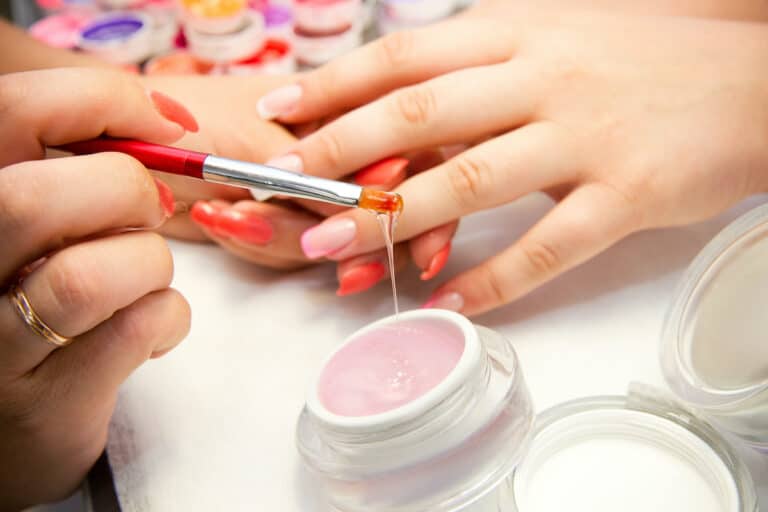
For a gel overlay manicure, the technician applies the products required by that system, which may include a base, builder or hard gel layer, and top coat. Each light-cured layer is cured according to the brand directions.
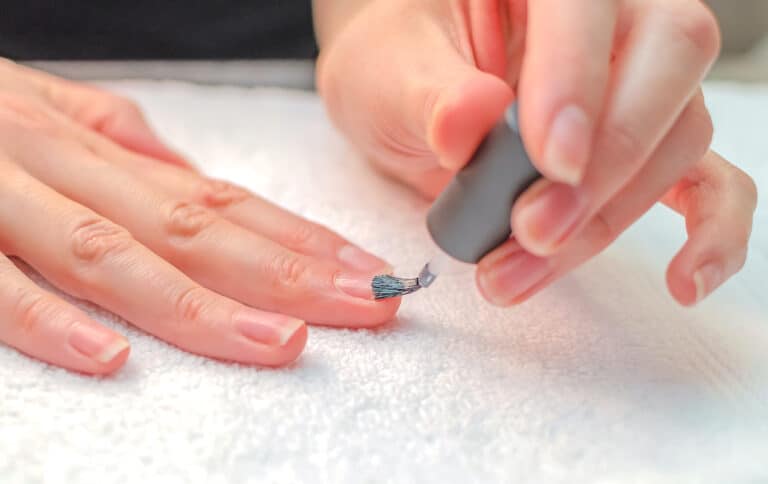
For a gel polish manicure, the gel base coat is applied and cured, then the required coats of the desired colour are applied and cured, and lastly, the gel top coat is applied and cured.
For both manicures, each light-cured layer needs the correct lamp and full manufacturer-recommended cure time. Under-curing can increase the risk of lifting and exposure to uncured gel ingredients.
The removal process for a gel polish is easier than the removal process for a gel overlay.
Many soak-off gel polishes can be removed with acetone after the top surface is broken, although exact soak time varies by brand. Peeling or scraping the polish off can damage the natural nail.
Overlay removal depends on the product. Hard gel is typically filed off, while some soft-gel or builder-gel formulas can be reduced and then soaked with acetone. Follow the manufacturer’s removal instructions instead of assuming every overlay will soak off.
Difference Between Gel Overlay And Gel Polish
The main differences between gel overlay and gel polish are what they are meant to do for the nails, as well as how they feel on the natural nail.
Gel overlays are thicker than gel polish and are used to add structure and reinforcement over natural nails without necessarily adding length.

Gel overlay creates a firmer coating that can reduce bending and help protect the nail while it grows. It does not change the biology of the nail plate or make new nail growth inherently stronger.
Gel polish is a thinner formula that is meant to be flexible and soft on the natural nail.
It generally feels lighter and less structured than a gel overlay, which may appeal to people who prefer a natural-nail feel.
Gel polish is a more durable version of a regular nail polish manicure, which will protect the nails against chips and flakes in the colour.
Gel overlays often wear longer than gel polish because they are built for structure, although longevity depends on prep, growth, product choice, and maintenance rather than coat count alone.
Although the application process is similar, the removal process for gel polish is easier than gel overlay.
While both can be achieved in a DIY manicure at home, a gel polish manicure is the easier of the two to apply to yourself.
Gel Overlay Vs Gel Polish At A Glance
- Main purpose: Gel overlay adds structure; gel polish adds long-wearing color.
- Thickness: Overlay is thicker and more supportive; gel polish is thinner and more flexible.
- Length: An overlay usually stays on the natural nail, although some builder and hard gels can also create short extensions.
- Wear time: Overlays often last longer between maintenance appointments, while gel polish commonly lasts around two weeks.
- Removal: Soak-off gel polish is usually easier to remove. Hard-gel overlays must generally be filed, while some soft overlays can soak off.
- Best for: Overlay suits flexible or breakage-prone nails; gel polish suits people who mainly want durable color.
Which Gel Is Right For You?
Both gel overlay and gel polish can work well, but they are not equally suitable for every nail condition.
If your natural nails are very flexible or prone to splitting, a gel overlay may provide more reinforcement than gel polish alone.
If you prefer a manicure that can often be maintained for several weeks, an overlay may also suit you, although waiting too long between maintenance appointments can increase imbalance and lifting as the nail grows.
If you are mainly looking for long-wearing color with a thinner, more natural feel, gel polish is usually the simpler option.
Gel polish is available in almost any colour a regular polish would be, and can be used to achieve colour or designs on the natural nail.
If regular polish chips quickly and your natural nails do not need extra structure, a gel polish manicure may give you longer color wear without the bulk of an overlay.
Because gel polish comes in a wide range of colors and finishes, it is convenient if you like to change your manicure more frequently.
Many gel-polish manicures last around two weeks before growth, wear, or lifting makes a refresh necessary.
While the applications are similar, gel polish can be removed more easily at home if you are unable to make it to the salon.
Gel Manicure Safety Tips
Keep uncured gel off the skin as much as possible. Repeated skin contact with uncured gel products can increase the risk of irritation or acrylate allergy.
Use a lamp that is compatible with the specific gel system and follow the stated cure time. A product can feel hard on the surface while still being incompletely cured underneath if the wrong lamp is used or the layer is too thick.
Do not peel gel polish or overlays off. Peeling can remove layers of the natural nail plate and leave the nails thin, rough, and sensitive.
Conclusion
Both gel polish and gel overlay manicures can create a polished, glossy result that lasts longer than regular nail polish, but they solve different needs.
Whether you are taking the trip to your favourite nail salon or creating a DIY manicure at home.
Gel polish is mainly about durable color, while a gel overlay adds more structure and reinforcement over the natural nail.
Choose based on whether your priority is extra structure or long-lasting color with less bulk.
Experimenting with these different types of gel manicures can be a fun way to switch up your normal nail care routine!
Gel Overlay Vs Gel Polish FAQs
Can You Put Gel Polish Over A Gel Overlay?
Yes. Gel polish is commonly applied over a cured and properly prepared builder- or hard-gel overlay to add color and designs.
Does Gel Overlay Make Natural Nails Stronger?
It makes the nail feel stronger while the product is on because the overlay reduces flexing and adds structure. It does not permanently change how strong new nail growth is.
Can A Gel Overlay Be Soaked Off?
It depends on the formula. Many soft-gel and some builder-gel products are soak-off, while true hard gel is usually file-off. Check the product instructions before removal.
Which Lasts Longer, Gel Overlay Or Gel Polish?
A well-applied overlay often lasts longer between maintenance appointments because it is designed for structure, but either service can lift early if prep, curing, or product compatibility is poor.
Related Articles
How To Prevent Gel Polish Bubbles And Wrinkles