
Can I Use Toner Without Moisturizer?
Skincare routines can feel overwhelming, especially when every new product seems to promise another essential step.
It is easy to end up with a long routine when most advice seems to focus on adding more products rather than figuring out what your skin actually needs.
Before you know it, you go through 10 steps every morning and evening, and your bathroom counter is cluttered with a dozen different bottles.
You might be wondering if all of this is necessary, and if not, which products are actually needed?
When simplifying a skincare routine, it makes sense to look for products that can comfortably serve more than one purpose.
A hydrating toner might seem like a candidate, but whether it can replace moisturiser depends on its formula.
If you used skincare in the ‘90s or early 2000s, you may remember toners as strongly astringent products marketed for oily or acne-prone skin.
Some of those formulas could leave skin feeling tight, stinging, or dry, which is not what most people want from a daily routine.
Modern toners are much more varied.
Many of today’s toners are applied after cleansing and focus on hydration, soothing, or exfoliation rather than simply removing oil.
Some contain antioxidants or exfoliating acids, but these ingredients serve different purposes and are not a substitute for moisturising.
Can you use toner without moisturiser?
Yes, but a watery toner usually cannot do the same job as a moisturiser. A richer toner-moisturiser hybrid may be enough if your skin stays comfortable. If your skin feels dry, tight, or flaky, keep the moisturiser and consider skipping the optional toner instead.
In this post, we will look at what toner can realistically do, where it fits in a routine, and how to decide whether your skin still needs a separate moisturiser.
What Exactly Is Toner?
Many older toners were heavily marketed as astringents and often contained relatively high levels of drying alcohols.
Higher amounts of alcohol denat. or ethanol can feel drying or irritating on some skin types. These are different from fatty alcohols, such as cetyl or cetearyl alcohol, which help soften skin and give creams their texture.
But let’s forget the toners of the ’90s; let’s talk about what toners can do for you today.
Today’s toners come in many formulas. Some are alcohol-free, while others still contain alcohol alongside humectants, exfoliating acids, or other active ingredients.
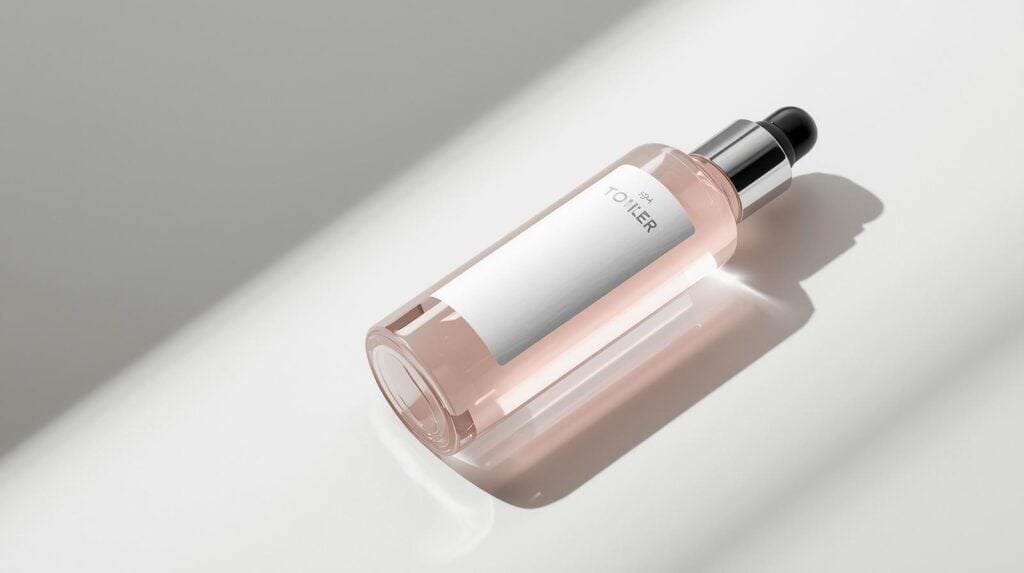
Many have a watery consistency and include hydrating ingredients, soothing ingredients, or skin-conditioning ingredients. Others are exfoliating toners built around acids such as glycolic, lactic, or salicylic acid.
The purpose of toner depends on the formula. It may add hydration or deliver an active ingredient. It should not replace proper cleansing to remove makeup or sunscreen.
A cleanser can remove some surface oil along with sunscreen, makeup, sweat, and debris, but a well-formulated gentle cleanser should not leave your skin feeling stripped.
Toners are usually applied after cleansing. A hydrating formula can add water-binding ingredients back to the skin, while an exfoliating toner has a different job and may need to be used less often.
Toner is optional and your serum or moisturiser does not need toner in order to work properly. However, applying a hydrating toner before thicker products can make the routine feel more comfortable if your skin likes extra hydration.
Some toners contain exfoliating acids that help loosen dead surface cells and address concerns such as rough texture, clogged pores, or uneven-looking tone.
Used at an appropriate frequency, these formulas can make the skin look smoother and brighter, but overuse may cause dryness or irritation.
There are many different types of toners, including ones with lactic acid, vitamin C, and many more.
If your goal is fewer steps, you can usually leave toner out. The American Academy of Dermatology’s basic layering guidance focuses on cleansing, any needed treatment, and moisturiser and/or sunscreen.
Here’s a tutorial for using toners from Tabeth Giselle on YouTube.
When Should You Use Toner?
Most toners are applied after cleansing, but the rest of the routine depends on the toner itself. A hydrating toner can usually go before serums, while stronger acid toners may have product-specific directions.
A gentle hydrating toner may be comfortable once or twice a day, while exfoliating or strongly active toners may need much less frequent use.
If you like to use a makeup remover and a cleanser, your toner should go on after the cleanser.
Double cleansing is optional too. If you use an oil cleanser followed by a second cleanser, apply toner only after both cleansing steps.
The most important thing is to follow the directions for the specific toner and avoid layering too many irritating actives at once.
For simple routines, layering lighter products before thicker ones is a useful rule of thumb, but treatment instructions can override that rule.
If you enjoy a hydrating toner and serum, these are example routines. Both steps are optional:
- Evening: Cleanser → Hydrating toner (optional) → Serum (optional) → Moisturiser
- Morning: Cleanser → Hydrating toner (optional) → Serum (optional) → Moisturiser if needed → Sunscreen
If you use a retinoid, follow its directions or your prescriber’s advice. Avoid adding an exfoliating toner at the same time when you are still working out what your skin tolerates. The example below assumes a gentle hydrating toner:
- Example retinol evening: Cleanser → Hydrating toner (optional) → Let skin dry → Retinol as directed → Moisturiser
In a basic routine, toner usually comes after cleansing, but it does not need to be included every time you wash your face.
In the morning, sunscreen should be the final skincare step before makeup. At night, there is no sunscreen step.
You do not need a fixed waiting period between a basic hydrating toner and moisturiser. Let the toner settle enough to layer comfortably, unless the product directions say otherwise.
Retinoids and other special treatments do not all follow the same order, so check the product instructions and adjust for skin tolerance.
Toner Vs Moisturiser: What Is The Difference?
Toner and moisturiser can both make skin feel more hydrated, but they are usually designed to do different jobs. Knowing the difference makes it easier to decide which step you can simplify.
- Hydrating toner: usually a lightweight, water-based step that adds humectants or soothing ingredients. It is optional for most routines.
- Moisturiser: usually combines water-binding ingredients with emollients and/or occlusives that soften skin and help slow water loss.
- Toner-moisturiser hybrid: a richer, milky formula may provide enough comfort for some oily or combination skin types, especially in warm or humid weather.
If your toner disappears into the skin within seconds and leaves no lasting softness, it is probably functioning more like a hydrating layer than a moisturiser. If your skin becomes tight or flaky later, that is a practical sign that toner alone is not enough for you.
Can You Use Toner Without A Moisturiser?
Because some toners are very hydrating, it is reasonable to wonder whether they can replace a moisturiser.
The useful distinction is adding water versus helping skin retain it. Humectants attract water, emollients soften skin, and occlusives help limit water loss.
People with oily skin sometimes skip moisturiser because they worry it will feel greasy or contribute to clogged pores.
Oily skin can still be dehydrated, so oiliness alone is not a reason to skip moisturiser. If heavier creams feel uncomfortable, a light gel or lotion moisturiser may suit you better. A very emollient toner-moisturiser hybrid may also be enough for some people.
Most watery toners contain mainly humectants and do not provide the same emollient or occlusive support as a moisturiser. That is why a moisturiser is usually more reliable for reducing water loss and supporting a comfortable skin barrier.
Toner does not replace sunscreen. During the day, use broad-spectrum SPF 30 or higher, with water resistance when needed. A moisturising sunscreen may make a separate morning moisturiser unnecessary if it keeps your skin comfortable. Apply and reapply it as directed.
If you try a richer toner without a separate moisturiser, watch for tightness or flaking later in the day, not just how skin feels immediately after application. Stinging can also mean irritation from the toner itself, so stop using a product that repeatedly stings.
Just keep in mind that this doesn’t work for everyone, and it might only work for you during certain seasons.
If you have dry skin or use treatments that leave it dry, keeping a gentle moisturiser is generally a more reliable choice than relying on toner alone.
Many lightweight moisturisers are designed for oily or acne-prone skin and can provide hydration without feeling heavy.
If you are considering toner without a separate moisturiser, look for a formula with ingredients that support hydration or barrier comfort, such as:
- Glycerin
- Hyaluronic acid
- Ceramides
- Aloe vera
- Niacinamide
These ingredients can be useful, but their presence does not automatically mean a toner can replace moisturiser. The overall formula matters more than spotting one familiar ingredient on the label, especially the balance of humectants, emollients, and occlusives.
How To Tell If Your Skin Is Oily
Surface shine can help you choose a texture, but it cannot tell you whether your skin has enough moisture. To get a rough sense of your skin’s needs, observe it during your usual routine:
- Use your usual gentle cleanser and skincare products.
- Notice whether your skin feels comfortable, tight, or flaky after cleansing and moisturising.
- Later, check whether shine appears across your face or mainly on the forehead, nose, and chin.
- Gently press a clean tissue or blotting paper on shiny areas if helpful. Surface oil does not measure skin hydration.
There is no need to leave your face bare for hours or skip sunscreen to assess oiliness. Product finish, weather, and activity can all affect how shiny skin looks.
If your face becomes shiny fairly quickly, you may have oily or combination skin. That does not mean you need to skip moisturiser, but it may mean you prefer a lighter formula.
If your skin feels tight, flaky, or uncomfortable after cleansing, that is a sign your routine may be too drying or that you need more moisturising support.
In that case, a moisturiser is usually more useful than toner alone, regardless of whether your skin is dry, combination, or temporarily dehydrated.
If you are simplifying your routine, change one product at a time and give your skin enough time to show whether the change is comfortable.
Does your skin feel greasy immediately after applying a product, or does shine develop later? Noticing the difference can help you decide whether to try a lighter texture.
If you see more breakouts, the issue may be the particular moisturiser rather than moisturiser as a category. Try a lighter formula or one labelled non-comedogenic instead of assuming your skin needs no moisturiser at all. Keep in mind that “non-comedogenic” is not a guarantee that every formula will suit every person.
With skincare, small, controlled changes are often more useful than overhauling the whole routine at once.
Everyone has different skin, and it responds differently to products and ingredients.
Persistent redness, burning, or an itchy rash needs more attention than simply adding another moisturising layer. Stop the suspected product and seek advice if symptoms do not settle.
Hydrating Toners To Consider
If you prefer a very simple routine, choose a hydrating toner rather than an astringent or exfoliating one, especially if you are considering skipping a separate moisturiser.
For extra hydration, favour a formula you tolerate over a strongly astringent or exfoliating one. “Alcohol-free” alone does not guarantee gentleness; fragrance and other ingredients can also irritate.
These are hydrating options, not interchangeable replacements for a cream. Compare the exact version and current ingredient list before buying, since names and formulas can change:
- LANEIGE Cream Skin Toner & Moisturiser – this is a milky toner-moisturiser hybrid with a richer feel than a traditional watery toner.
It may suit people who want hydration without layering a separate heavy cream. - CeraVe Hydrating Toner – this alcohol-free toner contains ceramides, niacinamide, and hyaluronic acid.
These ingredients can support hydration and barrier comfort. CeraVe recommends following toner with moisturiser, so this is best viewed as an extra hydrating step rather than a cream replacement. - PYUNKANG YUL Facial Essence Toner – this is a simple, hydrating essence-toner option for people who prefer a lightweight layer and minimal product feel. It can add hydration, but it should not be treated as an acne treatment or guaranteed replacement for moisturiser.
Frequently Asked Questions
Can I Skip Moisturiser If I Have Oily Skin?
You can try a lighter routine, but oily skin does not automatically mean moisturiser is unnecessary. If a cream feels greasy, a lightweight gel, lotion, or moisturising sunscreen may be more comfortable. Judge the routine by how your skin feels over several hours, not only by how shiny it looks.
What Happens If I Use Toner But No Moisturiser?
A hydrating toner may make skin feel fresh and comfortable at first, but a very watery formula may not provide enough emollient or occlusive support to keep that hydration from evaporating. If your skin later feels tight, rough, or flaky, add a moisturiser back into the routine.
How Long Should I Wait Between Toner And Moisturiser?
For a basic hydrating toner, you usually do not need a timed waiting period. Apply moisturiser once the toner has settled enough that the next product layers comfortably. Follow specific product directions when using exfoliating acids or prescription treatments.
Is Toner Necessary In A Skincare Routine?
No. Toner can be useful if you enjoy the extra hydration or want a specific active ingredient, but it is not an essential step for everyone. A simple routine can work well with cleanser, moisturiser as needed, and daytime sunscreen.
Can Sunscreen Replace Morning Moisturiser?
Sometimes. If your sunscreen is moisturising enough to keep your skin comfortable, you may not need a separate moisturiser underneath it. The sunscreen still needs to be applied generously enough to provide the labelled protection.
Final Thoughts
Moisturiser is useful for most skincare routines because it can reduce water loss and support a comfortable skin barrier after cleansing and treatment steps.
Moisturisers typically combine humectants, emollients, and/or occlusives to help the skin retain water and feel softer and less tight.
A hydrating toner can complement moisturiser, but adding several watery layers is not necessarily a substitute for a cream or lotion.
Toners are usually thinner and may provide hydration or active ingredients, but they do not inherently make later products absorb better.
People with very oily skin may prefer a lighter moisturiser or a richer toner-moisturiser hybrid, but oily skin can still benefit from barrier support.
For most people, a moisturiser is the more dependable step for maintaining hydration and comfort, especially if the routine includes exfoliating acids, retinoids, acne treatments, or other potentially drying products.
The simplest useful routine is one your skin tolerates and you can maintain. Keep moisturiser when you need it, protect your skin from the sun, and treat toner as an optional extra.
Related Articles